
Homemade chicken liver sausage in natural casings is a true gastronomic nod to the past, back when meat delicacies were made entirely from fresh, recognizable ingredients. Unlike store-bought varieties, where the ingredient list often raises questions, the stars here are tender chicken liver and juicy thigh meat, which acquire a silky texture after blanching and gentle steaming. Liver sausages have historically been prized for their high nutritional value and deep umami flavor, while the addition of nutmeg transforms offal into a refined treat with a delicate spicy aroma. The process of stuffing a natural casing might seem daunting at first glance, but the reward—a mouthwatering ring of sausage curing in your fridge—is worth every minute spent.
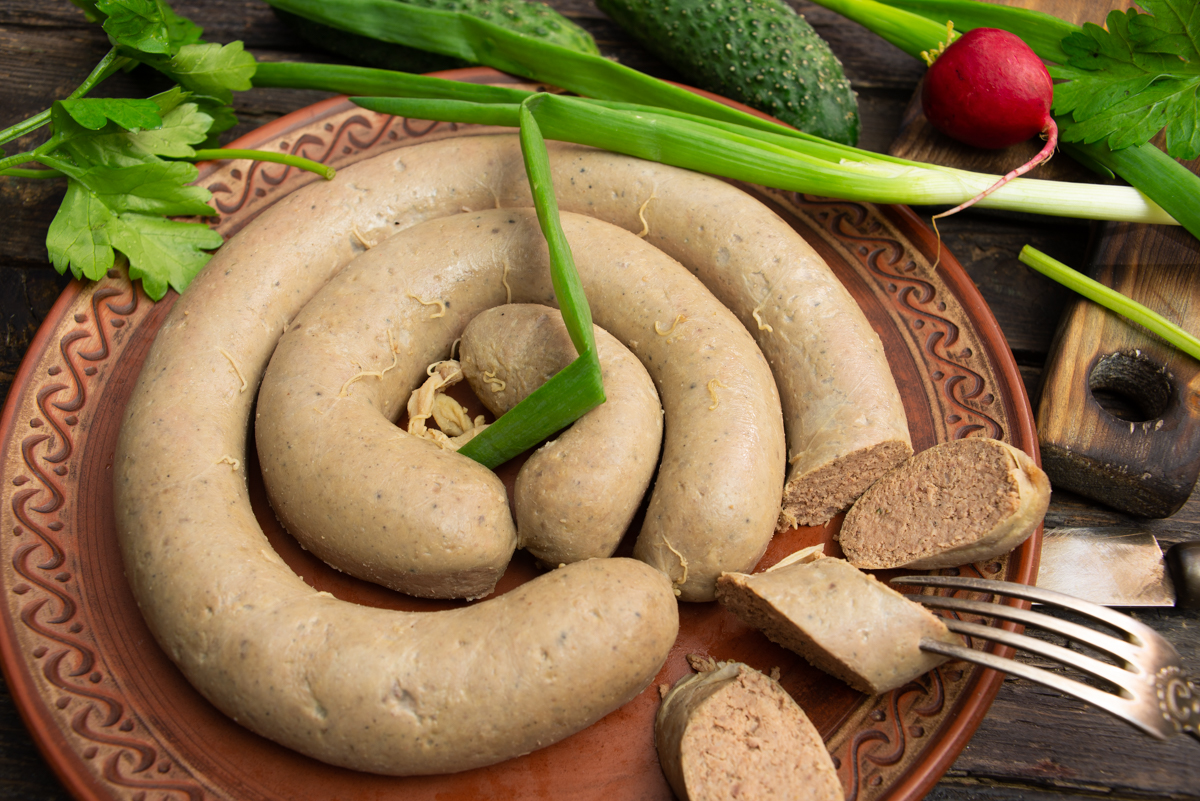
The finished homemade liver sausage turns out incredibly tender and natural. It's a fantastic alternative to store-bought products.
Ingredients
- 700 g (about 1.5 lbs) chicken thighs
- 600 g (about 1.3 lbs) chicken liver
- 1 meter (approx. 3 feet) narrow pork casing
- 2 eggs
- 150 ml (about 2/3 cup) milk
- Nutmeg
- Black pepper and allspice
- Salt to taste, broth seasonings (e.g., onion, garlic, parsley)
How to Make Homemade Chicken Liver Sausage in Natural Casings
Soak the chilled chicken liver in cold water, then rinse thoroughly. Trim away any fat and bile ducts, if present. Bring 1 liter (about 4 cups) of water to a boil and add 1 teaspoon of salt. Drop the liver into the boiling water and blanch for 5 minutes.
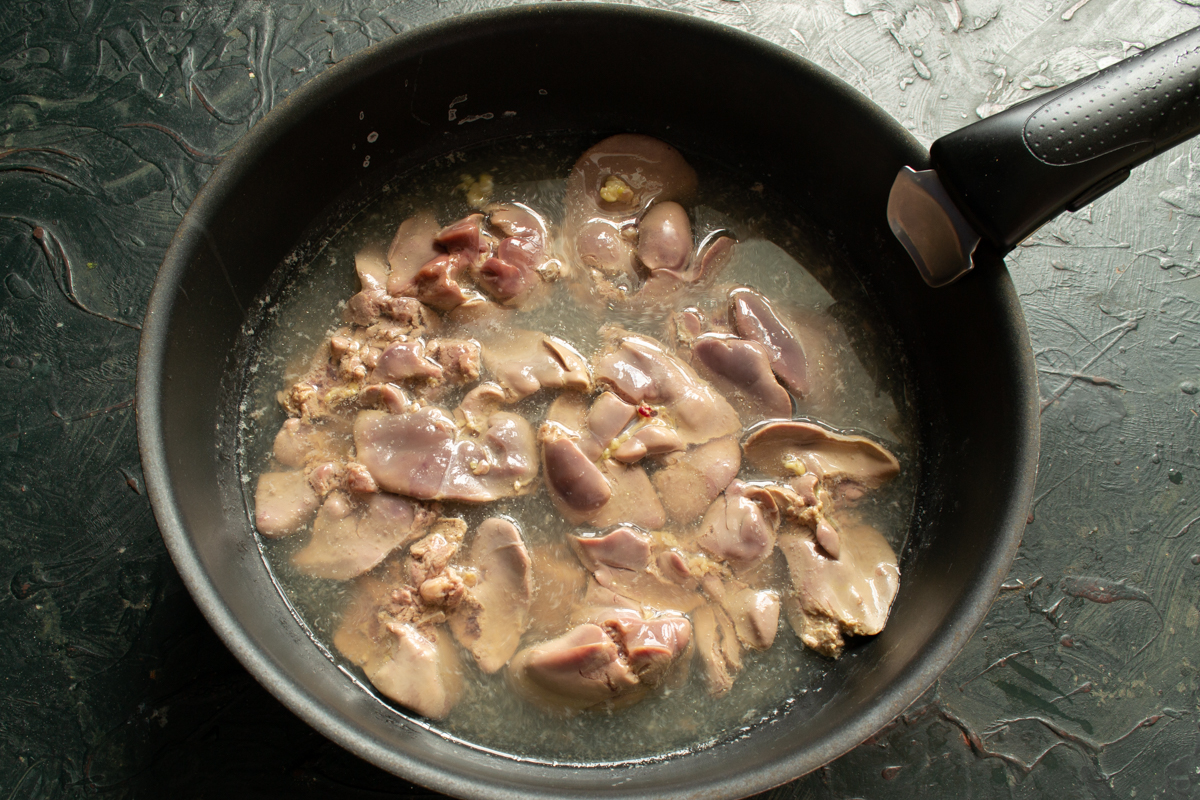
Blanch the chicken liver in boiling salted water for just 5 minutes to keep it tender.
Remove the blanched liver, rinse with cold water, and place it on a cutting board.
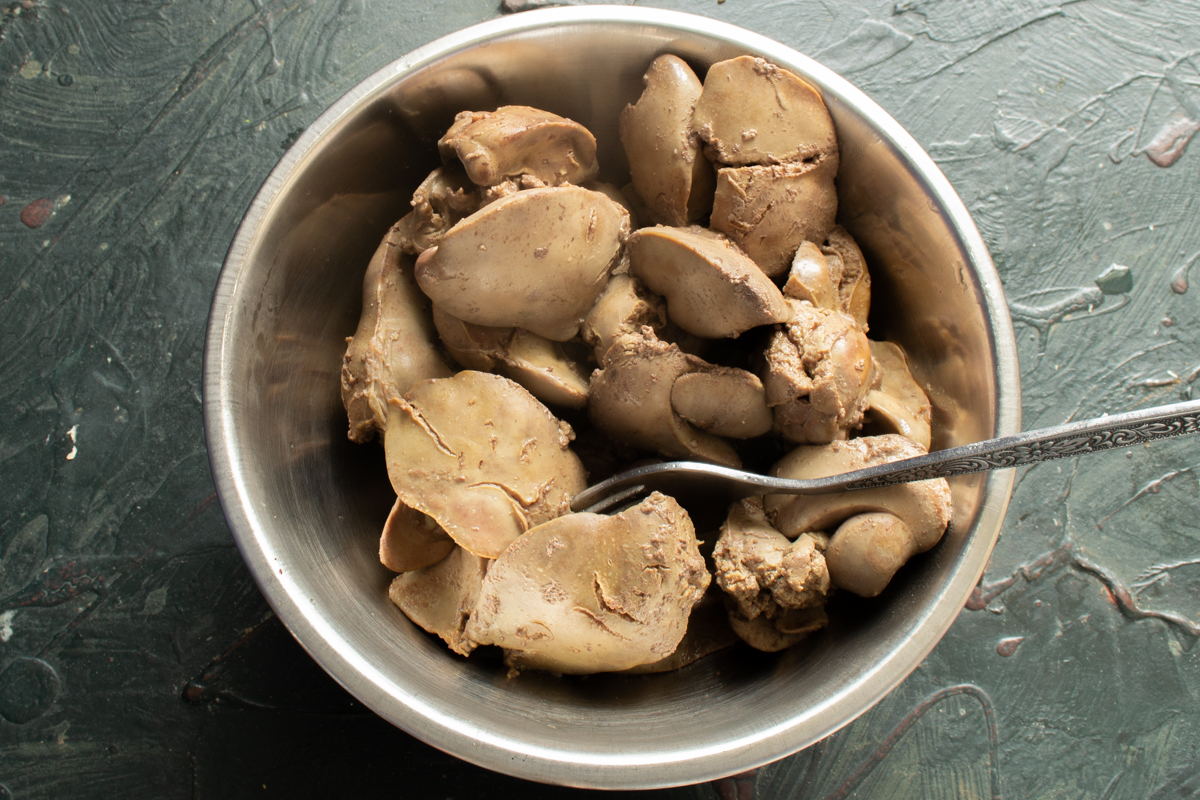
After boiling, cool the liver and rinse it thoroughly under cold running water.
Once cooled, run the blanched liver through a meat grinder.
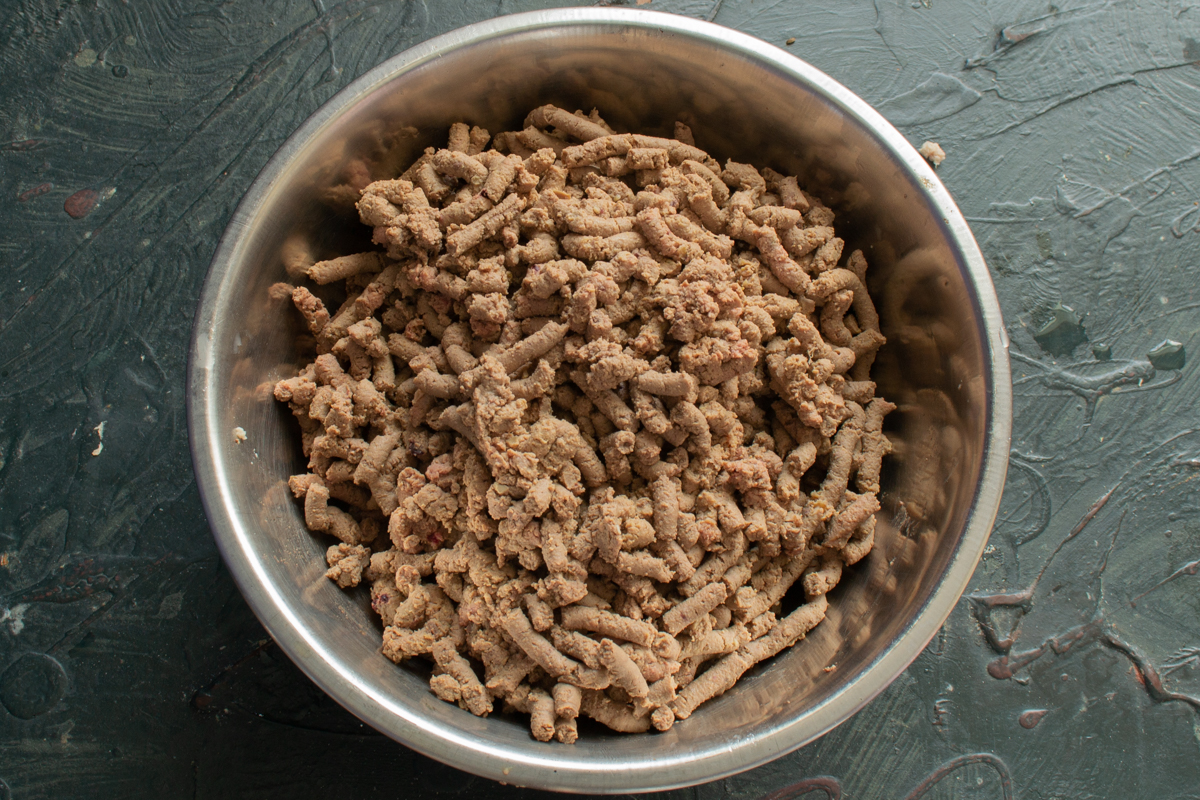
Run the blanched liver through a meat grinder to create the base for our sausage.
Place the chicken thighs in a pot. Add an onion, a garlic clove, and a bunch of parsley. Bring to a boil and season with salt to taste. Simmer gently over low heat for about 1 hour.
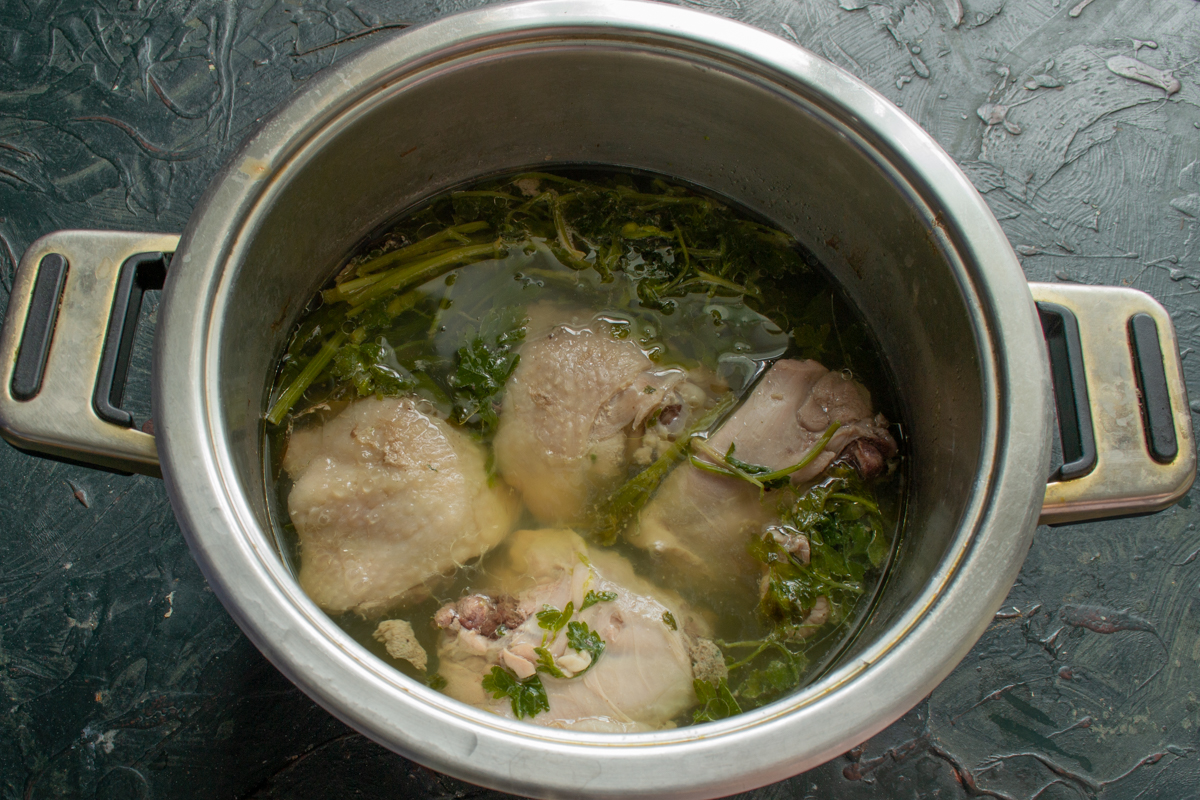
Boil the chicken thighs with spices and herbs for about an hour until the meat is very tender and aromatic.
Let the chicken cool in the broth, then remove it and pull the meat off the bones. Keep the skin, as the sausage needs a little fat.
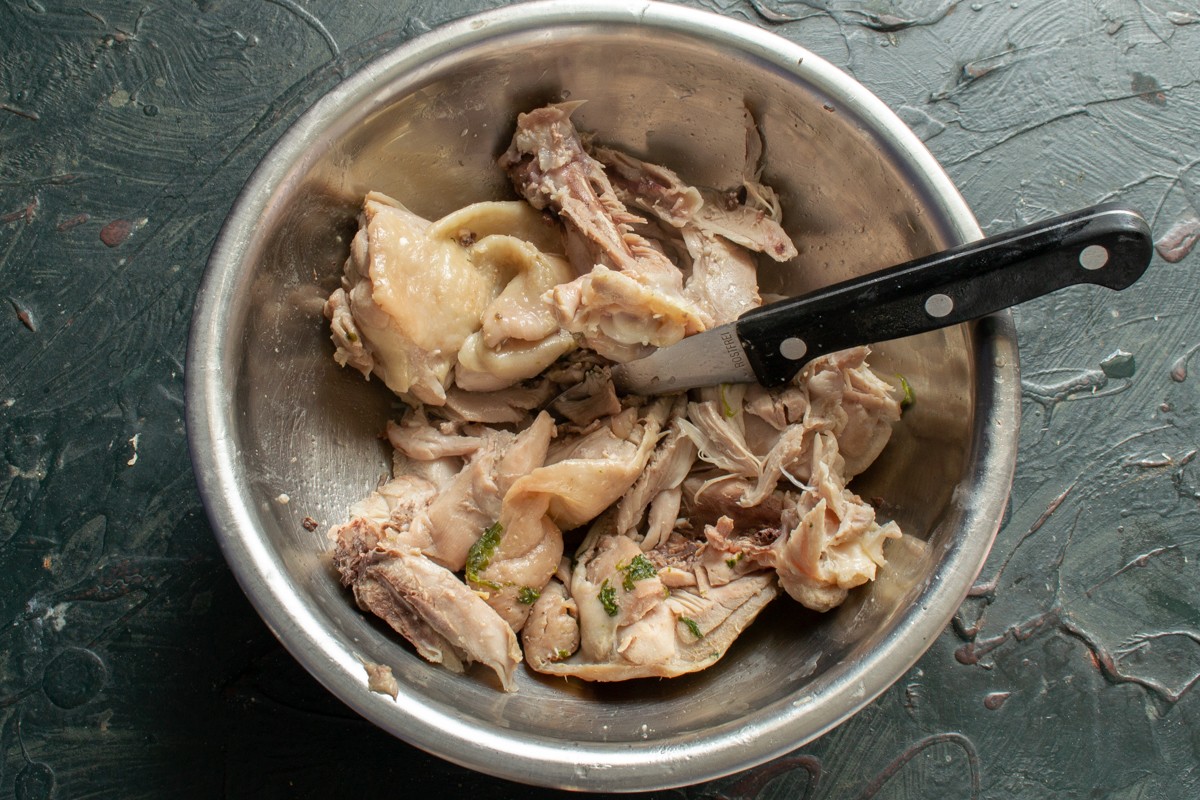
Pull the meat off the bones, keeping the skin—this adds necessary moisture and fat to the sausage.
Run the cooked chicken meat through the meat grinder as well.
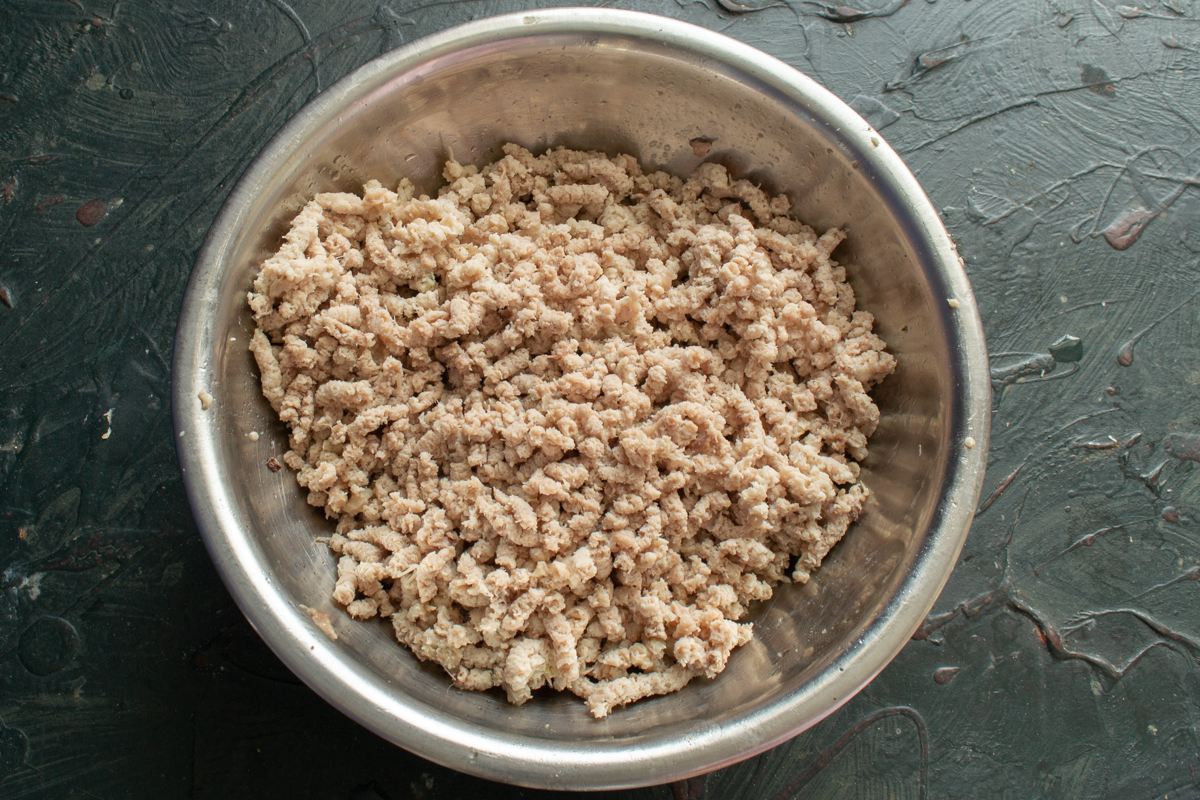
Run the cooked chicken meat through the meat grinder as well to achieve a smooth mixture.
Mix the ground liver and ground chicken together.
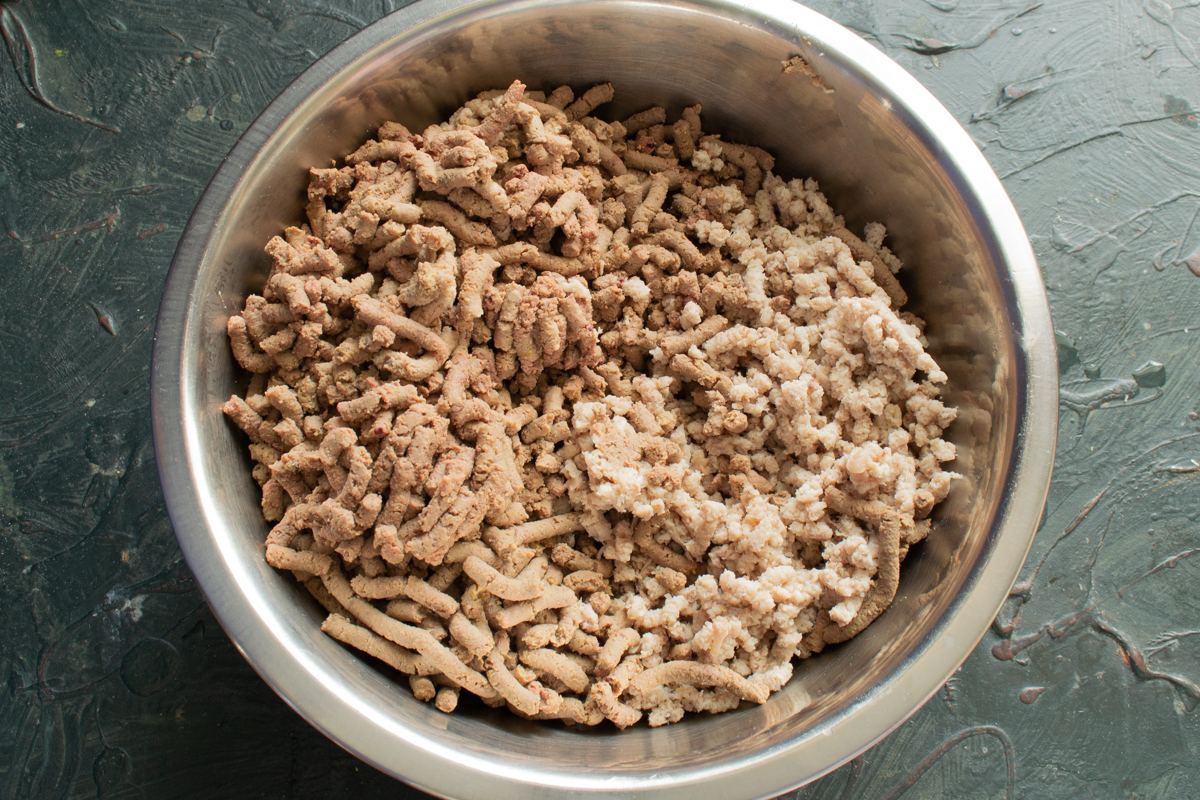
Thoroughly mix the ground liver and the ground chicken together in a large container.
Crack in two chicken eggs.
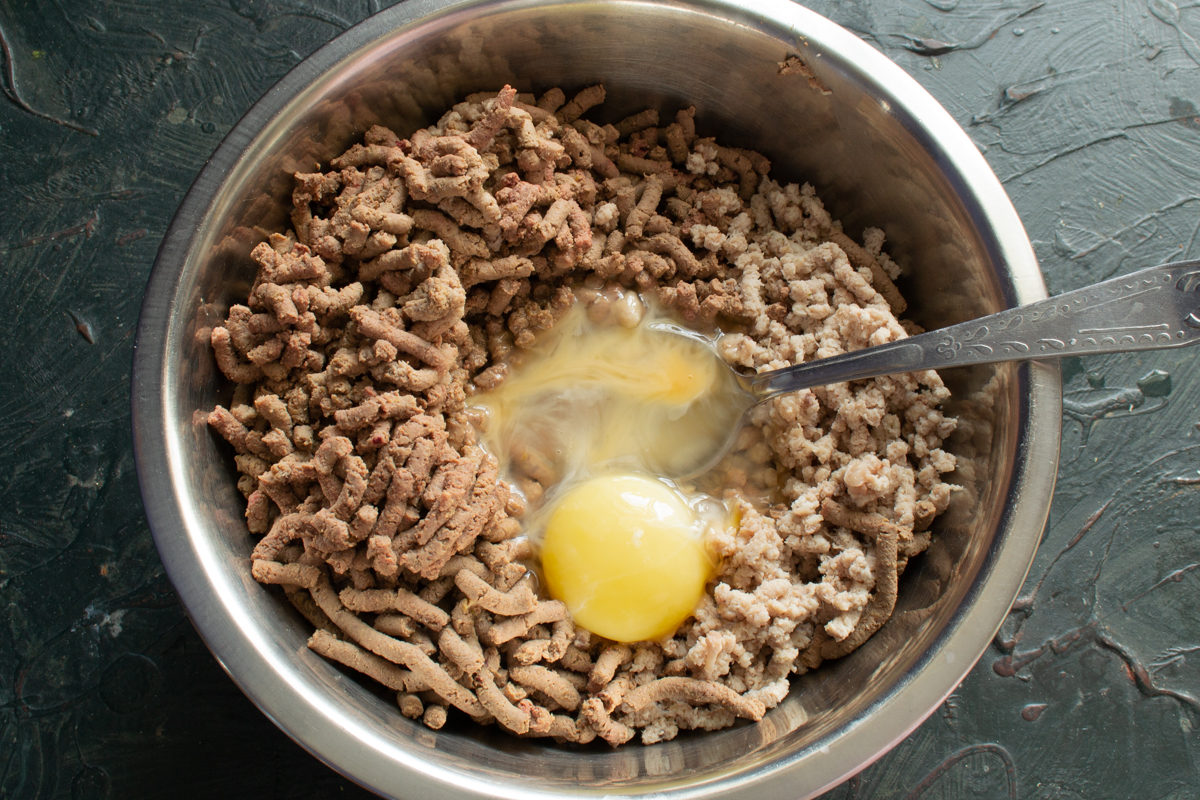
The eggs will help bind all the filling components together so the sausage holds its shape.
Finely grate about 1/4 of a nutmeg. Add a scant teaspoon each of ground allspice and black pepper. Season with salt to taste.
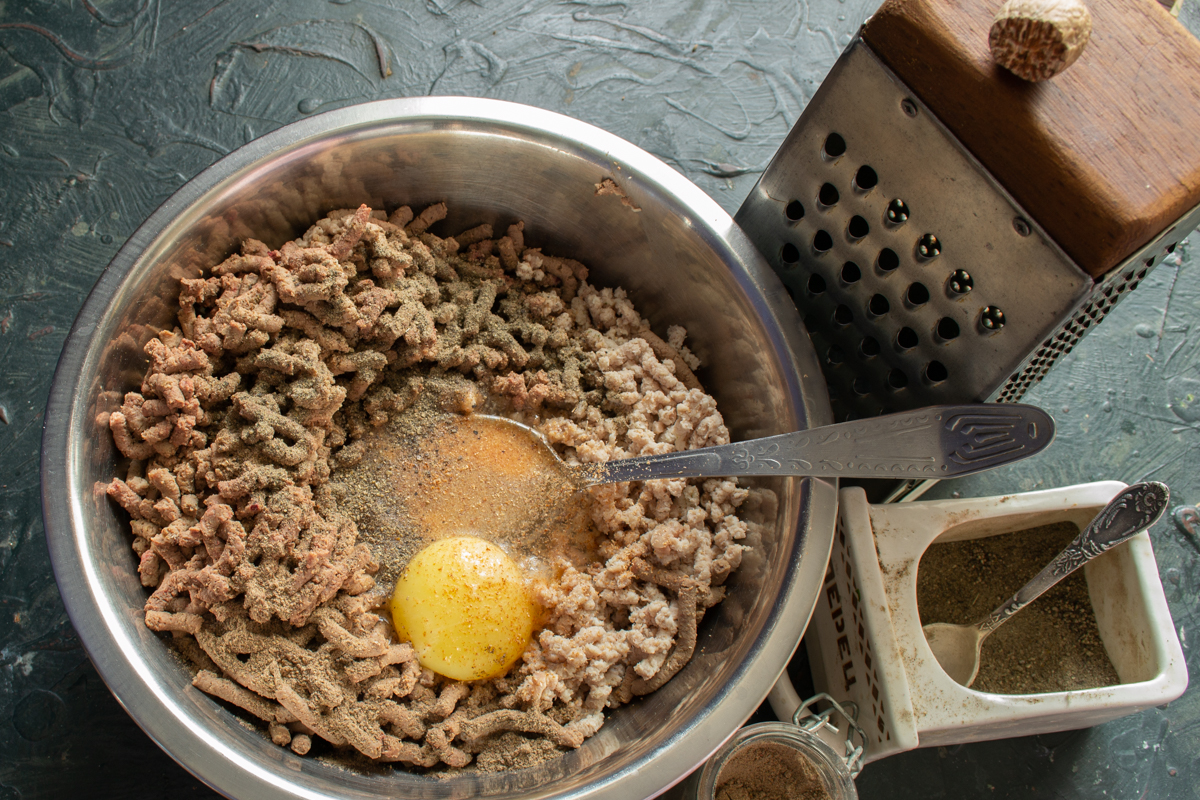
Nutmeg and freshly ground pepper give the liver sausage its classic, recognizable flavor.
Pour in the cold milk. You can substitute the milk in this recipe with heavy cream for a richer sausage, which will yield an even more tender flavor.
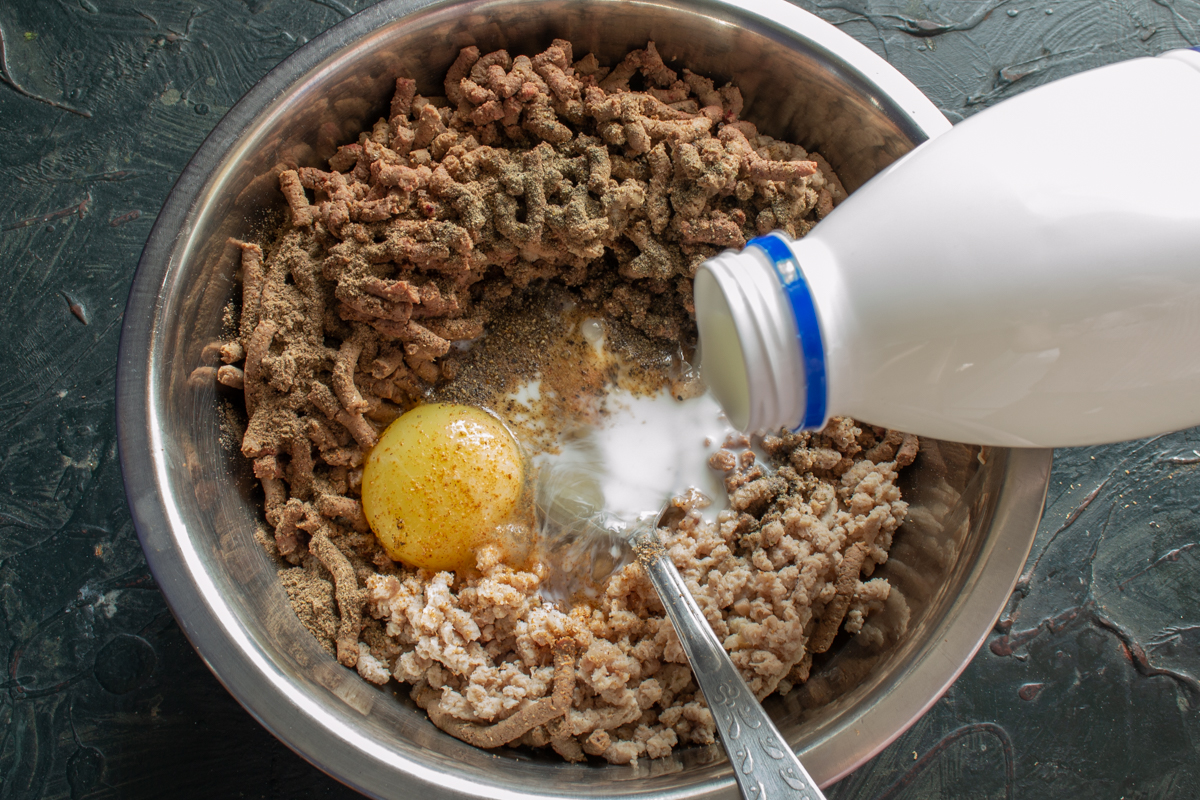
Milk or heavy cream makes the sausage's consistency creamier and more pleasant.
Mix the filling thoroughly and run it through the meat grinder one more time.
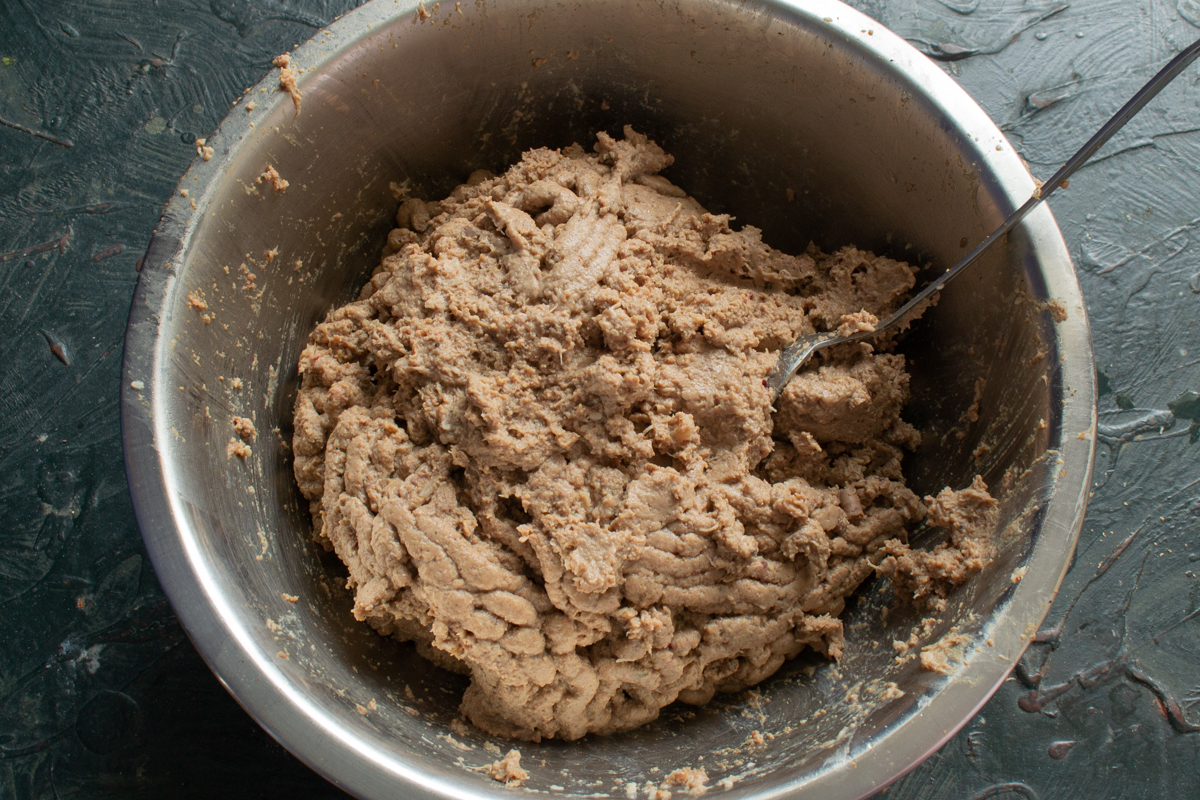
After adding all the spices and milk, we run the filling through the meat grinder once more for perfect smoothness.
Measure out about 1 meter (roughly 3 feet) of narrow pork casing; if it’s very thin, take a bit extra. Store-bought pork casings usually come ready to use, so no extra prep is needed. Just soak the casing in cold water to wash off the salt.
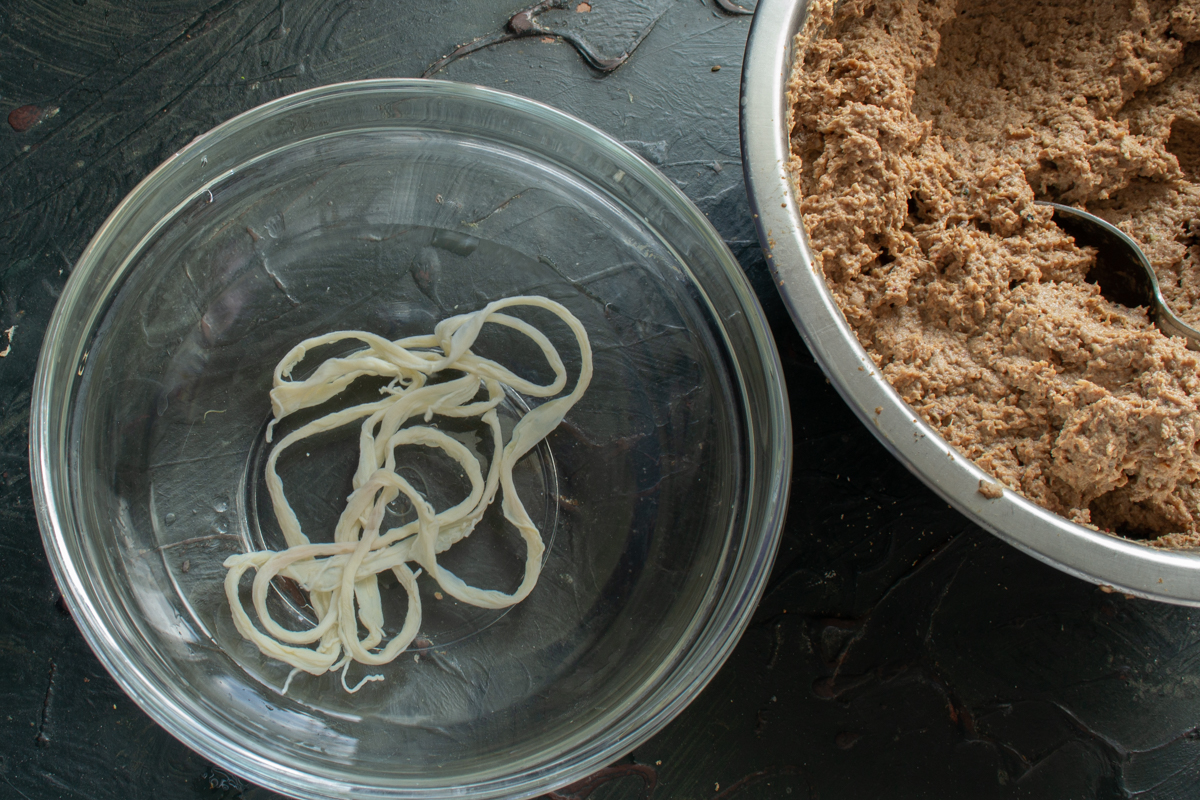
We use natural pork casings, which need to be soaked in cold water beforehand.
Attach the sausage stuffing nozzle to your meat grinder. Slide the casing onto the nozzle, gradually gathering the whole meter on it. The casing is sturdy, slides easily, and shouldn’t tear.
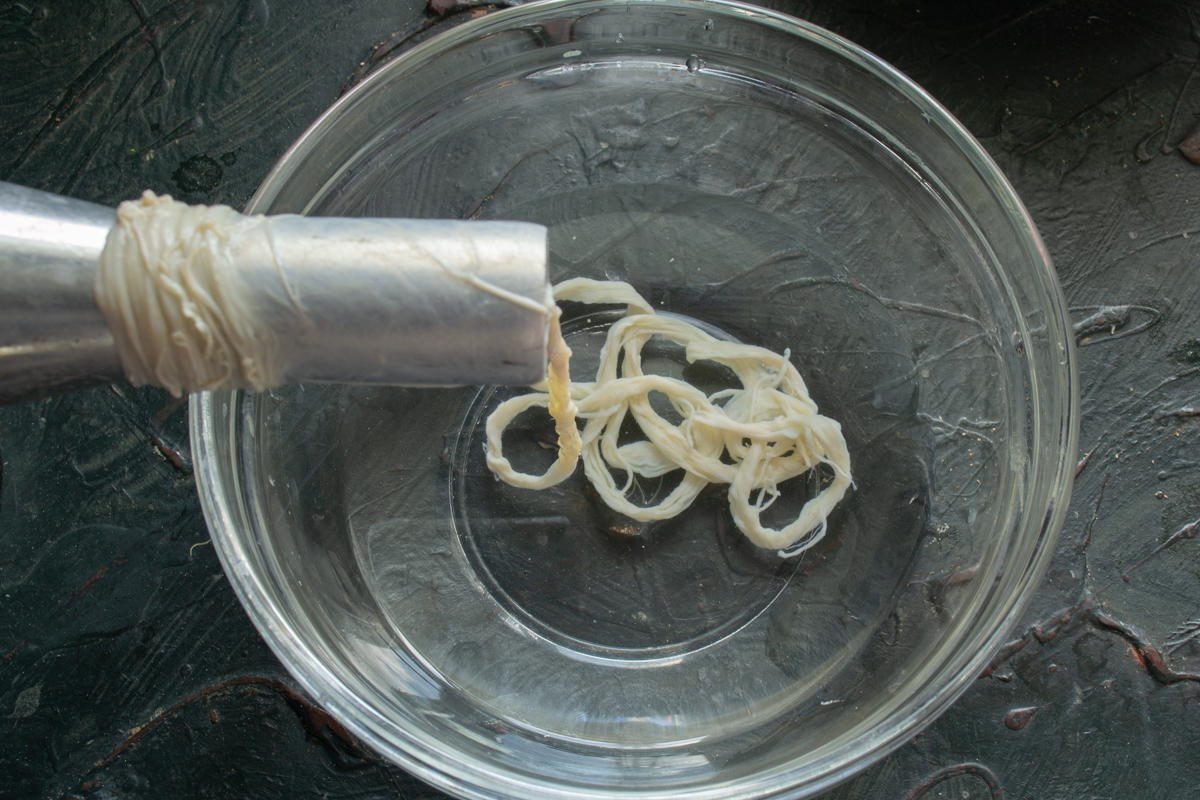
Carefully slide the entire length of the casing onto the special sausage stuffing nozzle.
If using an electric grinder, set it to a low speed and stuff the casing with the filling. A manual grinder takes a bit longer, but filling one meter of casing shouldn’t take more than 5 minutes. Distribute the filling evenly and tie the ends into knots.
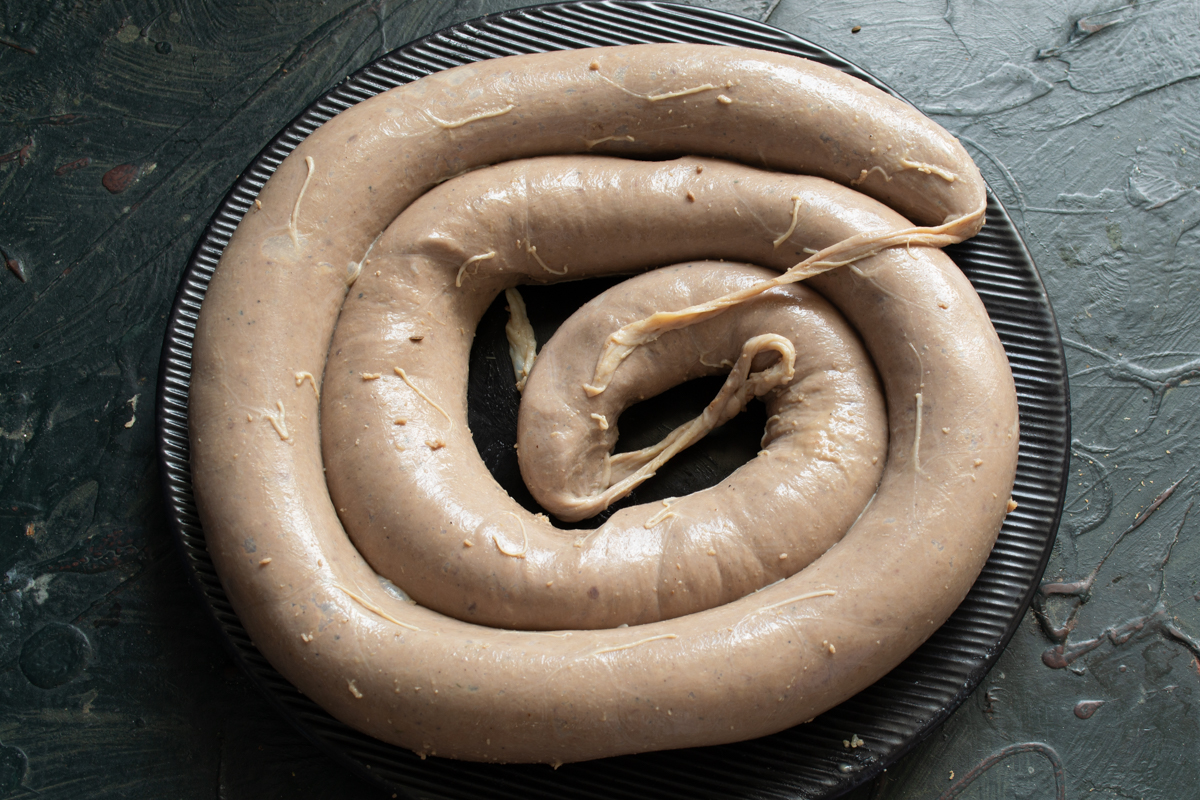
Fill the casing evenly with the meat mixture, forming a ring, and tie off the ends.
Lightly oil the steaming rack with vegetable oil and arrange the sausage ring on it.
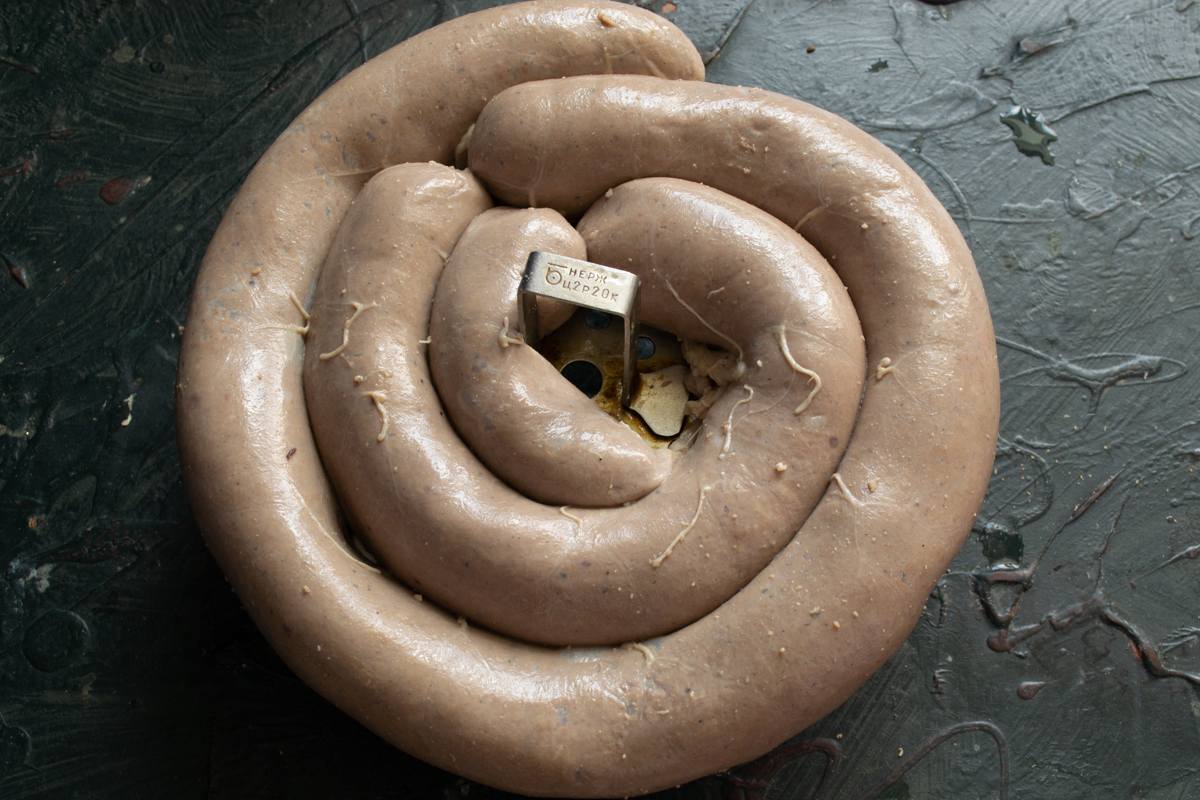
Place the sausage in the steamer basket, lightly oiling the surface first to prevent sticking.
Steam the homemade liver sausage for 30-40 minutes. The water shouldn’t boil vigorously, just bubble gently.
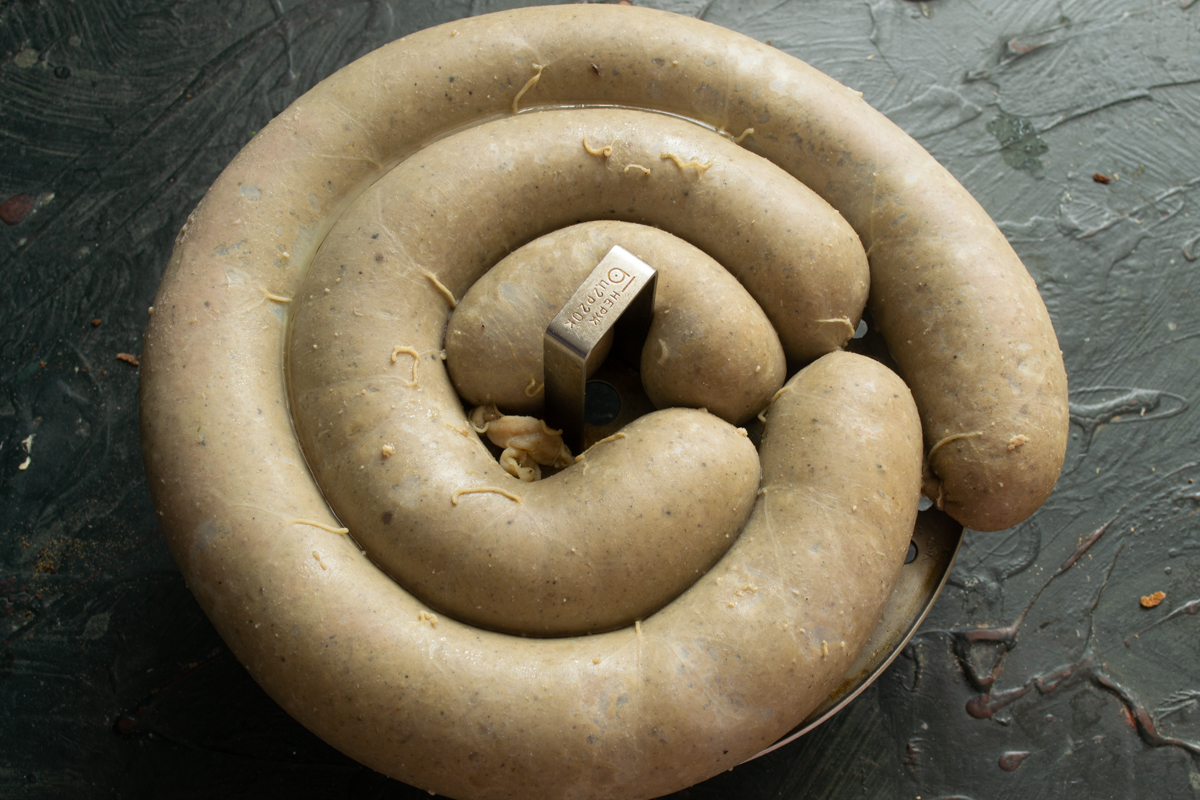
After 30-40 minutes of gentle steaming, the sausage is cooked and now needs time to cool.
Cool the finished sausage, wrap it in plastic wrap or foil, and refrigerate for 24 hours. After a day, the sausage will have cured slightly and will be incredibly tasty.
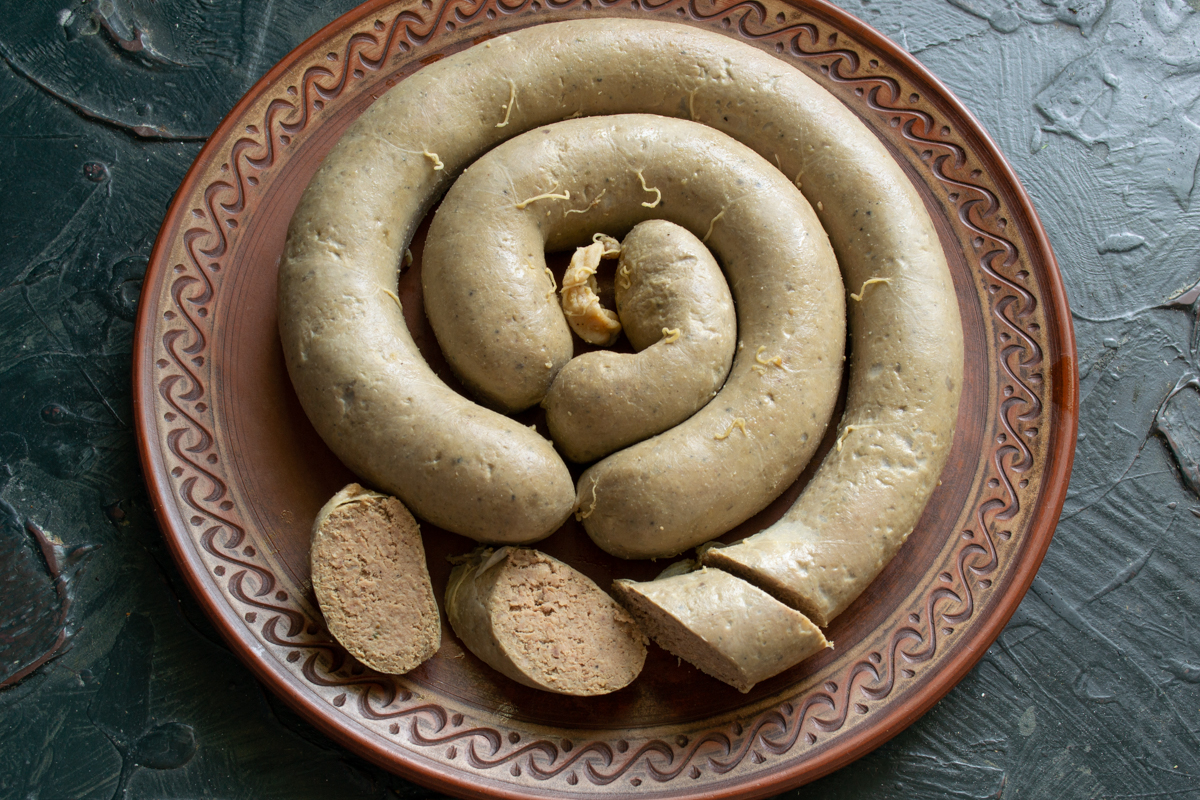
After 24 hours in the refrigerator, the sausage achieves the proper firmness and becomes truly delicious.
Once your homemade chicken liver sausage has spent 24 hours chilling in the fridge, it will achieve the perfect firmness for neat slicing. Serve it on a slice of fresh, dark rye bread with a dab of sharp mustard or horseradish—these traditional condiments perfectly complement the mild flavor of the liver. If you want to impress your loved ones, try lightly pan-frying the finished sausage in a bit of butter until it forms a delicate crispy crust right before serving; this adds new textural nuances and makes the aroma even more pronounced.
Store this delicacy wrapped in parchment or foil in the refrigerator for no more than 4–5 days, as it contains no artificial preservatives. If you’ve made a large batch, the sausage can be frozen and then thawed slowly on the top shelf of the fridge—it retains its flavor wonderfully. For those who love culinary experiments, try adding some caramelized onions or chopped pistachios to the filling next time for an interesting pattern when sliced and a lovely nutty undertone.
0 comments