
Winter horseradish sauce with beet and garlic is more than just a condiment; it is a true gastronomic calling card of Russian cuisine, known for its fiery character and ability to instantly awaken the appetite. The vibrant ruby hue of the beet softens the harshness of the white roots, turning this pungent blend into an aesthetic addition to a festive table. This spicy homemade preserve is made without boiling or sterilization, which keeps all the essential oils and phytoncides that fresh horseradish is famous for completely intact. The best time to make this sauce is late autumn when the roots reach their maximum strength and juiciness after the first frosts.
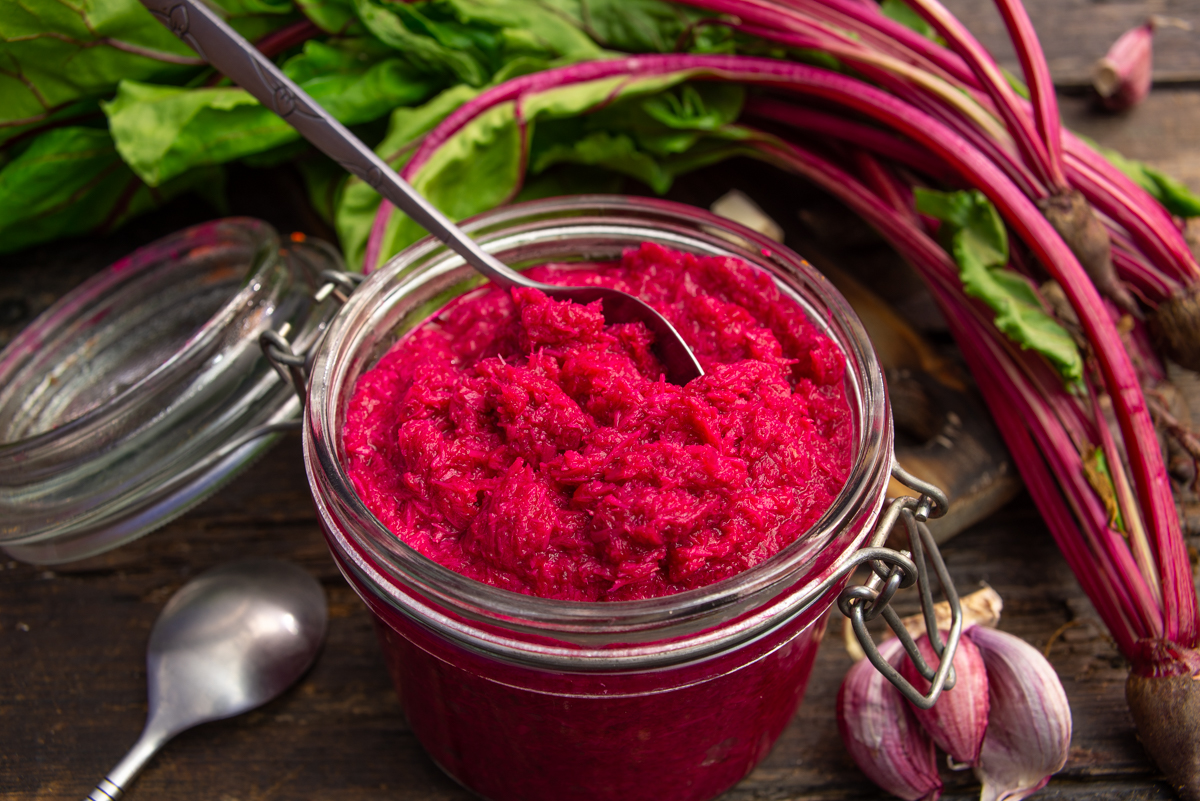
The finished horseradish and beet relish turns out incredibly vibrant and appetizing. It makes a perfect accompaniment to Kholodets (meat aspic) or any meat dish.
Ingredients
- 1 kg (2.2 lbs) horseradish roots
- 1 boiled beet
- 4 garlic cloves
- 20 g (0.7 oz) salt
- 50 ml (1.7 fl oz) apple cider vinegar
- Sugar to taste
- Cold boiled water
How to Make Winter Horseradish Sauce with Beet and Garlic
Soak the dug-up roots in cold water for a couple of hours, then wash them thoroughly. Next, peel the roots using a vegetable peeler. Keep the peeled roots in water until processing so they do not dry out in the air.
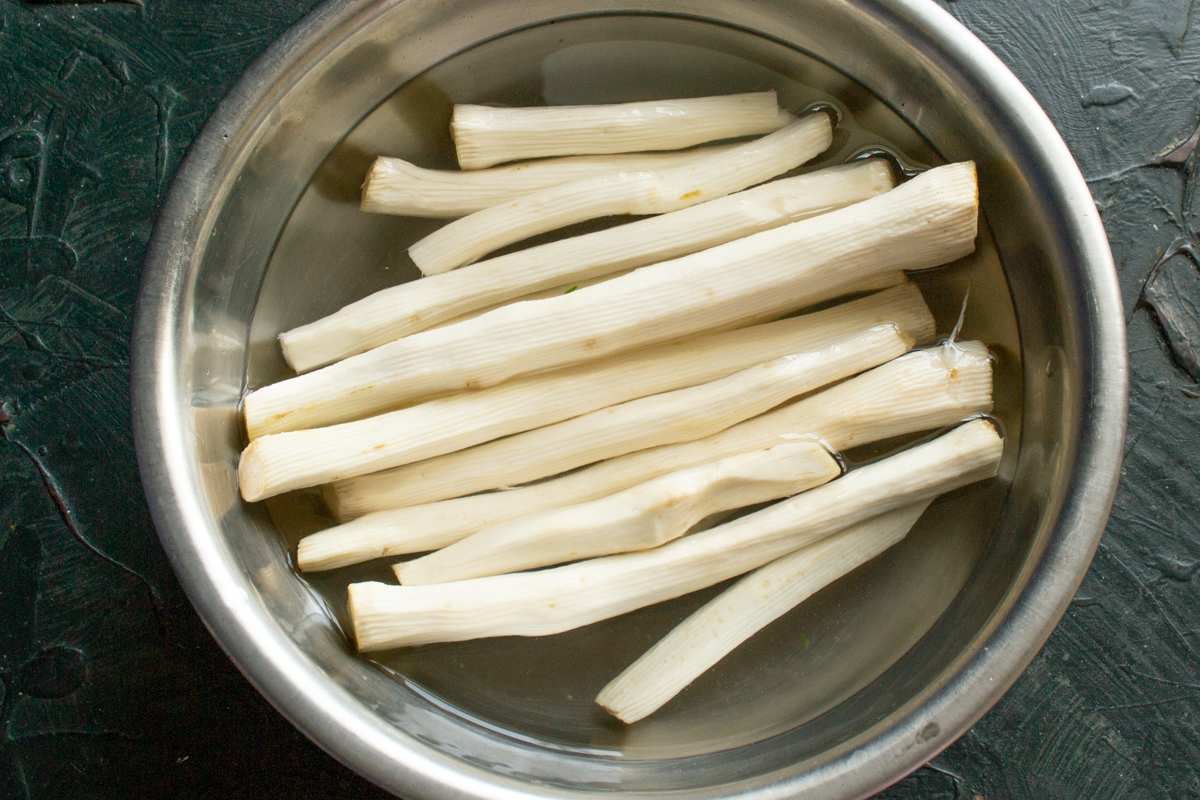
Soaking the peeled horseradish roots in water prevents them from drying out and makes subsequent blending much easier.
Boil the beets in their skins, then peel them. Finely chop the peeled horseradish roots. This cutting method is convenient if you are using an electric meat grinder or a powerful food processor. For a manual meat grinder, it will be easier to cut the horseradish into long, narrow strips.
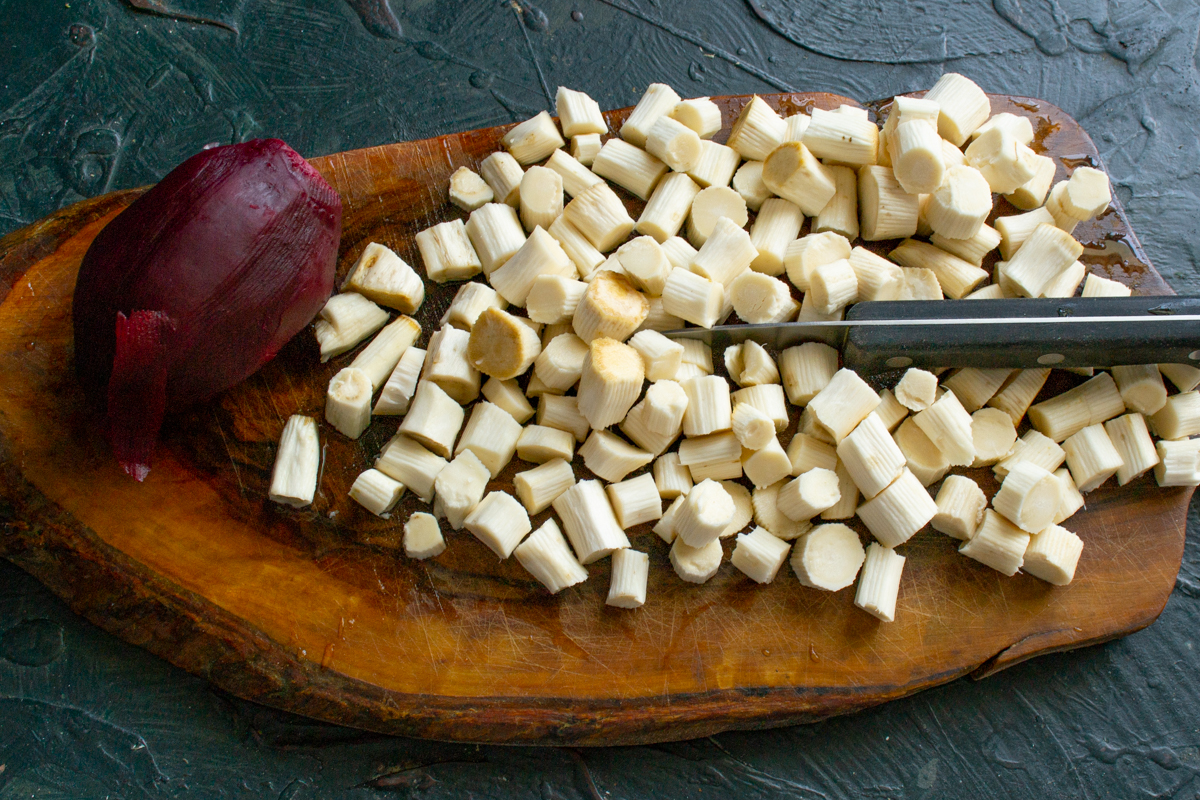
For food processor blending, it is best to dice the horseradish into small cubes and boil the beet in advance until tender.
Grate the boiled beets or pass them through a meat grinder. Mince the garlic cloves through a garlic press.
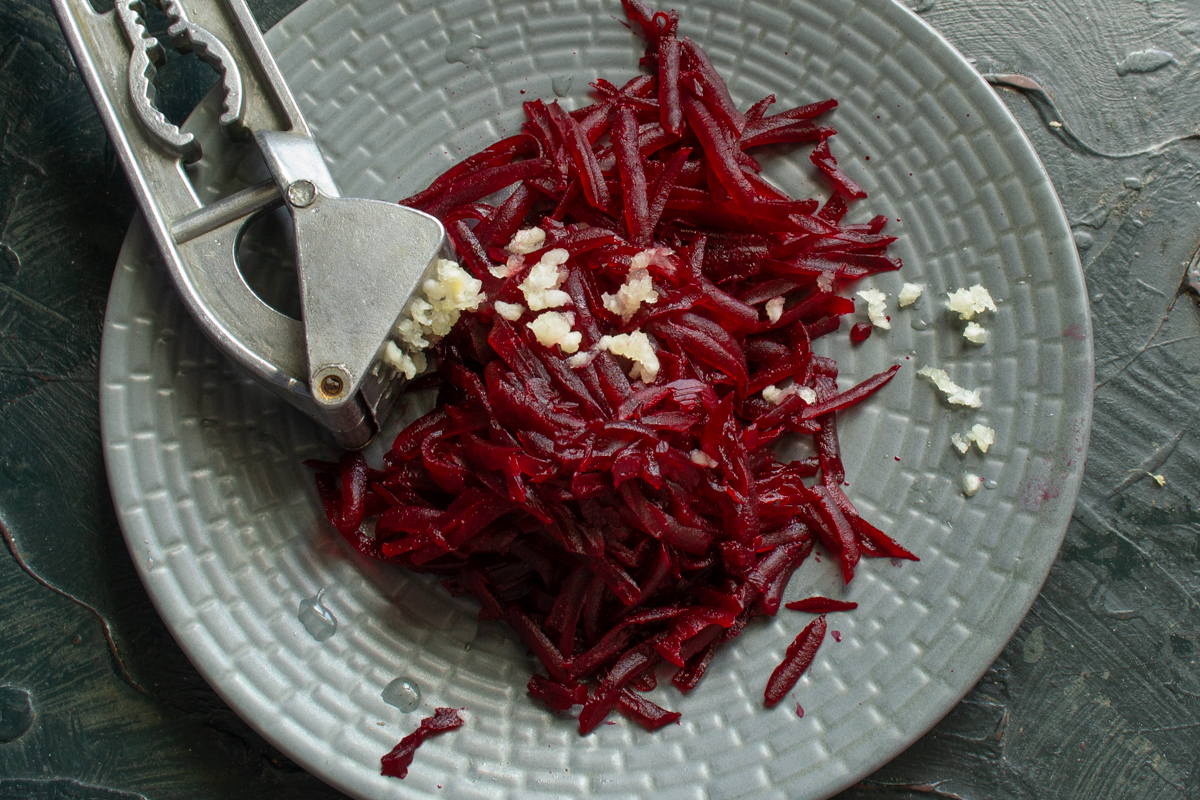
Grate the beet finely and press the garlic cloves to ensure the sauce has a smooth, uniform texture.
Processing horseradish is notoriously tough on the mucous membranes. Sure, if you hand-grate a kilo of horseradish, no cold will touch you for six months! But it is best to protect your eyes and nose by using an electric meat grinder. Secure a plastic bag tightly over the grinder’s output tube with a rubber band. Process the prepared horseradish roots—you can grind them together with the beets to save time mixing later. The bag traps the potent fumes, keeping you completely tear-free.
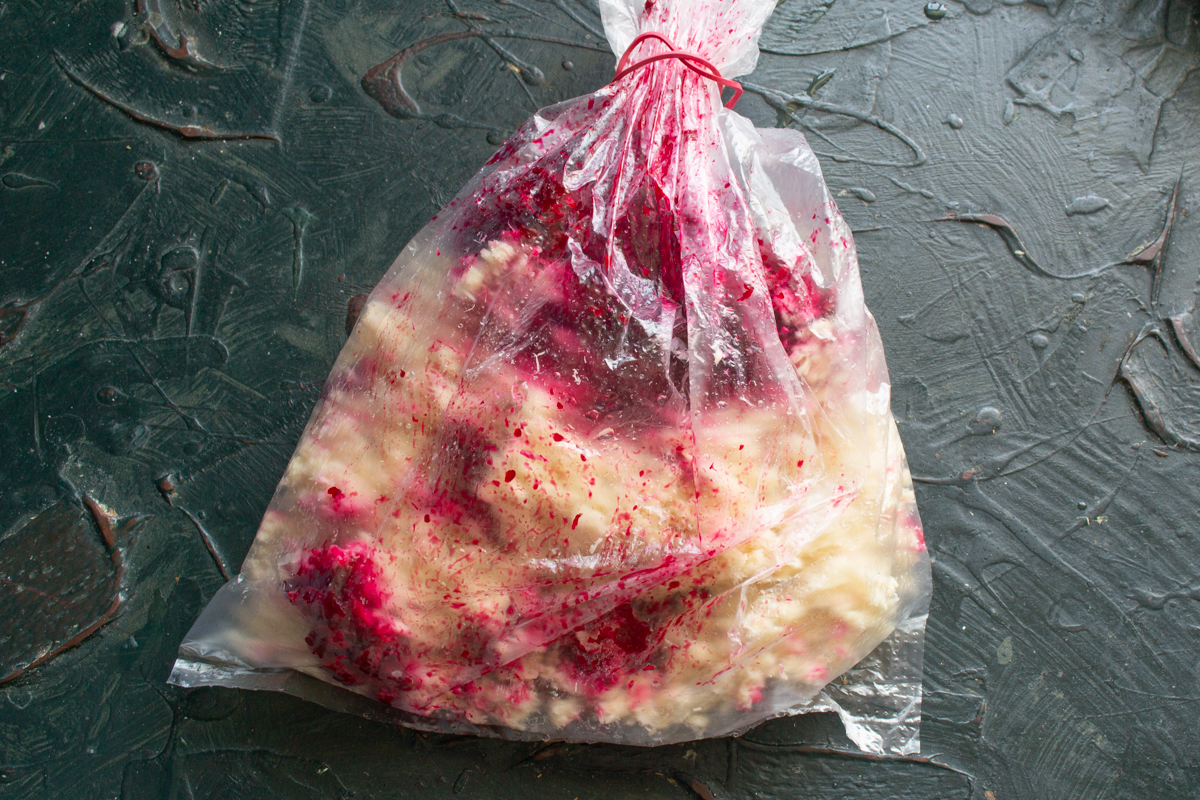
A plastic bag secured over the meat grinder safely protects your eyes from the pungent fumes of freshly ground horseradish.
Transfer the ground horseradish, beets, and garlic into a bowl, and add salt. At this stage, I strongly recommend keeping your distance from the bowl until the initial fumes dissipate. It is also a good idea to wash the grinder immediately and ventilate the kitchen.
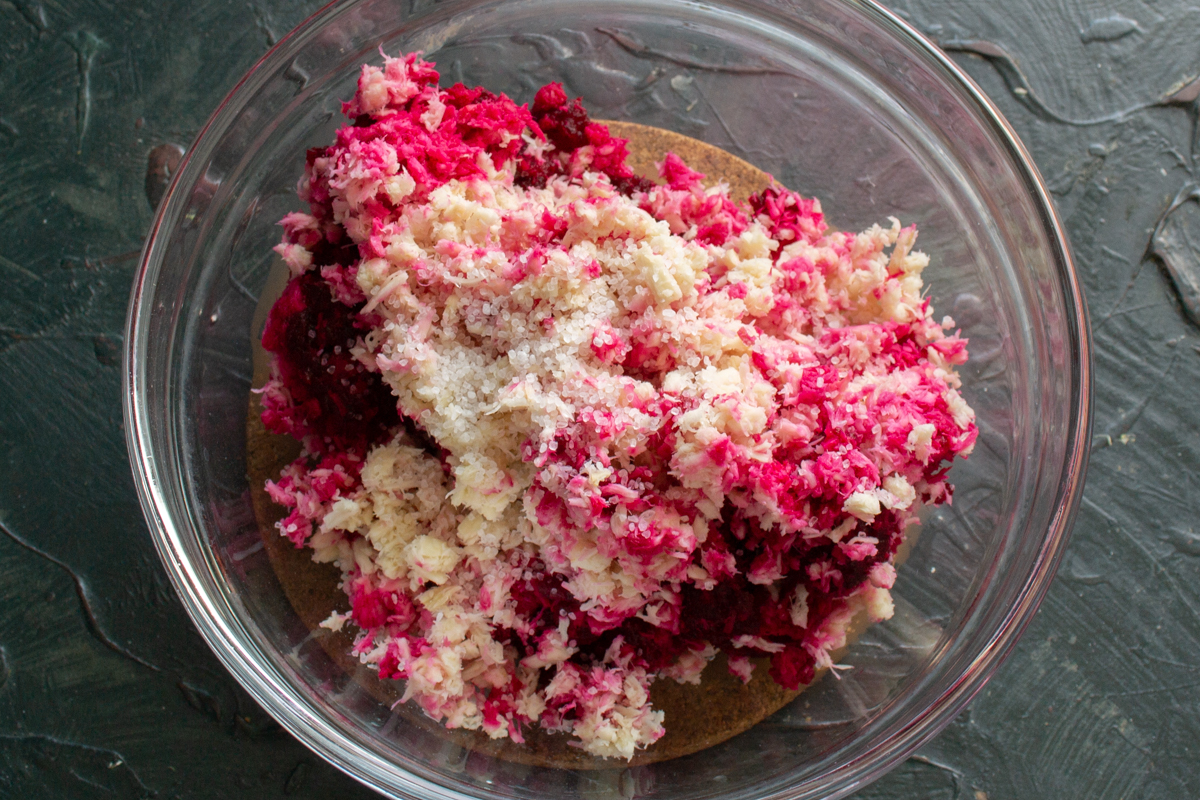
Combine all the prepared ingredients in a bowl and add salt. Try to avoid inhaling the strong horseradish fumes at this stage.
Pour in the apple cider vinegar. Add a little sugar to taste. The saying ‘horseradish is no sweeter than radish’ is quite unfair—you can always sweeten horseradish, whether with sugar or honey.
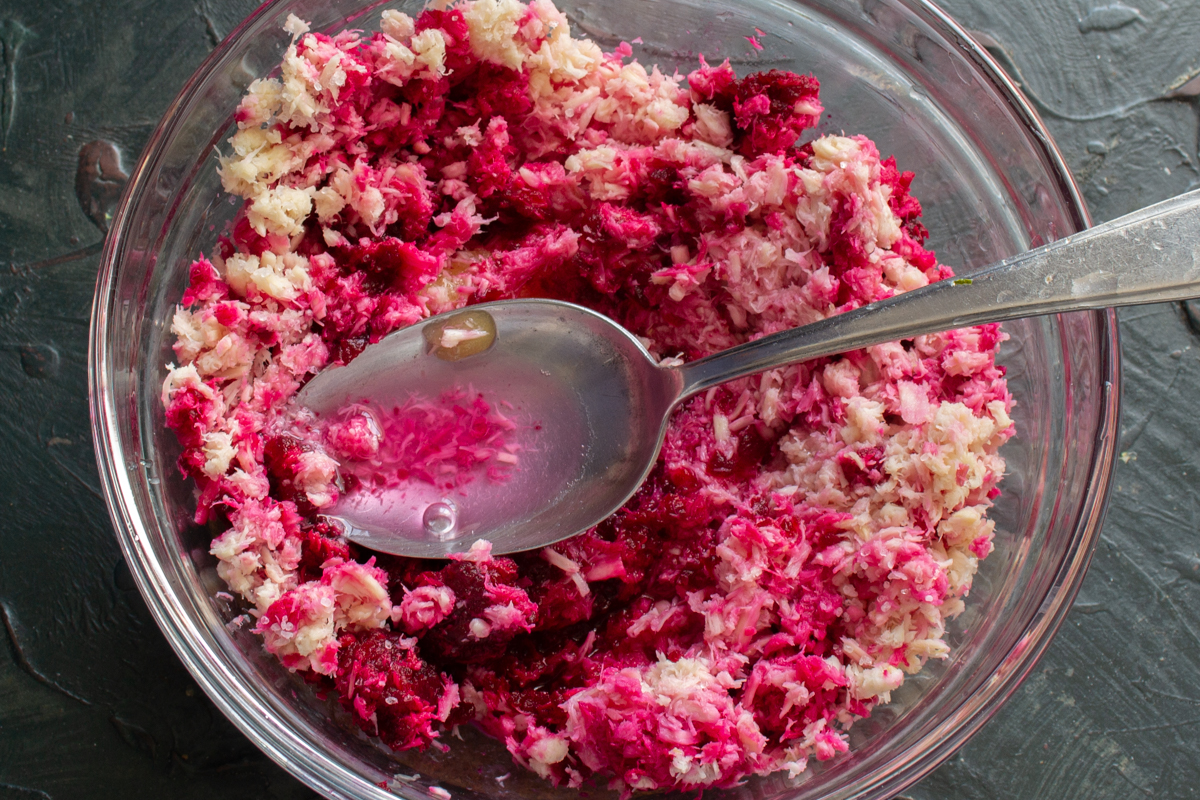
Apple cider vinegar and sugar help balance the heat of the horseradish and act as additional natural preservatives.
If you are happy with the coarse texture from the meat grinder, you can stop here and just mix everything well. I prefer a finer grind, so I use a powerful blender. To blend, add some cold boiled water and process the sauce to your desired consistency.
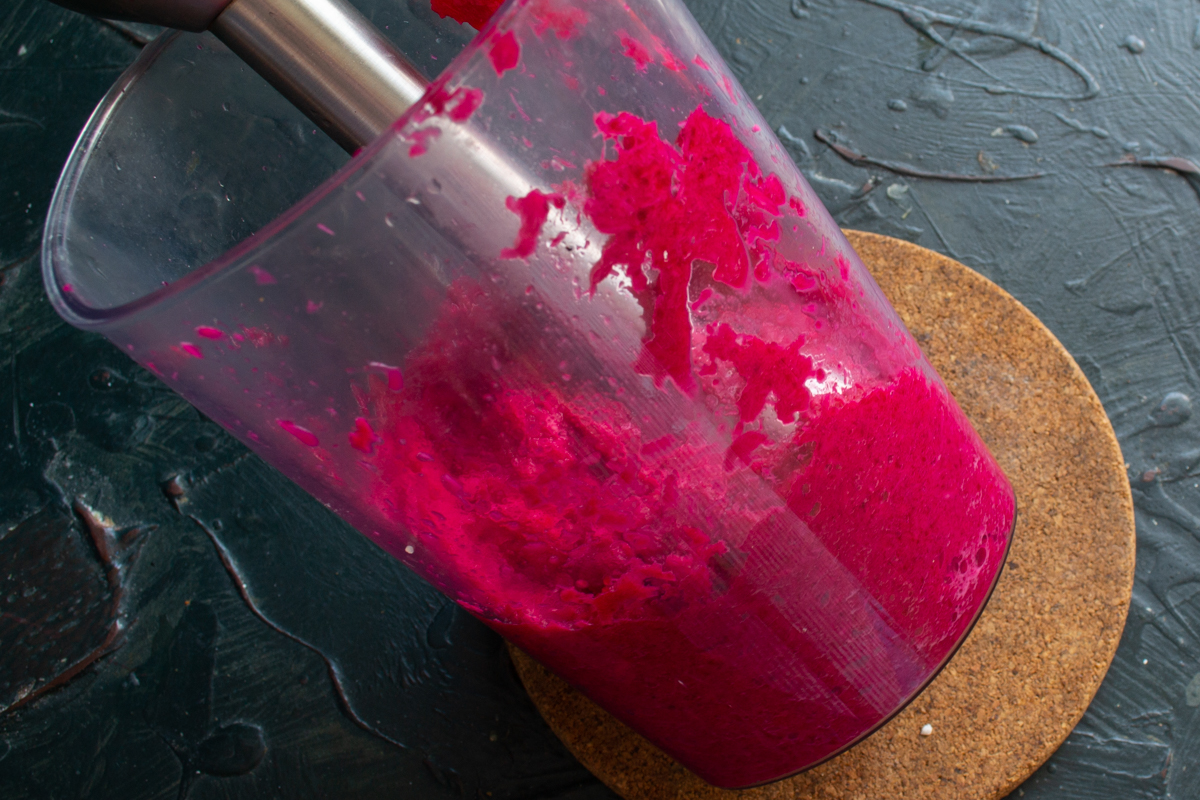
If you prefer a much finer texture, use an immersion blender and add a small amount of water.
Thoroughly wash and steam-sterilize your canning jars. I recommend using jars with a capacity of 200 to 300 grams (7 to 10 oz). Pack the horseradish, garlic, and beet sauce tightly into the jars and seal them securely. Store in the refrigerator or a cold cellar at a temperature no higher than +3 degrees Celsius (37 degrees Fahrenheit). These preserves do not require sterilization, as horseradish itself is an excellent natural preservative, along with the salt and vinegar.
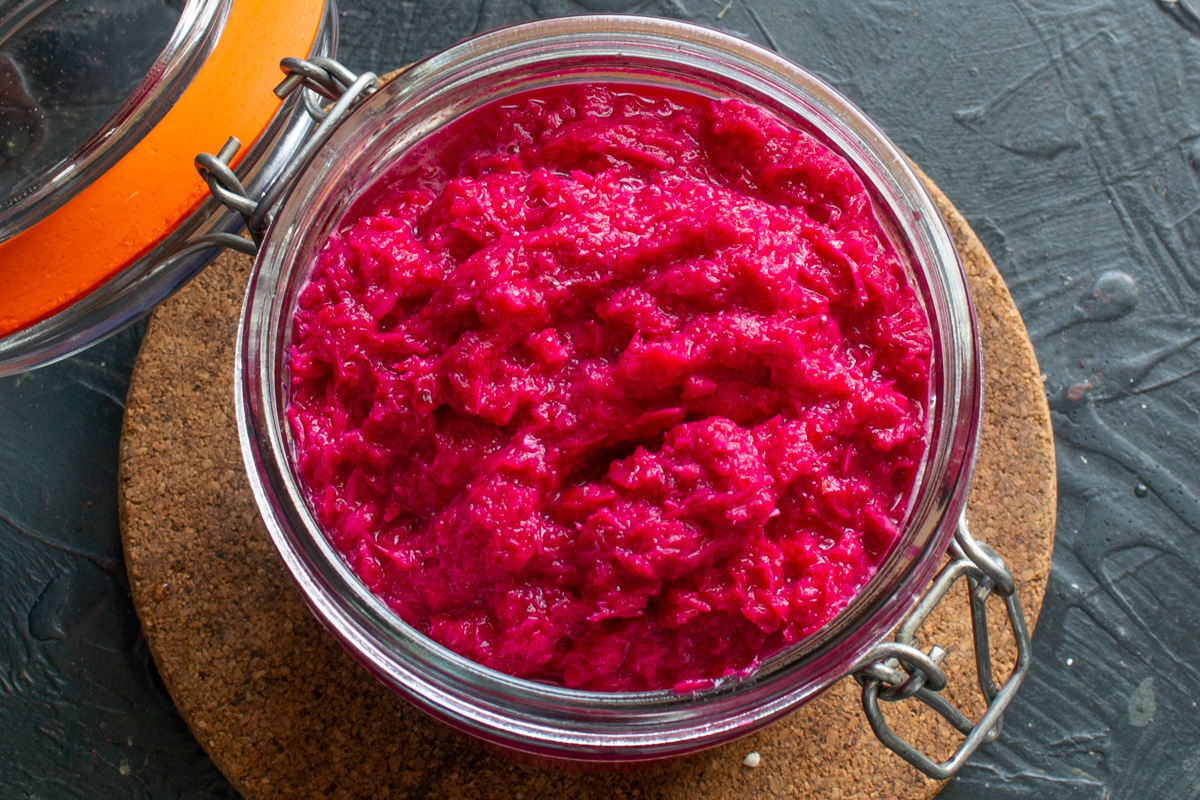
Pack the finished horseradish sauce into sterilized jars and seal them tightly. Store the preserve in the refrigerator.
The finished horseradish sauce with garlic and beet reveals its best flavor alongside rich Kholodets (meat aspic), jellied tongue, or succulent roasted meats. If the sauce seems too strong, try mixing it with a little rich Smetana (sour cream) before serving—this transforms the fiery condiment into a delicate cream with a piquant finish. This preserve also makes an excellent marinade base for poultry or fish, adding an appetizing aroma and a beautiful pinkish hue. To ensure your preserve lasts until spring, always store the jars in the coldest part of your refrigerator or cellar, as the lack of heat treatment requires strict temperature control. If you harvest a large crop, a portion of the peeled roots can be finely chopped and simply frozen in airtight bags. This allows you to make a fresh batch of horseradish sauce at any time of the year, retaining that tear-inducing sharpness that gradually fades during long-term storage in its prepared form.
0 comments