
Meat color lies. The pink center of a beef steak, the rosy slice of a pork loin, and a piece of meat that remains essentially raw inside might look similar on a plate, but they mean entirely different things. Viewing cooking as a chain of physical and chemical processes has been second nature to me since my university days. Over the years, realizing that asking whether one can undercook pork misses the mark entirely has shaped my perspective. The real question centers on the specific cut, the internal temperature it reaches, and the cooking conditions.
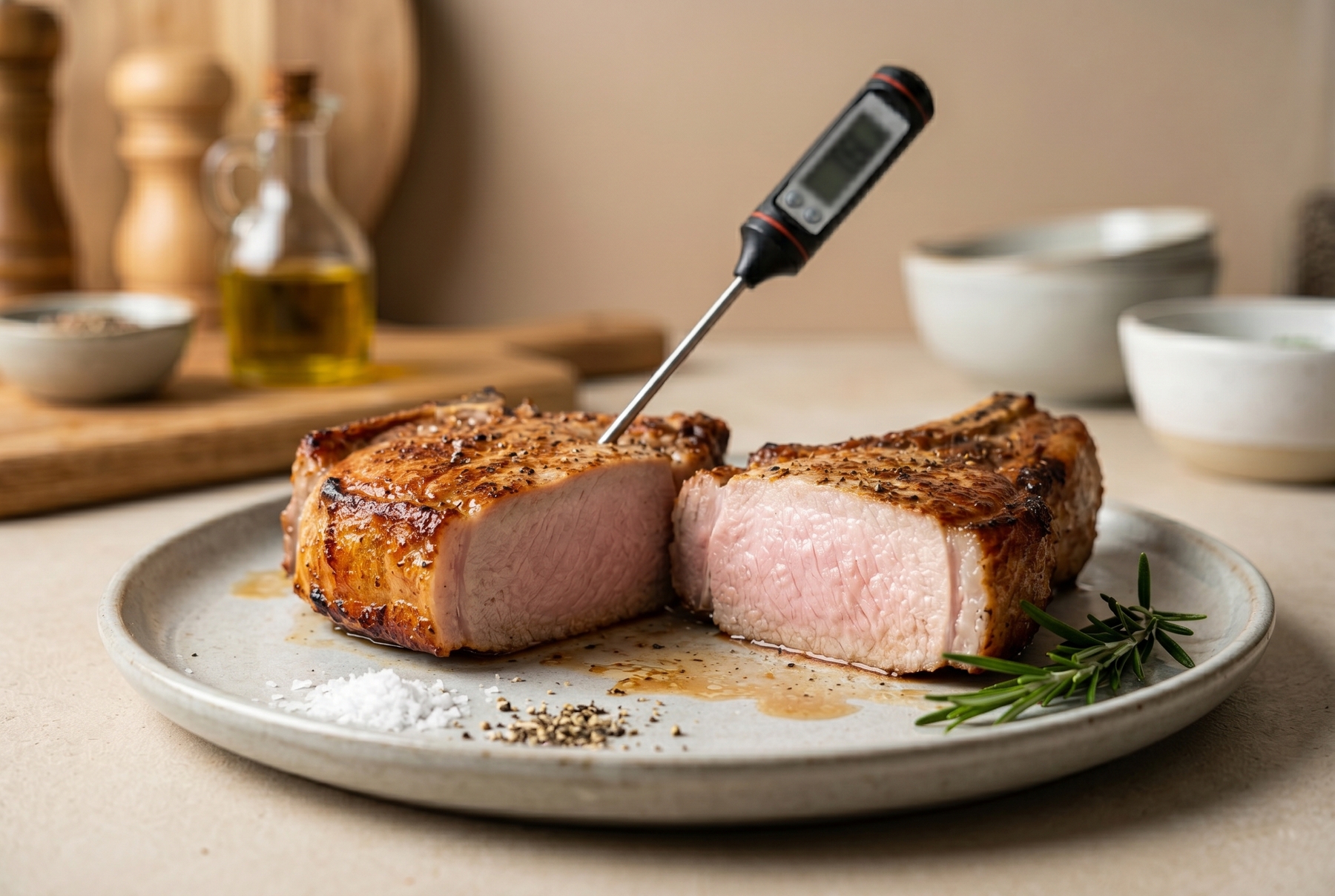
Using a culinary thermometer remains the only reliable method for ensuring pork reaches a safe 63 °C (145 °F) while maintaining juiciness and a pink hue.
Table of Contents
- Why Beef Is Served Rare While Pork Requires Caution
- Safe Pork Temperature: Meat Does Not Have to Be Gray and Dry
- What Pink Pork Inside Actually Means
- Which Pork Cuts Handle Juiciness Better, and Which Demand Caution
- A Thermometer Beats Guesswork
- Why Treating Pork Like Beef Is Too Broad
- Where Results Usually Fall Apart
- Kitchen Cheat Sheet
- How to Make Pork Juicy Without the Risk
- What to Do If Pork Seems Undercooked
- Can You Eat Undercooked Pork Like Beef?
Why Beef Is Served Rare While Pork Requires Caution
The Surface Risk of Whole Muscle Cuts
Examining a standard steak cut from a whole muscle reveals that bacteria, if present, mostly reside on the outside where the meat touched cutting boards, hands, packaging, or the air. These microbes have almost nowhere to anchor inside the dense muscle fibers. Hitting a scorching pan instantly subjects the surface to temperatures that obliterate microbes. A dark crust the color of burnt caramel forms on the outside, rendered fat sizzles, and the center remains pink. The culture of rare meat relies on this principle: whole cuts carry a noticeably lower risk than ground meat because contamination usually stays on the surface. However, food safety authorities do not officially recognize rare meat as entirely safe. If the cut underwent mechanical tenderization, needle piercing, or brine injection, surface bacteria could have been pushed inside, and the usual steak logic no longer applies.
Why Ground Meat Follows Different Rules
This trick fails with ground meat. Running meat through a grinder mixes the surface straight into the center. Everything that was outside now spreads throughout the entire volume of a patty or burger. The entire mass requires heating, not just the crust. Consequently, a rare burger and a rare steak exist in different realms, even if the meat originates from the same cut.
The Origins of Pork Paranoia
Cooks spent decades cooking pork to absolute dryness, and this habit did not appear out of nowhere. The main bogeyman was the trichinella parasite (the cause of trichinosis), alongside a host of bacteria like Salmonella and Yersinia. The number of pork-related trichinosis cases in developed countries dropped sharply starting in the mid-20th century due to changes in animal feed, housing conditions, and veterinary oversight. Today, the internal temperature dictates safety. Evaporating all the moisture from the meat is no longer necessary.
Safe Pork Temperature: Meat Does Not Have to Be Gray and Dry
Cooking pork into shoe leather is unnecessary for safe eating, as the safe temperature matters more than the color. Food safety agencies recommend that whole cuts of pork reach an internal temperature of 63 °C (145 °F), followed by a 3-minute rest. At this level of doneness, the meat retains a slight pinkish hue and stays juicy. Comparing this to a rare beef steak does not work, since a rare steak features a cold, practically raw center. Pork at 63 °C (145 °F) heats through completely without drying out.
What Pink Pork Inside Actually Means
Color Depends on More Than Just Doneness
Myoglobin (the protein that holds muscle color) dictates the pink hue, and numerous factors besides temperature influence it. The age of the animal, marinades, salt, smoking, added nitrites, heating methods, and even kitchen lighting play a role. Nitrites, for instance, lock the pink color in permanently, leaving ham pink at any cooking stage. Therefore, a piece of meat can be perfectly safe while remaining pinkish. The reverse also holds true: meat can look gray on the outside but remain poorly heated inside.
Clear Juices Prove Nothing
The old rule dictating that clear juices mean the pork is done fails regularly. Studies show that neither the color of the meat nor the color of the juices serves as an accurate indicator of doneness. Ground beef can turn brown before it reaches a safe temperature. Pork can stay pinkish even when fully cooked. The eye makes a poor assistant here and cannot replace a reliable thermometer.
Finding the Line Between Juicy and Raw
Certain cues genuinely help at the stove. A properly cooked cut feels firm but springs back softly, without rubbery resistance. The fiber structure remains dense, lacking a sticky or slimy sensation under the knife. The heat distributes evenly throughout the thickness. It smells like perfectly roasted meat. Finding a moist, shiny cut that stretches and gives off a raw odor means the piece simply needs more heat.
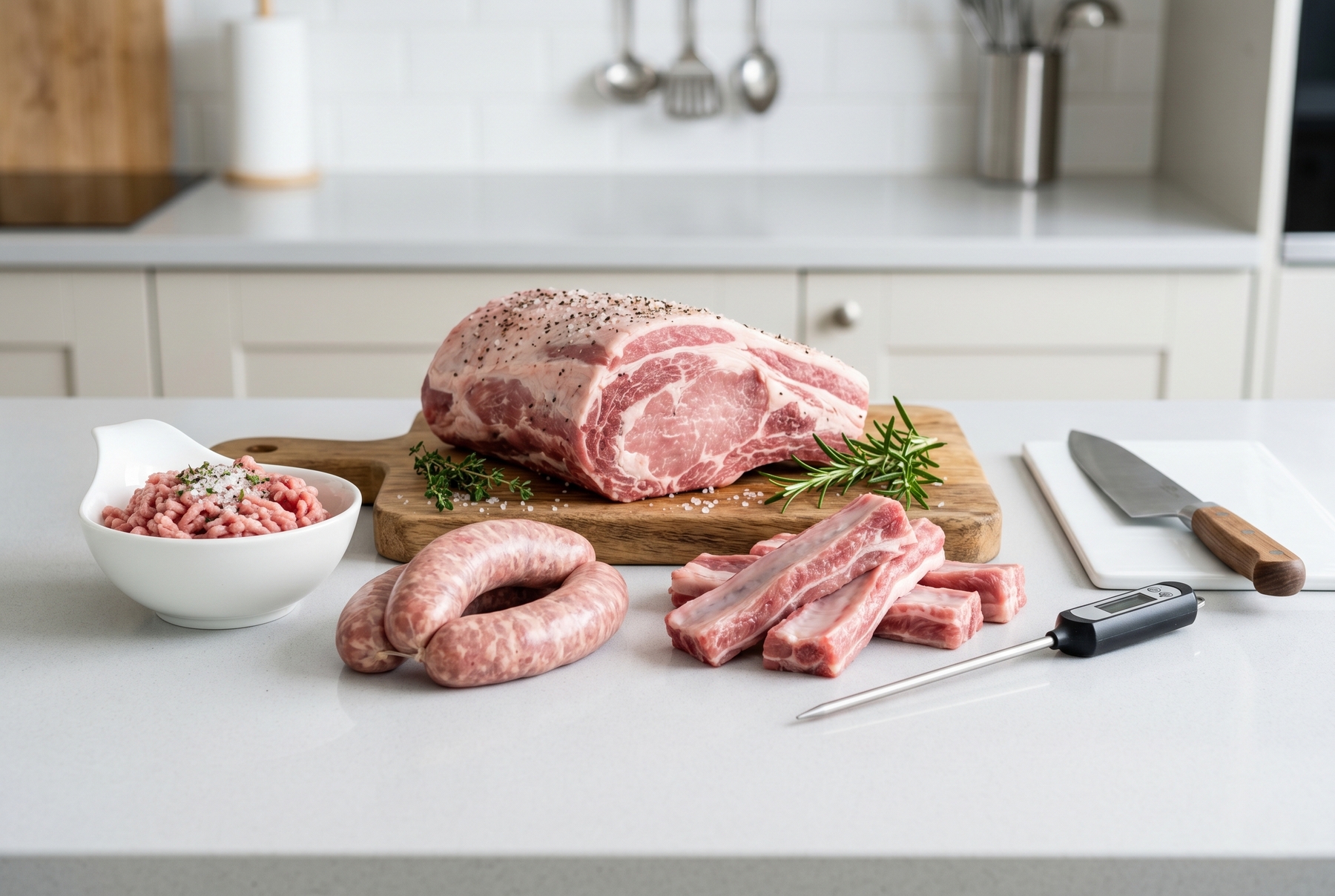
Every type of pork, from a whole loin to homemade ground meat, demands specific temperature safety standards.
Which Pork Cuts Handle Juiciness Better, and Which Demand Caution
Whole Cuts: Loin, Tenderloin, Chop, Collar
Handling whole cuts allows for finesse. Controlling the internal temperature yields tender meat. Searing a loin or chop in a pan for a crust and finishing it in the oven works beautifully. Tenderloin cooks rapidly, making it easy to overcook. A large pork collar roasts well under moderate heat. Utilizing a sous-vide machine eliminates half the guesswork, as the water maintains a precise temperature, making it physically difficult to overcook the meat.
Ground Meat, Fresh Sausages, and Patties
Here, the rules get stricter. Microorganisms can hide inside the mass, making the steak approach invalid. Ground pork, patties, sausages, and kupaty (traditional Eastern European raw sausages) require an internal temperature of 71 °C (160 °F). Homemade sausages often look finished on the outside while remaining pink and raw inside. Checking the center ensures safety.
Ribs, Shank, Belly, and Long Braising
These cuts simmer for hours to break down collagen, which they possess in abundance. Without prolonged heating at low temperatures, the meat remains rubbery. Collagen transforms into gelatin slowly, and rushing this process ruins the result faster than anything else.
A Thermometer Beats Guesswork
Where to Insert a Meat Thermometer
Piercing the thickest part of the cut provides the best reading. Hitting bone, large fat veins, or the bottom of the pan gives false numbers. Testing a large roast in two or three spots ensures accuracy, as heating rarely distributes perfectly evenly. An inexpensive probe thermometer costs very little and settles almost all debates with culinary intuition.
Why Meat Continues Cooking Off the Heat
Pulling a cut from the stove still allows the internal temperature to creep up a few degrees. Heat from the scorching surface continues traveling to the center. This carryover cooking effect explains why a 3-minute rest factors into the safety calculation for whole pork cuts, as the center reaches its final temperature during this time.
Safe Temperatures for Pork and Other Meats
Using one unified recommendation system prevents mixing standards from different countries:
- whole cuts of pork, beef, veal, and lamb: 63 °C (145 °F) plus a 3-minute rest;
- ground meat from pork, beef, veal, and lamb: 71 °C (160 °F);
- all poultry, including ground poultry: 74 °C (165 °F).
These three benchmarks cover almost all everyday cooking situations.
Why Treating Pork Like Beef Is Too Broad
Doneness levels (rare, medium-rare, medium) actually describe internal temperature and texture ranges, not the chef’s mood. Rare signifies a cold, red center. Pork never reaches the table in this state. Modern pork easily stays juicy with a slight pink tint, but serving it with a raw, barely warm center like a rare beef steak remains a terrible idea.
Observing a restaurant chef sear pork pinker than a home cook does not obligate the home kitchen to blindly mimic the technique. Establishments utilize different suppliers, optimized storage, calibrated thermometers, trained staff, and strict sanitary regulations. Achieving this at home is entirely possible, but only when the process remains firmly under control, rather than relying on luck.
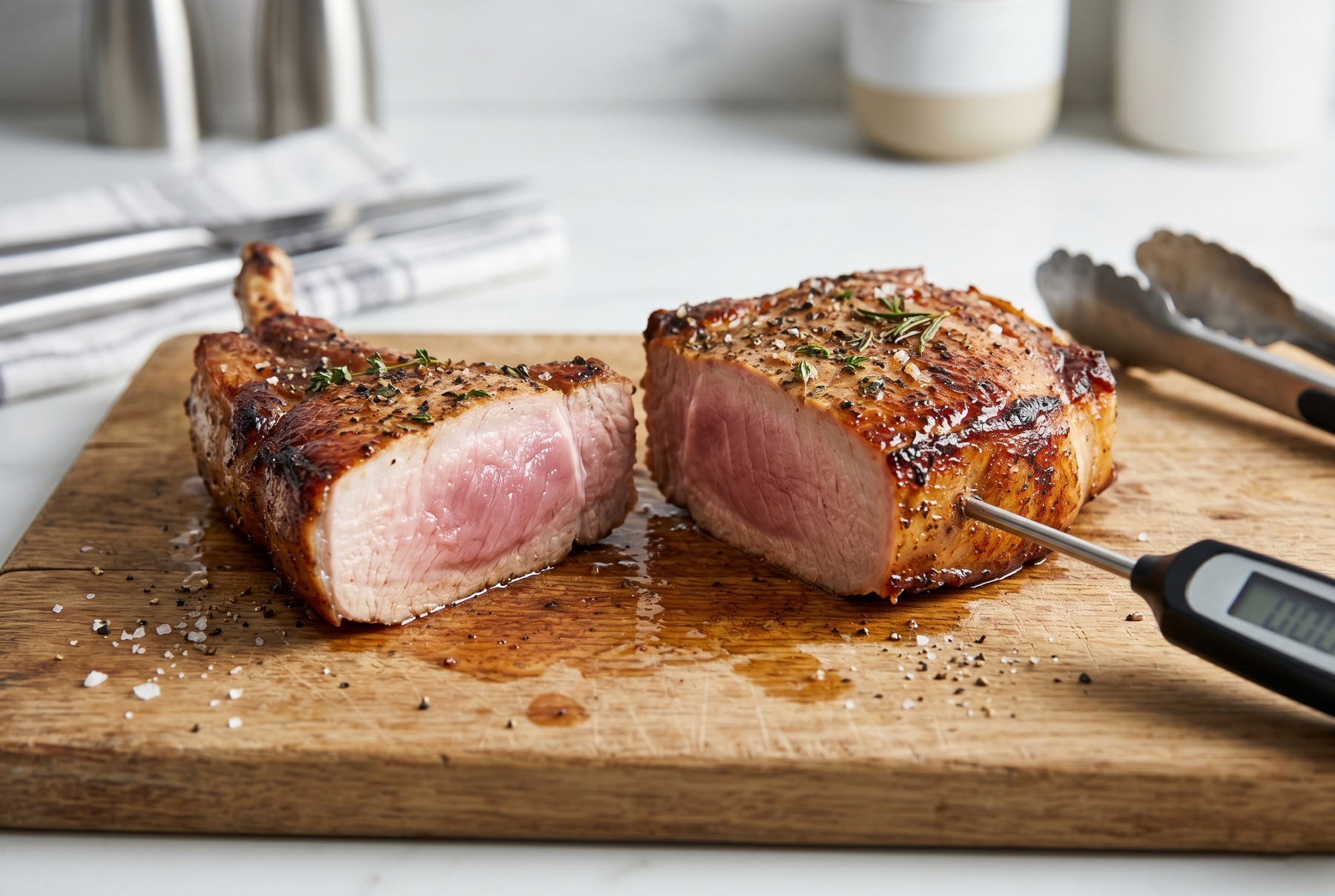
Pork does not have to be gray and dry. Reaching the precise internal temperature ensures the meat fibers remain tender and slightly pink.
Where Results Usually Fall Apart
Results typically fall apart in the exact same places.
A beautiful crust masking raw reality. High heat creates a golden surface in a couple of minutes, while the inside of the meat remains cold. The eyes approve, but the thermometer disagrees.
Fear of pink leading to dry fibers. Overdrying does not equal safety. A piece cooked until gray and tough is no safer than a cut at 63 °C (145 °F) with a rest; it simply tastes worse.
Sharing one knife for raw and cooked meat. Cross-contamination operates without sight or smell. Cutting boards, knives, hands, plates used for raw meat, or leftover marinades easily transfer bacteria to the finished product. Raw and cooked items must never meet on the same surface.
Careless defrosting and marinating. Safe defrosting follows three paths: in the refrigerator, in cold water (in a sealed bag, changing the water every 30 minutes), or in the microwave, followed immediately by cooking. Thawing meat on the counter at room temperature poses serious risks. Bacteria multiply most actively between 4 °C and 60 °C (40 °F to 140 °F), and keeping a product in this danger zone for more than 2 hours ruins it. In hot weather, when ambient temperatures exceed 32 °C (90 °F), the safe limit drops to 1 hour. Marinating always belongs in the fridge, never on the windowsill.
Kitchen Cheat Sheet
- relying on a thermometer for whole pork cuts beats trusting the eye;
- a pink hue and raw texture represent different things; avoiding confusion is key;
- cooking ground meat, sausages, and patties demands stricter rules, up to 71 °C (160 °F);
- letting the meat rest for a few minutes after heating guarantees juiciness;
- placing a cooked cut on a plate previously holding raw meat courts disaster;
- doubting the doneness means returning the meat to the heat; arguing with safety costs too much.
How to Make Pork Juicy Without the Risk
Salting in advance. Salting the cut half an hour to an hour before cooking, or ideally the night before, allows the salt to distribute and helps the meat retain moisture during heating. The resulting texture turns out more even, and the juices stay inside rather than spilling into the pan.
Combined heating. Grabbing a quick crust over high heat and finishing the cut in the oven at a moderate temperature works wonders. This method grants the surface robust color and aroma, while the center heats through without drying out. Roasting large cuts immediately at a medium temperature simplifies the process. Employing a sous-vide setup makes the task even more effortless.
Resting. Resting the meat for five to ten minutes under foil changes the juiciness more dramatically than an extra minute on the fire. The juices redistribute across the fibers and refrain from leaking onto the board during slicing. This remains the most underrated step in any kitchen.
Sauces save the day but offer no excuses. A creamy, apple, mustard, or wine sauce rescues a dinner if the cut turns out slightly dry. However, turning a sauce into a permanent excuse for overcooked meat makes no sense; avoiding overcooking is much easier.
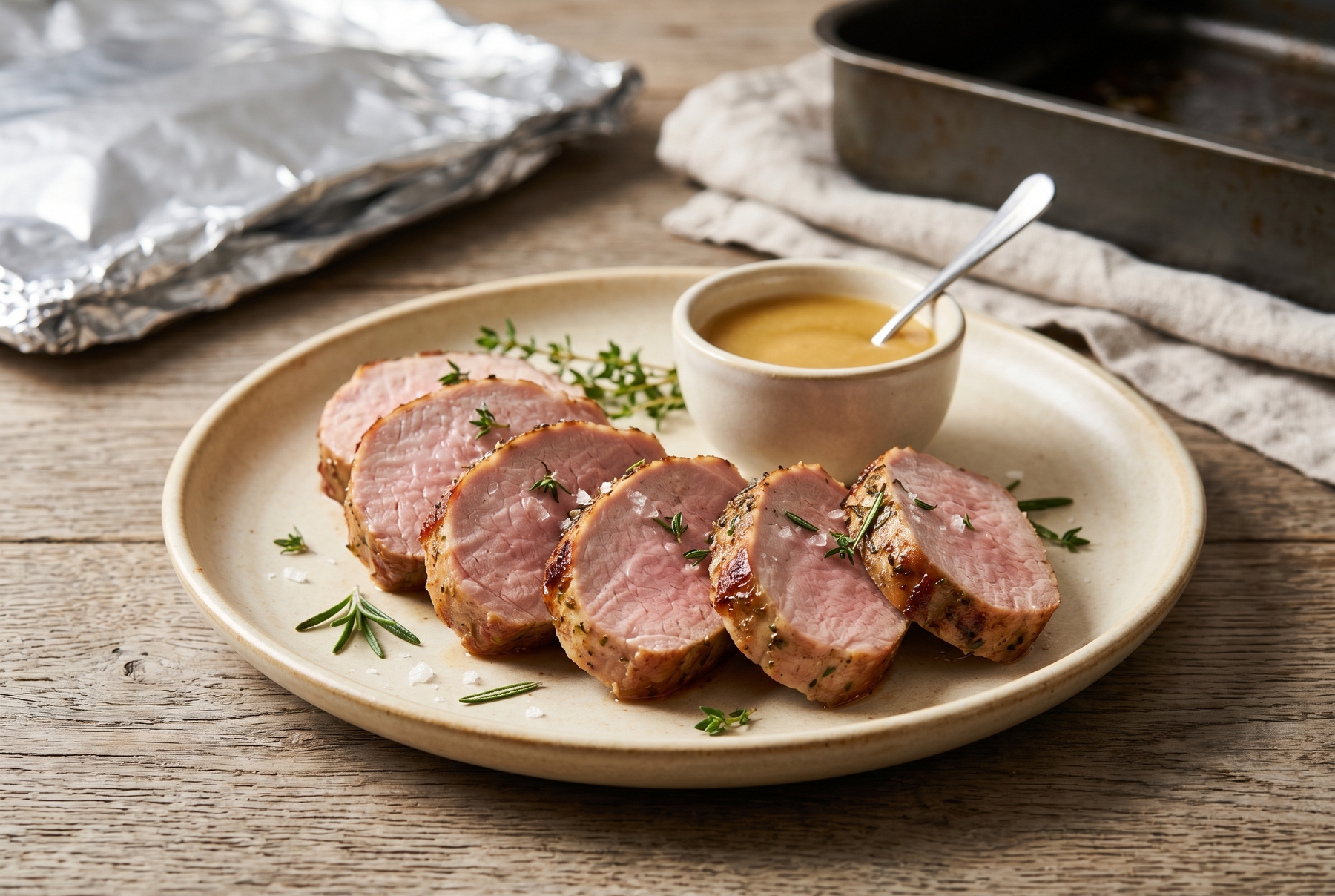
Juicy pork featuring a pink slice results from strictly observing the temperature regimen and allowing the meat to rest after cooking.
What to Do If Pork Seems Undercooked
Slicing into a cut only to find the center moist, sticky, giving off a raw smell, and dragging under the knife requires calm action. Returning the cut to the pan or oven and bringing it up to a safe temperature on the thermometer solves the issue. Attempting to carefully eat around the pink part or panicking serves no purpose. Using a microwave here demands caution, as it heats unevenly, leaves cold pockets, and makes the piece look cooked where it still remains raw.
Can You Eat Undercooked Pork Like Beef?
No. Treating pork like a rare beef steak with a cold, raw center is never acceptable. Modern pork indeed shines when cooked juicy, featuring a slight pink tint on the slice, provided that three things stay under control: the internal temperature, the type of cut, and standard kitchen hygiene. The objective is not to cook it until it turns gray, but rather to hit the correct numerical target. For a whole cut, this number stands at 63 °C (145 °F) on the probe, plus three minutes of rest.
0 comments