
A morning glass of pickle juice, a bottle of mineral water, or a strong coffee does not simply wash away a hangover because there is nothing to wash away. The physical discomfort following alcohol consumption stems from multiple factors at once, with each pulling the body in a different direction.
The body loses fluids as alcohol suppresses the hormone responsible for water retention, causing the kidneys to produce urine more actively than usual. The stomach lining becomes irritated, as alcohol directly impacts the mucosa and accelerates acid production. Sleep after a night of drinking remains fragmented and superficial, leaving a person waking up completely exhausted. Blood sugar levels fluctuate unsteadily. Adding to this is an inflammatory response that feels similar to a mild cold, along with acetaldehyde—a toxic byproduct of ethanol metabolism that the body cannot neutralize instantly.
A magical hangover cure does not exist. Time and sleep work more reliably than any remedy. Everything else merely helps one endure the hangover more comfortably, as canceling it altogether remains impossible.
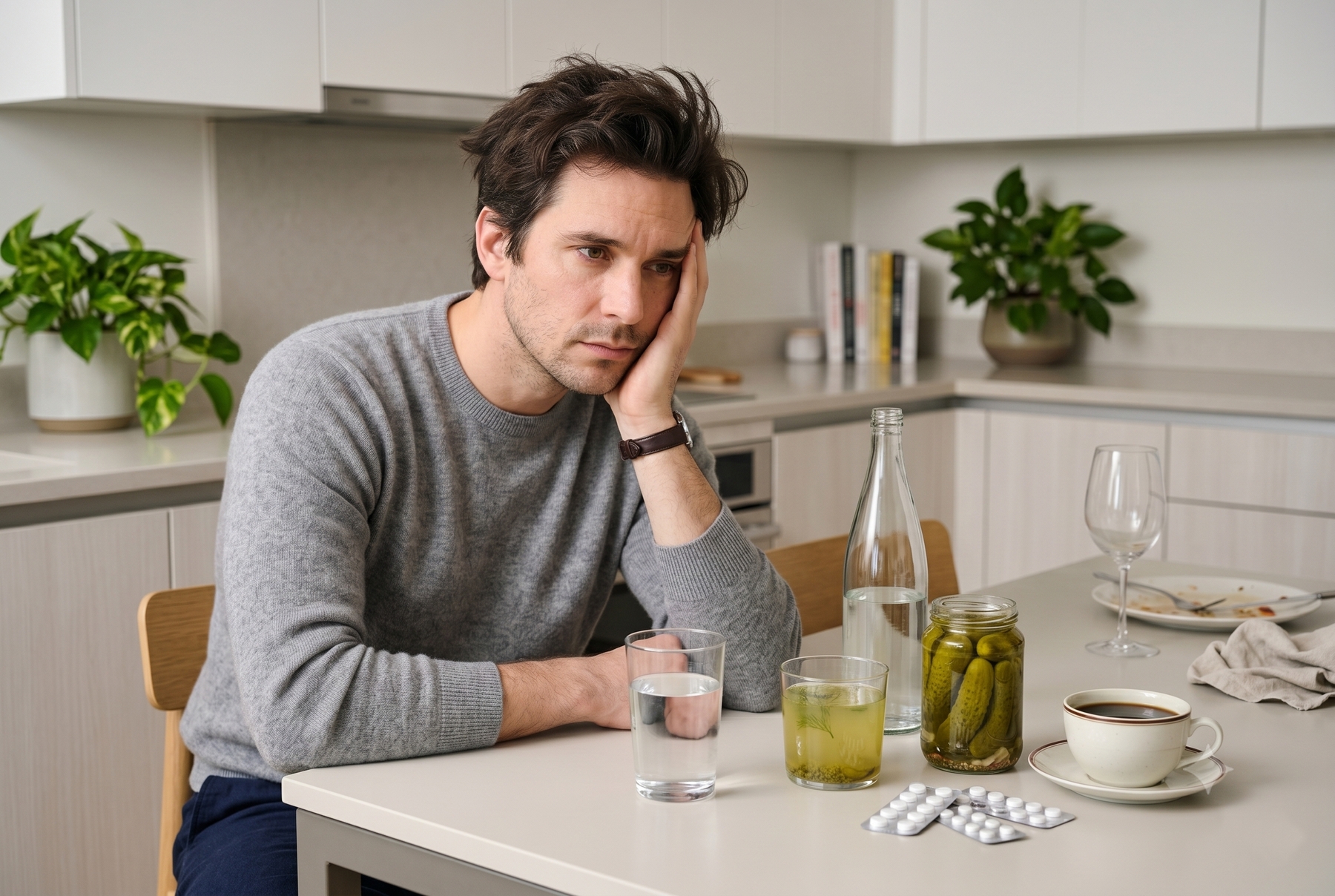
A hangover stems from dehydration, intoxication, and stomach irritation. A comprehensive approach helps mitigate the symptoms.
Table of Contents
- What the Body Needs in the Morning
- Mineral Water: When It Actually Helps
- Rassol: A Folk Classic Rooted in Sense
- Rehydration Solutions and Pharmacy Electrolytes
- Coffee, Tea, and Energy Drinks: Alertness Does Not Equal Recovery
- Sweet Sodas, Juices, Berry Drinks, and Kvass
- Food After the Party: It Does Not Cure a Hangover, but It Helps You Survive Until Evening
- Pills, Sorbents, Vitamins, and "Detox"
- What to Absolutely Avoid Doing
- A Clear Blueprint for the Morning After the Party
- Cheat Sheet: What Works, What Might Help, and What Belongs in Myths
What the Body Needs in the Morning
Water and Why the Thirst Feels Real
Experiencing a dry mouth in the morning feels dramatic, but it does not always indicate severe dehydration. This sensation usually stems from localized mucosal dryness combined with overall nighttime fluid loss. The thirst is justified, and replenishing water remains essential. Downing it all at once is not the answer, however.
Pouring a liter (about 34 fl oz) of water into an irritated stomach in one sitting is more likely to provoke nausea than provide relief. The body cannot absorb that much fluid simultaneously, and the excess will simply pass through within half an hour. Drinking small portions—a half glass or a full glass—with pauses makes much more sense. Cool water usually goes down easier than ice-cold or hot water.
Salts and Electrolytes: The Role of Sodium, Potassium, and Magnesium
Electrolytes—dissolved salts responsible for transmitting nerve signals, supporting muscle function, and retaining water in tissues—leave the body along with fluids. Sodium, potassium, magnesium, and calcium levels drop. When this balance shifts, it introduces lethargy, occasional mild muscle twitches, and an overall sense of fatigue.
This explains the logic behind why mineral water, pharmacy hydration solutions, and rassol (traditional fermented brine from pickles or cabbage) seem perfectly reasonable: they contain salts. The logic holds up, but there is a caveat. A healthy person recovering from a standard night of overindulgence will see their balance restore naturally once they rehydrate and eat a proper meal. Chasing salts specifically is rarely necessary.
The Stomach, Sleep, and Blood Sugar
Relief often arrives for a simple reason: the person has stopped burdening their irritated stomach. Calmly drinking fluids, eating something mild, and sleeping for another couple of hours works wonders. The mucosal irritation subsides, blood sugar stabilizes after a meal, and the body finally rests.
It sounds boring, but honestly, peace and time do more for one’s well-being than any bottle with a promising label.
Mineral Water: When It Actually Helps
Table, Therapeutic-Table, and Therapeutic Water: Understanding the Difference
Mineral waters are categorized by their total mineralization, meaning the amount of dissolved salts per liter. The division remains straightforward and standardized in many regions:
- Table water: Mineralization up to 1 g/L, suitable for everyday drinking;
- Therapeutic-table water: 1–10 g/L, suitable for drinking, but best consumed in short periods rather than daily;
- Therapeutic water: Over 10 g/L, intended for doctor-prescribed treatments; it is entirely unsuitable for a morning hangover cure.
Translating this to a hangover morning: table water or a lightly mineralized therapeutic-table water works beautifully. A highly concentrated therapeutic water is completely unnecessary here.
Which Salts to Look for on the Label
Sodium provides a slightly salty taste and helps retain water, but an excess is undesirable for those with high blood pressure. Bicarbonates subjectively soothe heartburn, while sulfates sometimes act as a mild laxative. Meanwhile, magnesium, calcium, and potassium support that crucial water-salt balance. All of this relates to physical sensations and bodily support. Mineral water during a hangover can support hydration, but it offers no actual “hangover cure” properties; water simply does not work that way.
Sparkling or Still
Bubbles refresh the palate and tingle the tongue, which feels delightful to a healthy stomach. However, on an irritated mucosa, carbonation frequently worsens burping, bloating, and nausea. A simple solution involves opening the bottle in advance, letting it sit, and perhaps stirring it with a spoon to release the carbon dioxide.
How Much to Drink and Who Should Exercise Caution
Drinking mineral water is best done not in one gulp, but in small portions: starting with a glass and taking a few sips every 10–15 minutes, guided by thirst and nausea. The goal is not to force down a liter (about 34 fl oz) at once, but to gradually restore fluids without angering the stomach. If nausea hits, one should reduce portions to just a couple of sips. Regarding caution, individuals with hypertension, kidney or heart conditions, a tendency for edema, or those on sodium-restricted diets should avoid highly sodic mineral waters. Anyone with chronic conditions must rely on medical advice, rather than following the common folk wisdom to drink as much as possible.
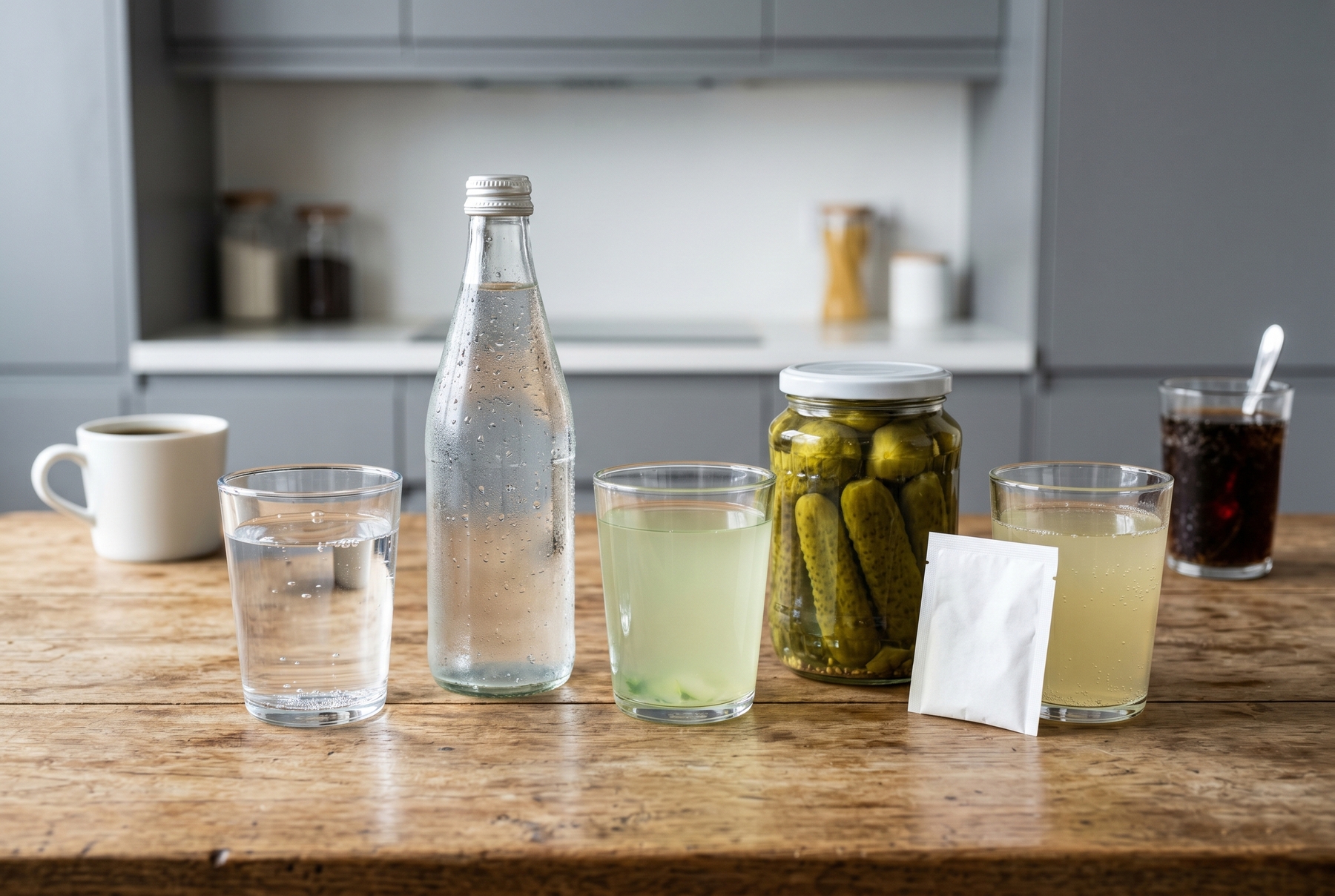
Fermented brine and mineral water help restore electrolytes, but choosing natural fermented products over vinegar marinades remains crucial.
Rassol: A Folk Classic Rooted in Sense
Why It Might Actually Help
Genuine rassol (traditional fermented brine) contains water, salt, fermentation acids, and sometimes the fermentation byproducts themselves. Subjectively, it can ease the condition: the salty taste, a bit of fluid and salts, and a mild appetite stimulation work together. This certainly does not make it a universal cure.
Cucumber, Cabbage, or Tomato: Do Not Confuse It with Marinade
When facing a hangover, one must never confuse fermented brine with a vinegar marinade. True brine forms through salting and natural fermentation, yielding a salty and sometimes slightly sour liquid thanks to lactic acid. Marinades rely on vinegar, making them sharply acidic and sometimes spicy, which places a heavy burden on an irritated stomach. Sauerkraut juice tastes noticeably more acidic than cucumber brine, while tomato brine offers a softer flavor profile. The liquid from a store-bought jar of pickled cucumbers and a naturally fermented homemade brine remain two entirely different things.
Why “The Stronger, The Better” Fails
Excess salt does not accelerate recovery; instead, it adds unnecessary strain. It retains water, provokes swelling, negatively affects those with high blood pressure, and irritates an empty stomach. If one chooses to drink fermented brine for a hangover, they should consume it in small amounts, never on an empty, irritated stomach, and absolutely not as a replacement for proper hydration.
Rehydration Solutions and Pharmacy Electrolytes
When They Make More Sense Than Mineral Water or Brine
These solutions are formulated to replenish fluids and salts during significant depletion. No one designed them specifically for hangovers. However, if a person experiences sweating, vomiting, diarrhea, or noticeable dehydration, these solutions make much more sense than brine because their salt composition is scientifically balanced.
Why Mixing Everything Together Is a Mistake
The temptation is completely understandable: drink mineral water, some brine, a packet of electrolytes, and a “vitamin” drink all at once. The problem arises because each of these adds sodium or sugar, making it incredibly easy to overdo it. Choosing just one option remains the smartest path. Pharmacy rehydration powders must be mixed strictly according to the instructions for a specific volume of water; otherwise, the resulting solution becomes far too concentrated.
Coffee, Tea, and Energy Drinks: Alertness Does Not Equal Recovery
Why Coffee Seems Like Salvation
Caffeine blocks the receptors responsible for sleepiness, providing a sudden rush of energy. For those accustomed to a morning cup, coffee simultaneously relieves the withdrawal headache caused by a lack of routine caffeine. The trap lies elsewhere: coffee during a hangover does not speed up alcohol elimination. The liver processes alcohol at its own pace, and the alertness from a cup of coffee equals neither sobriety nor recovery.
When Coffee Makes Things Worse
Following a sleepless night, caffeine frequently introduces anxiety, palpitations, and shaky hands, while adding unwanted acid and nausea to an already irritated stomach. The diuretic effect slightly worsens dehydration, and an evening cup later disrupts proper sleep recovery. Energy drinks demand even more caution: caffeine, sugar, and stimulants collectively burden the heart, forming a terrible combination against the backdrop of yesterday’s alcohol consumption.
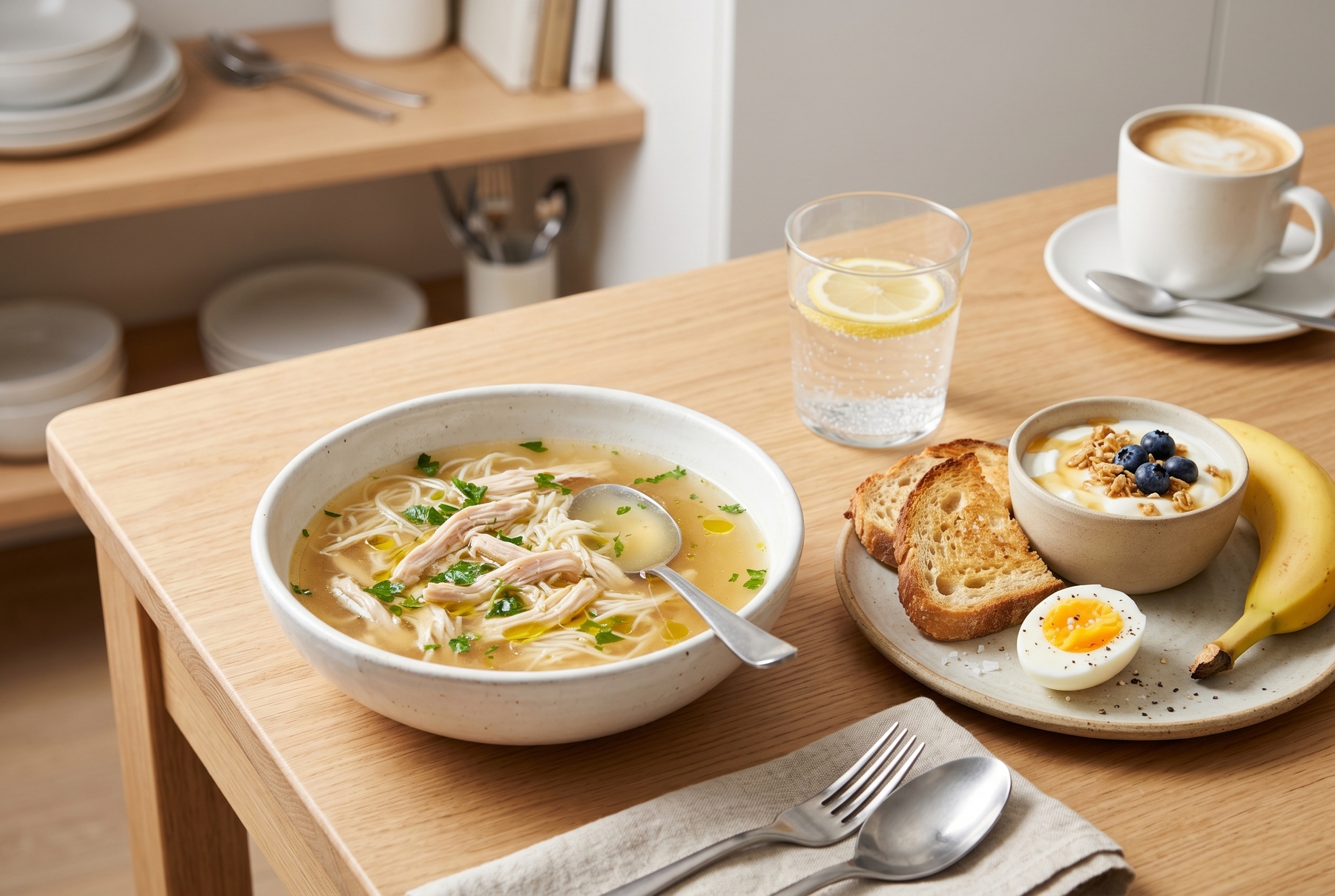
A light chicken broth and potassium-rich foods, such as bananas, help the stomach recover much faster.
Sweet Sodas, Juices, Berry Drinks, and Kvass
Why the Craving for Sweets Hits Hard
Following a feast, blood sugar levels can drop, causing the brain to honestly demand quick fuel. A tart, sweet beverage subjectively “activates” a person: a sip of soda invigorates with its flavor and bubbles. This fails to solve the underlying problem, while excessively sweet and carbonated liquids can easily induce bloating.
What to Choose When Craving Flavor and Water Falls Flat
When plain water feels unappealing, mild alternatives step in: diluted juice, unsweetened mors (traditional berry drink), weak tea, water with a lemon wedge, or a lightly sweetened fruit compote. Kvass (a traditional fermented beverage made from rye bread) deserves special consideration. It contains acid, sugar, carbonation, and trace amounts of alcohol from fermentation, meaning it rarely acts as a friend to an irritated stomach and should not be overused.
Food After the Party: It Does Not Cure a Hangover, but It Helps You Survive Until Evening
Why a Greasy Breakfast Is Not the Best Choice
Fatty food only absorbs alcohol prior to drinking, when it slows absorption in the stomach. By morning, the alcohol is already in the bloodstream, leaving nothing to absorb. Consuming a heavy, greasy breakfast on an irritated stomach frequently intensifies nausea and creates a rock-like sensation in the gut. Fat significantly delays stomach emptying, offering absolutely no relief.
What Usually Goes Down Easier
Soft, simple food always wins. Broth or a light soup, porridge, a banana (which avoids scratching the stomach lining and provides a little potassium), toast, eggs, or cultured dairy products prove highly effective. Tolerance varies from person to person, and if nausea persists, small sips of liquids come first, with food following only after the stomach settles.
Pills, Sorbents, Vitamins, and “Detox”
What Matters Most About Painkillers
Combining paracetamol with alcohol severely increases the load on the liver: the alcohol depletes the substance that protects the liver during paracetamol metabolism, causing toxicity to spike. Anti-inflammatory painkillers like ibuprofen irritate the stomach lining and elevate the risk of bleeding, particularly when the stomach is already compromised by alcohol, while also stressing the kidneys. There is no need for panic: one must simply wait for the alcohol to clear, avoid taking pills on an empty, irritated stomach, read the instructions and contraindications carefully, and consult a specialist if liver, kidney, stomach, or heart conditions exist.
Activated Charcoal: Why the Morning After Is Too Late
Sorbents bind substances in the intestines. By morning, all of yesterday’s alcohol has long since absorbed into the bloodstream, leaving nothing in the intestinal tract to draw out. Charcoal absolutely cannot pull alcohol from the blood. Sorbents have their proper use cases, but they do not function as a universal morning hangover cure.
Vitamins, Succinic Acid, and Anti-Hangover Blends
Part of the effect here remains purely subjective: a person dissolves an effervescent tablet in a glass of water, simultaneously replenishing fluids, and ends up feeling better primarily because of the water itself. The evidence base for most “anti-hangover” remedies is weak or contradictory. Succinic acid, B vitamins, and amino acids are sold with promises of accelerated cleansing, but the body cleanses itself at its own pace using its own enzymes. Paying for an acceleration that simply does not exist is entirely optional.
What to Absolutely Avoid Doing
The “Hair of the Dog”
A morning dose of alcohol genuinely provides brief relief, and that is precisely where its danger lies: the new ethanol merely dulls the symptoms and pushes them back, completely failing to address the root cause. The ensuing crash becomes longer and harder, paving a direct path toward morning drinking habits. This remains an incredibly risky route.
Saunas, Intense Workouts, and Ice-Cold Showers
The advice to sweat it out sounds vigorous, but in reality, it misses the mark entirely. A sauna session or a heavy workout against a backdrop of dehydration and an already stressed heart can easily worsen the condition: the heart rate spikes, more fluids are lost, and blood pressure fluctuates wildly. An ice-cold shower shocks the blood vessels intensely. When a person needs to refresh, a warm shower provides a much safer alternative.
Force-Drinking Fluids
When water simply will not go down and nausea approaches, small sips with pauses work vastly better than a forcefully swallowed glass. On a more serious note: repeated vomiting, confusion, chest pain, irregular breathing, loss of consciousness, or vomiting blood are absolutely not scenarios for simple life hacks. These situations demand immediate medical attention.

Sleep, fresh air, and gradual fluid replenishment serve as the most reliable methods for returning to normal.
A Clear Blueprint for the Morning After the Party
If the Condition Is Mild
- Drink water or lightly mineralized water in small sips;
- Consume calm, soft food once the stomach is ready;
- Rest and sleep, if the opportunity arises;
- Ventilate the room thoroughly;
- Skip the heroics: avoid burdening the body with intense workouts or liters of coffee.
If Nausea Strikes
Take small sips of uncarbonated beverages, maintaining pauses in between. Introduce simple food only after the nausea recedes. Push acidic, greasy foods and coffee aside for now. If the nausea persists relentlessly, seeking medical advice becomes a priority.
If a Headache Hits
For a hangover headache, start without pills: rely on fluids, food, darkness, silence, and sleep. If reaching for a painkiller feels inevitable, read the instructions, keep contraindications and alcohol interactions firmly in mind, and consult a specialist if any doubts arise.
If Facing the Public Is Unavoidable
No miracles here: a warm shower, plenty of water, light food, and clean clothes. Skip the energy drinks for a “quick start.” Transforming into a completely different person in half an hour is impossible, but looking and feeling somewhat tolerable remains entirely realistic.
Cheat Sheet: What Works, What Might Help, and What Belongs in Myths
- Water and sleep: The most foundational, reliable aid available;
- Mineral water: Effective if the salt profile matches and it does not anger the stomach;
- Fermented brine: Capable of providing minor relief through taste and salts, but not a miracle cure;
- Rehydration solutions: Logical and effective during noticeable fluid loss;
- Coffee: Demands caution and does not suit everyone, as it completely fails to accelerate alcohol elimination;
- Energy drinks and “hair of the dog”: A genuinely terrible idea;
- Morning sorbents: Generally fail to solve the primary issue;
- Food: Keep it soft, simple, and based entirely on personal tolerance.
The liver metabolizes approximately one standard drink per hour, and absolutely nothing on this list rushes that process.
0 comments