
Turkish pilaf with chicken giblets is a vibrant embodiment of ancient Eastern culinary traditions, where the skill of transforming simple offal into an exquisite treat was valued above all. Unlike Central Asian variations, Turkish pilaf is often studded with sweet raisins and toasted nuts, creating a wonderful interplay of textures and flavors. The aroma of melted ghee, mingling with fragrant thyme and garlic, fills the kitchen during the vegetable sautéing stage, promising a truly warming and hearty dinner. Using parboiled rice guarantees flawless fluffiness, allowing each grain to soak up the savory meat juices and become part of a harmonious ensemble.
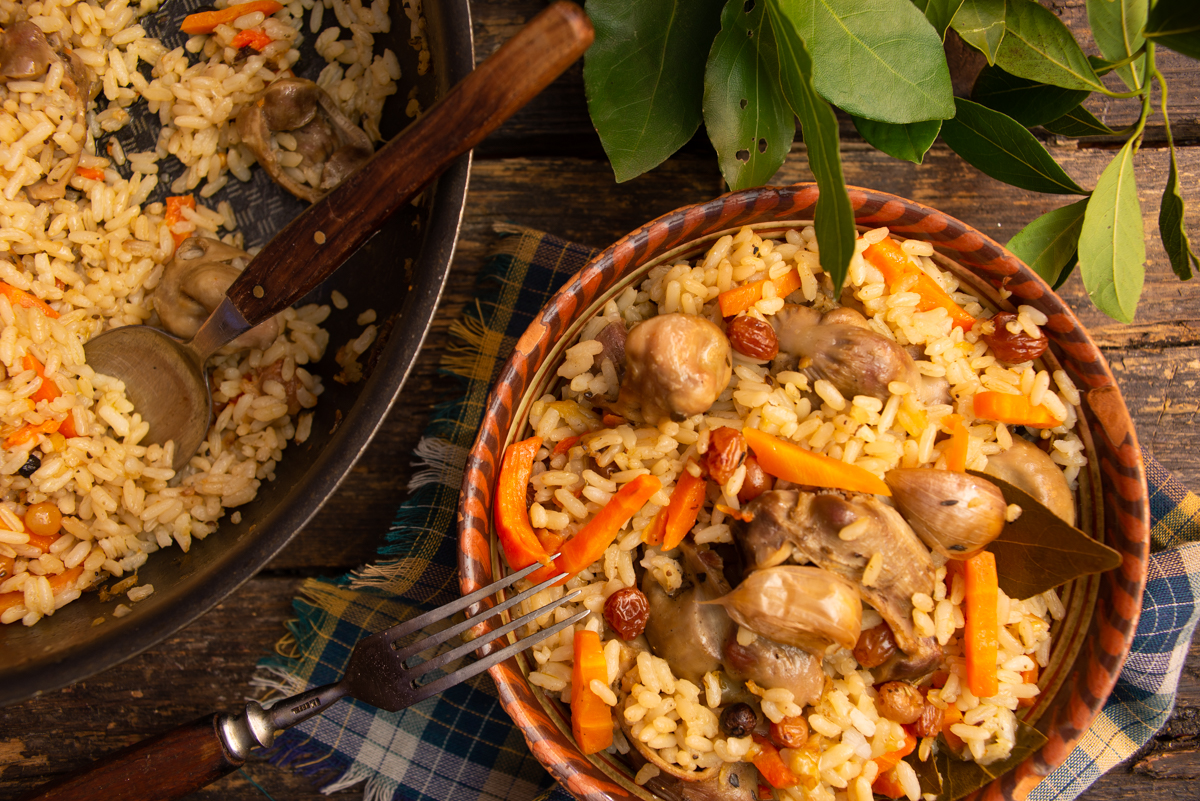
Aromatic and hearty Turkish pilaf with tender chicken gizzards, complemented by sweet raisins and crunchy nuts.
Ingredients
- 500 g (1.1 lbs) chicken gizzards
- 150 g (5.3 oz) onions
- 150 g (5.3 oz) carrots
- 250 g (8.8 oz) parboiled rice
- 60 g (2 oz) raisins
- 30 g (1 oz) nuts (hazelnuts or cashews)
- 1 head of garlic
- A few bay leaves
- Dried thyme
- Black pepper, cayenne, and allspice
- 35 g (1.2 oz) ghee (clarified butter)
- Salt, vegetable oil
- Water or 1 L (1 qt) chicken broth
How to Make Turkish Pilaf With Chicken Giblets
Thoroughly rinse the chicken gizzards. Transfer them to paper towels and pat dry. At this stage, inspect the giblets—sometimes a thin membrane remains on the gizzards, which must be trimmed away.
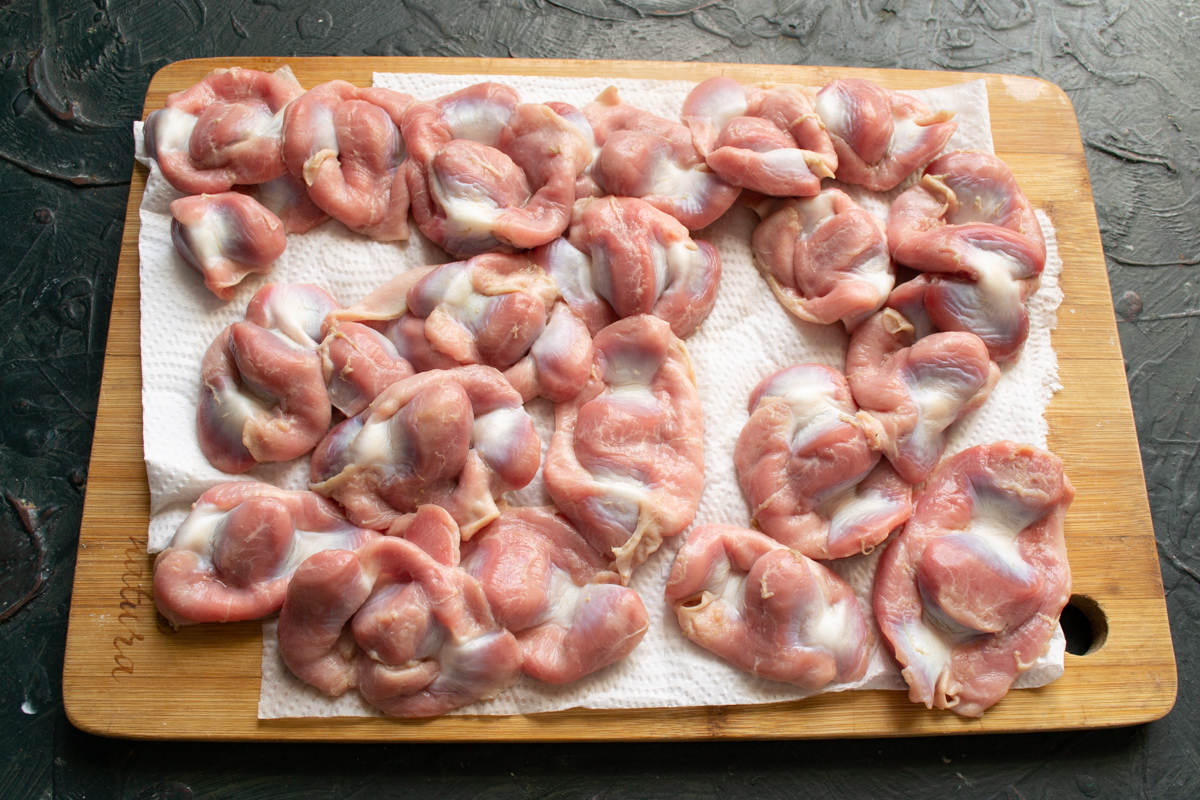
It is important to thoroughly dry the chicken gizzards before frying so they develop a golden crust.
Finely chop the onion. Sauté the chopped onion in melted ghee along with the bay leaves. To prevent the ghee from burning, you can pour 1 tablespoon of neutral vegetable oil into the pan. The ingredients in this recipe are quite lean, so you can’t ruin this pilaf with a little extra fat.
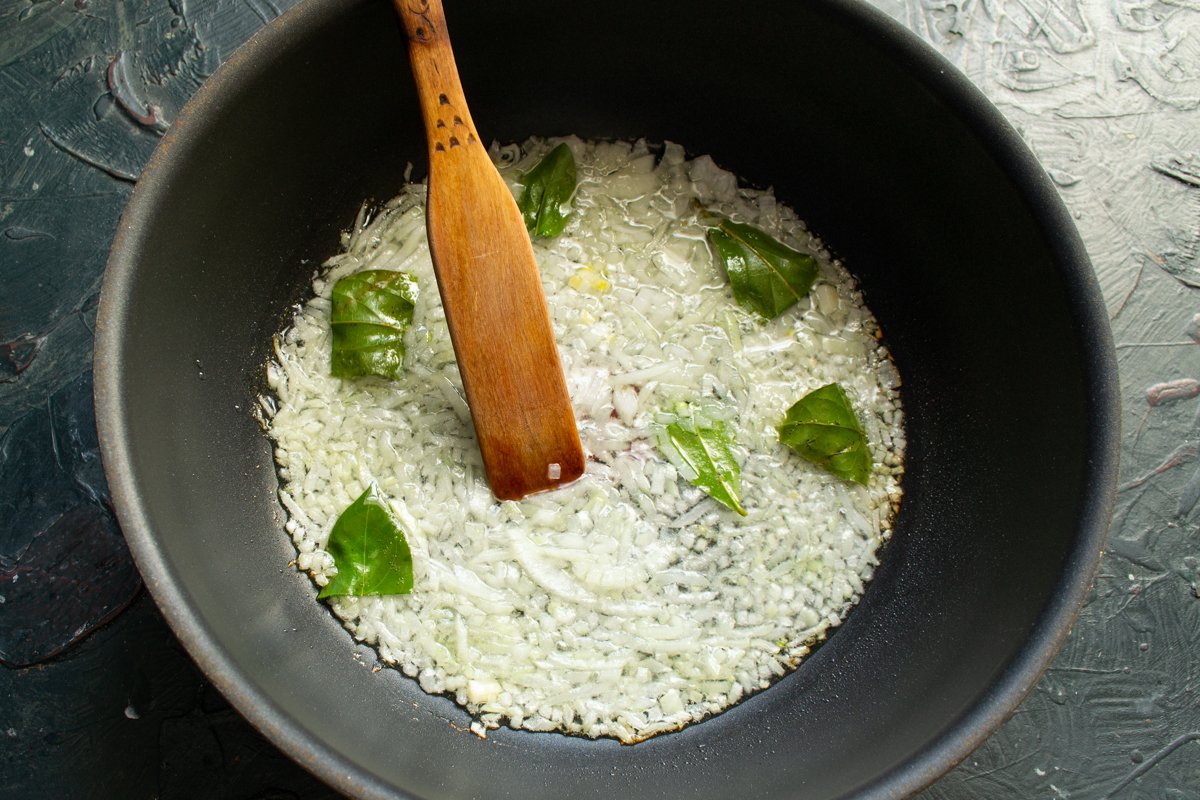
Using ghee gives the pilaf a signature creamy taste and rich aroma.
Cut the carrots into thick batons. Add the sliced carrots to the sautéed onions.
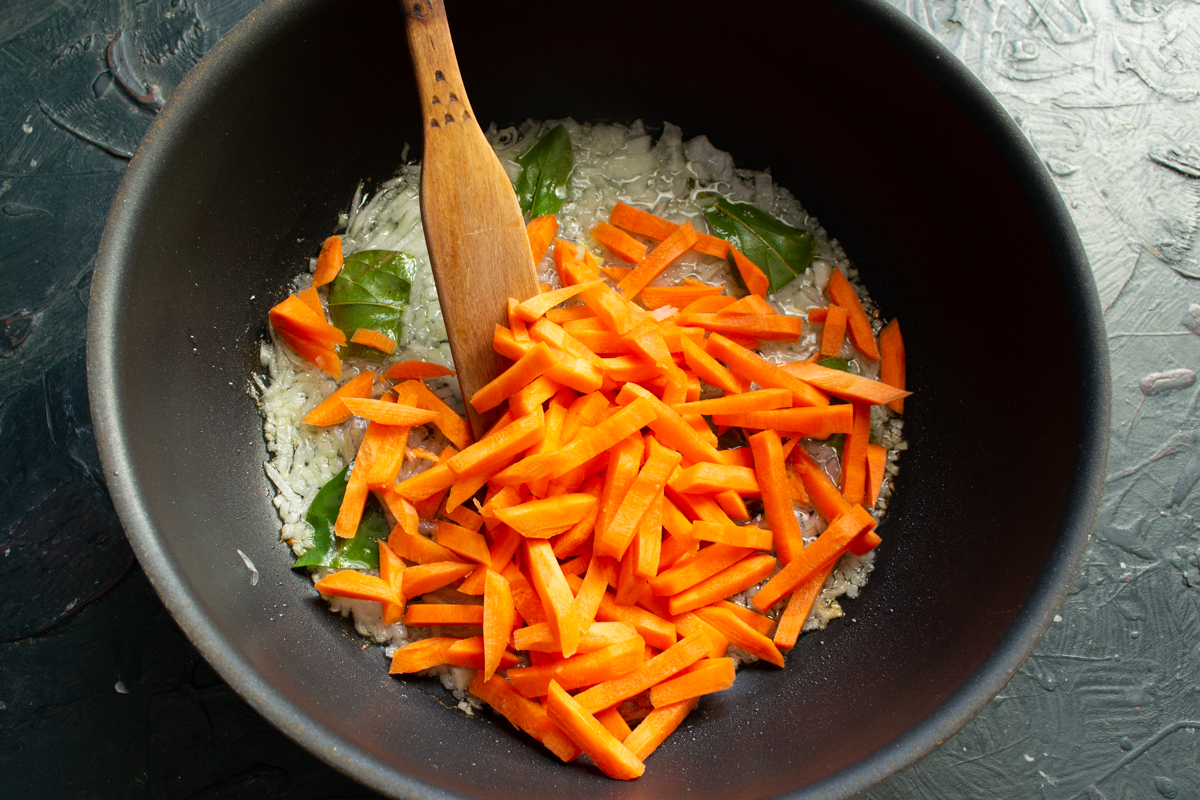
Cut the carrots thickly so they hold their shape and are noticeable in the finished dish.
Sauté the vegetables over moderate heat until the carrots turn a beautiful golden color.
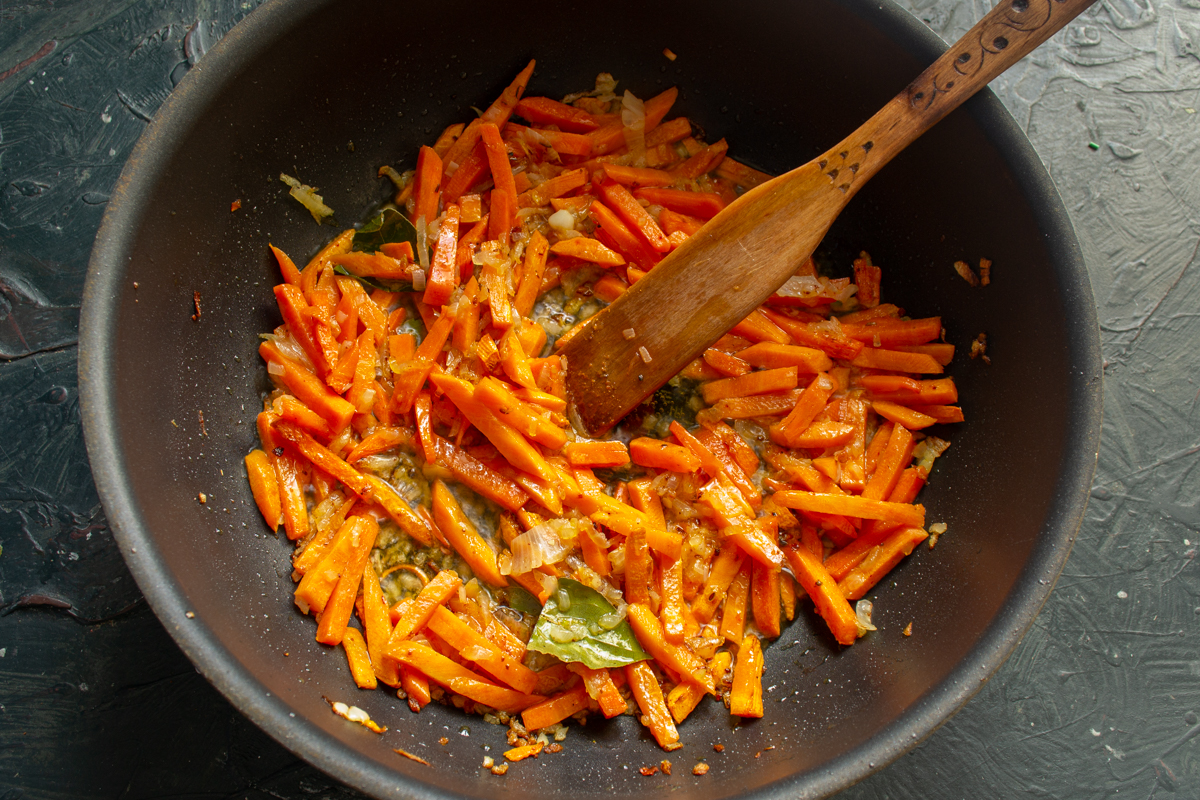
The vegetables should be well-browned, creating a flavor base for the pilaf.
Pour a little vegetable oil into a separate skillet. Add the dried chicken gizzards and quickly sear them over high heat. Season generously with ground black pepper and cayenne. If you prefer milder food, substitute sweet paprika for the cayenne pepper.
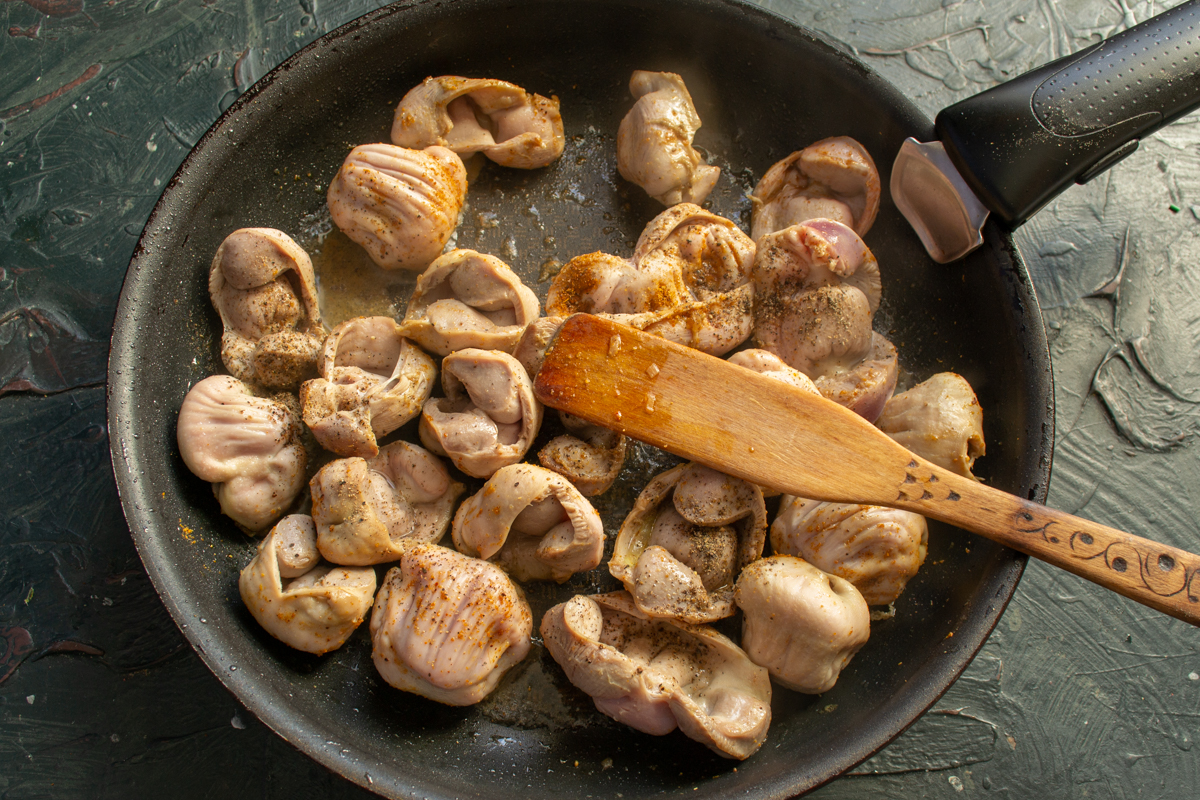
A quick sear over high heat locks in the moisture of the giblets.
Add the seared gizzards to the onions and carrots.
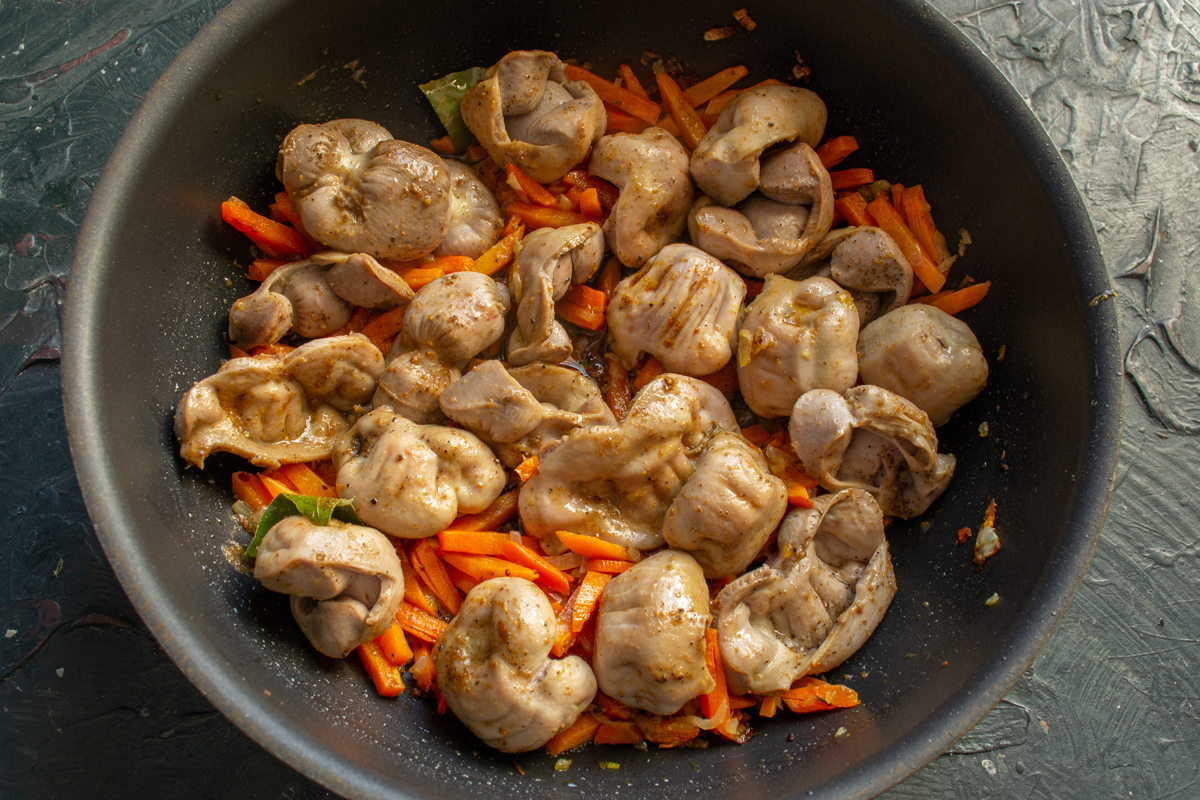
Combine all components so the aromas of spices and vegetables infuse the meat.
Pour in the parboiled rice. Try to distribute the rice evenly to blanket the giblets and vegetables completely.
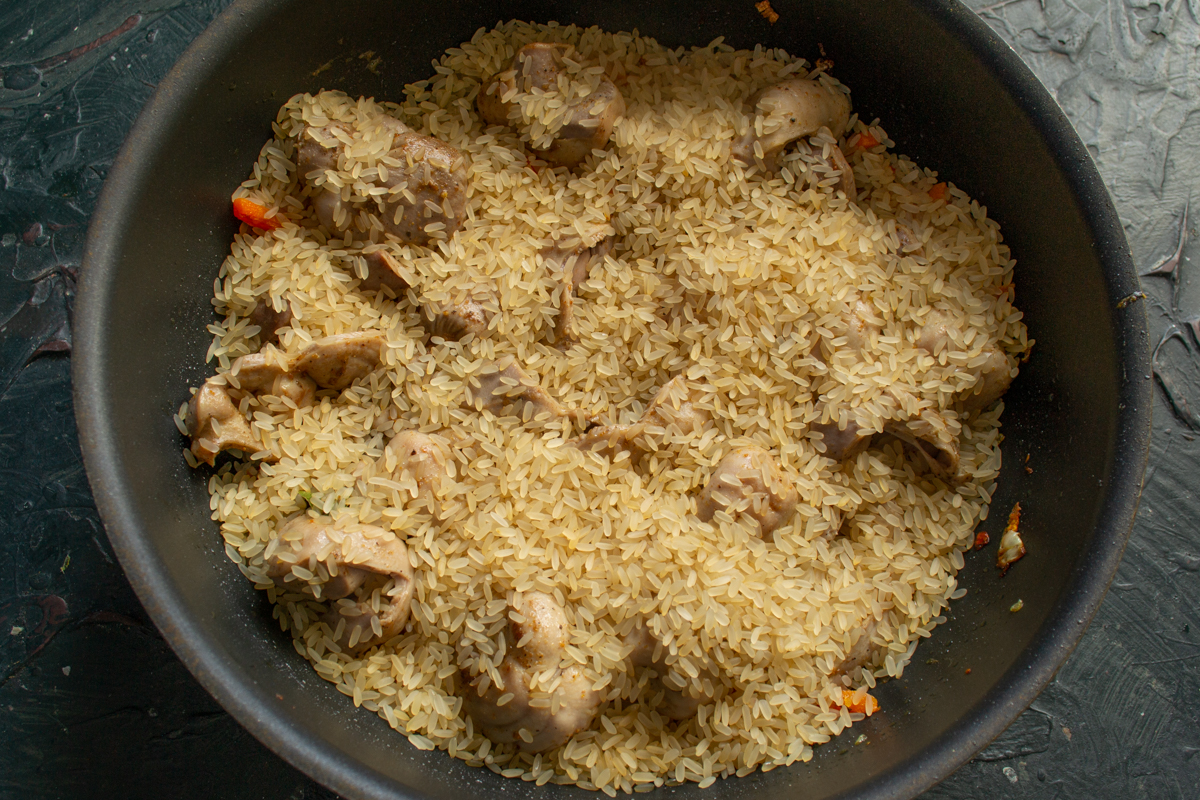
Parboiled rice is perfect for this recipe, as it always turns out fluffy and separate.
Season with salt to taste. Toss in crushed, unpeeled garlic cloves. Sprinkle a teaspoon of dried thyme. Add a few whole black and allspice peppercorns.
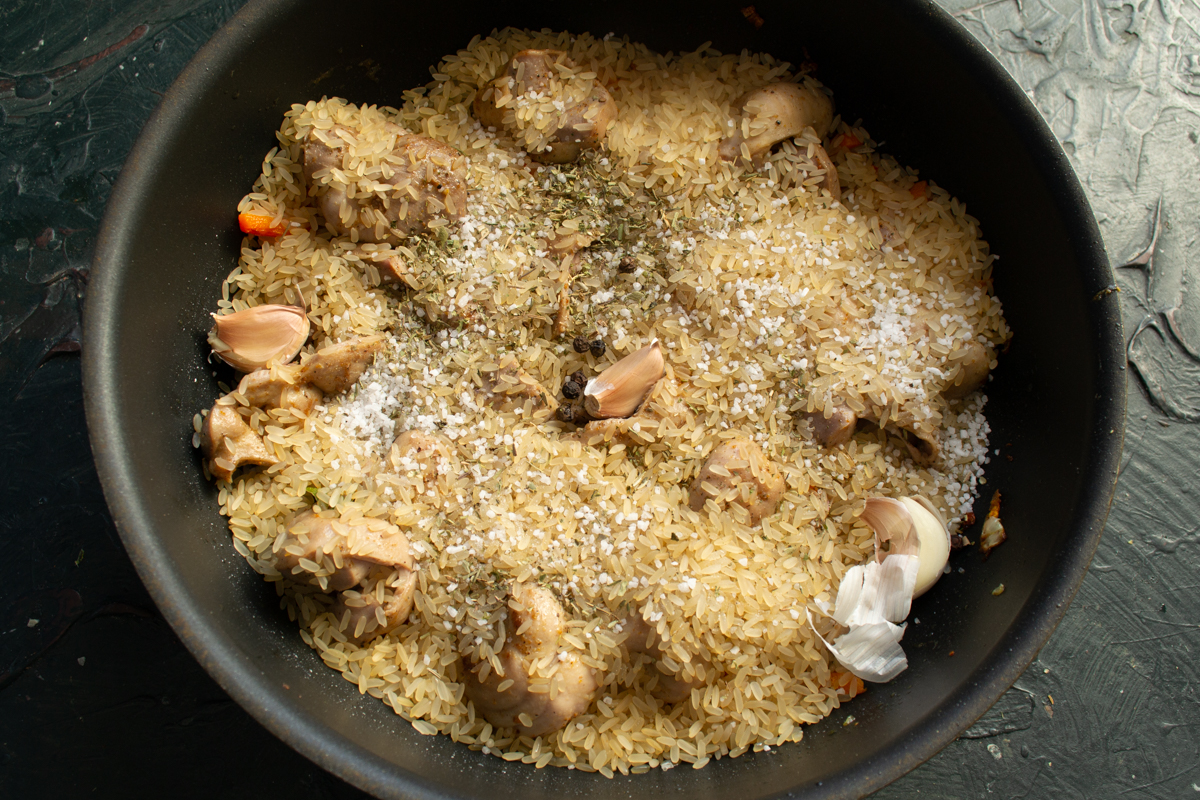
Unpeeled garlic and dried thyme are the secret ingredients for an authentic Eastern aroma.
Pour in enough water or chicken broth to completely cover the contents of the pot, allowing the liquid to rise about 1.5 centimeters (1/2 inch) above the rice. If your pot is narrow and deep, you might need slightly more liquid.
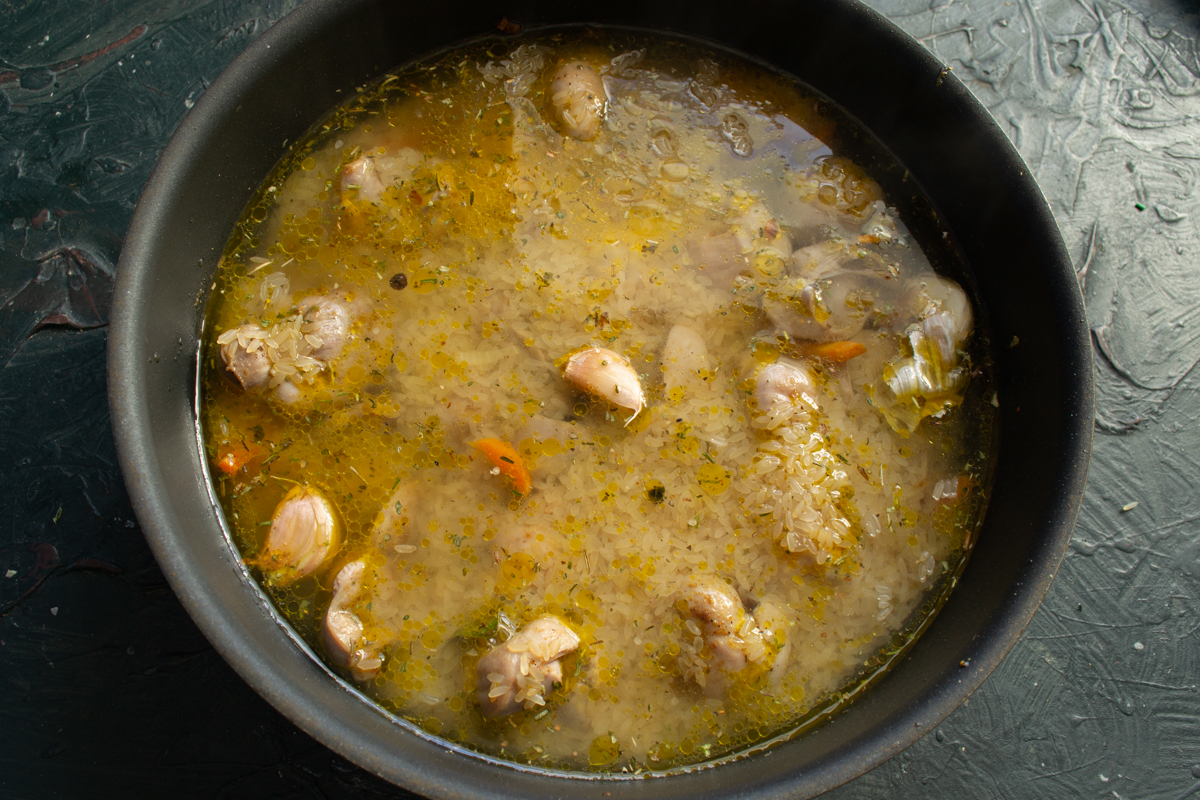
The water level should be about 1.5 centimeters above the rice for proper simmering.
Add scalded and rinsed raisins. Toast the hazelnuts or cashews, chop them finely, and add them to the pot right after the raisins. Rapidly bring the mixture to a boil. Cover the pilaf tightly with a lid and simmer on the lowest possible heat for about 1 hour. If possible, transfer the covered pot to the oven and bake at 170 degrees Celsius (340 degrees Fahrenheit) for 1 hour.
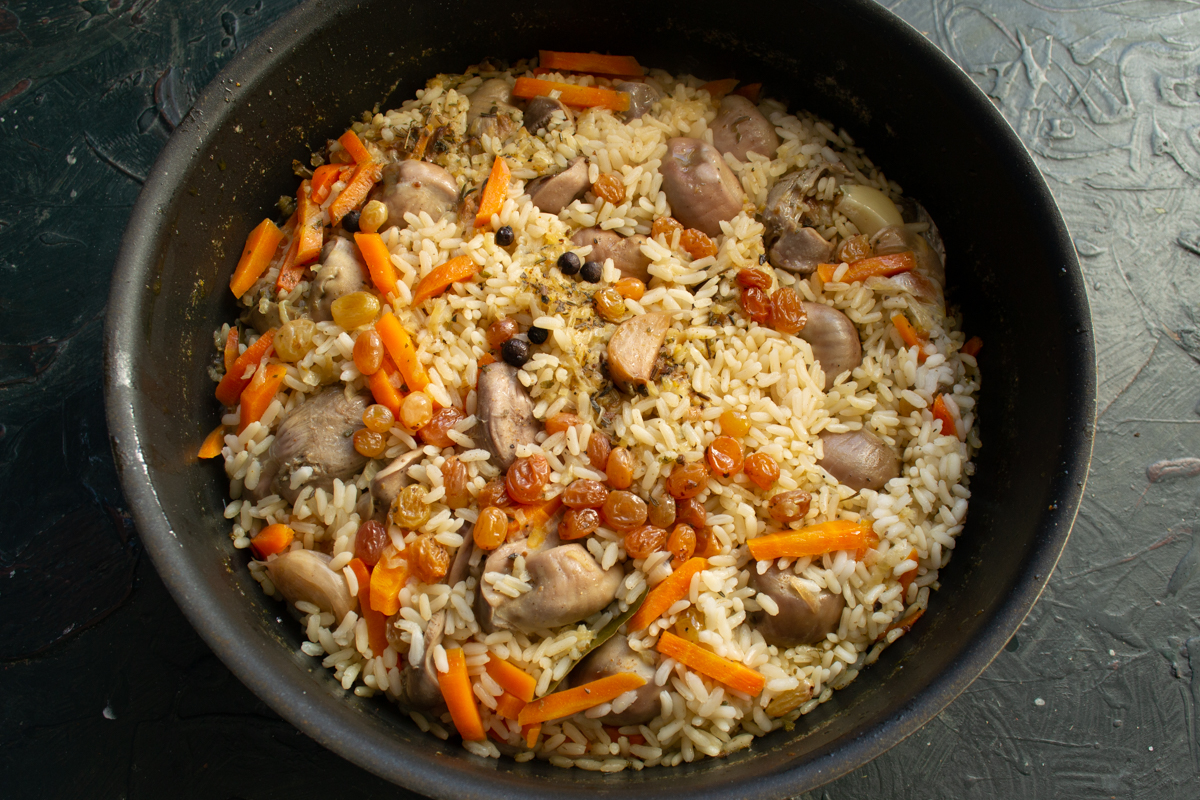
After an hour of slow simmering, the pilaf becomes incredibly tender and aromatic.
It is best to serve this Turkish pilaf with chicken giblets family-style in a deep communal dish, garnished with fresh cilantro or parsley. A refreshing Turkish tomato and cucumber salad or thick garlic yogurt makes an ideal accompaniment, perfectly balancing the warmth of the spices. If you want to add an even brighter Eastern flair, offer your guests pomegranate seeds—their bright acidity beautifully complements the sweetness of the raisins and the buttery richness of the cashews. If you have any pilaf left over after dinner, don't worry—it only becomes more aromatic when reheated. Store it in an airtight container in the refrigerator for up to two days. To restore the rice to its original succulence, reheat it gently in a skillet, adding a tablespoon of water or a small knob of butter, and cover with a lid. A little chef's secret: if you want to experiment, try substituting part of the water with strong chicken broth—this will make the flavor of the giblets even deeper and more robust.
0 comments