
A classic 4-egg sponge cake is a true pastry staple, where a minimum of ingredients creates an airy cloud with a subtle vanilla aroma. The secret to its incredible lightness lies not in the amount of baking powder, but in mechanically aerating the egg mixture through prolonged whipping, which should last at least ten minutes. A properly prepared base has a delicate golden color and a porous structure that is ready to soak up the most refined syrups like a sponge. This approach guarantees a reliable foundation for creating both simple homemade cakes and luxurious, multi-tiered festive desserts.
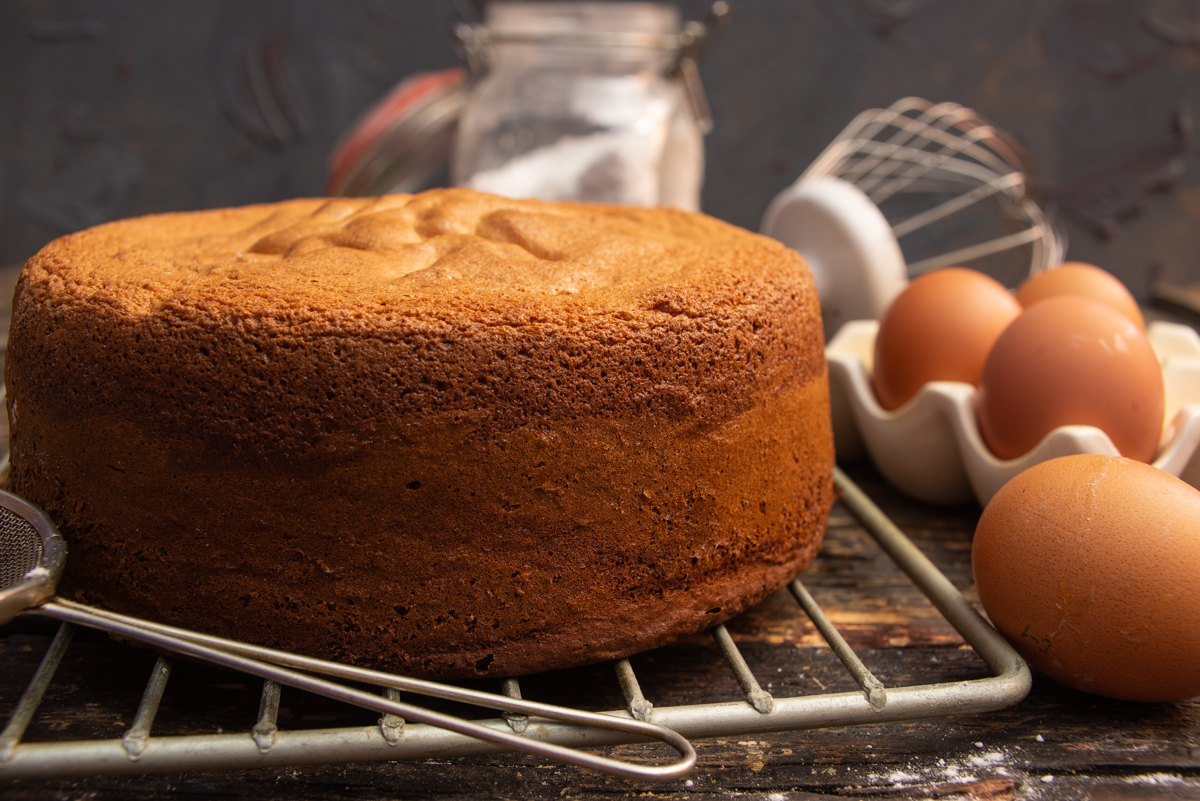
A perfectly even and tall sponge cake that will serve as a great base for any festive layer cake.
Ingredients
- 4 eggs
- 130 g powdered sugar
- 130 g all-purpose flour
- 1/4 teaspoon baking powder
- vanilla extract or vanillin to taste
- butter for greasing the pan
How to Make a Classic 4-Egg Sponge Cake
Crack the eggs into a bowl and add the powdered sugar. Let it sit for a couple of minutes so the sugar begins to melt. The size of the eggs matters. On average, a shelled egg weighs 45-50 grams (about 1.6-1.8 oz). Eggs from young hens are smaller, so always account for the average weight of eggs in the recipe—it is crucial.
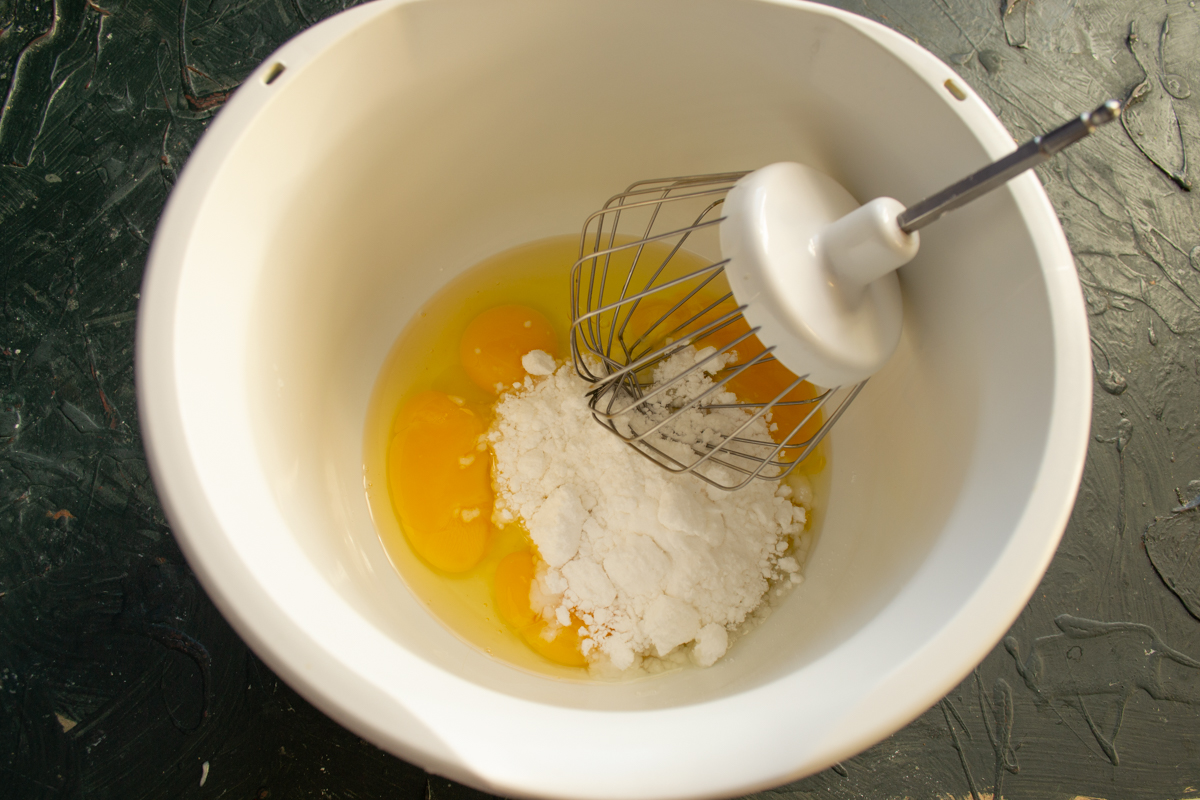
Combine the eggs with the powdered sugar. At this stage, it is important to consider egg size to keep the proportions right.
Whisk the all-purpose flour together with the baking powder. You can bake a fluffy sponge cake without baking powder, but adding a little will not hurt the bake and guarantees a great result.
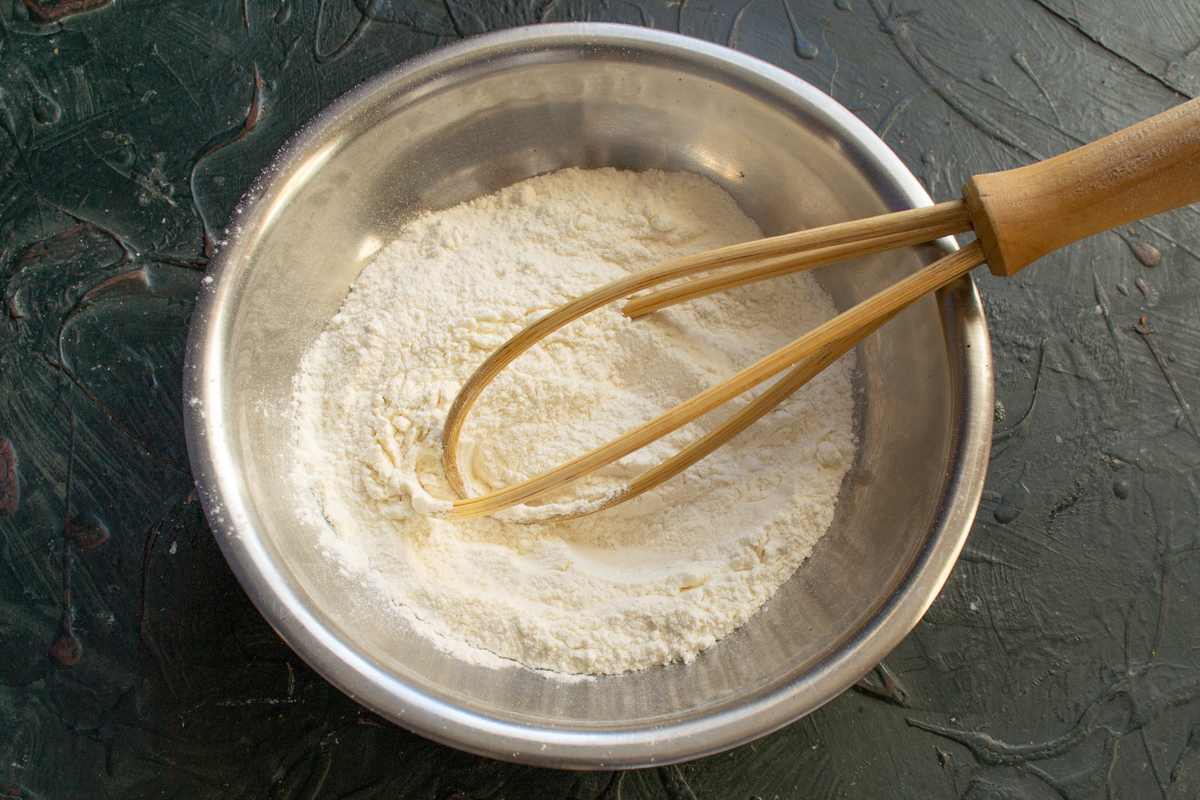
Thoroughly whisk the flour with the baking powder. This guarantees a steady rise in the oven.
Start whipping the eggs with the powdered sugar on low speed, gradually increasing to maximum. Whip for about 10 minutes—this is the most important step and the foundation of a good sponge cake. The mixture is ready when it triples in volume and looks like a thick, silky cream.
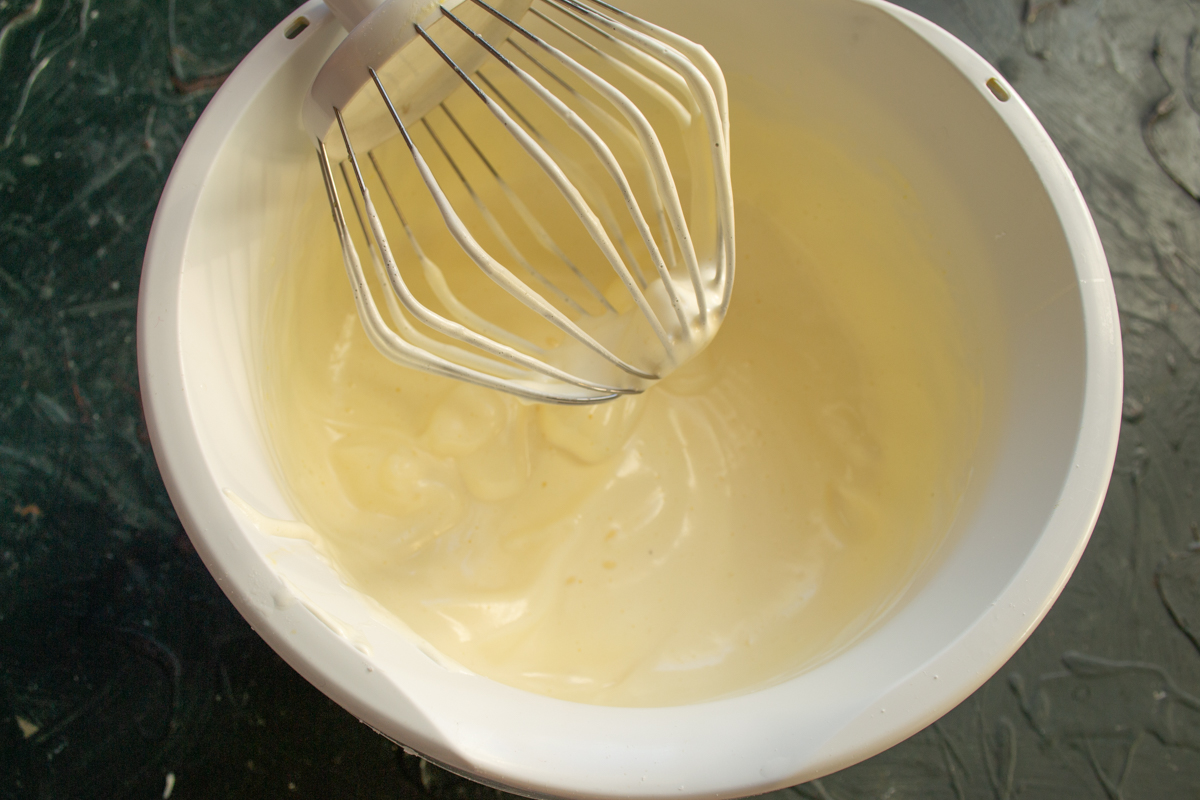
Whip the mixture for about 10 minutes until it turns into a thick, silky cream—this is the foundation of the sponge cake.
For the next step, put the mixer away—we are doing this by hand! Sift the flour into the bowl and gently fold it in using a spatula with smooth, soft circular motions.
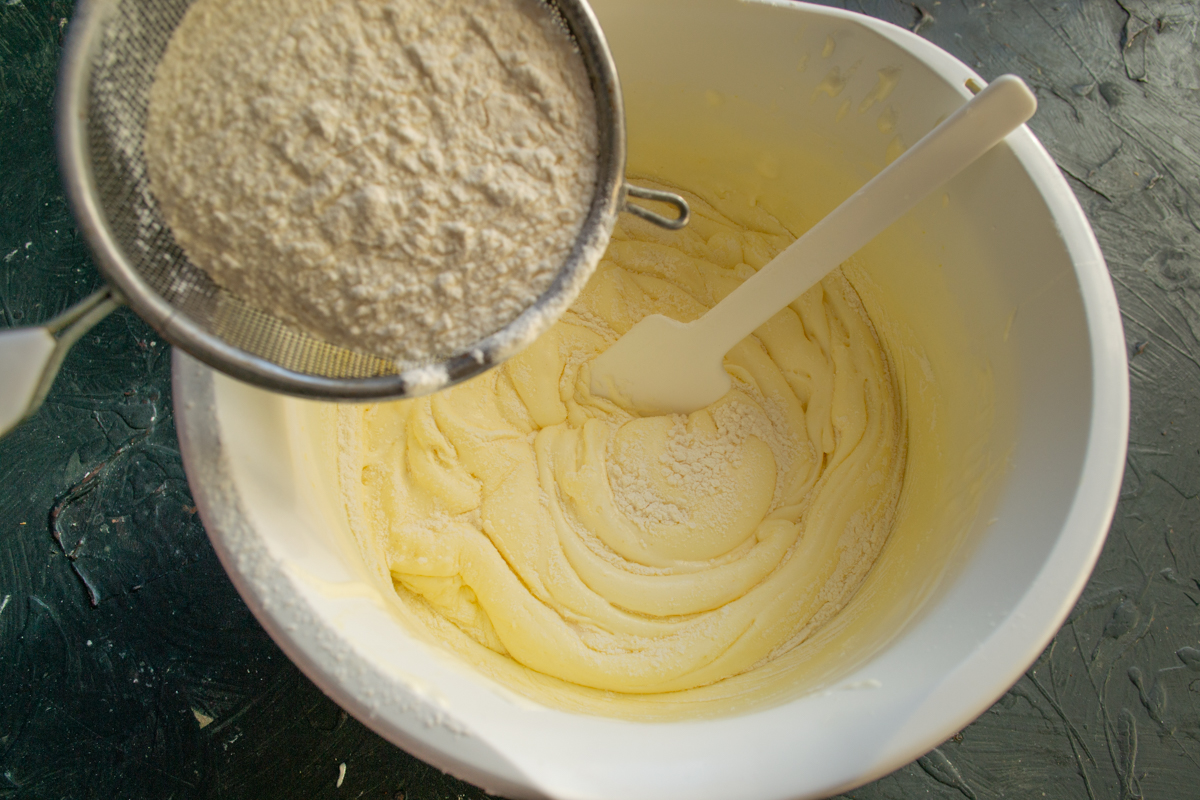
Gently fold the sifted flour into the airy mixture using soft, circular motions with a spatula.
Properly mixed sponge batter is light, airy, and fluffy. There should not be any pockets of dry flour or lumps, while the whipped eggs should maintain their volume and texture.
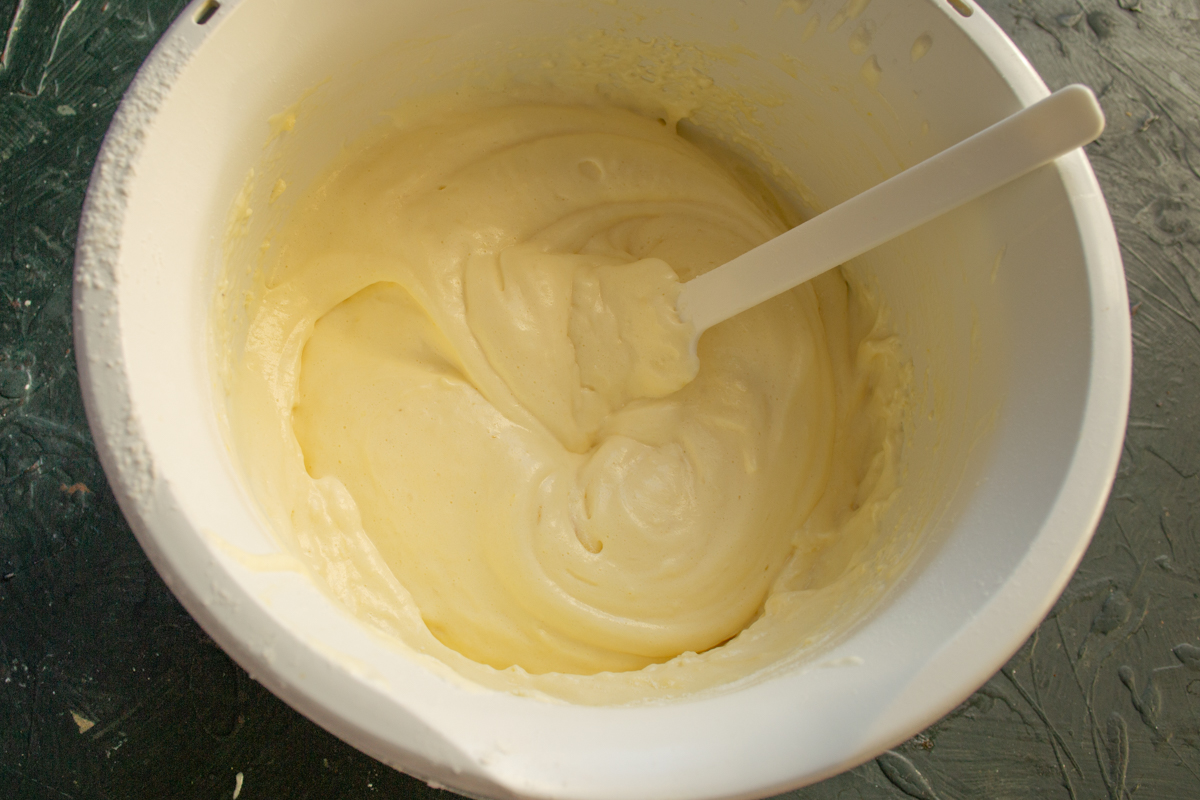
Properly mixed batter should be light and uniform, without any flour pockets or deflated eggs.
Prepare an 8-inch (20 cm) non-stick cake pan. Grease the bottom with softened butter and dust it lightly with flour, tapping out any excess.

Grease the bottom with butter and dust with flour for an easy release.
Transfer the sponge batter into the pan. To prevent the cake from doming in the middle as it bakes, I like to make a slight depression in the center—forming a barely noticeable crater.
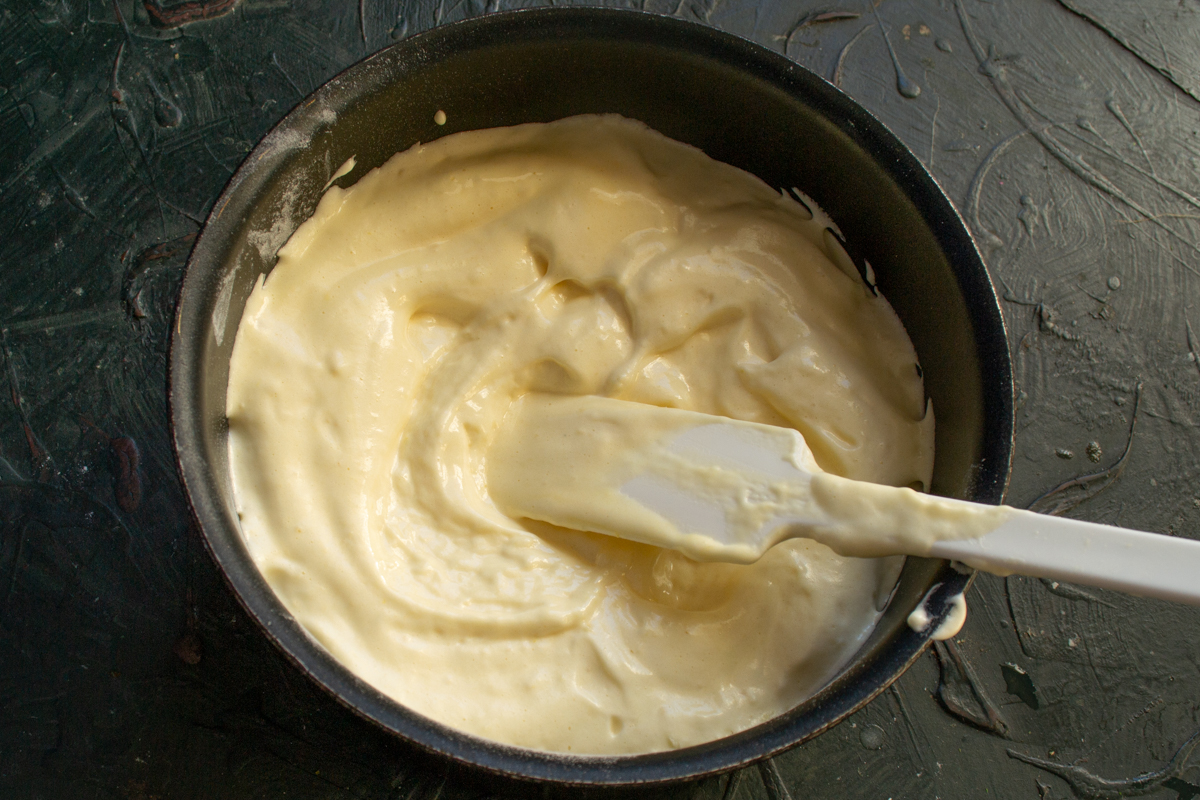
Form a slight depression in the center so the cake does not dome while baking.
Preheat your oven to 180°C (350°F). Place the cake on the middle rack and bake for about 40-45 minutes. A few strict rules while baking: first, do not open the oven door. Second, do not lower the temperature during the first 20 minutes. If the crust browns too quickly, you can drop the heat by 10°C (about 20°F) after the 20-minute mark.
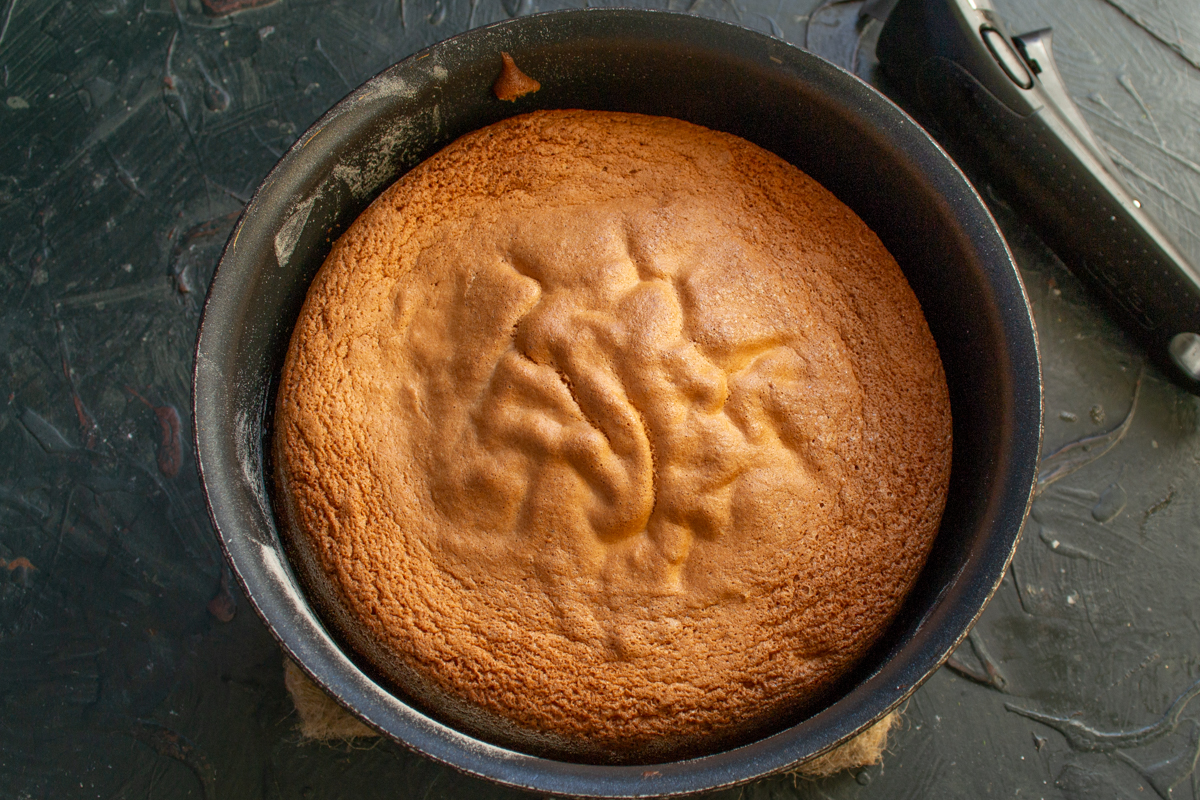
The finished sponge cake should have a lovely golden color. Do not open the oven door while baking!
Remove the finished sponge cake from the oven. Let it rest in the pan for 10 minutes, then carefully turn it out onto a wire rack. Cool the cake completely to room temperature, then wrap it tightly in plastic wrap or place it in a large zip-top bag.
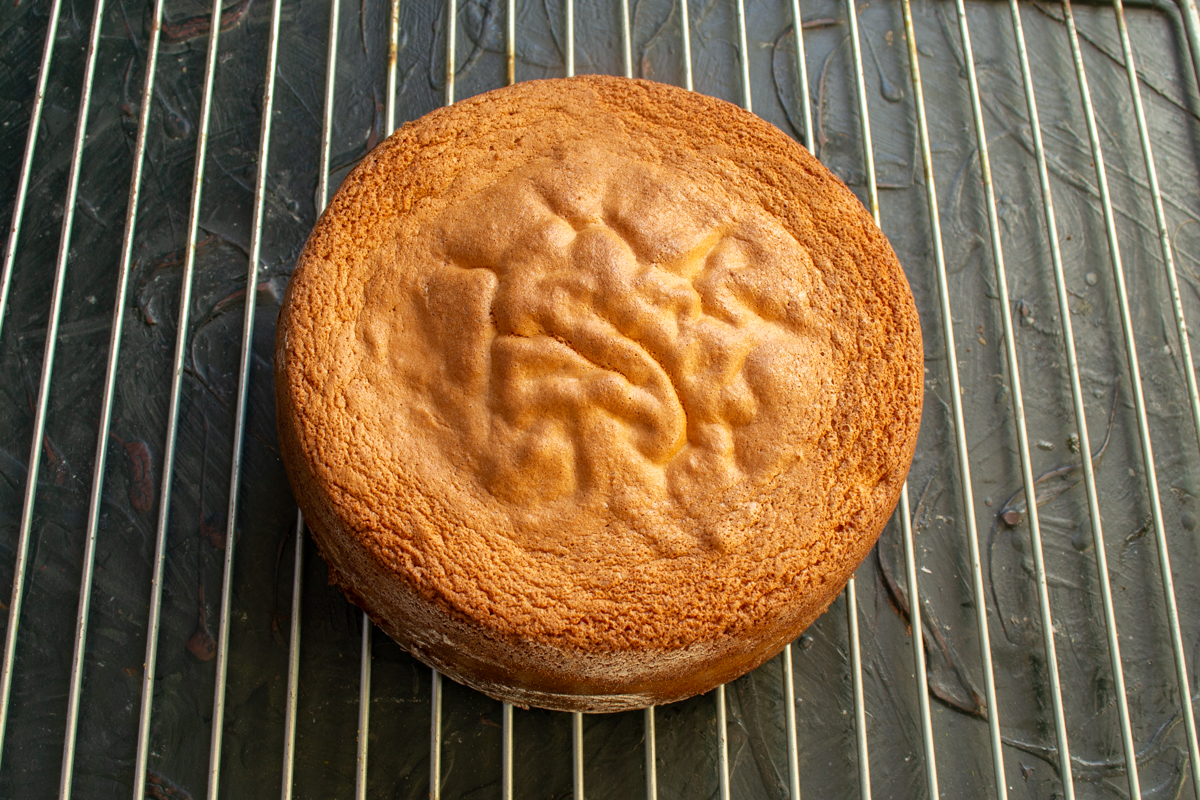
Cool the sponge cake on a wire rack to room temperature before wrapping it tightly in plastic.
To let your 4-egg sponge cake reach its full potential, be sure to let it rest before using. Wrapping the cooled cake in plastic wrap allows the moisture to distribute evenly inside, making the crumb more elastic and less prone to crumbling. If you are planning a complex cake with heavy frosting, letting it mature in the refrigerator overnight is highly recommended—it will make slicing it into even layers much easier. For a variation in flavor, you can add lemon zest to the batter or replace some of the flour with high-quality cocoa powder to turn the classic base into a chocolate one. The finished 4-egg sponge cake freezes beautifully, allowing you to prep ahead of time. When served, these cake layers pair perfectly with buttercream, berry preserves, or fresh fruit, creating a harmonious and well-rounded dessert.
0 comments