
Creamy caraway farmer's cheese is the epitome of domestic comfort and old-world culinary traditions, requiring no complex rennet or special equipment. The heart of this recipe is the magic of transforming regular milk and kefir (a cultured, slightly effervescent milk drink) into a firm, velvety curd, which then gains a noble, rich texture when blended with butter and smetana (Eastern European sour cream). Caraway plays the lead role here: lightly toasting it in a dry skillet awakens its essential oils, filling the kitchen with warm, savory notes reminiscent of freshly baked rustic bread. This isn't just an appetizer; it's a beautiful way to embrace wholesome dairy making. You can even save the leftover whey for baking tender crepes or crafting healthy fermented beverages.
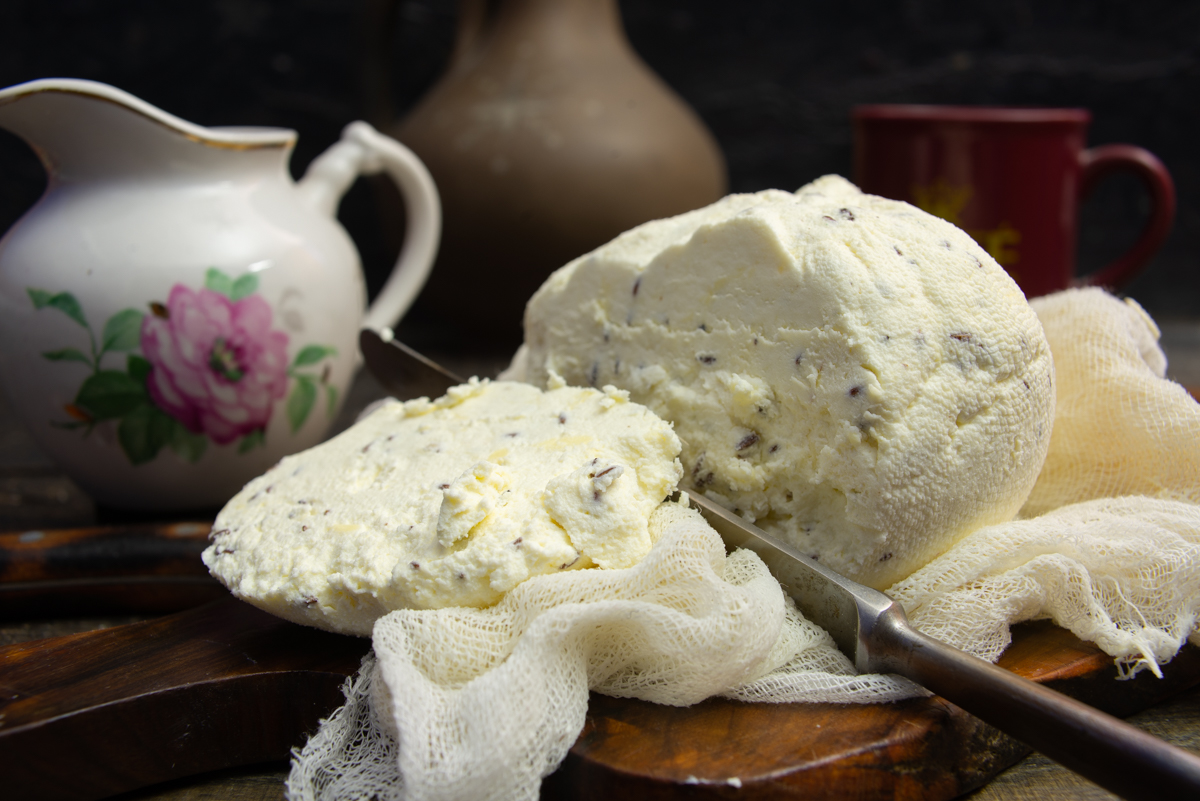
This delicate homemade cheese with fragrant caraway makes a wonderful addition to breakfast or a light snack.
Ingredients
- 1 liter (4 cups) milk
- 1 liter (4 cups) kefir (cultured milk drink)
- 100 g (3.5 oz) butter
- 50 g (1.7 oz) full-fat smetana (sour cream)
- 1/2 teaspoon salt
- 1 tablespoon caraway seeds
How to Make Creamy Caraway Farmer's Cheese
Pour the milk into a saucepan and heat it to about 40-50°C (105-120°F). Pour kefir (a cultured, fermented milk drink) into the warm milk and heat for a few more minutes until it reaches 36-40°C (97-105°F). Stir the mixture gently at this stage to prevent it from sticking to the bottom. Cover the pot and place it in a warm oven (turned off, just slightly preheated). Leave the pot in this warm spot for 5 to 12 hours until a firm curd forms, as shown in the picture. The exact time depends on your room temperature and the quality of the dairy, so you will need to experiment a bit to find the perfect timing.
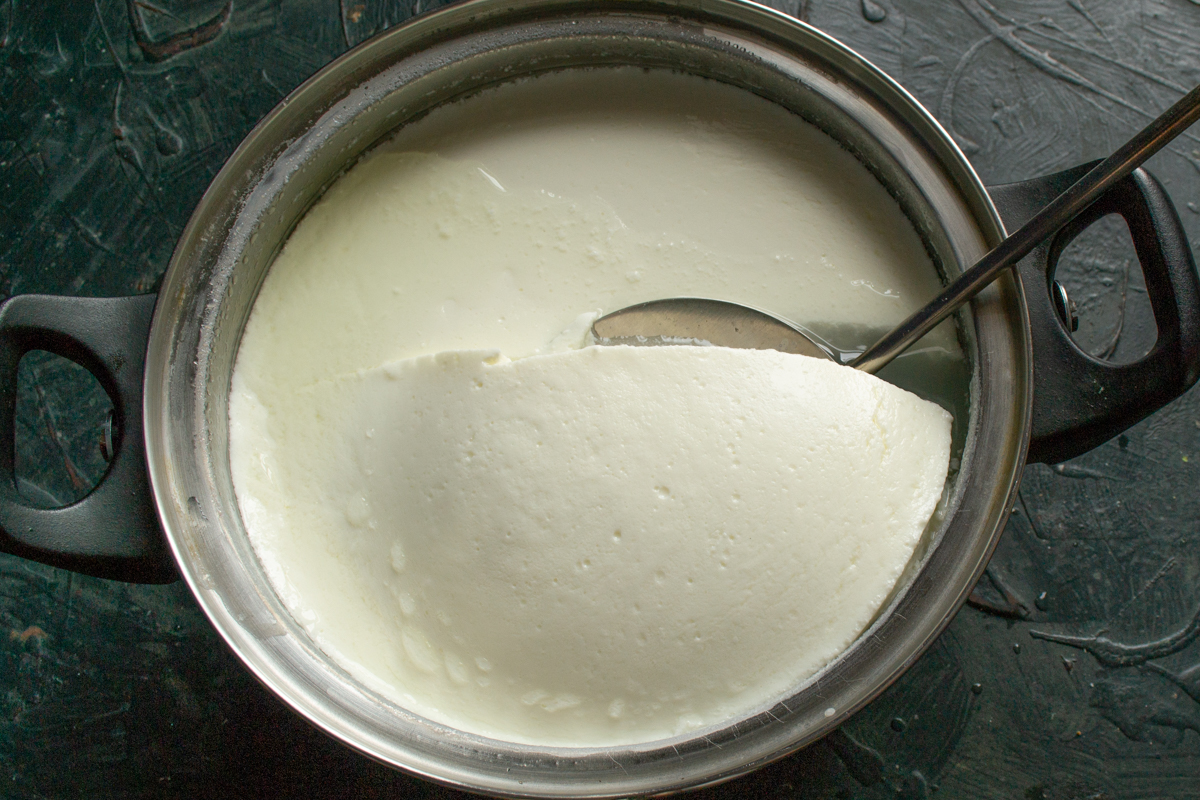
After resting in a warm place, the milk and kefir transform into a firm, smooth curd – the foundation of our cheese.
Line a colander with a dense linen cloth or several layers of cheesecloth. Carefully transfer the milk curd into it using a slotted spoon.
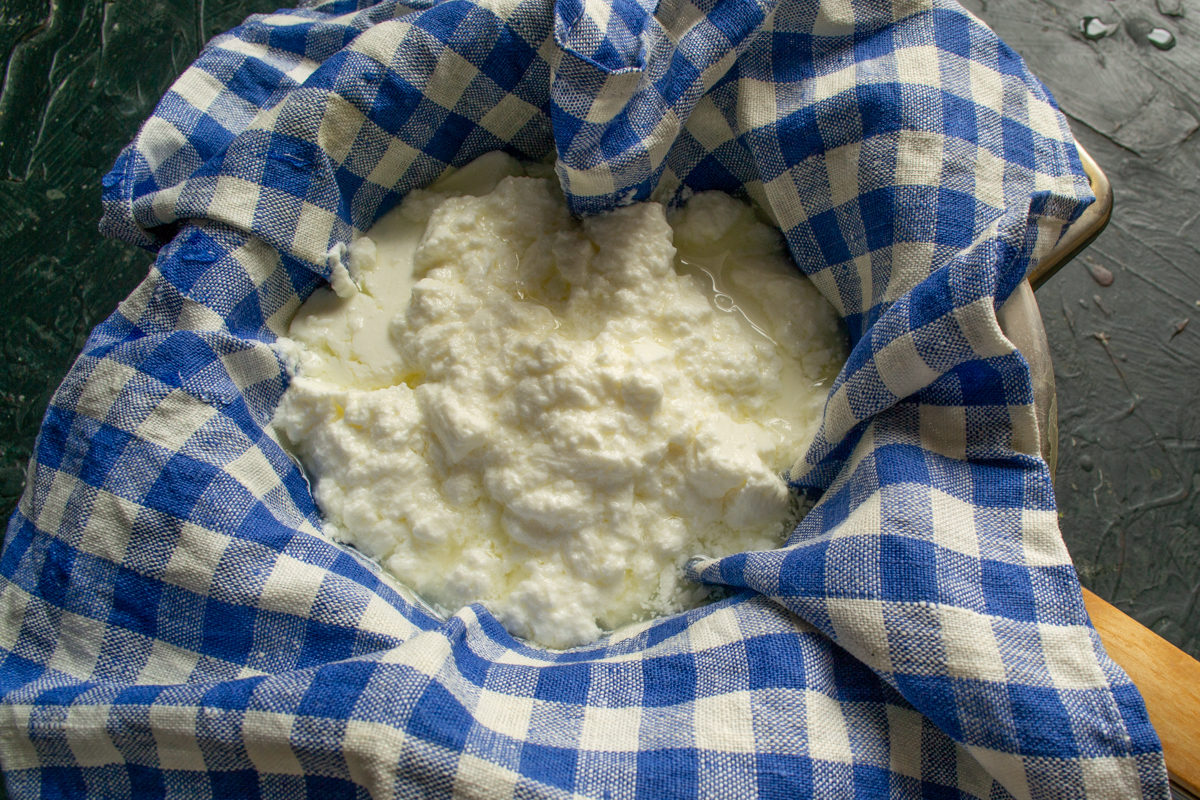
Line a colander with a thick linen cloth or several layers of cheesecloth to carefully separate the curd base from the whey.
Let the mixture drain for 2 to 3 hours to remove the excess whey.
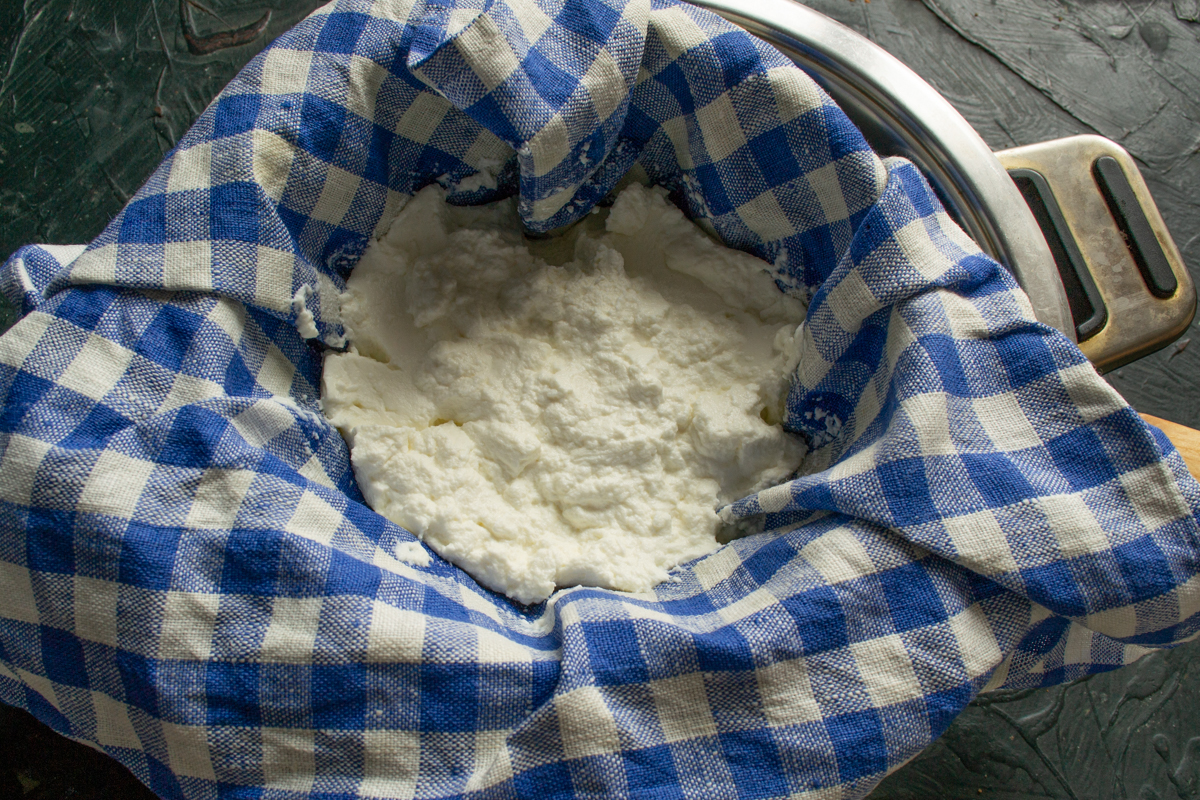
Let the cheese drain for 2 to 3 hours. The better the whey drains, the more stable the final texture will be.
Whisk room-temperature softened butter with full-fat smetana (a rich, Eastern European sour cream) and salt. The richer and thicker the sour cream, the better your final texture will be. Add salt to taste; half a teaspoon is usually enough for me, but adjust if you prefer a sharper, saltier flavor.
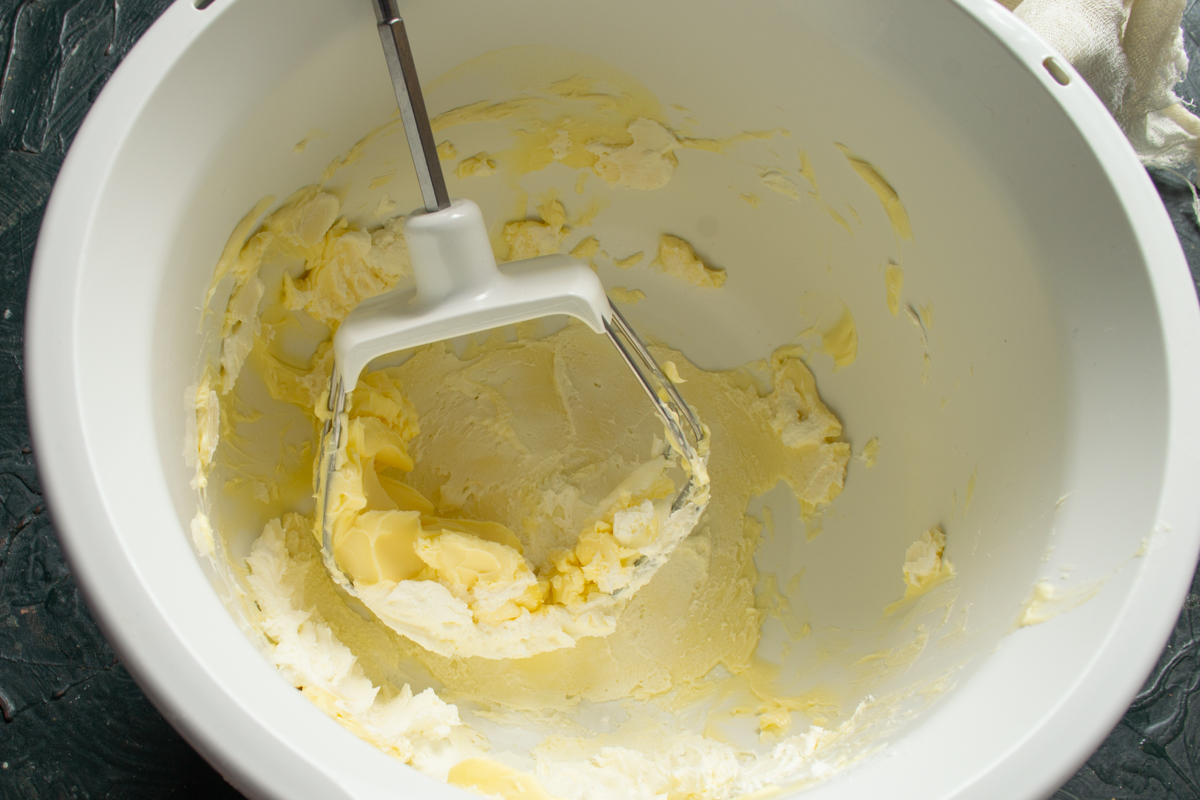
Whisk high-quality butter with rich sour cream until fluffy – this will give the cheese its unmistakable creamy flavor.
Fold in the freshly made tvorog (farmer’s cheese) in small batches, continuing to whisk the mixture until perfectly smooth.
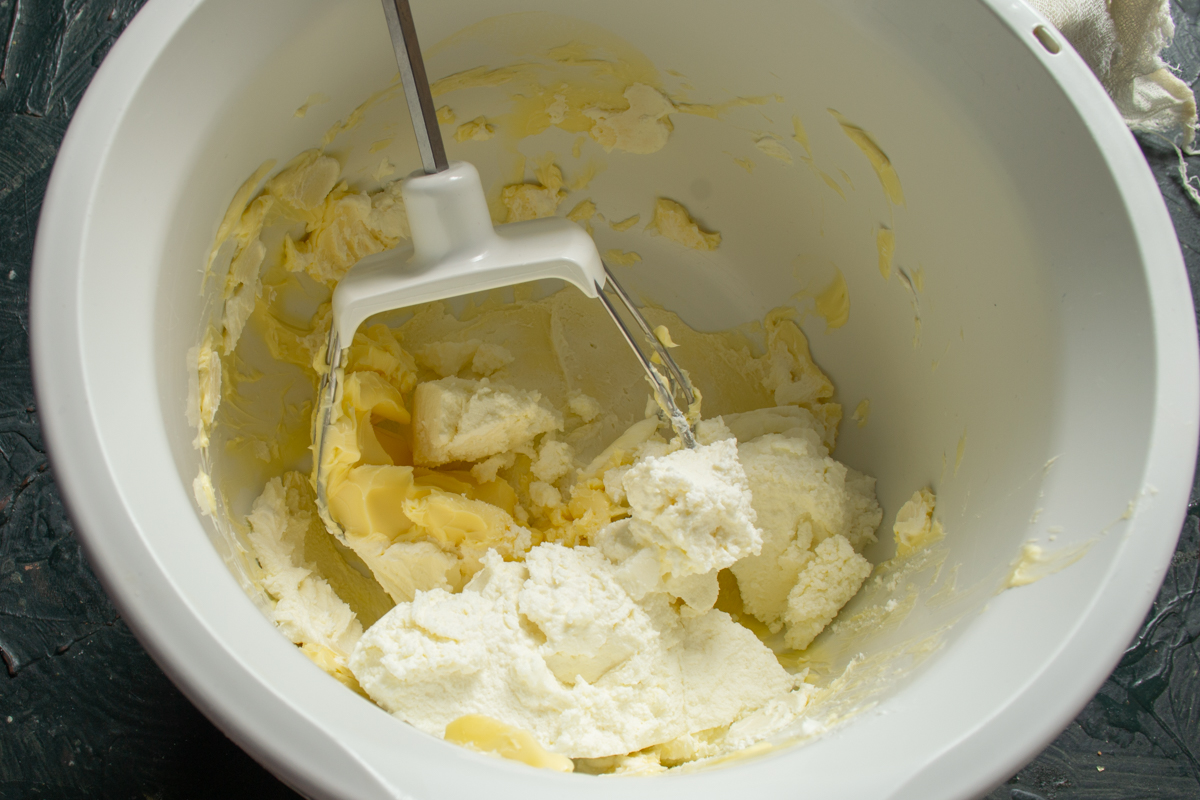
Fold the curd into the mixture in small batches, whisking continuously to achieve a perfectly smooth and delicate texture.
Toast the caraway seeds in a dry skillet over medium heat until they start to pop and release their first wisp of smoke. Transfer the toasted seeds to a cutting board, let them cool, and lightly crush them with a pestle. Fold the crushed caraway into the cheese mixture and mix thoroughly.
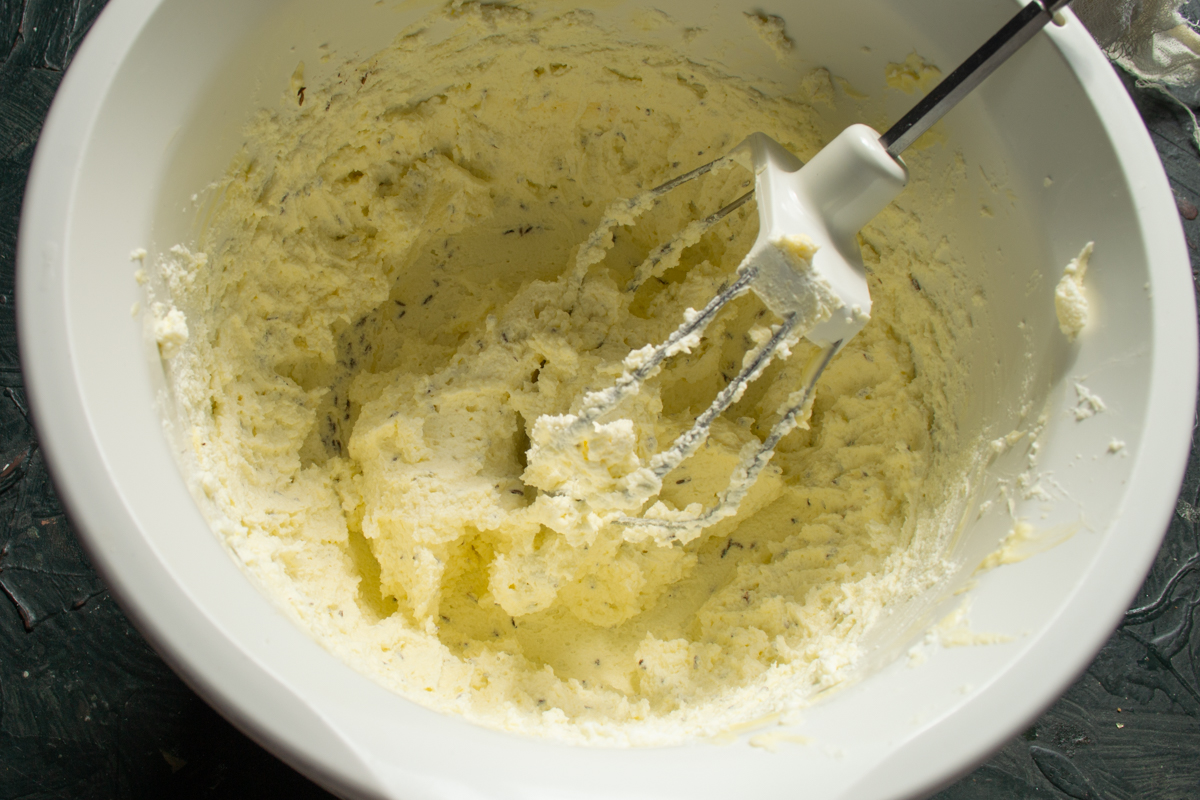
Toasted caraway seeds release their essential oils, giving this homemade cheese its signature savory and spiced flavor.
Shape the cheese using an ordinary small bowl. Place a few bamboo toothpicks or skewers at the bottom of the bowl for better drainage. Line the bowl with 3 to 4 layers of cheesecloth and spoon in the whipped cheese mass.
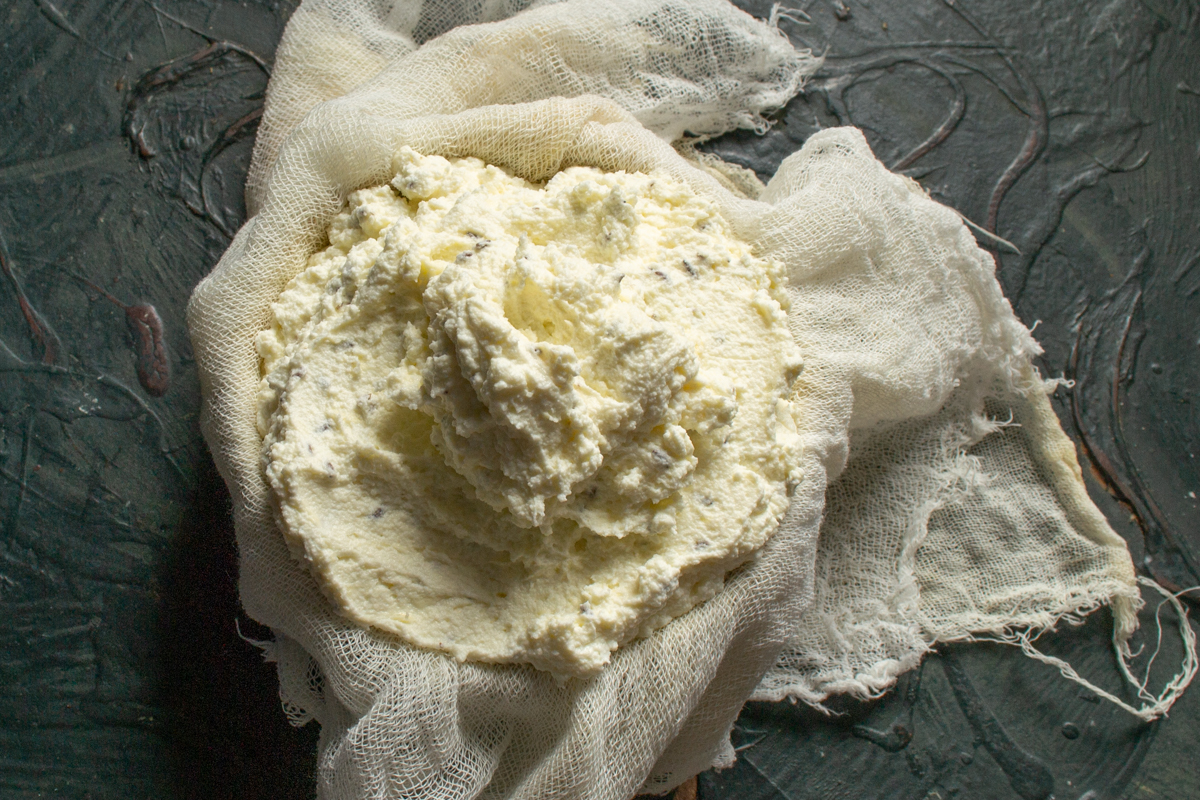
An ordinary small bowl is all you need to mold the cheese. Remember to line it with cheesecloth for easy removal later.
Twist the cheesecloth to form the cheese into a tight ball and refrigerate for 12 to 24 hours. Check periodically to drain off any accumulated whey.
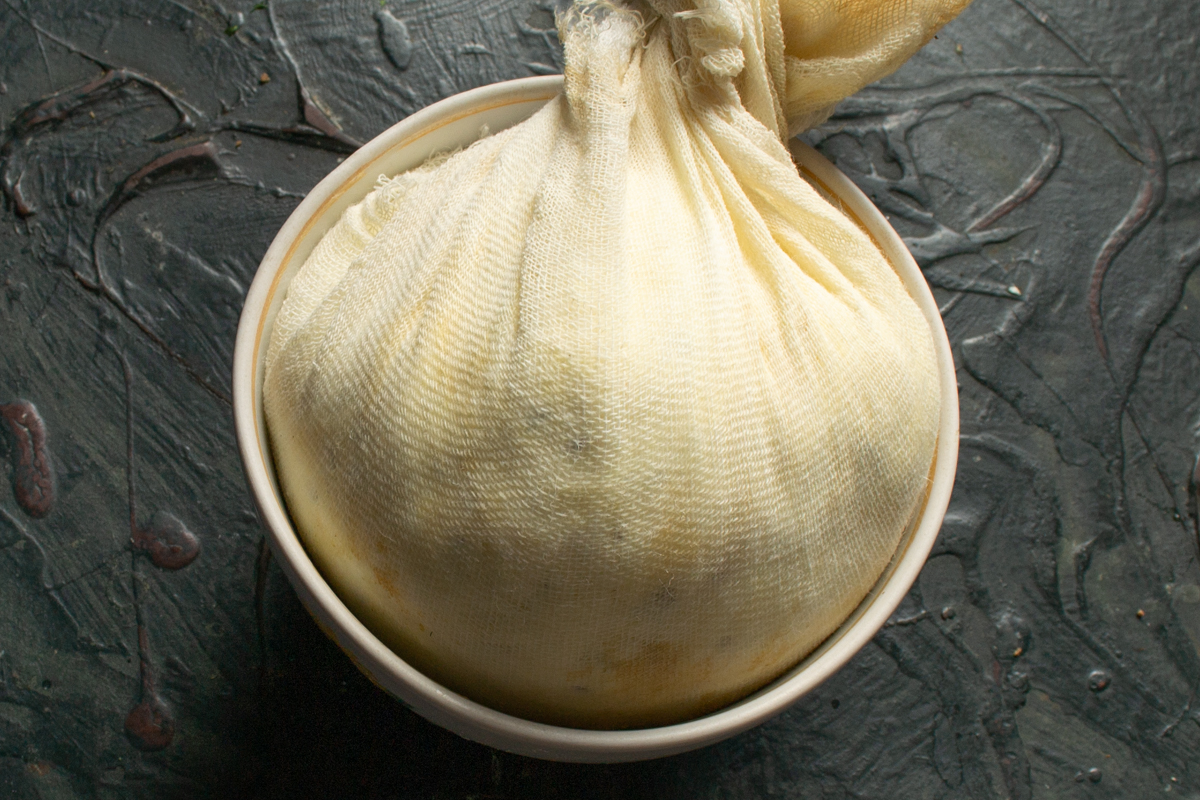
Twist the cheese tightly into a ball. It now needs time in the refrigerator to cool down completely and set firmly.
After a full day in the fridge, you will have a beautifully firm wheel of cheese. By this point, it will have stopped releasing any whey.
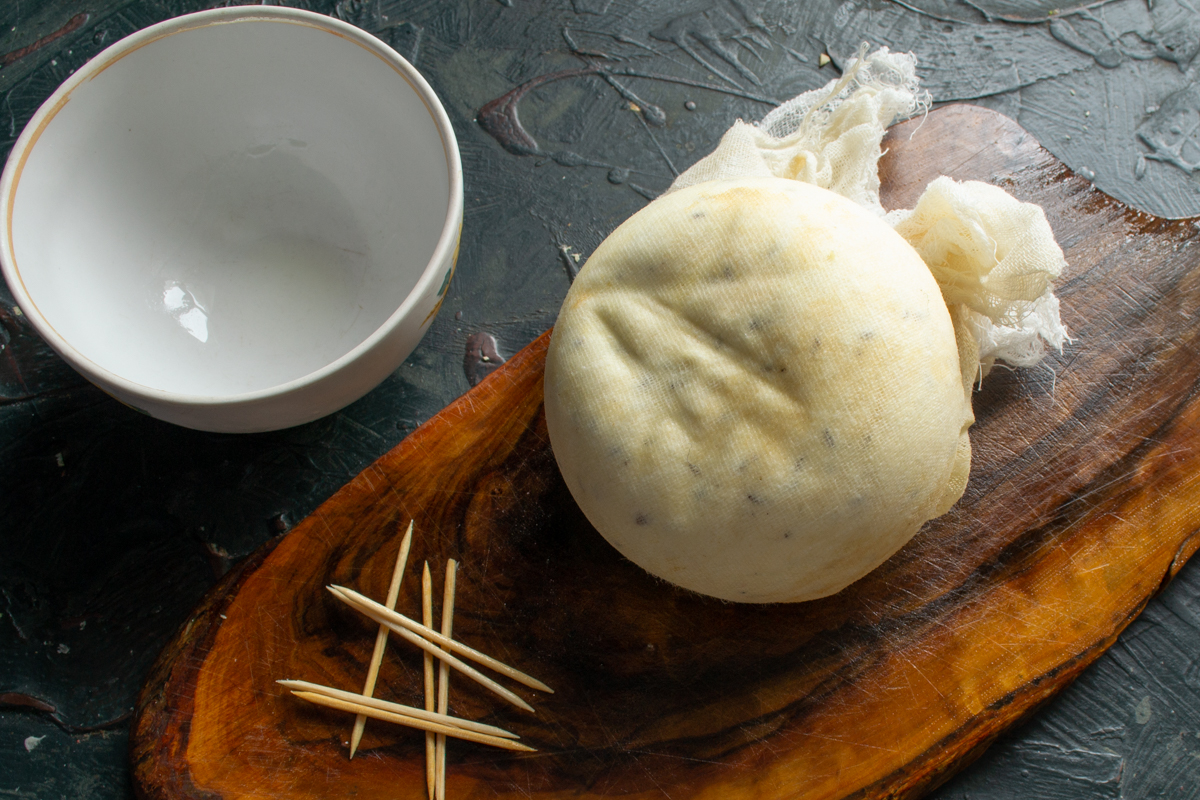
After 24 hours in the fridge, the cheese sets into a firm texture and is completely ready to be enjoyed.
If you try to slice the cheese immediately, it might crumble slightly. However, give it another day, and it will slice perfectly into thick, neat pieces. It tastes absolutely fantastic generously spread on a hearty slice of rustic rye bread!
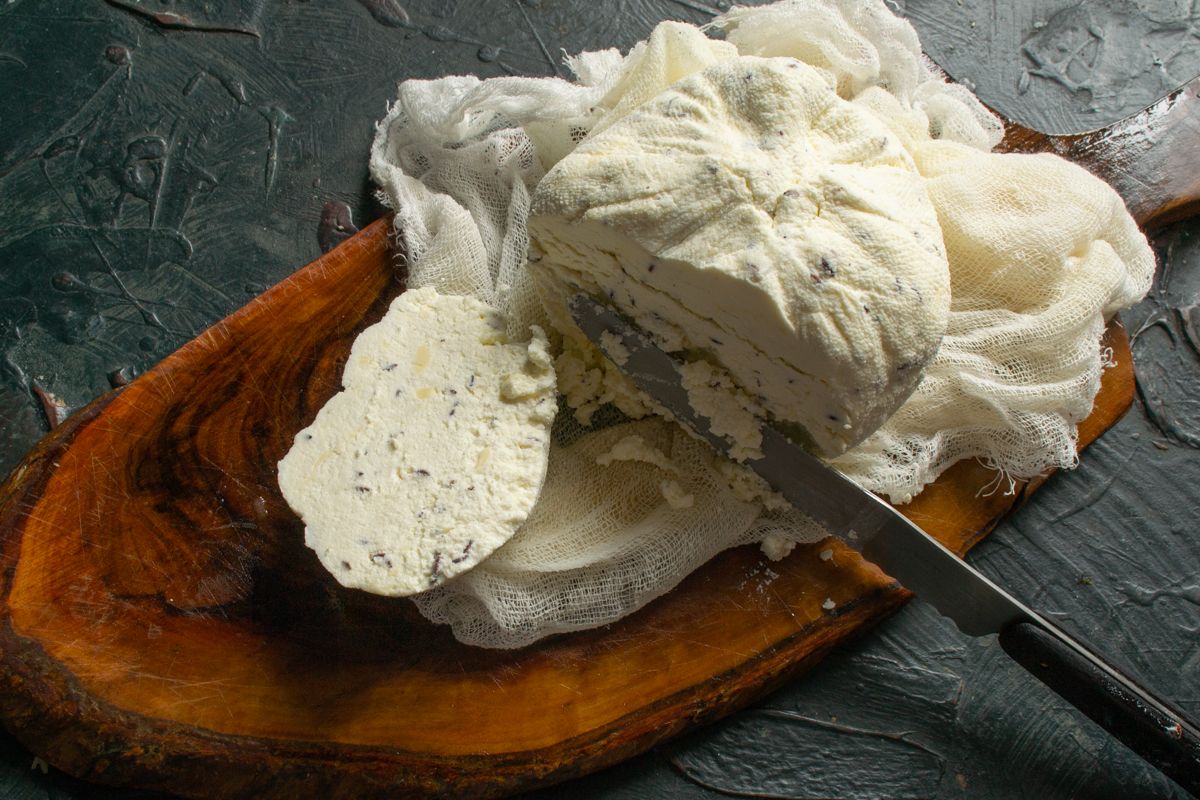
The finished cheese slices beautifully. It pairs perfectly with hearty rye bread and fresh vegetables.
This creamy caraway farmer's cheese reaches its peak flavor on the second or third day, when the savory notes of the toasted spices fully infuse the delicate curd. Serve it generously smeared on a toasted slice of hearty rye or whole-grain bread, topped with a crisp cucumber slice or a sprig of fresh dill for a perfect textural contrast. The base is highly versatile; feel free to experiment by swapping the caraway for crushed walnuts, smoked paprika, or dried basil. Store your finished cheese wheel wrapped in parchment paper or in a glass container so it can breathe without absorbing fridge odors. This homemade delight is a fantastic alternative to store-bought spreads and makes a gorgeous centerpiece for a holiday table, especially echoing the tradition of making farmer's cheese for Easter. If your mixture feels a bit too soft, do not worry - just press it a little longer under a light weight in the fridge, and next time you will achieve that perfect sliceable density.
0 comments