
Chicken khinkali offer a lighter yet incredibly juicy take on the famous Caucasian dish that originated in the mountainous regions of Georgia. It is said that the shape of this dish symbolizes the sun, with the neat dough pleats representing its rays. Unlike the classic beef version, the chicken filling boasts a more delicate flavor that, paired with the spiced broth hidden inside the pouch, creates a perfect culinary balance. Your main task as a cook here is to achieve flawless dough elasticity so it securely holds the juices during boiling, turning every bite into a tiny celebration of flavor.
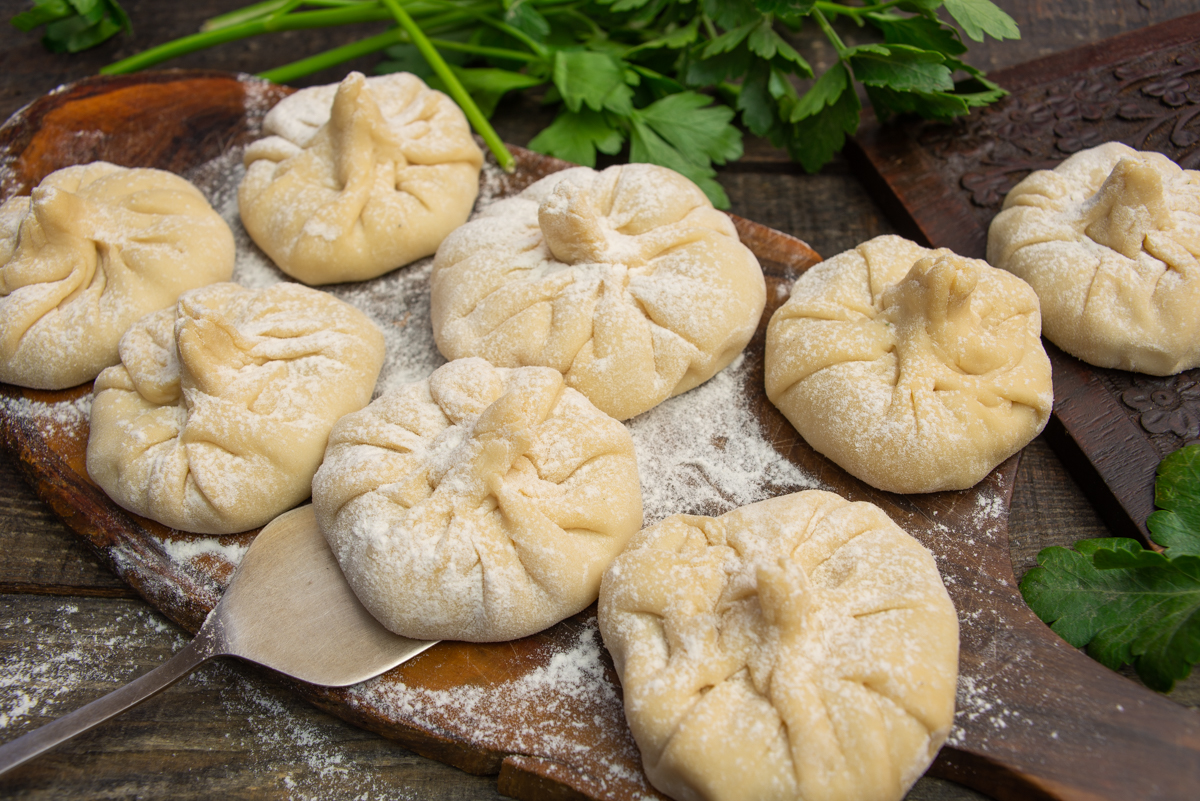
Appetizing homemade khinkali with a juicy chicken filling. Thin dough and a generous filling are the secrets to the perfect dish.
Dough Ingredients
- 270 g wheat flour
- 1 chicken egg
- 120 g water
- 1/2 teaspoon salt
Filling Ingredients
- 300 g ground chicken
- 40 g shpik (pork fatback)
- 40 g onion
- 50 ml chicken broth
- salt and ground black pepper to taste
- a few sprigs of parsley or cilantro, optional
How to Make Chicken Khinkali
Prepare the dough, which is similar to standard dumpling dough. Measure out the wheat flour. Sift it into a deep bowl, making a well in the center for the liquid ingredients.
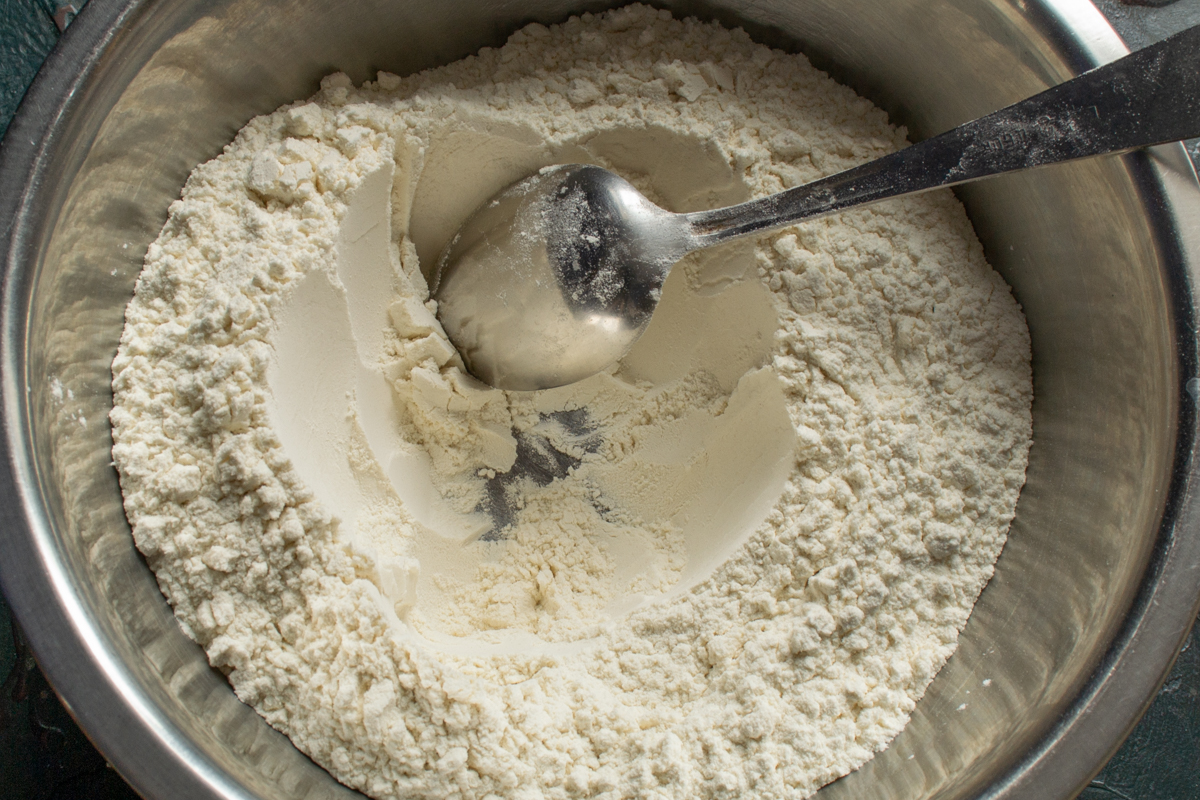
Pour the wheat flour into a deep bowl and make a well in the center for the liquid ingredients.
Dissolve the salt in cold water, then pour this salted water directly into the well.
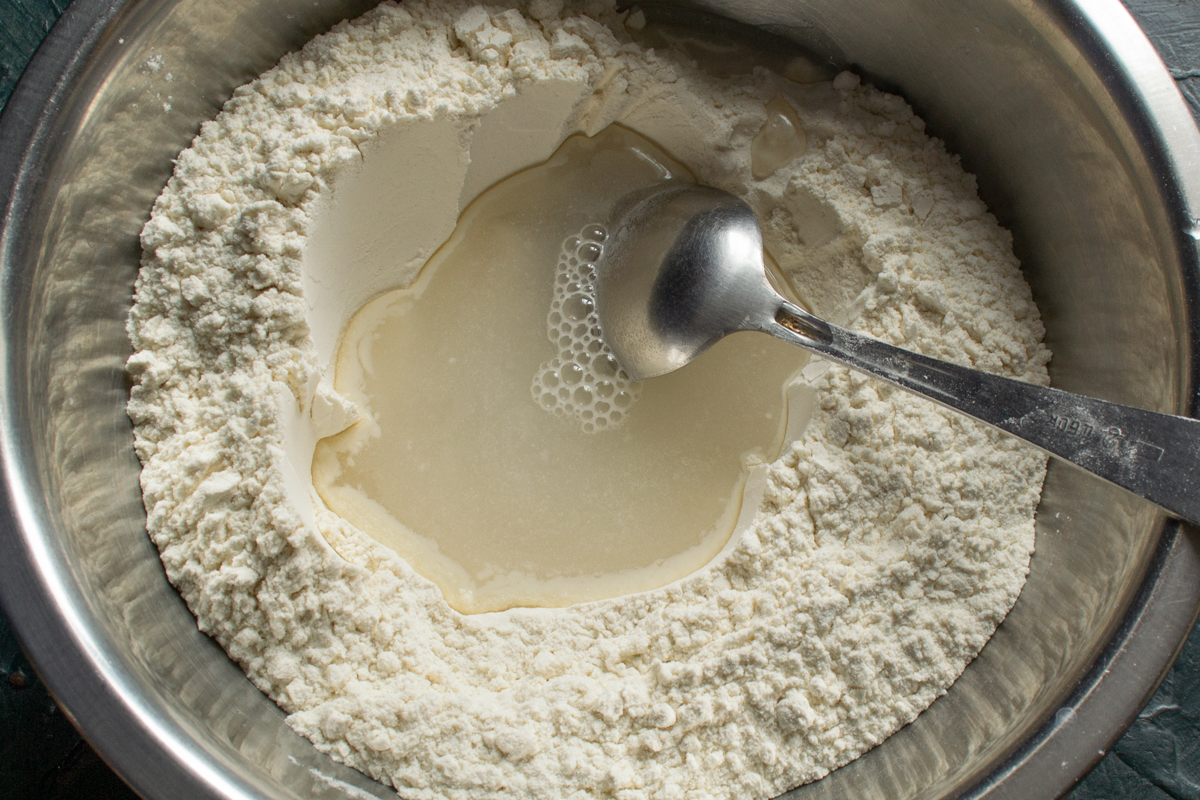
Dissolve the salt in cold water and carefully pour the salted water into the center of the flour well.
Crack a chicken egg into a separate small bowl and lightly beat it with a fork.
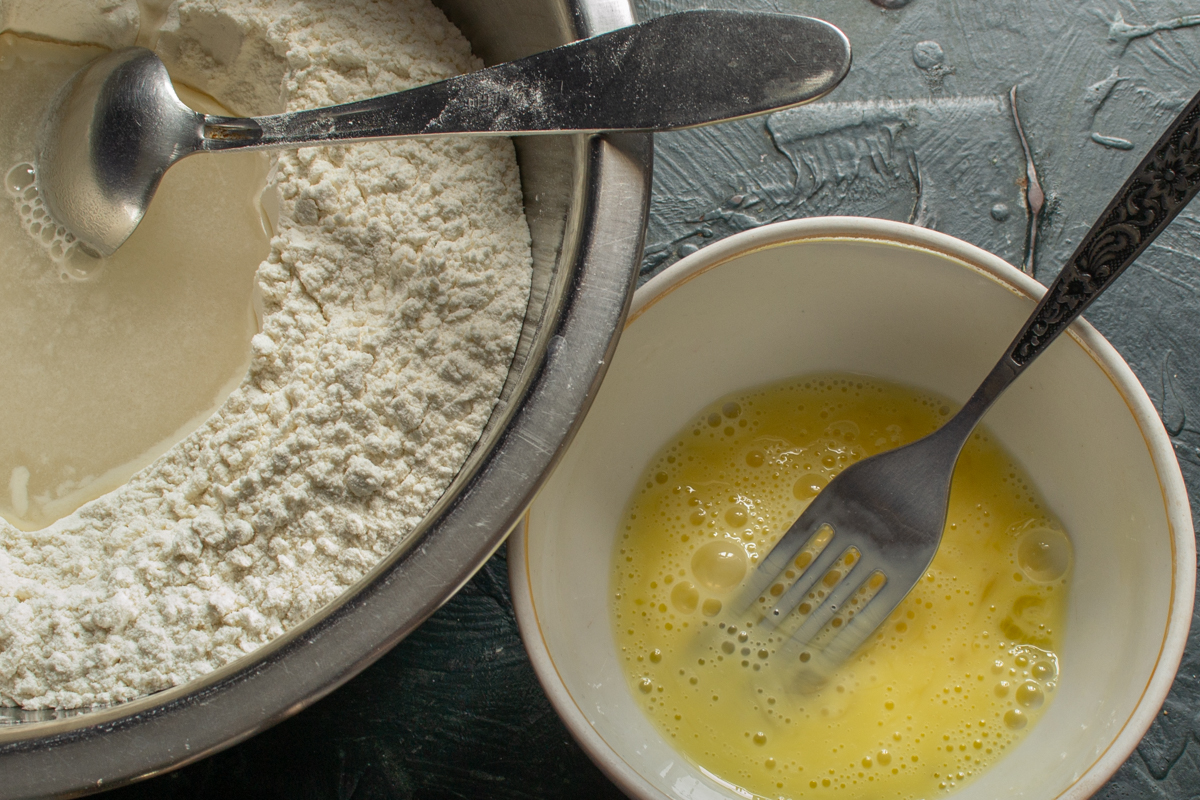
In a separate bowl, whisk the egg with a fork until smooth before adding it to the main mixture.
Pour the beaten egg into the water and start mixing the dough with a spoon.
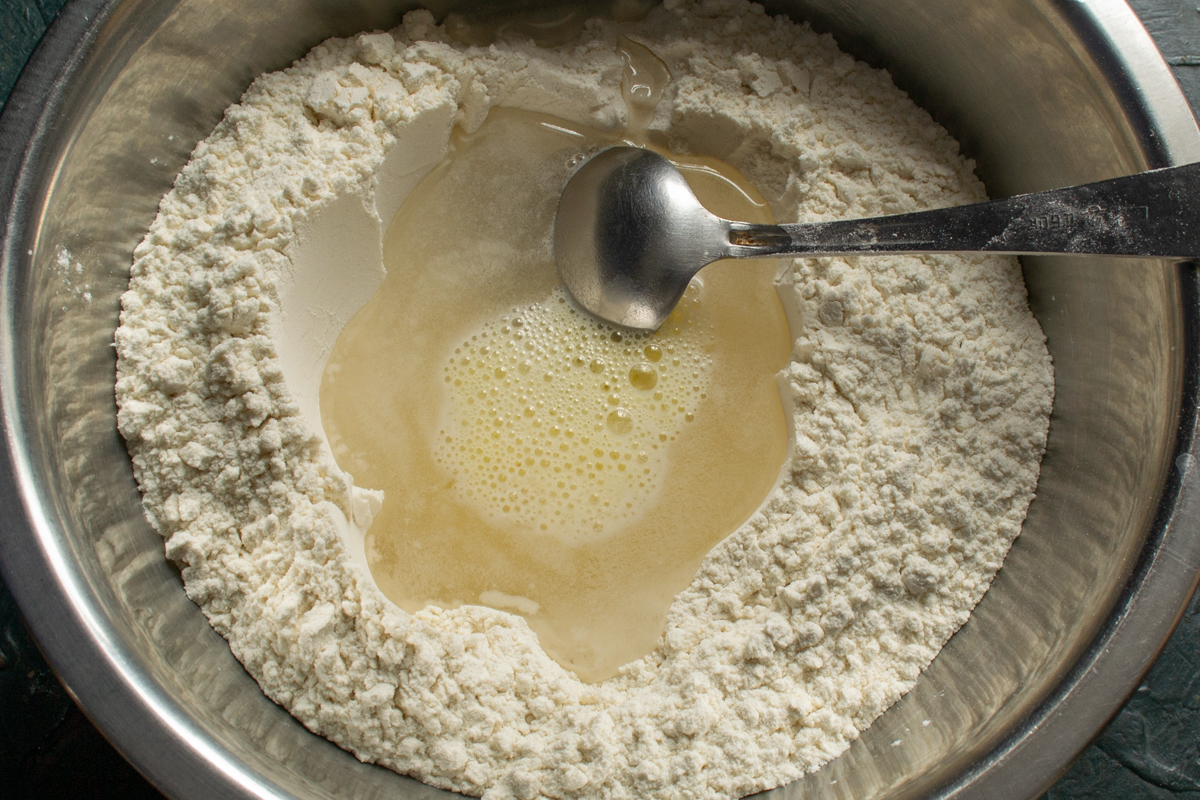
Add the beaten egg to the flour and water, then start mixing the dough with a spoon.
Dust your work surface with flour, turn out the dough, and knead it by hand for about 5 minutes. The dough is ready once it becomes smooth and no longer sticks to your hands. Now the dough needs to rest—this is a crucial step. Wrap it tightly in plastic wrap or cover it with a heavy inverted bowl. Let it sit at room temperature for 30 minutes while you prepare the filling.
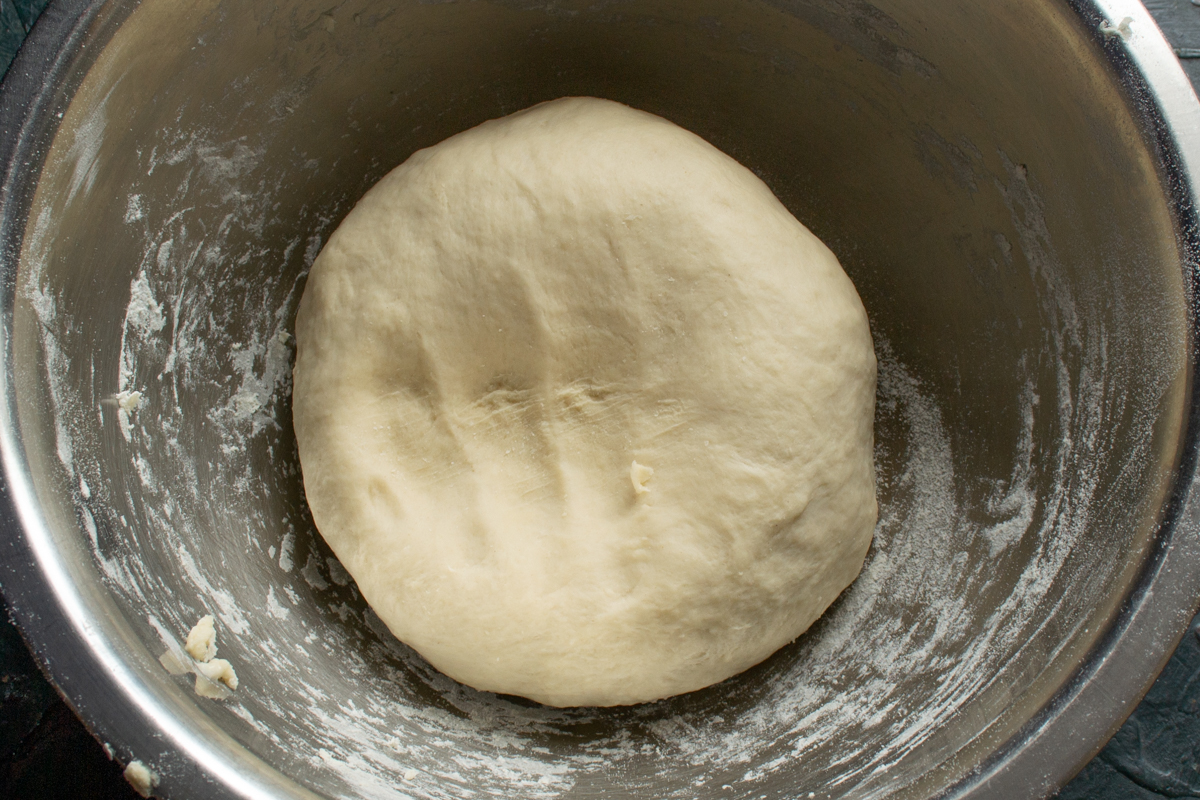
Knead the dough by hand until smooth, then let it rest under plastic wrap for 30 minutes.
You will need ground chicken with the right balance of meat and fat, or, as in this recipe, a mix of chicken breast fillet and pork fatback. I like to freeze portions of ground meat and fatback in bags so I always have these bases ready to go.
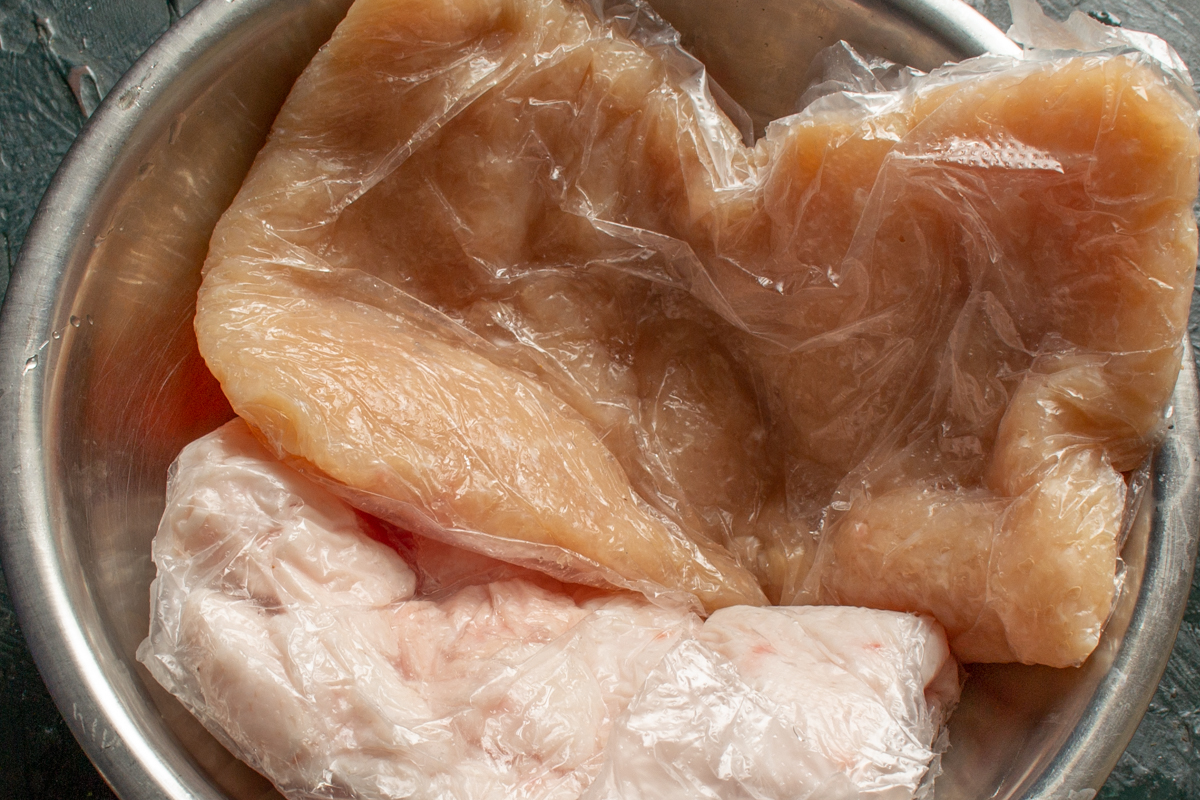
For the best filling, a combination of chicken breast and pork fatback provides ultimate juiciness.
Pass the pork fatback, ground chicken, and chopped onion through a meat grinder. Then, pour in the cold chicken broth.
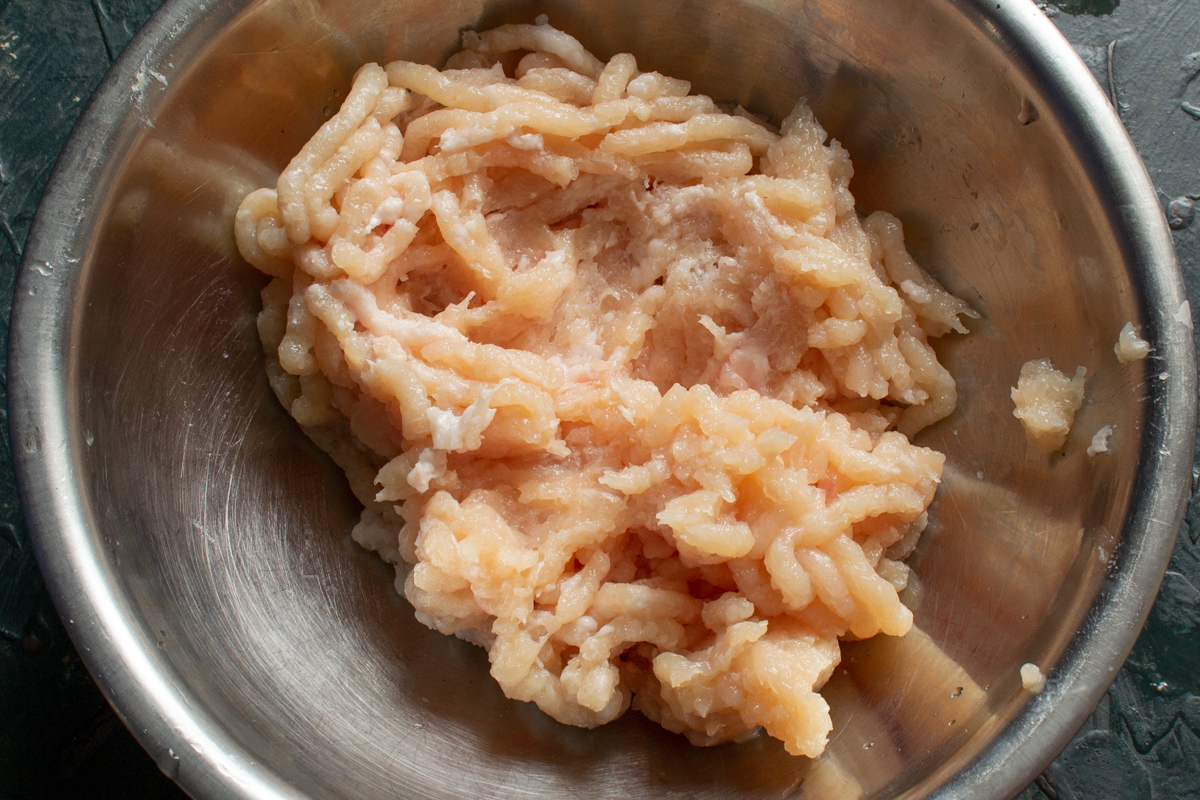
Pass the meat, fatback, and onion through a meat grinder to create a tender base for the filling.
Season with salt and ground black pepper to taste, then mix the filling thoroughly. Khinkali are often enhanced with fresh herbs; if you love cilantro or parsley, fold in 1 to 2 tablespoons of chopped herbs at this stage.
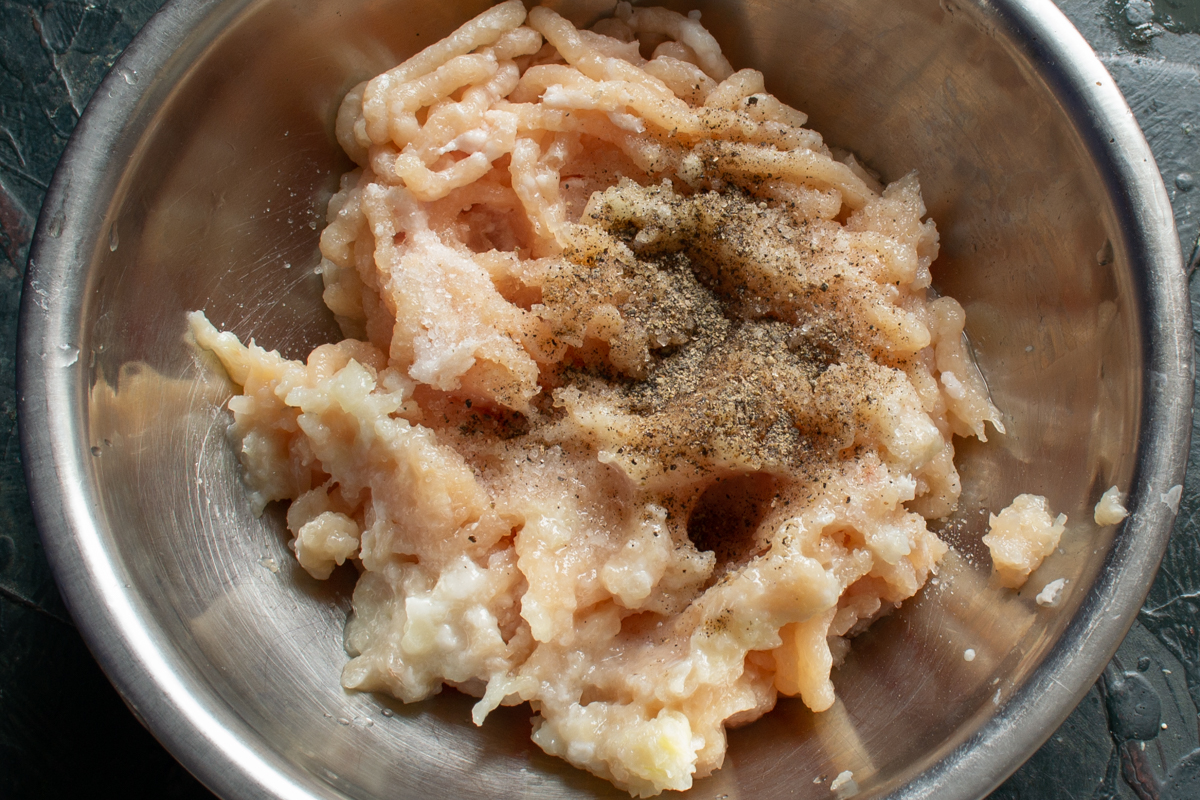
Season the filling with salt and pepper, then fold in cold broth to create that signature juice inside the khinkali.
Divide the rested dough into pieces weighing 25 to 30 grams each. Dust a cutting board with flour and roll the dough pieces into smooth balls.
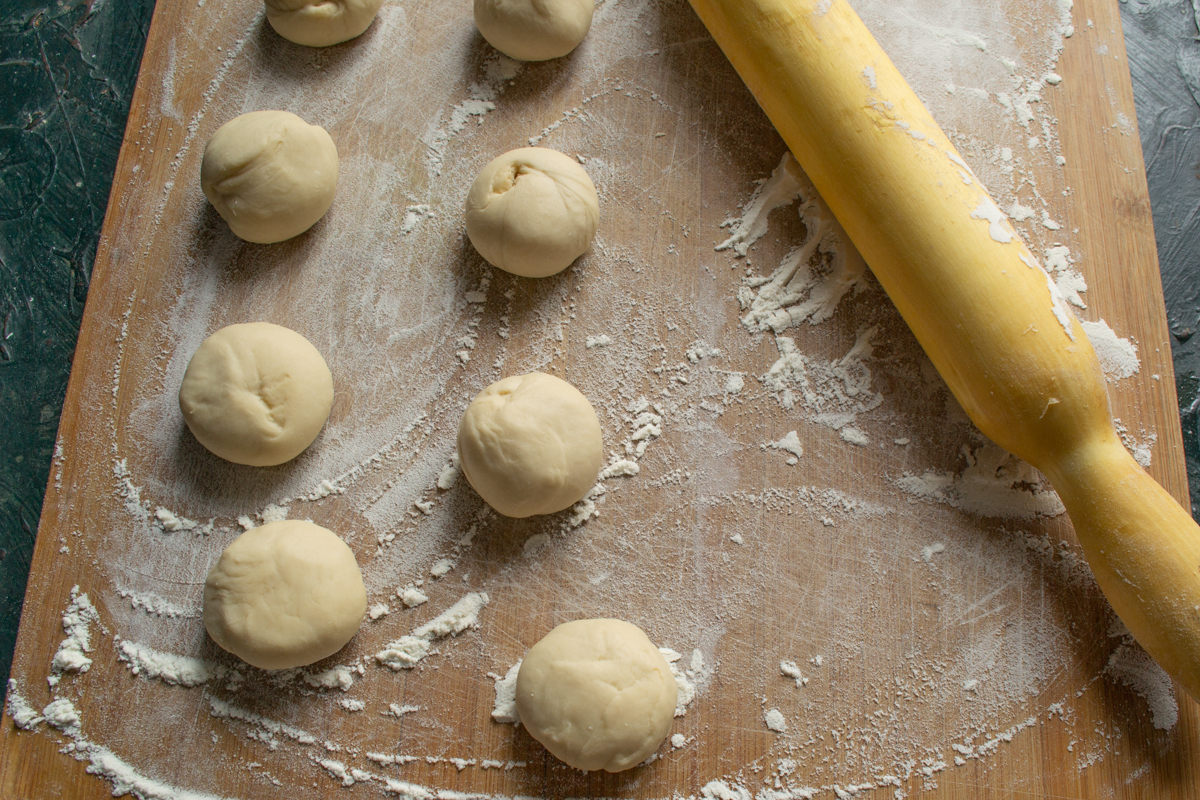
Divide the rested dough into pieces weighing about 30 grams and roll them into smooth balls.
Roll out each dough ball into a very thin, round wrapper. Place about 30 grams of the chicken filling right in the center.
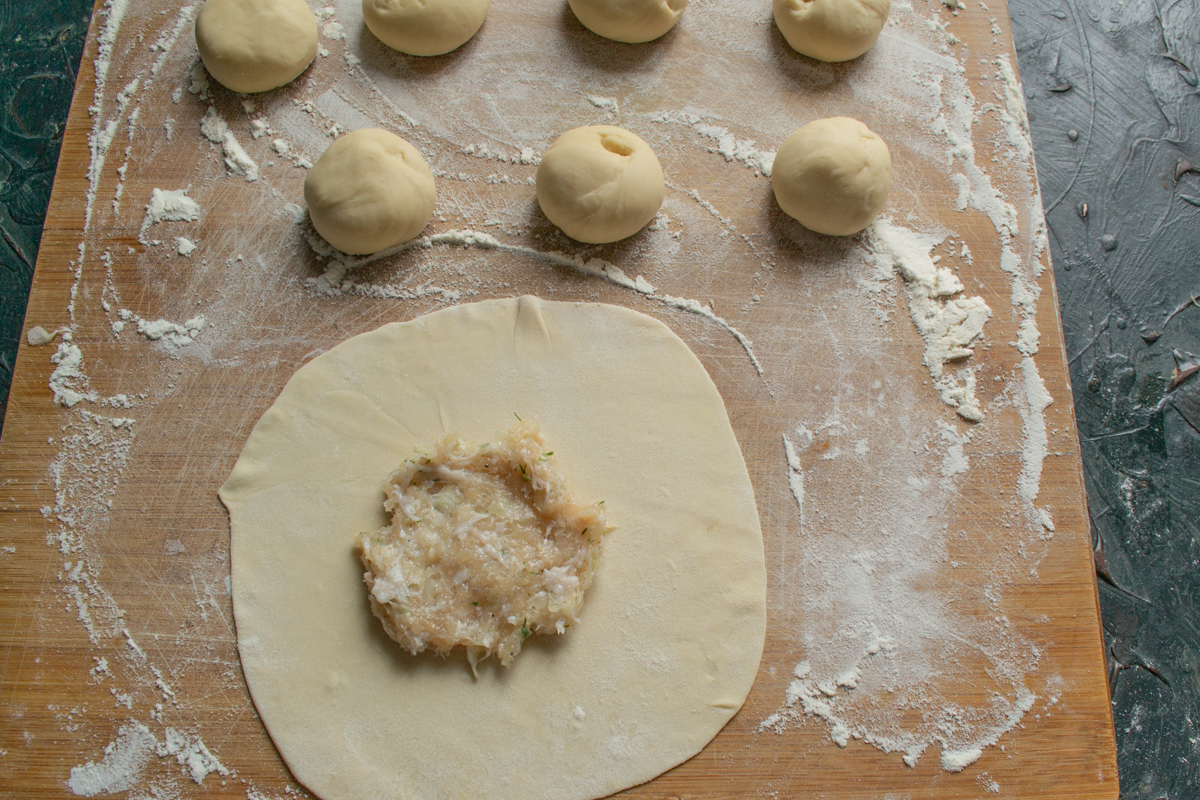
Roll out the dough very thinly and place a generous portion of chicken filling right in the center.
Lift the edges of the wrapper and pleat them together in the center. You will get a fairly dense knot of dough; give it a gentle squeeze to ensure the filling is securely sealed inside.
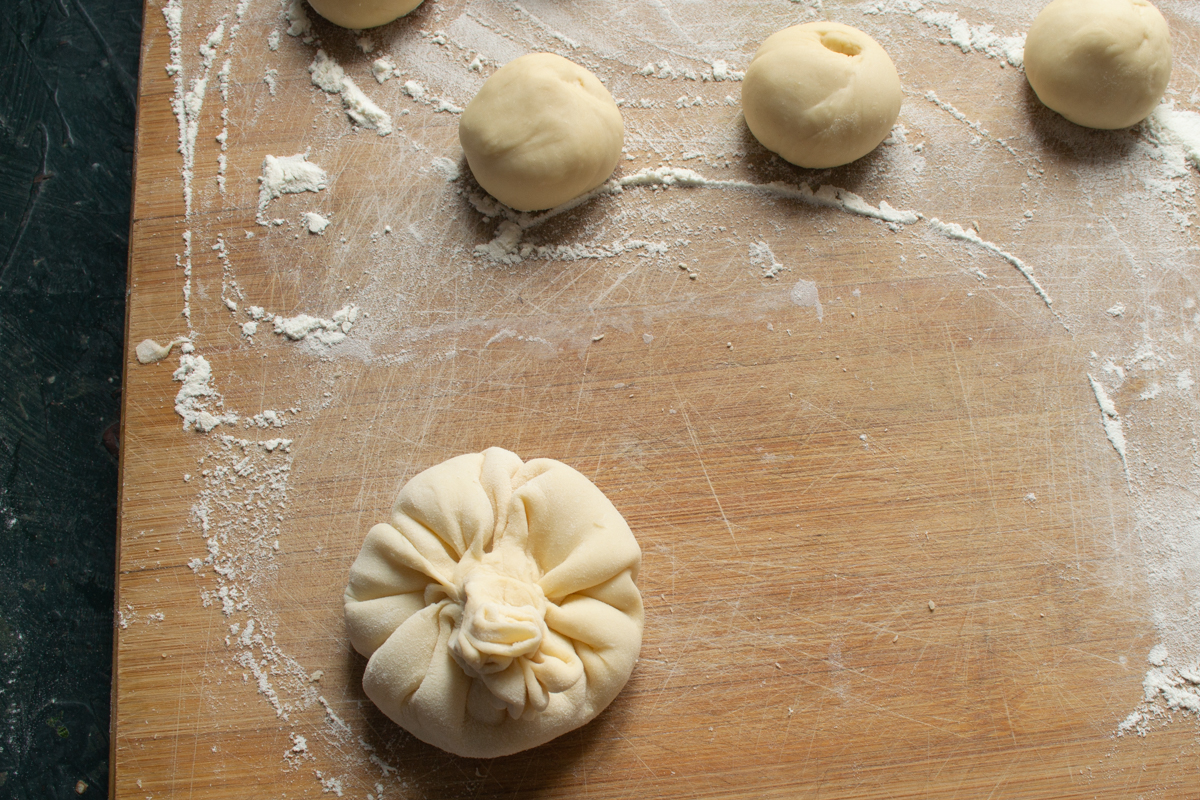
Lift the dough edges and pleat them tightly together in the center to form a little pouch.
Continue shaping the rest of the khinkali in the same way. I usually trim off the excess dough from the top, leaving a neat little stem.
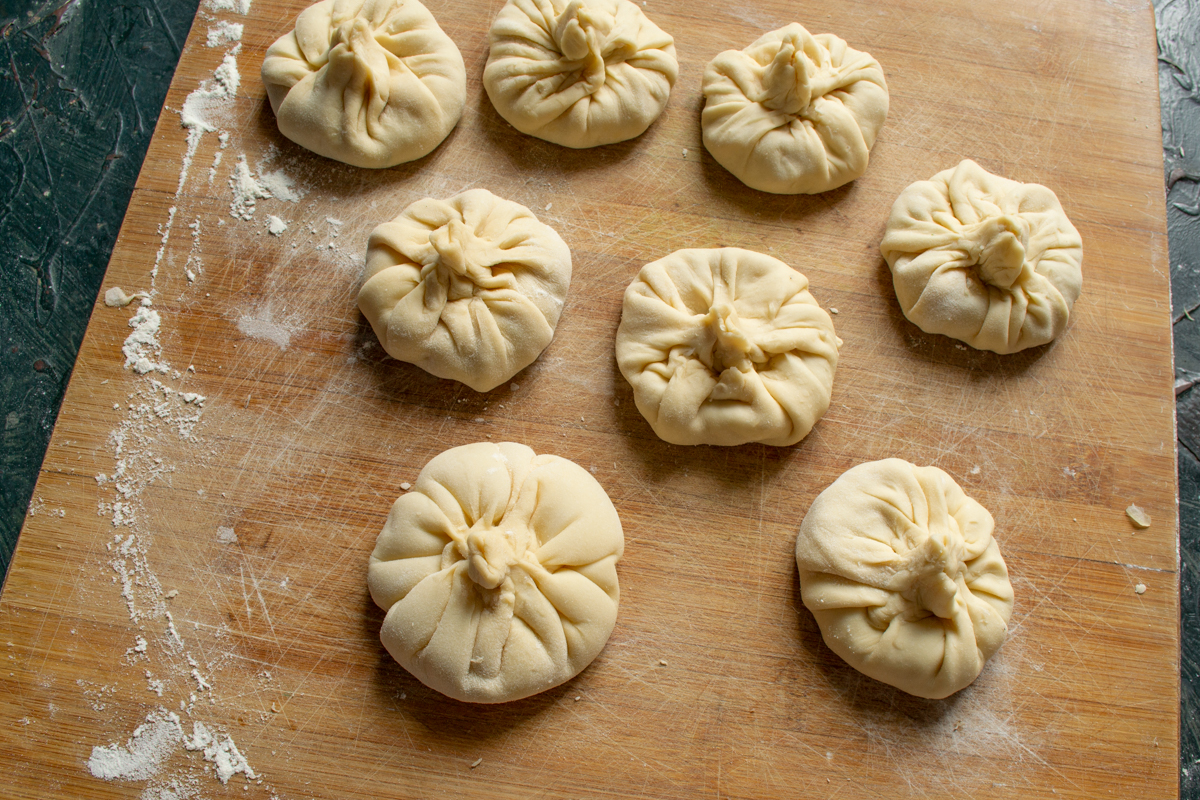
Squeeze the khinkali stem to ensure the filling is securely packed. You can trim off the excess dough on top.
Dust the shaped khinkali with flour to prevent sticking. You can transfer them to the freezer if you are making a batch for later. If cooking immediately, bring 2 liters of water to a rolling boil, salt it generously, and carefully drop the khinkali in. Cook them just like standard dumplings—let them simmer for a few minutes after they float to the surface.
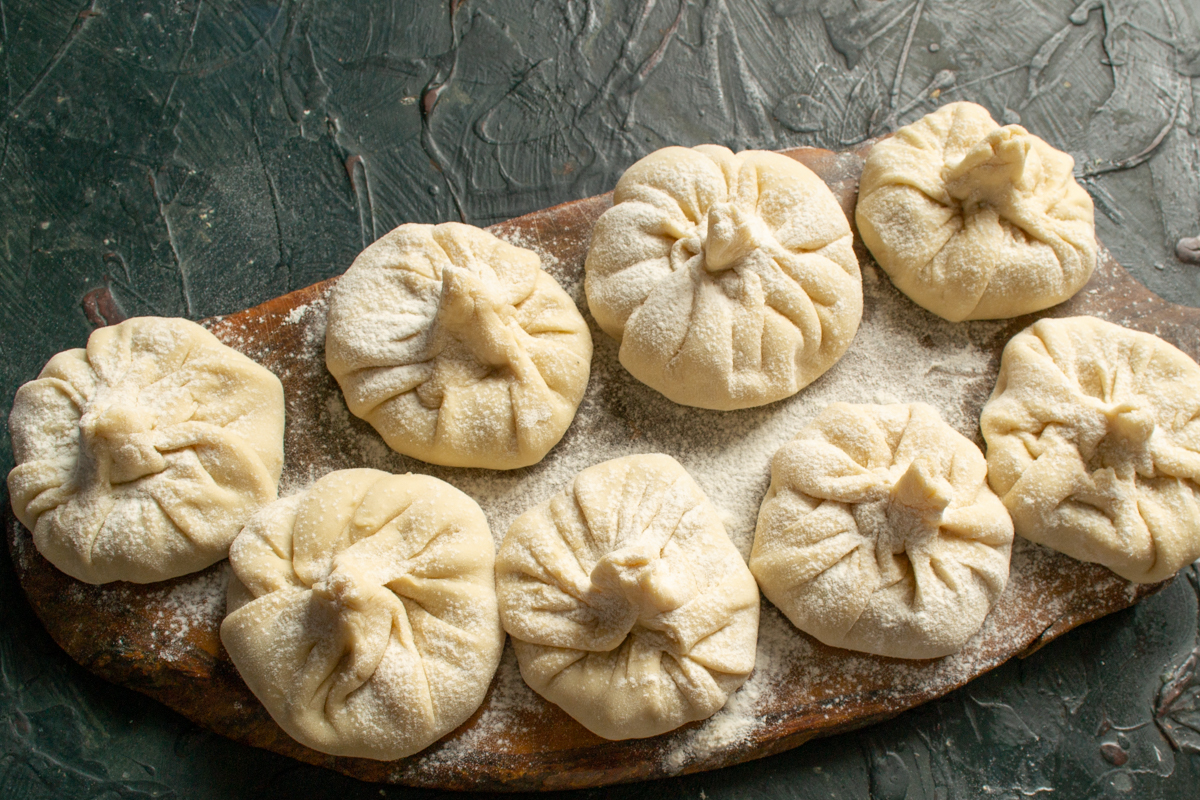
Dust the shaped khinkali with flour. Now they are ready to be boiled in salted water or frozen for later.
Serve your freshly cooked chicken khinkali piping hot, generously dusted with freshly ground black pepper to perfectly complement the tender poultry. Remember, these are eaten strictly with your hands: hold the dumpling by its thick dough stem, take a careful bite from the side to slurp the aromatic broth, and only then eat the rest. If you crave brighter flavors, fold finely chopped cilantro into the filling or serve the dish with a garlic sauce.
The dense dough stems are traditionally left uneaten, as they can sometimes remain slightly undercooked—but counting them on a plate is the best way to spot the ultimate fan of the dish! If you happen to have any leftover chicken khinkali, pan-fry them in butter the next day until golden brown. This will give the dough a mouthwatering crunch and introduce a completely new dimension to the dish.
0 comments