
Pork tushenka (canned stewed meat) with onions is more than just preserved meat; it is a true symbol of home comfort and practicality. The tradition of preserving meat for future use through long, slow simmering is rooted in times when it was crucial to store food without a refrigerator, maintaining its nutritional value. Making this homemade preserve on the stovetop does not require an autoclave—just a large pot and some patience. Slow-cooked in its own juices, the pork belly turns incredibly tender, while the layer of rendered fat on top acts as a natural preservative. Serve it with grechka (buckwheat porridge) or pearl barley for a classic camper's breakfast, or mix the meat with pasta to instantly create a hearty makarony po-flotski (navy-style pasta with ground meat).
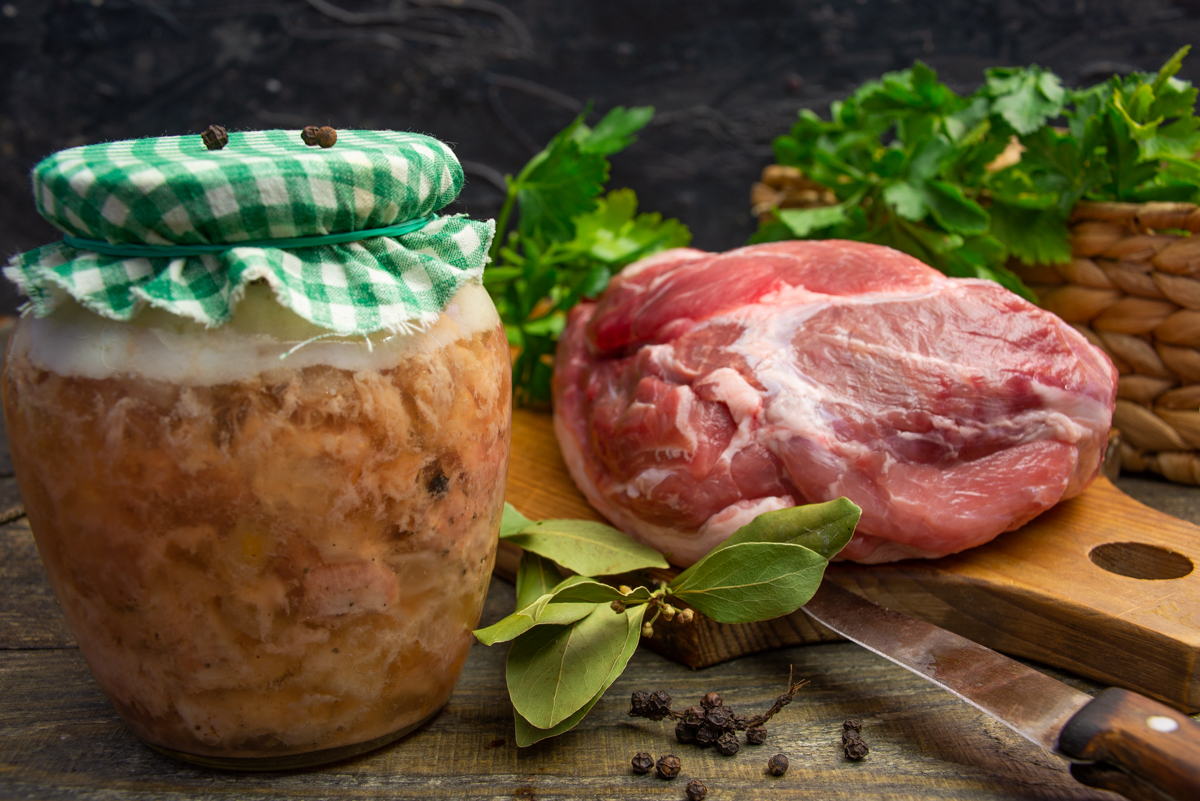
Appetizing homemade pork tushenka with onions. It pairs beautifully with any side dish and has a long shelf life.
Ingredients
- 750 g (1.6 lbs) meaty pork belly
- 60 g (2 oz) onion
- Salt and ground black pepper to taste
- Bay leaf, whole allspice, black peppercorns, and fennel seeds
- Water
How to make stovetop pork tushenka with onions
Remove the skin from the pork belly and cut the meat into 3-centimeter (1.2-inch) cubes. For tushenka, you need a meaty pork belly with thin layers of fat. If the belly is too fatty, it is better to salt it like salo (cured pork fat).
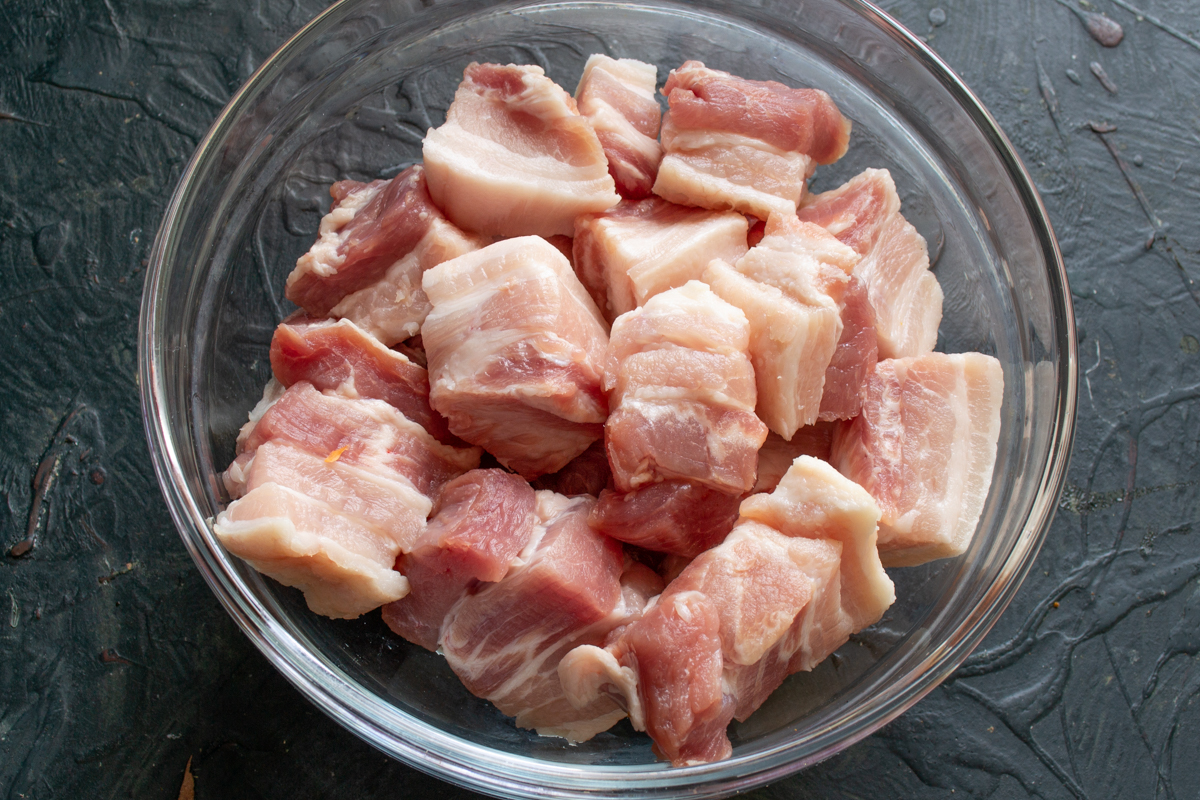
Pork belly with thin layers of fat is ideal for tushenka. Cut it into 3-centimeter (1.2-inch) cubes.
Finely chop the onion and add it to the diced pork belly.
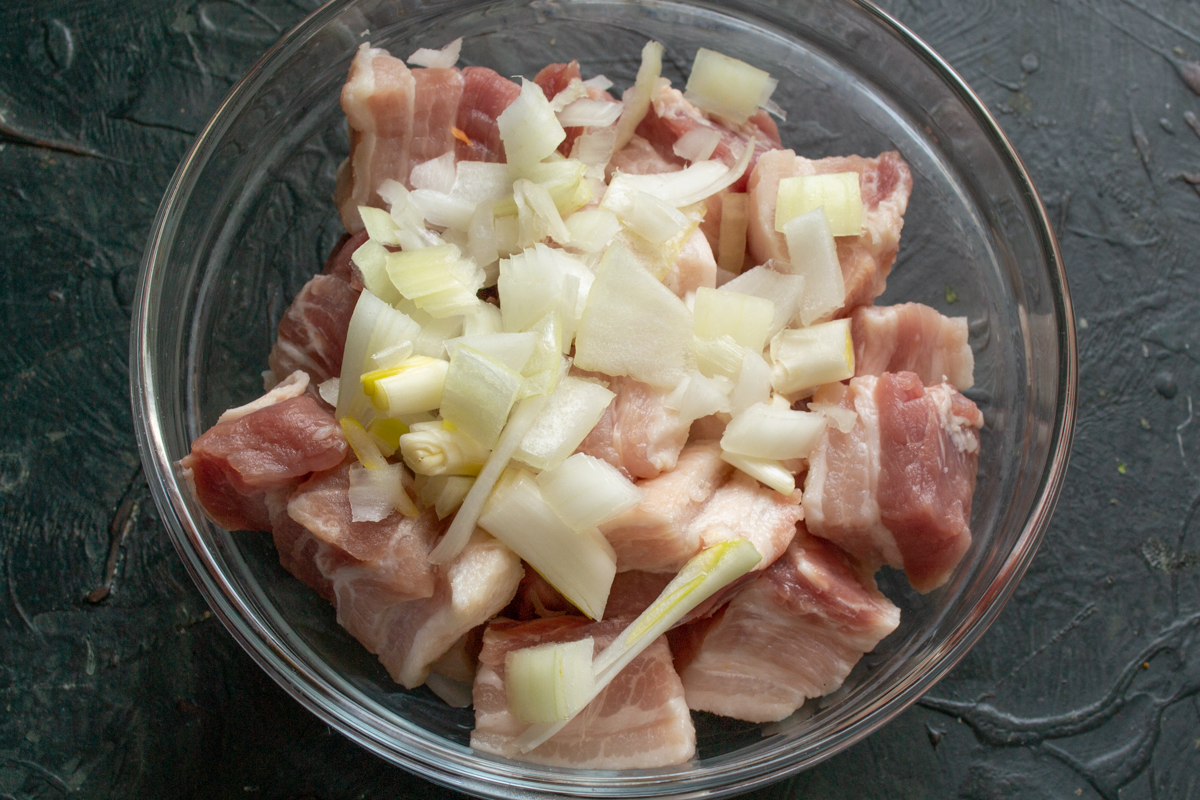
Add finely chopped onion to the meat, which will release its juices during the long slow cooking process.
Season with salt and ground black pepper to taste. There are no strict rules for the exact amount of salt—season the meat just as you normally would for a stew or soup.
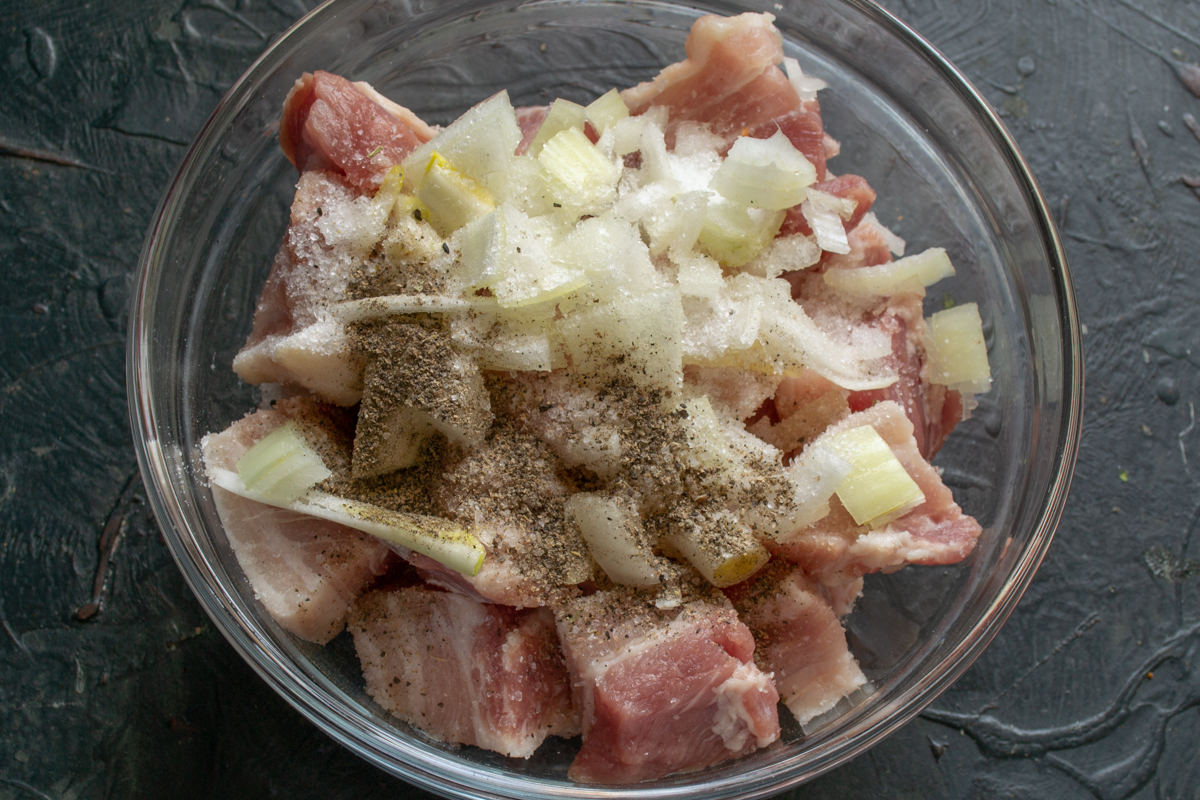
Season the meat with salt and pepper just as you would for a regular stew or soup.
Thoroughly mix the pork belly with the onion and seasonings. Pack the meat loosely into a glass jar, filling it up to the shoulders. A 750-800 ml (about 25-27 oz) jar perfectly fits 700-750 g (1.5-1.6 lbs) of diced meat. If you are making a larger batch, proportionally increase the amount of pork and the number of jars.
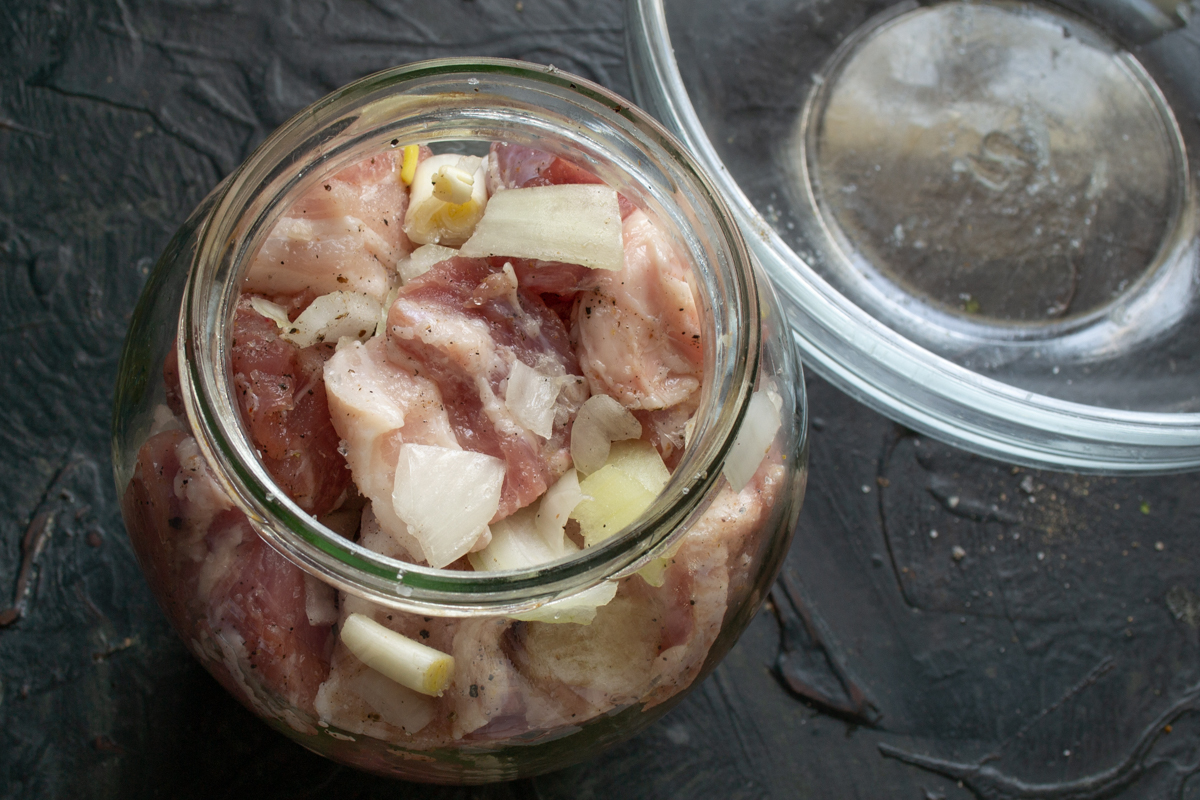
Pack the meat loosely into the jar, filling it right up to the shoulders.
Pour in cold water to cover the meat. Poke the mixture with the handle of a spoon so the water fills all the empty pockets. Leave 2 centimeters (about 0.8 inches) of headspace at the top.
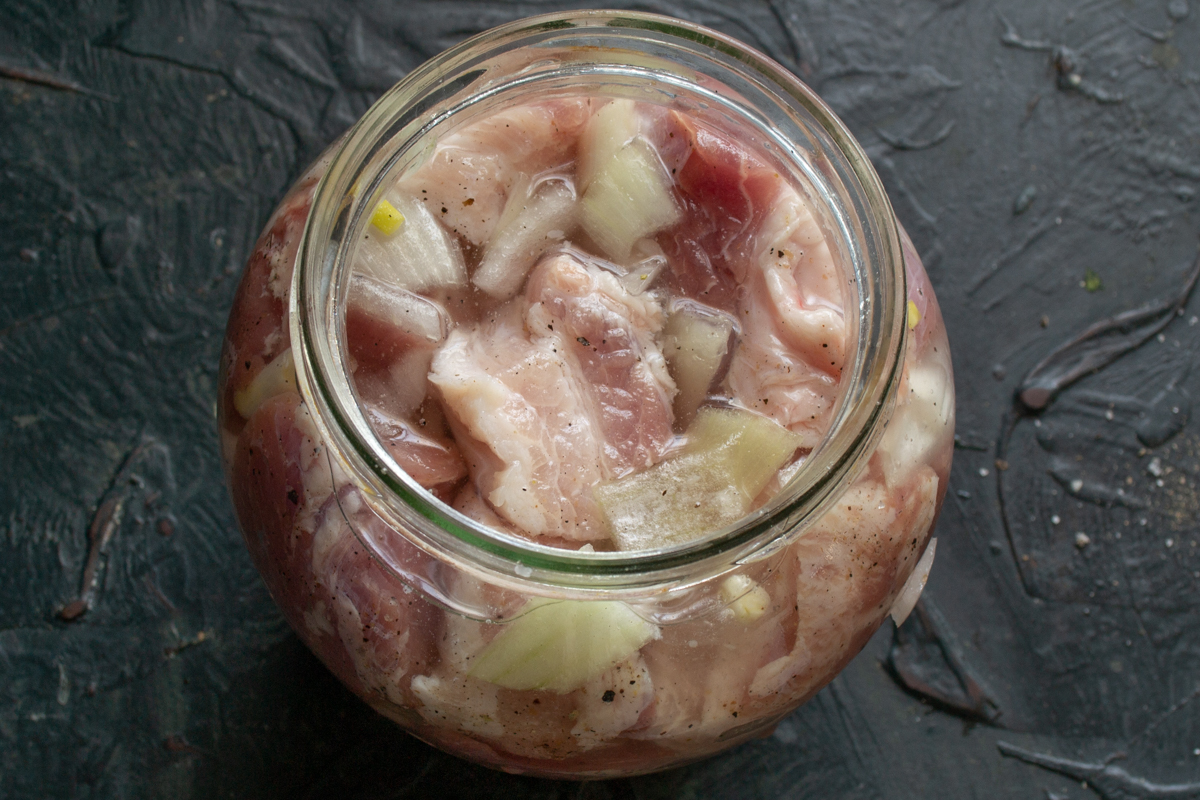
Pour water over the meat and poke with a spoon to release any trapped air and fill all the gaps.
Add the aromatics: 2 bay leaves, a pinch of fennel seeds, and a few black and allspice peppercorns.
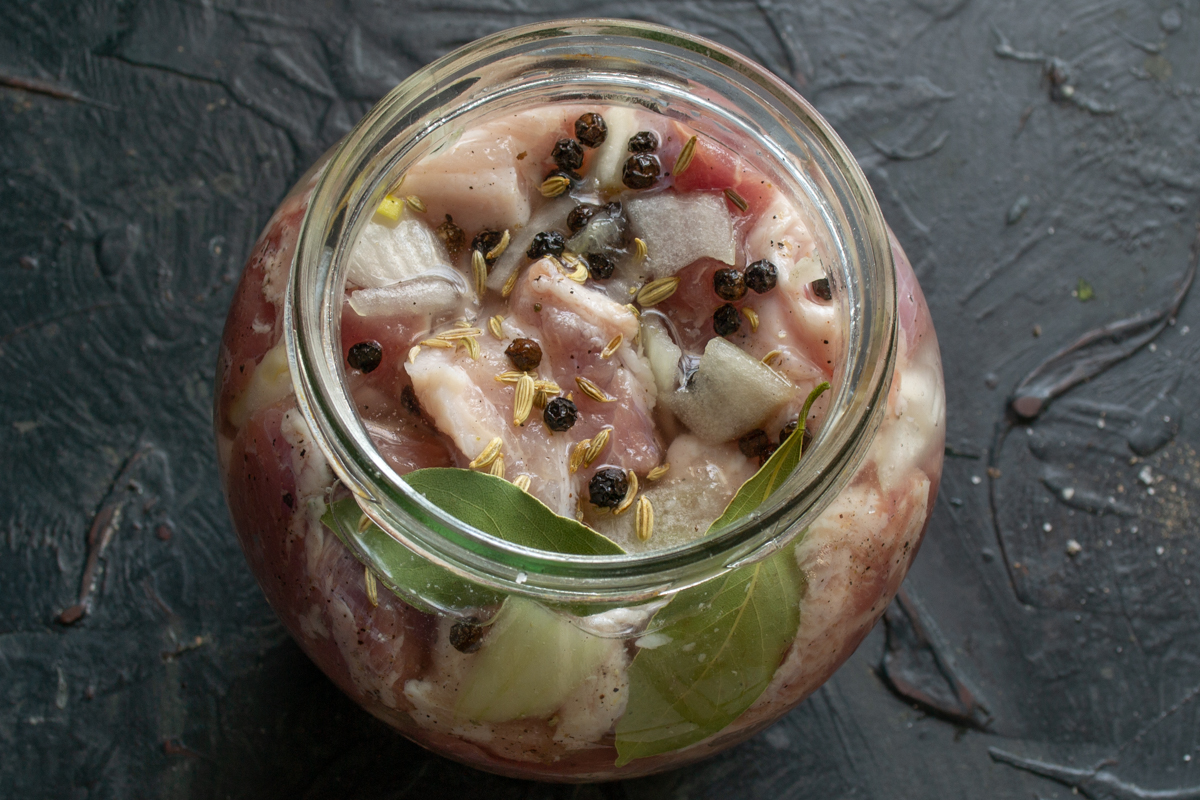
Add a bay leaf, fennel seeds, and peppercorns for the classic aroma of homemade tushenka.
Screw the lid on tightly. If you are making tushenka in jars without screw-top lids, use a canning sealer to secure the lids tightly at this stage.
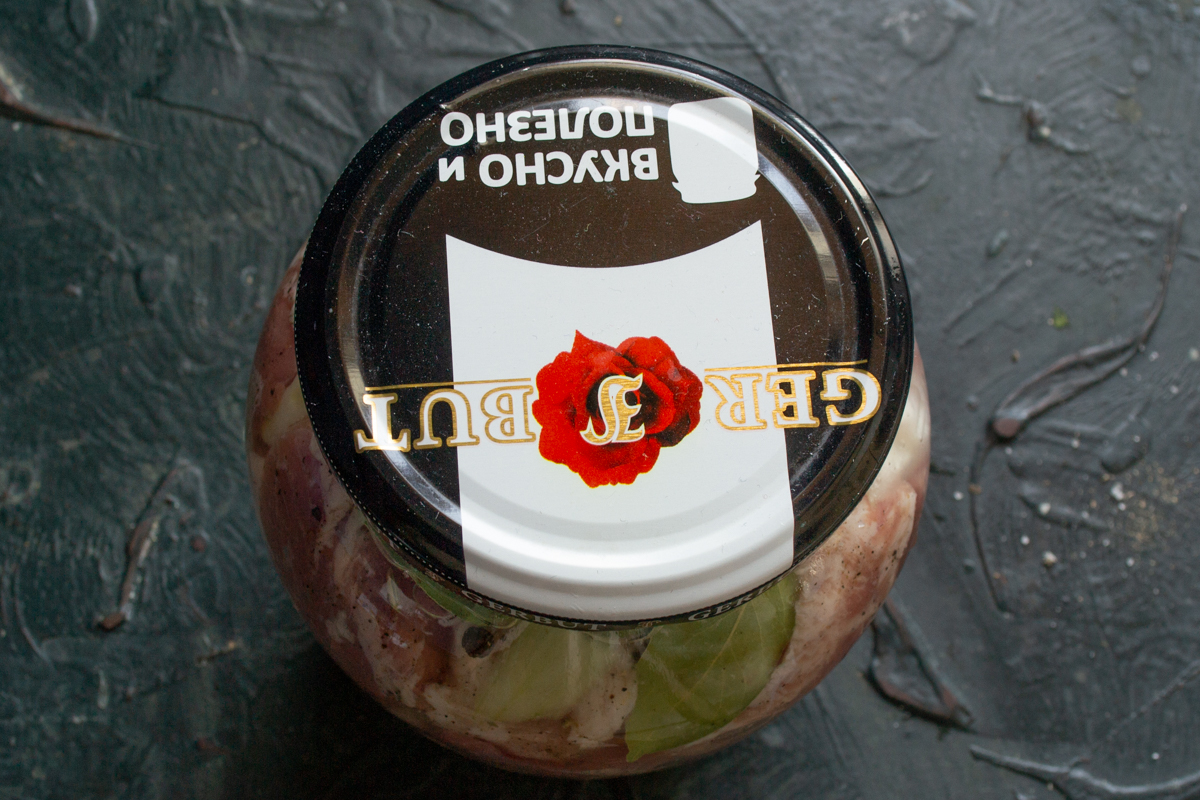
Screw the lid on tightly. If using standard canning lids, secure them with a canning sealer.
Place a kitchen towel or napkin at the bottom of a deep pot. Set the jar of tushenka inside and pour in warm water, fully submerging the jar. Slowly bring the water to a boil, then reduce the heat and simmer very gently for 5 hours. If the water boils off during the process, add boiling water to ensure the lid remains submerged at all times. If the boiling is too vigorous, pour in a little cold water to calm the bubbling.
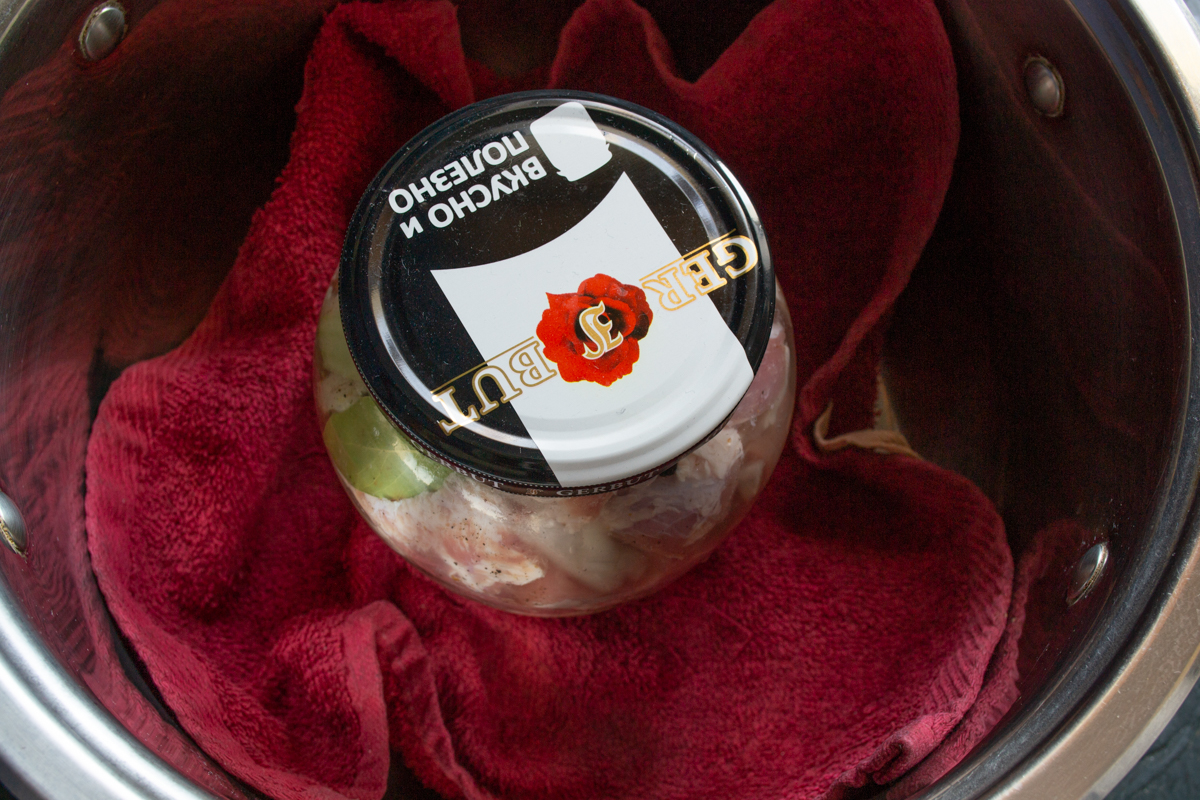
Place the jar in a pot lined with a towel, submerge in water, and simmer very gently for 5 hours.
After 5 hours, turn off the heat and leave the tushenka in the pot until it cools completely. The cooking process continues as it cools, making the meat incredibly tender and flavorful. Store the finished tushenka in the refrigerator or a cold cellar.
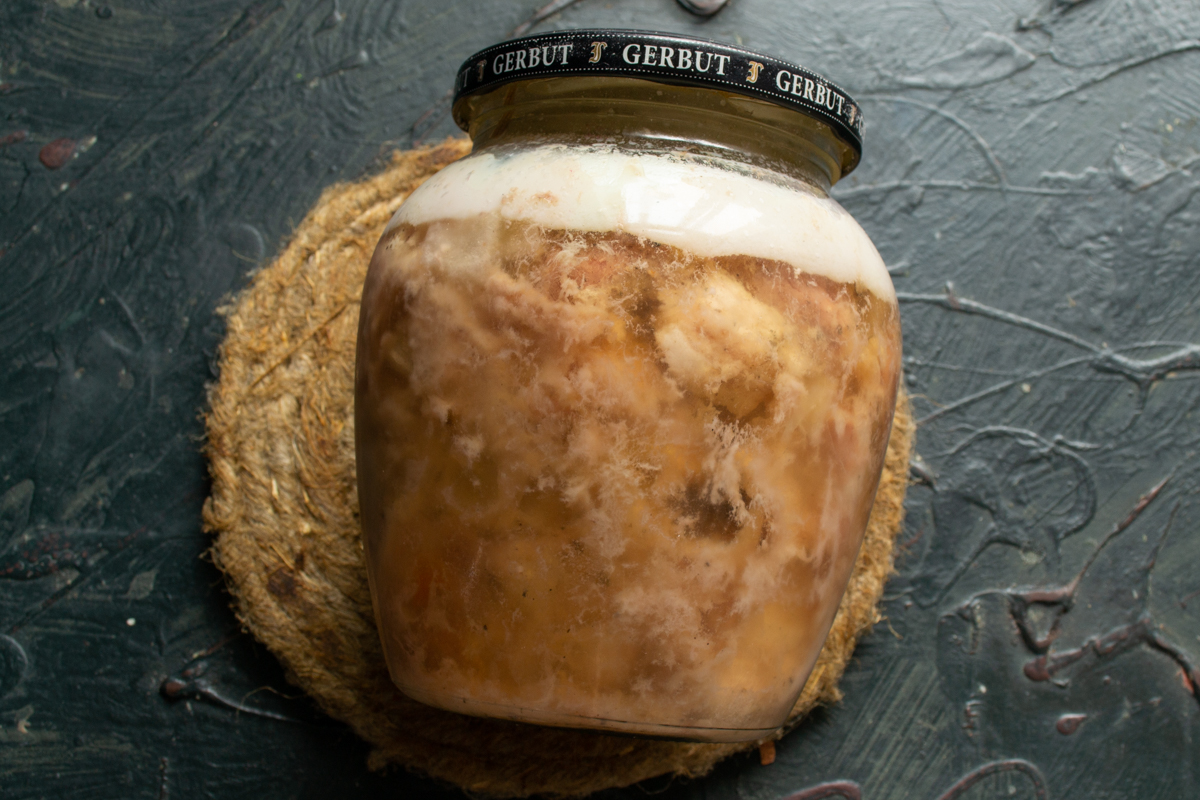
After 5 hours of simmering, leave the tushenka to cool directly in the pot—this makes the meat even more tender.
You can use this recipe to preserve not only pork belly but any meat—try pork leg or shoulder. Chicken tushenka can also be prepared using this exact method.
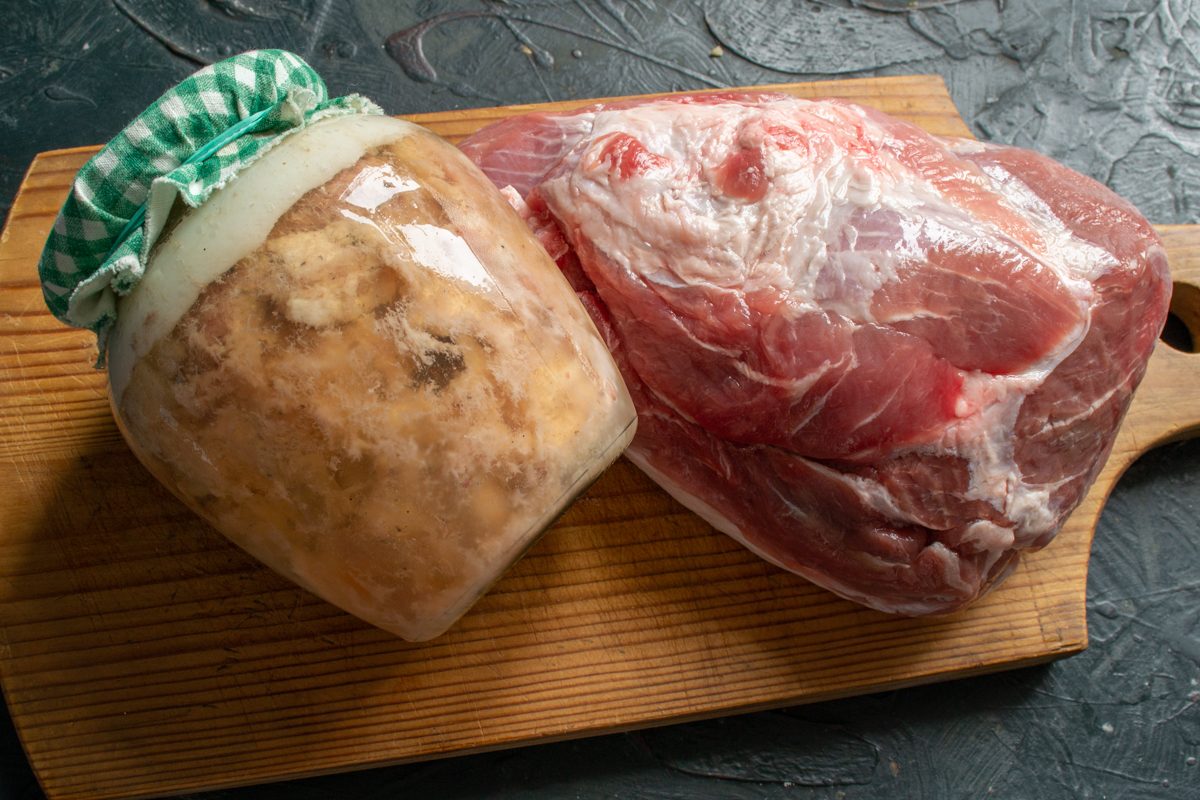
Homemade tushenka is a reliable and delicious way to preserve meat for a long time.
Pork tushenka with onions is the perfect base for quick soups, rich stews, or homestyle potatoes. If you want to diversify the flavor, try adding a little dried garlic or a sprig of rosemary to the jar before sealing—this gives the meat a more modern, aromatic profile. You can also shred the meat with a fork and use it as a hearty filling for savory crepes or closed pies.
The layer of fat that forms on the surface after cooling hermetically seals the meat, preventing spoilage. Store your finished jars in a cool place, such as a refrigerator or a dry root cellar, where they will keep their quality for up to a year. The main secret to success lies in letting the jars cool slowly right in the water—this allows the meat fibers to fully relax and absorb all the aromas of the bay leaf and spices.
0 comments