
A Spaniard we chatted with in Madrid recalled his 1980s kindergarten roughly like this: a bowl of something white and thick, an unbothered teacher, and children staring at the contents with an expression needing no translation. Semolina, boiled in water, with barely any salt or sugar, served as a standard breakfast.
Around those same years, my grandmother in Saratov would take a pot off the stove, drop a knob of butter into a bowl, and generously blanket the contents with sugar. I grimaced, too, though the reasons were entirely opposite.
One grain connects two childhood memories through a single grimace, yet they belong to entirely different versions of the same ingredient. This contrast marks the beginning of the story of a cereal that boasts many names worldwide but shares no common destiny.
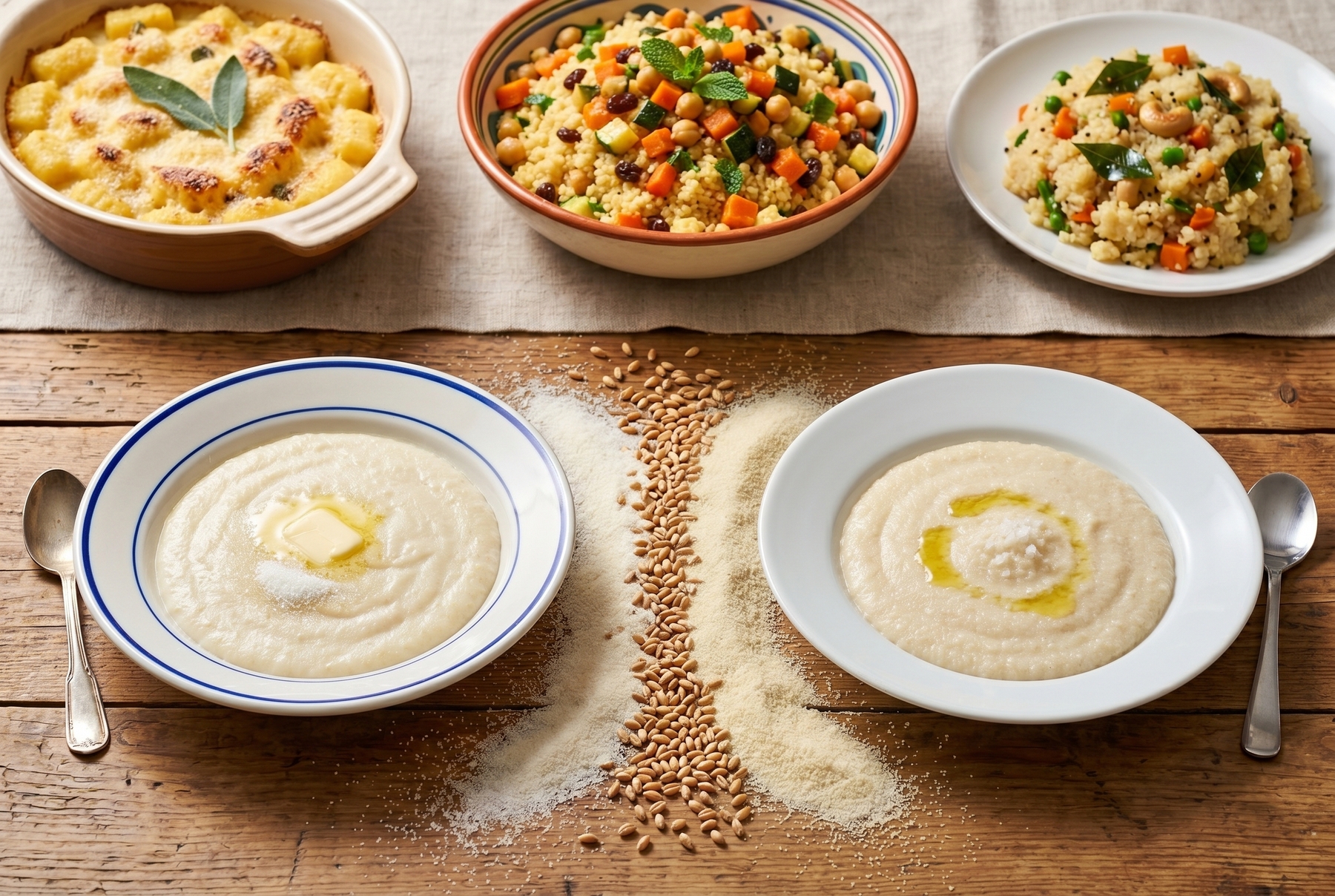
One grain shares different destinies, ranging from classic manna porridge to Middle Eastern couscous and Indian upma.
Table of Contents
- What Is Manka And How It Differs From Semolina
- Soviet Porridge And The Logic Of Centralized Feeding
- Spain: The Same Cereal, A Different Coordinate System
- Italy: When The Same Grain Stops Being Porridge
- Couscous: Is It Manka, Semolina, Or A Separate Product?
- India: Suji, Rava, Ghee, And A Hot Skillet
- How To Choose Manka Or Semolina In The Store
- What To Cook With Manka And Semolina When Porridge Gets Boring
What Is Manka And How It Differs From Semolina
Manka (a traditional Eastern European cream of wheat) does not represent a separate grain or a special wheat variety, but rather a milling product. It comprises the milling fraction, a part of the wheat endosperm remaining after sifting fine flour. Simply put, wheat undergoes milling, and the flour is sifted. The large endosperm particles left on the sieve become manka.
Producers can make it from soft wheat (Triticum aestivum), hard wheat (Triticum durum), or a blend of both. European semola and semolina usually originate from hard wheat, a difference that becomes immediately apparent on the stove.
Two factors primarily define the difference between manka and semolina: the degree of milling and the source grain—soft versus hard wheat. Spanish semolina and Italian semola usually indicate coarsely milled hard wheat, exhibiting a yellowish, almost sandy appearance. The granules feel distinctly textured under the fingers.
Russian manka historically utilized soft wheat, which gives it a whiter color. It behaves differently in water as well, swelling faster, yielding a stickier texture, and struggling to hold its shape during baking. Modern Russian packages labeled “from durum varieties” more closely resemble European semolina, though they remain distinct due to variations in milling, variety, and moisture content among producers.
The difference in water appears almost instantly. Hard wheat semolina swells slower, maintains its structure longer, and avoids turning into paste within three minutes. Soft wheat manka behaves otherwise, setting quickly and becoming creamy with almost no resistance. This presents an advantage for porridge but creates a problem for gnocchi or pasta.
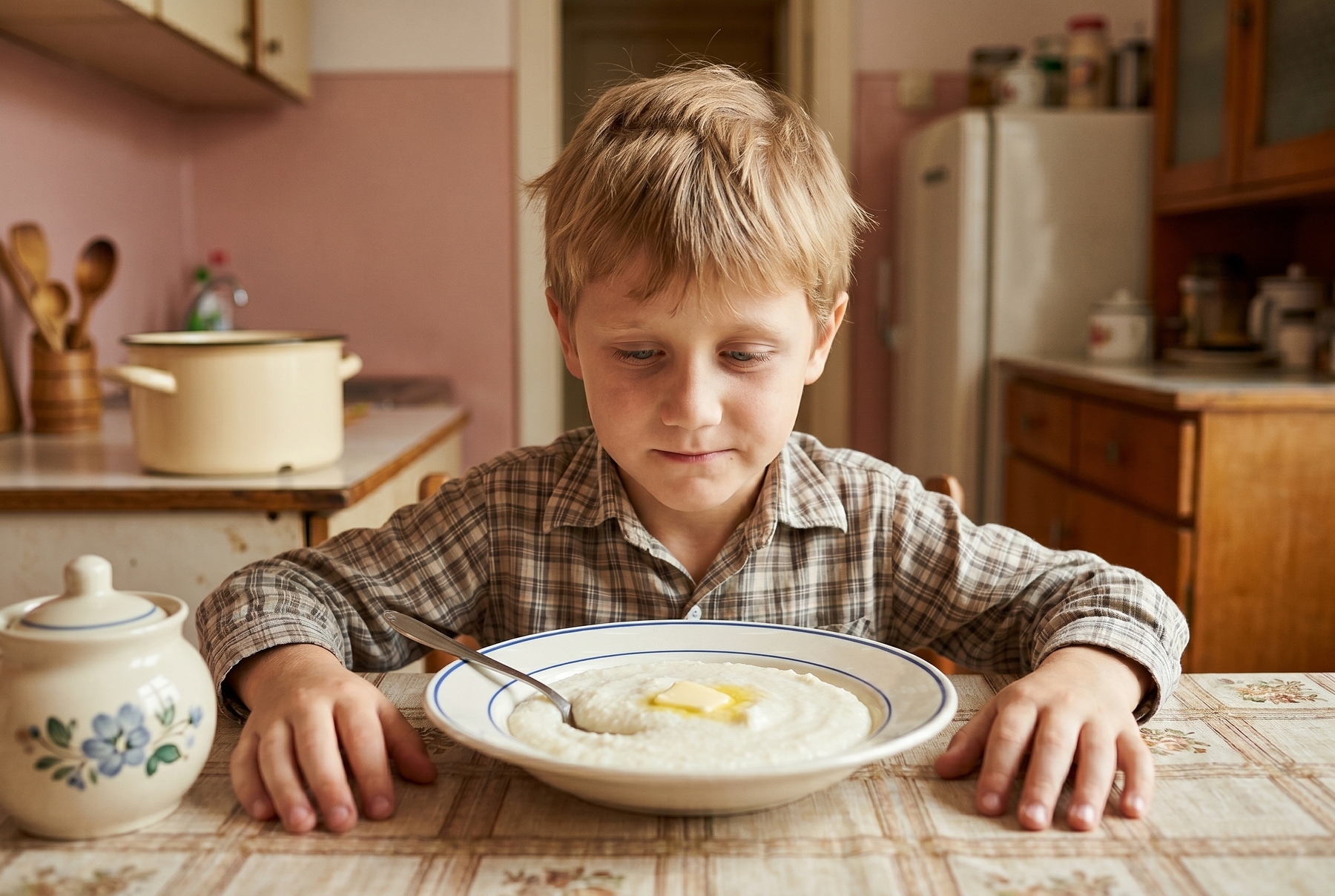
For many, the taste of manna porridge enriched with a knob of butter and sugar remains the ultimate gastronomic symbol of childhood.
Soviet Porridge And The Logic Of Centralized Feeding
Manna porridge became a symbol of a Soviet childhood due to convenience rather than taste. It cooked rapidly, required minimal culinary skills, stored well, cost little, and easily entered the supply system. In the logic of centralized child nutrition, it offered a convenient canteen product that cooks could prepare using a single formula in kindergartens and schools without relying heavily on their expertise.
Cooks added sugar and butter for reasons other than gastronomy. Sugar masked the blandness, while butter smoothed out the stickiness. The result was a food that a child agreed to eat. They did not love it, but they agreed to it.
A strange thing happened with that generation. Many of us now cook this porridge for our children, using the same proportion of sugar and the identical knob of butter. The reason does not lie in a love for this porridge, but rather because our hands remember better than our tongues. The process outweighs the result: the pot, the wooden spoon, the characteristic aroma of overcooked grain. The porridge transforms into a repeatable motion of pot, spoon, and butter on top.
Spain: The Same Cereal, A Different Coordinate System
Cooks in Spain frequently boil semolina without any sweetness whatsoever. They skip milk, sugar, and butter, relying only on water and a pinch of salt. Occasionally, a drizzle of olive oil finishes the bowl, though this remains more of an exception.
In Spain, this grain often occupies the same culinary space as rice water or light broth: recovery food designed for a stomach needing rest or for a child returning from the hospital. Its flavor remains quiet and almost utilitarian, aiming to soothe the digestive system. This reputation fuels its unpopularity, as children receive it for its neutrality rather than its taste.
The Spanish child who grimaces at a bowl of bland semolina and the Russian child who frowns at a plate of sweet manka suffer from different versions of a single problem: cooks placed the grain in the wrong culinary context. Blandness becomes glaringly obvious on a child’s table.
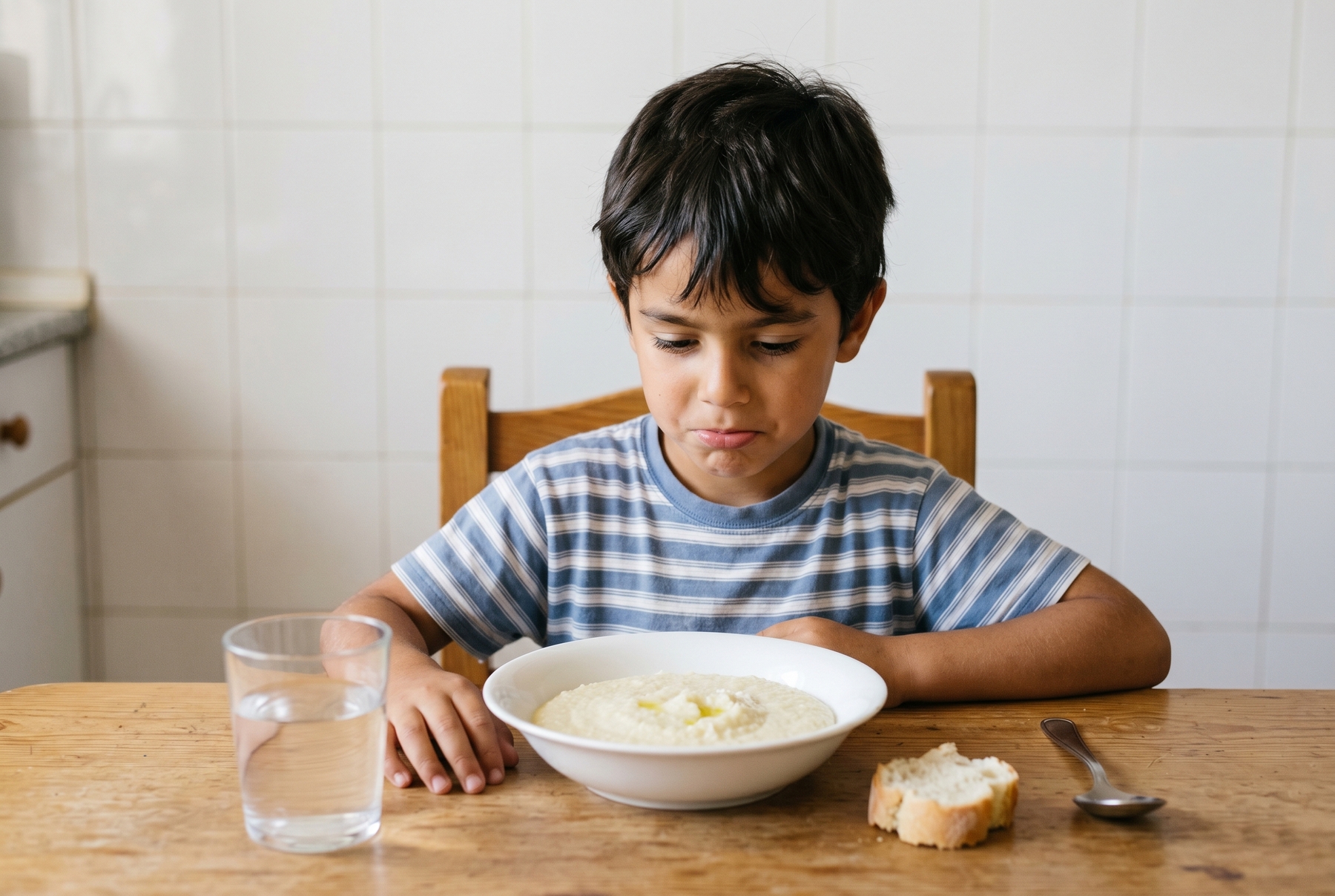
In Spain, cooks often prepare semolina as neutrally as possible, utilizing it as a light, restorative meal for recovery.
Italy: When The Same Grain Stops Being Porridge
In Italy, semola typically enters the realm of dough, serving as the foundation for pasta, bread, and gnocchi. Durum wheat pasta relies on protein and gluten, producing an elastic dough that resists disintegrating in boiling water. Semola rimacinata, a twice-milled semolina with a finer texture, finds its way into bread dough, specific pasta varieties, and regional pizzas.
Then comes gnocchi alla romana. They share little in common with potato gnocchi. Cooks boil semolina in milk until thick, spread it into a mold, let it cool, cut it into rounds, arrange them in an overlapping pattern in a baking dish, dust them with Parmesan, top them with butter, and bake at 200 °C (400 °F) for about 25 minutes until a crust the color of old copper forms on top. The interior remains creamy and soft. The same grain transforms entirely through technique: milk, cooling, knife, and oven.
Italian culinary logic typically views semolina as a foundation for pasta, bread, gnocchi, and specific desserts. The sweet, milky Soviet porridge does not fit this role. Here, the ingredient receives a task first, and its function defines its place in the dish.
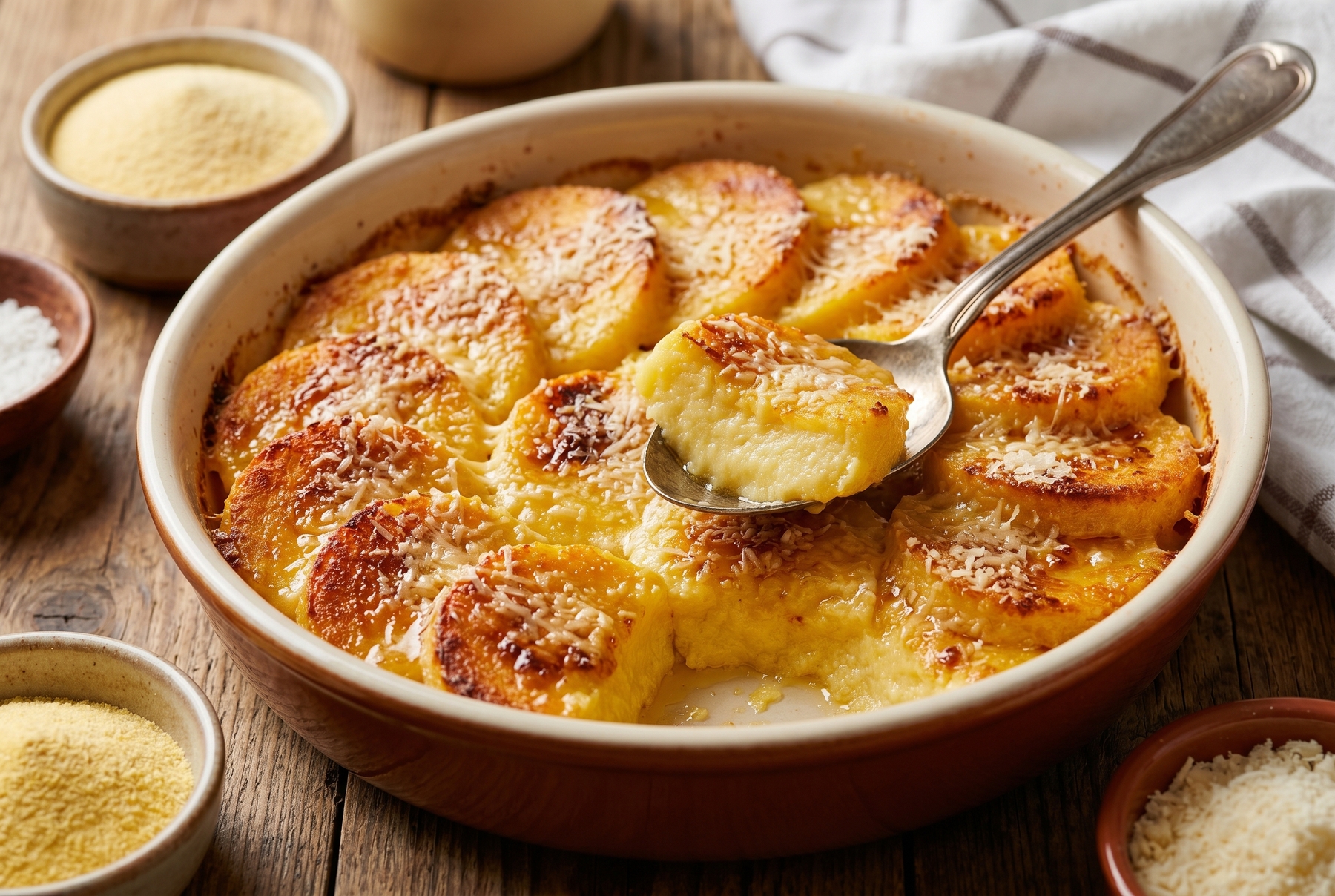
Gnocchi alla romana remains an Italian classic, transforming a humble grain into an elegant baked dish crowned with Parmesan.
Couscous: Is It Manka, Semolina, Or A Separate Product?
As long as it remains semolina, the answer is yes. Once cooks roll, sift, and dry it, it becomes something else entirely.
Producers make couscous from semolina, specifically the coarse flour of durum wheat. However, the package no longer contains the raw grain, but rather a processed product. Historically, cooks rolled couscous grains by hand, though machines now typically handle the process by moistening, rolling, sifting, and drying the semolina. This creates small spheres roughly 1–2 mm (0.04–0.08 inches) in diameter, resulting in something that is neither a whole grain nor flour.
The difference becomes even more pronounced during cooking. Raw semolina swells in boiling water and changes texture gradually. Quick-cooking supermarket couscous swells almost instantly; one simply pours boiling water over it, covers it, and waits five minutes, as it has already undergone preliminary thermal processing during production. Traditional couscous requires more labor, demanding moistening and steaming, sometimes in multiple stages with hand-rubbing between sessions.
In Morocco, Algeria, and Tunisia, couscous long ago transcended its status as mere food. In 2020, the tradition of preparing and consuming it entered the UNESCO Intangible Cultural Heritage list, following a joint application by Algeria, Mauritania, Morocco, and Tunisia. This reflects a habit of communal cooking rather than museum pride; families across the Maghreb prepare couscous collectively on Fridays. The original semolina practically vanishes, leaving only its essence in the elasticity of the grains.
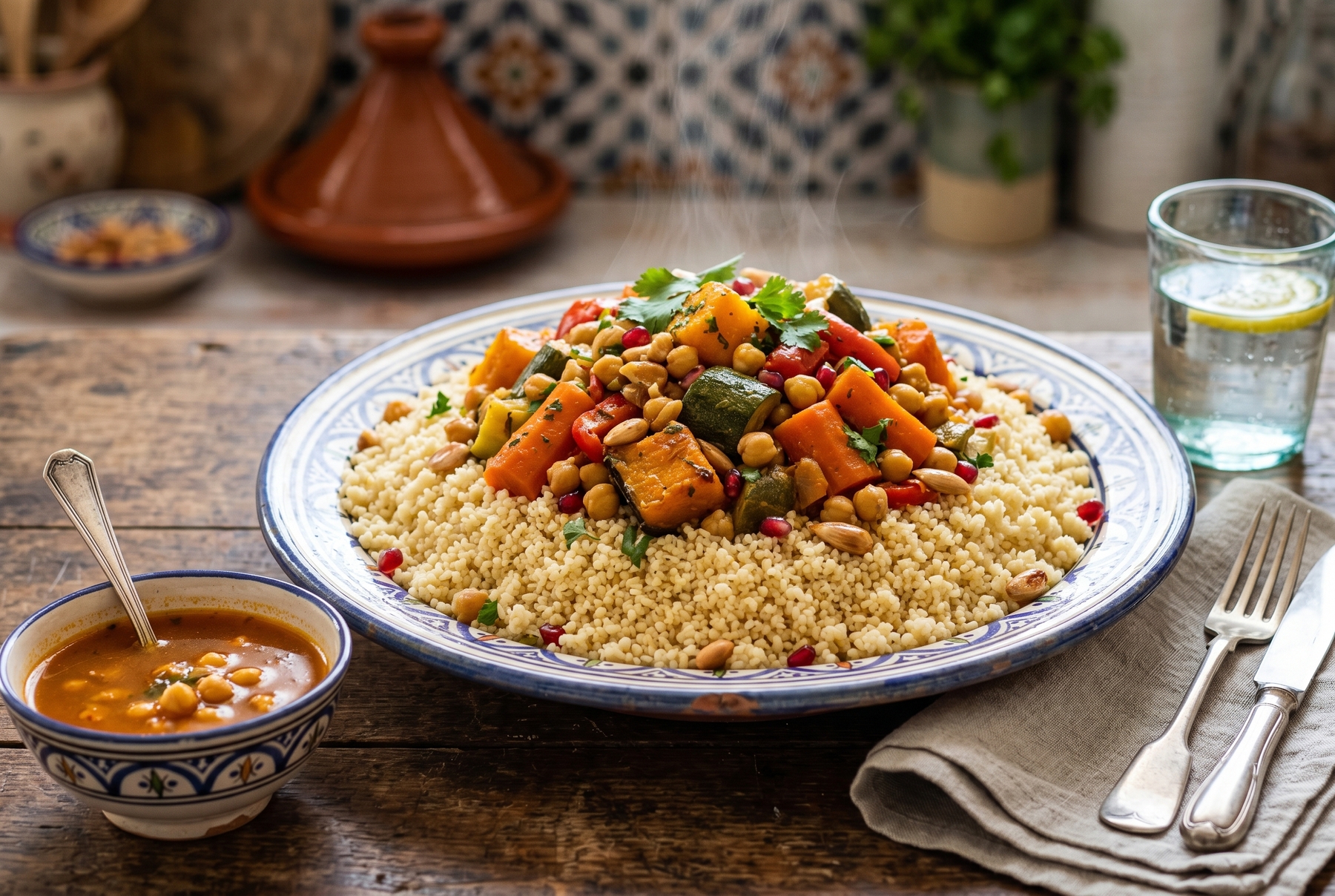
Couscous represents a processed semolina product whose traditional preparation techniques earned a spot as UNESCO Intangible Cultural Heritage.
India: Suji, Rava, Ghee, And A Hot Skillet
In India, this same milling fraction goes by the name suji or rava. Essentially the Indian version of semolina, the term depends on the region and language. The foundation remains cracked durum wheat, occasionally milled finer than Italian semolina.
Cooks prepare suji halwa as a dessert for holidays and temple offerings. They toast the grain in a generous amount of clarified butter, known as ghee, until it develops a nutty aroma, before adding water or milk and sugar. When executed correctly, the granules remain distinct by the end of cooking; the mass holds together without turning into mush. The kitchen fills with the warm, heavy, almost caramel-like fragrance of toasted grain and ghee, reminiscent of the bottom of a sugar pot.
People enjoy upma for breakfast. Cooks dry-roast the same suji in a skillet, then simmer it in water or broth with oil or ghee. They bloom mustard seeds alongside curry leaves, green chilies, and ginger. This savory dish features no sugar and entirely avoids blandness, as spices, fat, and a hot skillet elevate the grain. A curry leaf in hot oil produces a sharp crackle resembling a finger snap, instantly perfuming the kitchen with notes of greenery, zest, and heated oil.
In the Indian context, suji firmly escapes the hospital-food reputation. The grain absorbs spices effortlessly, maintains its structure beautifully, and cooks rapidly. Consequently, suji seamlessly integrates into the rhythm of urban breakfasts, taking 15 minutes from start to finish and delivering a plate rich with heat, a nutty aroma, and the lingering trace of hot oil.
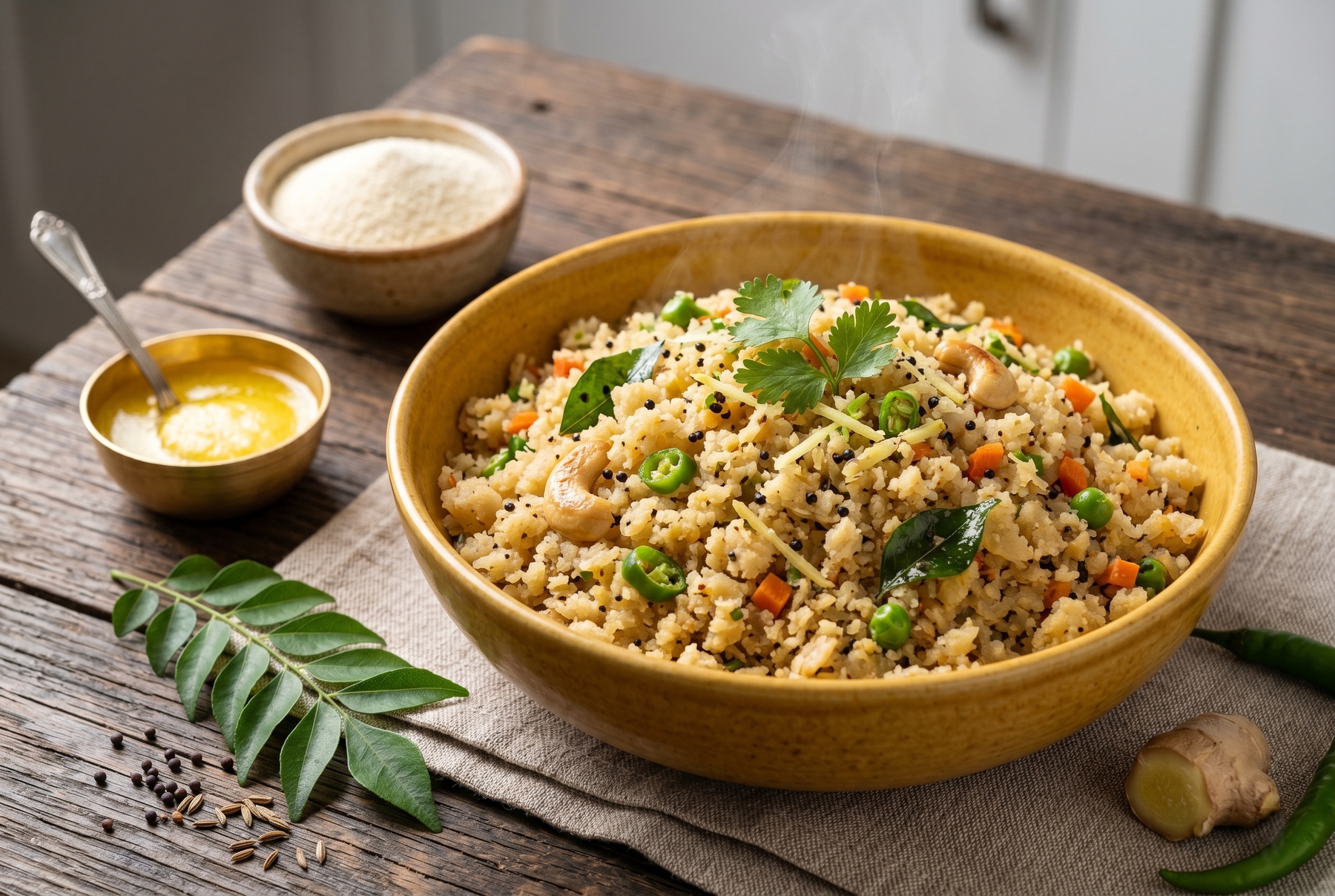
Indian upma proves that manka can become vibrantly spiced and aromatic through the clever use of seasonings, nuts, and proper roasting.
How To Choose Manka Or Semolina In The Store
Russian manka and European semolina do not always behave identically, although the difference sometimes remains subtle.
Shoppers should pay attention to three characteristics and a couple of specific terms:
- “From durum wheat” (Из твёрдых сортов пшеницы). This represents the most crucial label. Such manka aligns closer to Spanish or Italian varieties, holding its shape better, resisting turning into mush, and excelling in baking and thickening.
- Color. Hard wheat semolina displays a yellowish, almost creamy hue, while white grains usually originate from soft wheat.
- Texture. If the grain crunches slightly under the fingers and resists clumping, it qualifies as semolina.
- Semola rimacinata. Found on Italian packaging, this indicates twice-milled semolina, offering a finer texture closer to flour. Cooks choose this for pasta and bread, while gnocchi requires a coarser grind.
- Rava and suji. Available in Indian markets, these generally feature a medium grind that works perfectly for upma and halwa.
Italian coarse-ground semola proves easiest to find in imported food stores or online. Russian durum wheat manka successfully substitutes in gnocchi alla romana, fish crusts, and sauce thickening, provided the cook avoids overheating or overcooking it into paste.
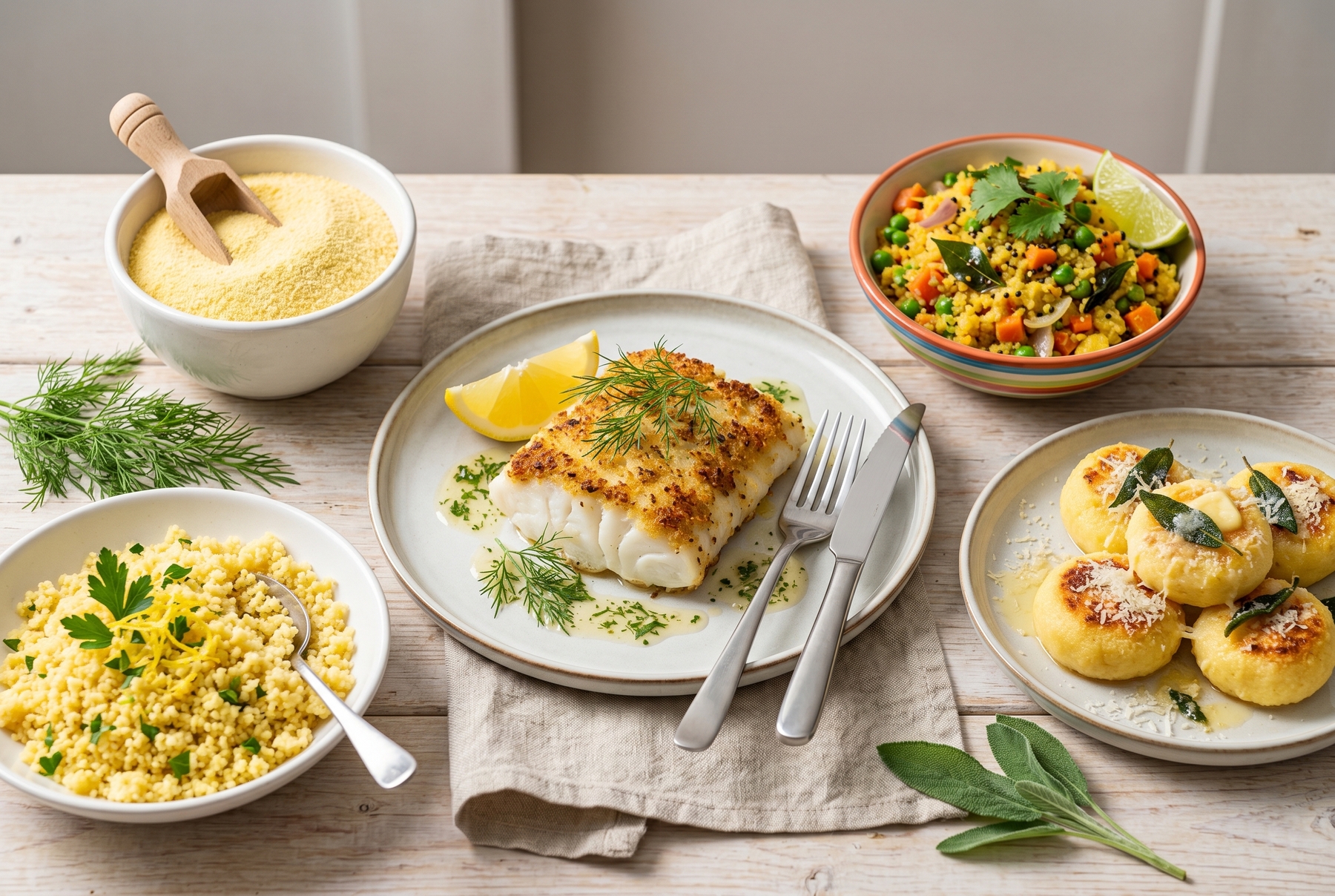
Semolina proves incredibly versatile, serving as an excellent breading for fish, a base for delicate gnocchi, or a hearty side dish.
What To Cook With Manka And Semolina When Porridge Gets Boring
Here are excellent ways to utilize manka beyond the traditional porridge bowl.
Crust For Fish Or Cutlets
Substituting semolina for breadcrumbs creates a remarkably thin, dry crust. It resists burning faster than flour and delivers a delightfully dry, sandy crunch.
Gnocchi Alla Romana
Boil 250 g (8.8 oz) of semolina in 1 liter (34 fl oz) of milk seasoned with salt and nutmeg, remove from heat, and fold in an egg yolk and Parmesan. Pour into a mold, cool, cut into rounds, arrange in an overlapping pattern, and bake. The entire process takes about 40 minutes including cooling time, yet it arrives at the table looking like a half-day culinary project.
Savory Flatbreads
Mix semolina with all-purpose flour in a roughly 1:1 ratio, adding a touch of oil, water, and salt. The resulting dough feels denser and more textured than standard flour dough, yielding flatbreads that crisp up beautifully on the outside while remaining tender inside.
Thickener For Sauces And Soups
Manka behaves almost exactly like flour in a sauce, but delivers a distinctly different texture, offering less stickiness and a subtly perceptible grain.
Upma
Cooking upma once proves simpler than explaining it at length. Dry-roast suji until a light nutty aroma develops. Separately, heat oil or ghee with mustard seeds and curry leaves, combine everything, pour in hot water, season with salt, and add ginger. The dish still succeeds without curry leaves, though the aromatic profile will lack a certain depth.
The Spanish and Russian children grimaced over the exact same grain for entirely different reasons. One encountered hospital-grade neutrality, while the other faced sugary stickiness. Manka itself bears no blame for either the cafeteria pot or the hospital bowl.
0 comments