
People drop a regular spoonful of sugar into their coffee without a second thought. Yet, they handle a packet labeled ‘sweetener’ with suspicion, as if it contained something dangerous. The logic here is backward. It is sugar, when regularly overconsumed, that carries proven health consequences, while the safety of most sugar substitutes and sweeteners has been confirmed by decades of research and food regulatory approvals.
At the same time, real issues have not disappeared. First, so many newspaper headlines surround safety that separating data from panic has become a distinct challenge. The second issue is purely culinary. Sweeteners behave differently than sugar in dough and caramel, which is why homemade ‘sugar-free’ desserts often turn out strange: pale, dry, and leaving a cooling sensation in the mouth. What follows is a look at the safety of sugar substitutes, their taste, and their behavior in desserts, without distortion.
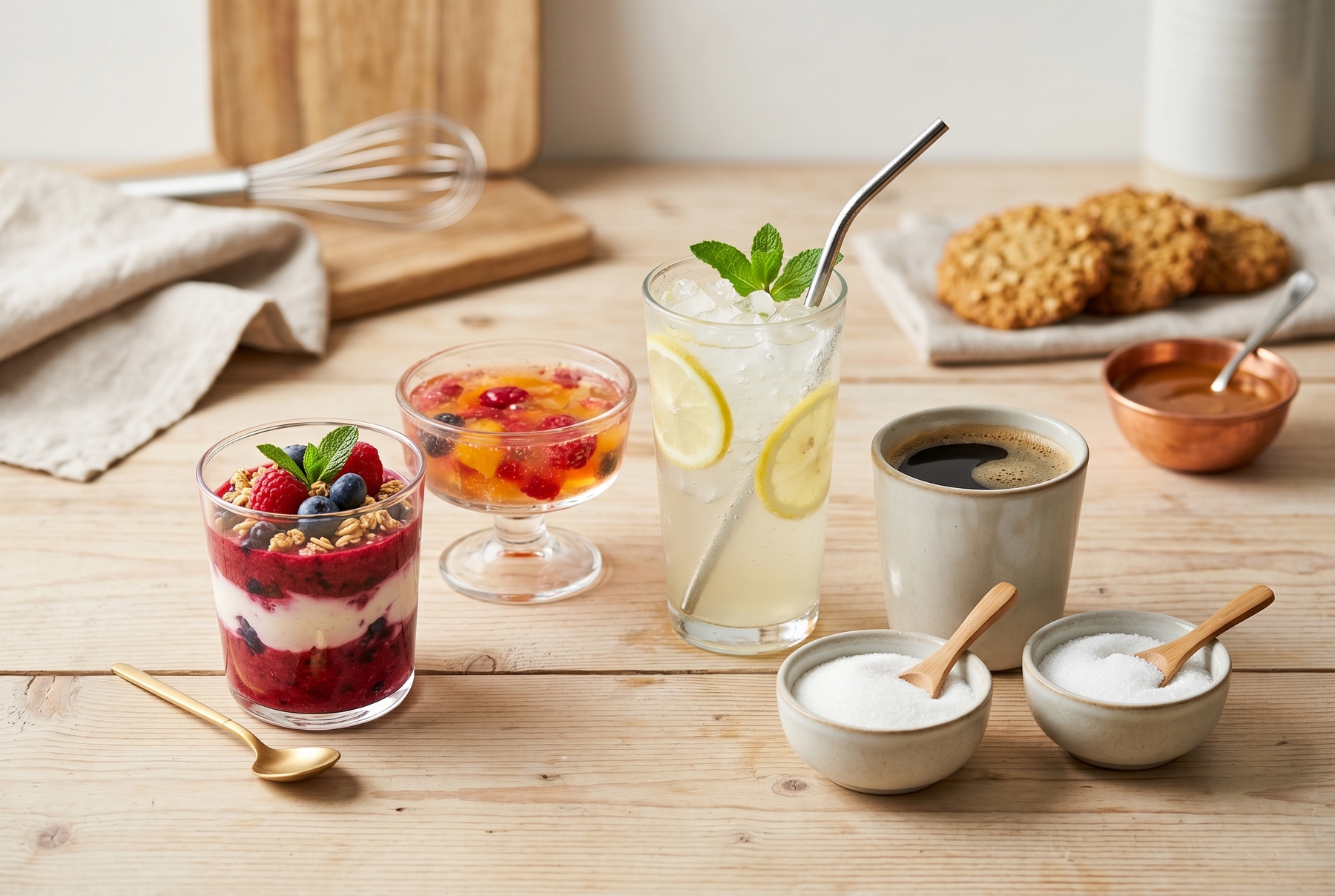
Modern sweeteners allow for the creation of visually appealing desserts, but their culinary properties require a different approach than regular sugar.
Table of Contents
2 Groups of Sugar Substitutes That Are Constantly Confused
The term ‘sugar substitute’ hides at least two fundamentally different things. Half of everyday fears and culinary failures stem precisely from lumping them together.
Intensive Sweeteners
This category includes stevia (specifically, steviol glycosides), sucralose, aspartame, acesulfame-K, saccharin, and monk fruit. They share one common trait: they are hundreds of times sweeter than sugar and work in microdoses. A few milligrams go into a cup of tea instead of a teaspoon. They contribute almost no mass or calories to a dish. This is an advantage for a beverage. For dough, where sugar is needed for volume, it becomes a problem, which will be discussed further below.
Sugar Alcohols, or Polyols
Erythritol, xylitol, maltitol, sorbitol, and isomalt fall into this group. These behave more like sugar: they are added by the spoonful, provide volume and body, and their crystals feel similar to granulated sugar. This resemblance comes with its own trade-off. Most of them contain calories (xylitol has about 2.4 kcal/g compared to sugar’s 4 kcal/g), and they can cause digestive trouble in the gut if consumed in excess.
This division explains two things at once: the difference in culinary behavior and why breaking news about a ‘dangerous sweetener’ cannot be applied to the entire supermarket shelf.
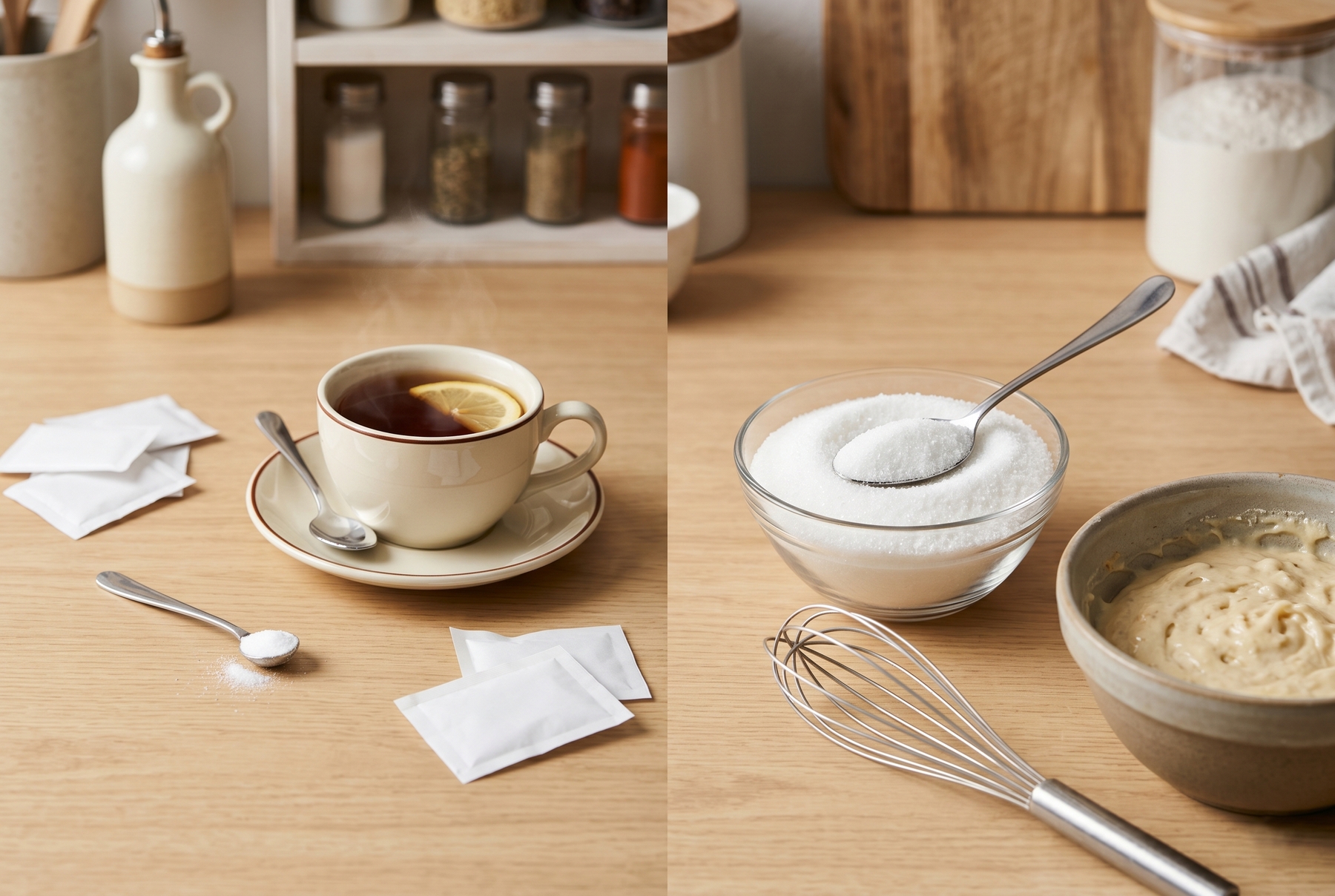
Different groups of sugar substitutes solve different problems: intensive ones provide only sweetness, while polyols offer mass and structure to a dish.
Safety: Science Versus Headlines
In science, the word ‘safe’ is always about the dose, rather than labels like ‘natural’ or ‘artificial’. Arsenic is natural. That says nothing about how much of it is safe to eat.
There is a key concept here: Acceptable Daily Intake (ADI). This is the amount of a substance that a person can consume every day for a lifetime without expected harm. It is calculated with a massive safety margin: scientists typically take the highest dose that showed no adverse effects in studies and divide it by a hundred. Therefore, the terrifying number in a headline usually describes a dose that is simply unattainable in a real diet.
Aspartame: Safety and the 2023 WHO Decision
In the summer of 2023, two documents were released simultaneously, and the press eagerly confused them. IARC classified aspartame as Group 2B, ‘possibly carcinogenic to humans,’ based on limited data (specifically regarding liver cancer). This sounds ominous. For context, aloe vera extract and Asian pickled vegetables are in the same 2B group.
The IARC assesses hazard as such: whether a substance could potentially be linked to cancer. However, how much of it is actually dangerous to consume is calculated by another committee, JECFA. Their conclusion is reassuring: JECFA found no reason to change the previously established acceptable daily intake of 40 mg per kilogram of body weight. To exceed this, an adult weighing 70 kg (154 lbs) would have to drink more than 9 to 14 cans of diet soda every day for a lifetime.
Erythritol: Risks and a High-Profile Study
In 2023, the journal Nature Medicine published a study that caused erythritol to flood newsfeeds as a ‘heart killer’. It is worth looking at what actually happened. Researchers measured blood erythritol levels in patients being screened for cardiovascular risk (the initial group consisted of around 1,157 individuals). Those with high levels experienced more frequent heart attacks and strokes over the following three years.
There are two points here that the headlines swallowed. This is observational data: it shows a correlation but does not prove that erythritol is the cause. Furthermore, the group did not consist of randomly selected healthy people, but patients who already had a high cardiovascular risk. Additionally, the human body produces erythritol on its own and obtains it from fruits. Thus, a ‘correlation in the blood’ and ‘harm from a spoonful of sweetener’ are far from the same thing. The topic remains active, and research continues, but current data does not provide a reason to panic out of nowhere.
Polyols and the Gut
This effect, however, is real, not fabricated. Sugar alcohols in large portions act as mild laxatives and can cause bloating and discomfort. Maltitol and sorbitol are the biggest offenders. Erythritol is tolerated noticeably better (it barely reaches the large intestine to ferment). Many packages containing polyols feature an honest warning about laxative effects when consumed in excess. Physiology stands behind this line, not overcaution.
Xylitol and Dogs
There is a practical warning for those who have a dog at home. Xylitol is highly toxic to dogs: even a small amount can cause a sudden drop in blood sugar, seizures, liver failure, and death. In dogs, it triggers a massive insulin release, which does not happen in humans. Chewing gum, mints, and homemade xylitol baked goods from the table must be kept out of reach. On labels, xylitol is denoted by the code E967.
What the WHO Said About Weight
Another piece of news from 2023 is also worth reading in its entirety. The WHO released a recommendation advising against using intensive sweeteners as a method for weight control or reducing the risk of chronic diseases. The reasoning: a systematic review found no long-term benefits for reducing body fat.
This recommendation comes with three caveats. It is conditional, and it focuses on weight loss effectiveness rather than issuing a ‘harmful’ verdict. It does not apply to individuals who already have diabetes. Finally, it concerns intensive sweeteners, not sugar alcohols. Essentially, the WHO stated the following: swapping sugar for sucralose in a cola is unlikely to help a person lose weight. There was no mention of danger.
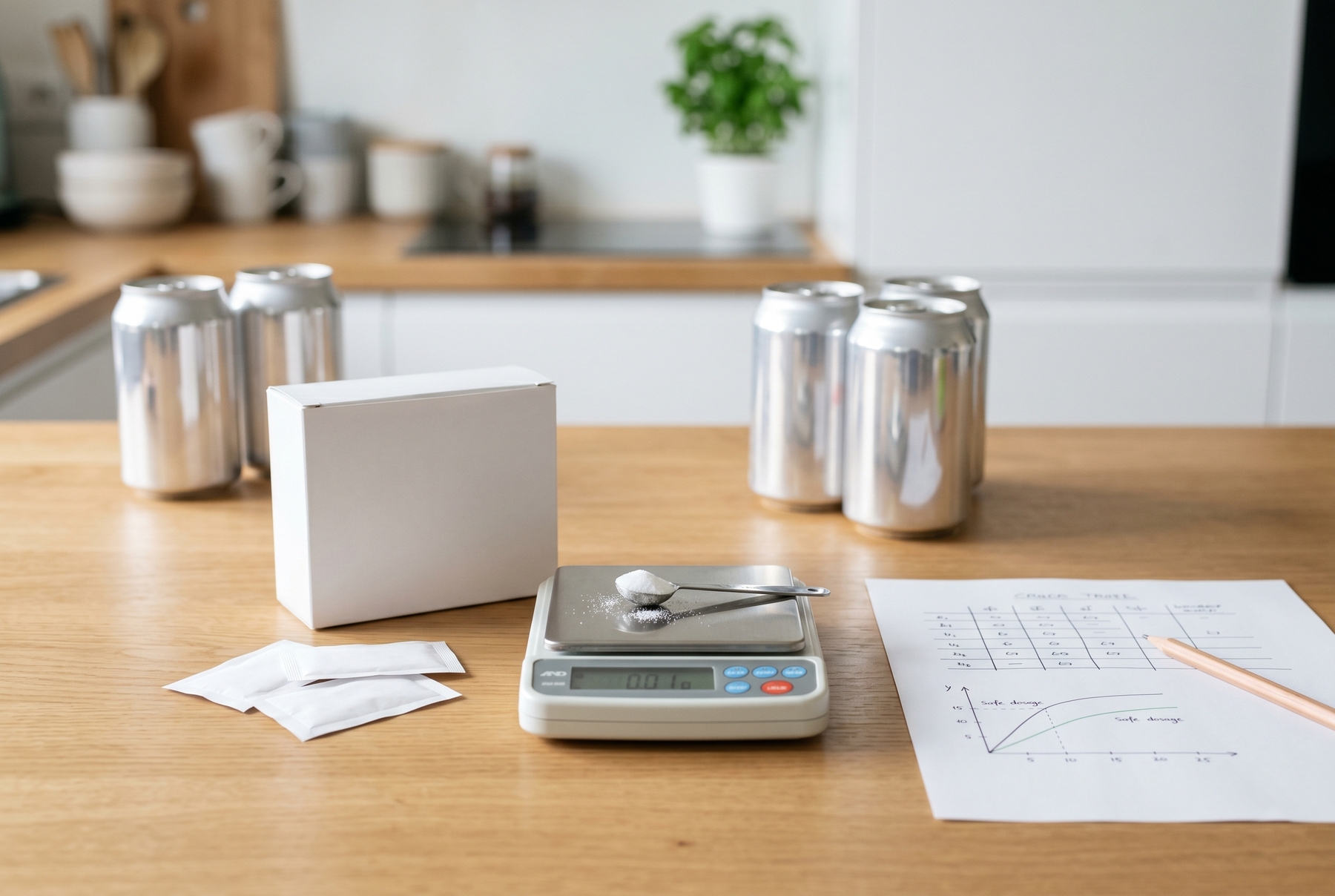
The safety of every sweetener is strictly regulated—acceptable daily intake (ADI) is calculated with an enormous safety margin.
Why Sugar Cannot Be Replaced One-to-One
In the kitchen, sugar does much more than just provide sweetness. It adds mass and volume, retains moisture, caramelizes upon heating, enhances crust browning (the color of burnt caramel), and influences dough structure as well as how a syrup sets. It affects the Maillard reaction rather indirectly: the reaction requires reducing sugars and a protein component, and table sugar only joins in after breaking down into glucose and fructose. A sweetener usually covers just one item on this list: sweetness. The rest remains unaddressed.
Sugar-Free Baking
Removing sugar from a cookie recipe and substituting it with stevia changes the dough right before one’s eyes. The sweetness remains, but the sugar no longer holds water, meaning the baked goods will turn out drier and go stale faster. It also no longer provides volume, so the structure becomes denser and flatter. Regarding color: without sugars, the crust stays pale and waxy because there is nothing to brown. Cookies made purely with erythritol can be left in the oven twice as long and still never catch a golden hue.
Caramel, Crust, and the Cold Sensation in the Mouth
Intensive sweeteners do not provide sugar caramelization: it is specifically sugars that caramelize when heated (from about 160 °C / 320 °F), and those are different molecules. Sweeteners behave differently in this process: some withstand the heat, while others lose their sweetness at high temperatures or decompose in their own way. Polyols help partially. Pastry chefs pull caramel and pour decorations using isomalt: it melts, holds its shape, and draws less moisture from the air than sugar.
Erythritol and xylitol have a distinct characteristic. When dissolving, they absorb heat, and the tongue perceives this as coolness. A minty chill arises in the mouth even without mint. This is pleasant for chewing gum and ice cream. It feels out of place in a warm chocolate ganache: one expects velvet but gets a draft.
What Holds Up in the Oven
Heat resistance varies among them. Aspartame cannot handle prolonged heat: it breaks down and loses its sweetness during long baking, making it of little use in pastries. Acesulfame-K and stevia tolerate the oven much better. Sucralose is trickier: it can behave unstably under prolonged, intense heat. Therefore, it is only added to long-bake goods with the manufacturer’s permission. If a mix package says ‘suitable for baking,’ consumers should rely on the manufacturer’s instructions rather than habit: such a mix is usually formulated for a specific heating regime.
A Taste Recognized Blindfolded
A blind tasting almost always identifies the ‘diet’ version. There are several reasons for this, and they lie in the molecules themselves.
Sweetness varies in strength and character. Sucralose is about 600 times sweeter than sugar, while aspartame, acesulfame, and stevia are around 200 times sweeter. Therefore, the phrase ‘measures like sugar’ on a jar of a commercial blend describes the work of a food technologist who added a bulking agent, rather than the property of the substance itself. Next come the aftertastes: stevia leaves a licorice, slightly bitter trail, while saccharin brings out a metallic hue if overused. Sugar does not leave such a tail; its sweetness is ‘clean’ and short.
Hence the blends. Manufacturers combine several sweeteners because the flaws of one are masked by another: the bitterness of stevia is neutralized by erythritol, bringing the flavor profile closer to sugar. The most popular pair on the shelf is indeed ‘erythritol plus stevia’.
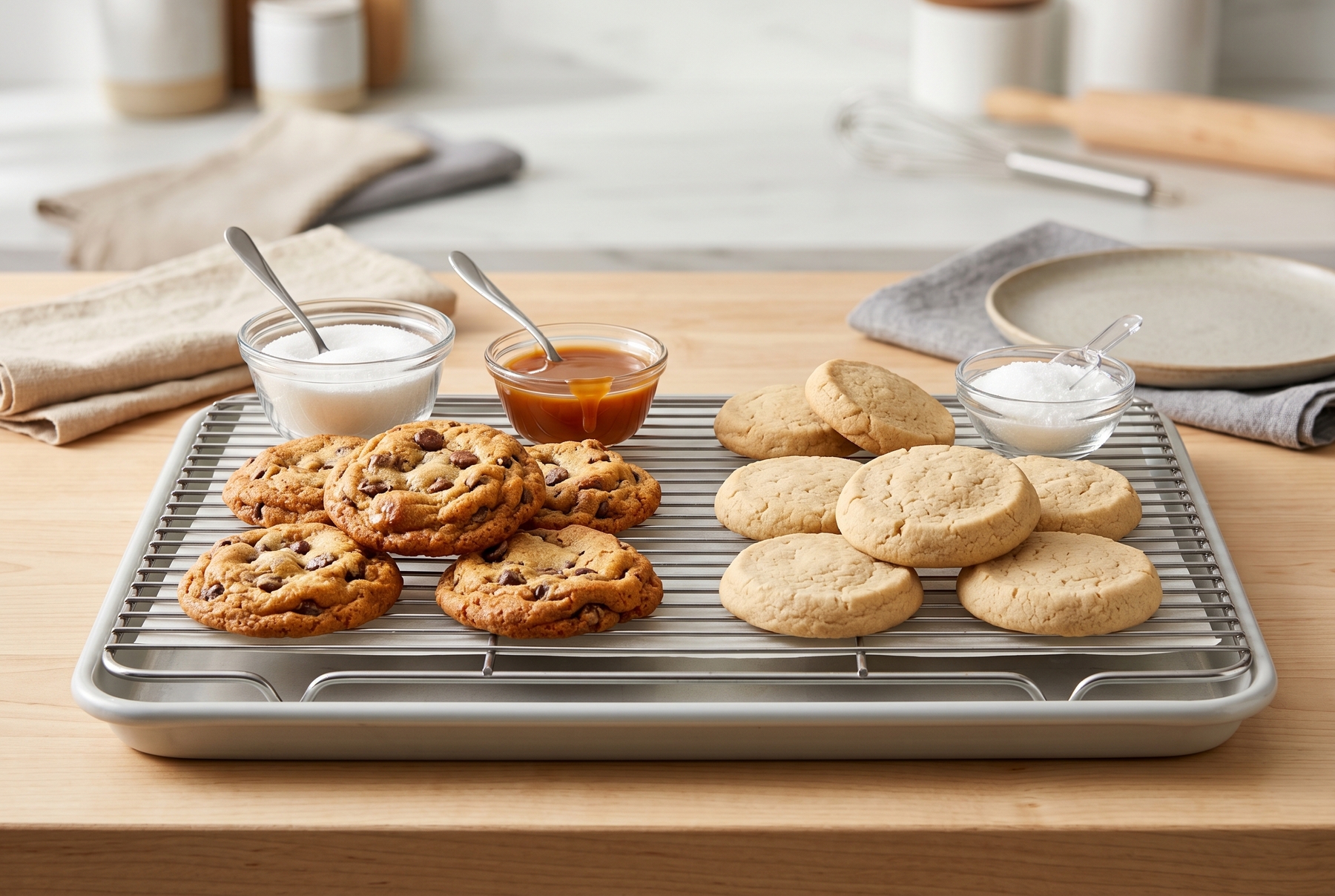
Without sugar, baked goods often turn out paler and drier, as most sweeteners do not participate in caramelization and retain moisture poorly.
How to Replace Sugar With a Substitute With Minimal Losses
The substitution passes almost unnoticed in beverages: tea, coffee, and lemonade only need sweetness from sugar, and a sweetener honestly provides it. The same applies to creams and mousses, especially cold ones, where neither a crust nor caramel is required. It also works for cold desserts and jellies: gelatin or agar holds the structure, and sugar is not the load-bearing wall there.
It is more honest to keep sugar or at least combine it in several cases. Caramel and hard candies simply will not work without sugar or isomalt. In yeast dough and complex pastries, sugar feeds the yeast and builds the structure. In fruit preserves, it acts as both a preservative and the element that gives the syrup its body.
Mistakes most often occur in three areas. People overdose on polyols and then wonder where the bloating comes from. They expect a golden crust where there is nothing to brown. And they swap out sugar in a recipe where it provided structure rather than just flavor.
On supermarket shelves, the most common sugar substitutes are erythritol, xylitol, stevia, sucralose, and ready-made blends based on them. Consumers should read the ingredient list, not just the large print on the front of the packaging. Polyols hide behind E-codes (sorbitol E420, xylitol E967, erythritol E968), and in ‘erythritol plus stevia’ blends, the most abundant component is listed first. If erythritol comes first, that signature cooling sensation in the mouth is guaranteed.
0 comments