
Fluffy yeast pancakes (oladyi) are a culinary symbol of home comfort, familiar to many since childhood. Unlike the quick kefir-based versions, a yeast batter requires time and specific temperature conditions, but the result is worth every minute of waiting. As the batter fills with carbon dioxide during its double proofing, it develops a unique porous structure that transforms into a springy, tender crumb when fried. The aroma of freshly baked goods, mixed with notes of melted butter, instantly creates the atmosphere of an unhurried Sunday morning, when there is nowhere to rush and the main task is to savor the moment.
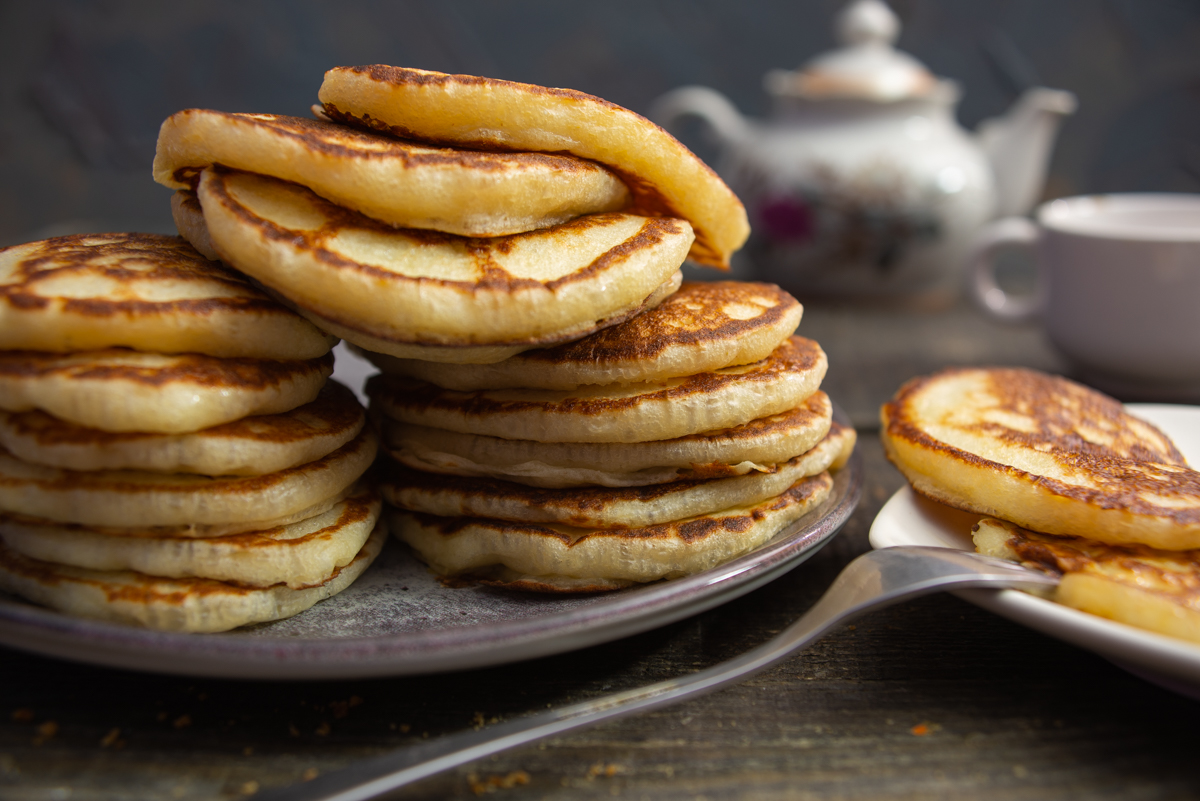
Perfectly fluffy and golden pancakes that will make the best breakfast for the whole family.
Ingredients
- 150 g (1 1/4 cups) wheat flour
- 165 ml (2/3 cup) milk
- 1 large egg
- 15 g (1 tbsp) granulated sugar
- 15 g (1 tbsp) vegetable oil
- 1/2 tsp salt
- 1 tsp active dry yeast
- oil for frying
- butter for serving
How to Make Fluffy Yeast Pancakes
Sift the wheat flour through a fine-mesh strainer into a large bowl to aerate it. Add one level teaspoon of instant yeast to the flour and whisk them together. If you are using active dry yeast, you need to wake it up first by mixing it with warm milk and letting it sit at room temperature for 20 to 30 minutes.
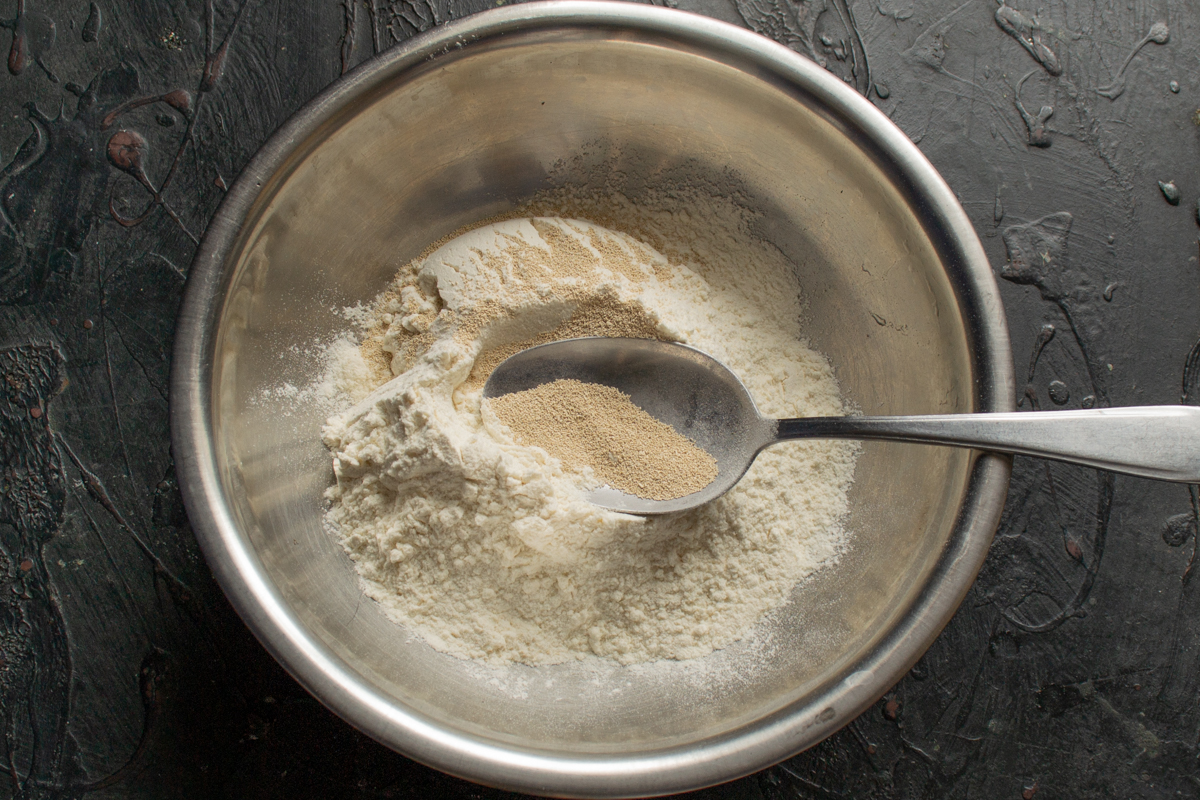
Sifting the flour is a crucial step that makes these pancakes truly airy.
Crack the egg into a separate bowl. Add the granulated sugar and salt.
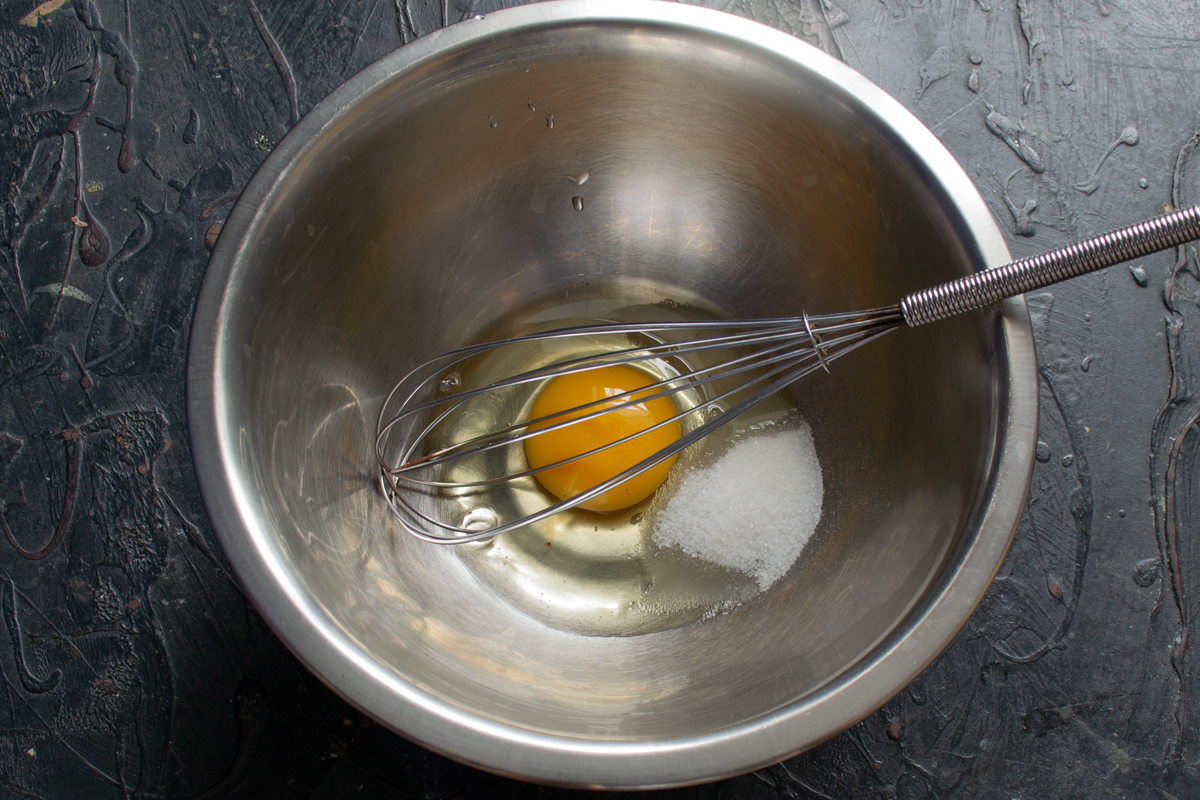
Begin combining the core ingredients for the wet base of the batter.
Whisk the egg with the sugar and salt just until the crystals dissolve. There is no need to beat it into a foam; a simple, thorough mix is enough.
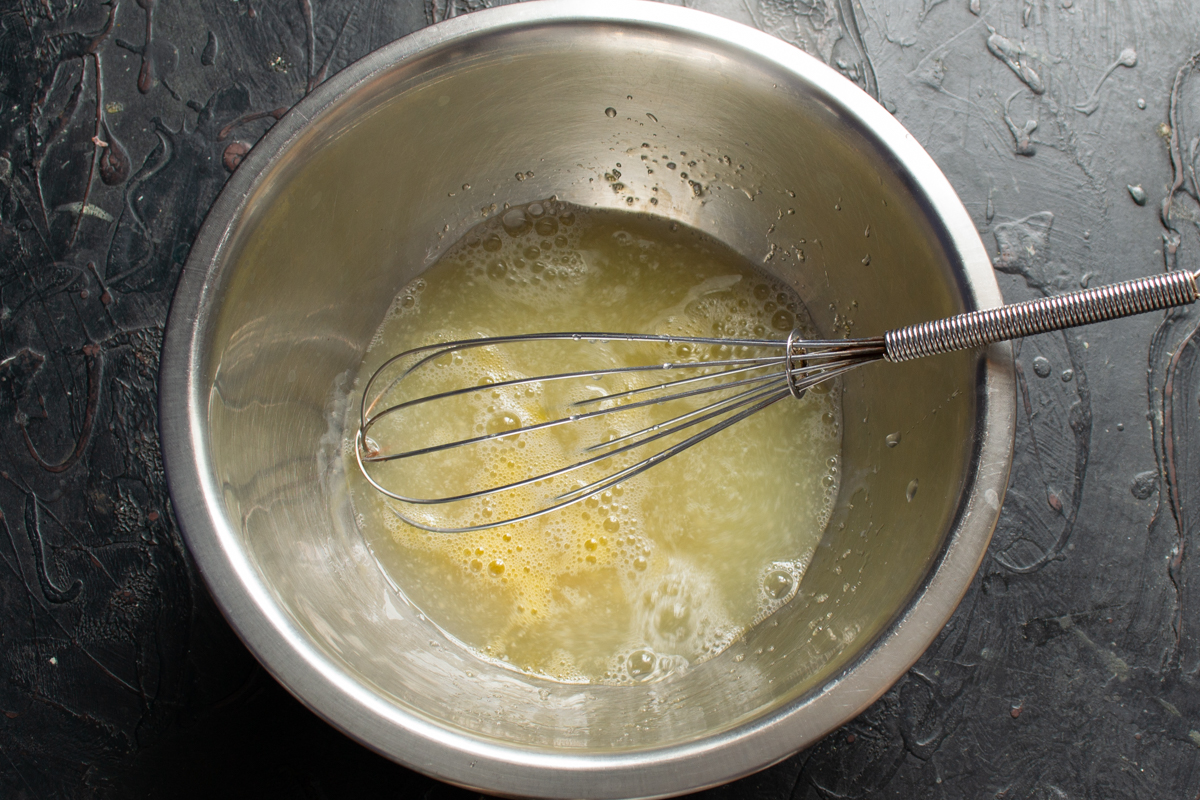
Whisk the egg and sugar until the crystals dissolve, without whipping into a thick foam.
Pour in the milk. You can mix the milk with water in a 1:1 ratio, or prepare the batter entirely with water if you prefer.
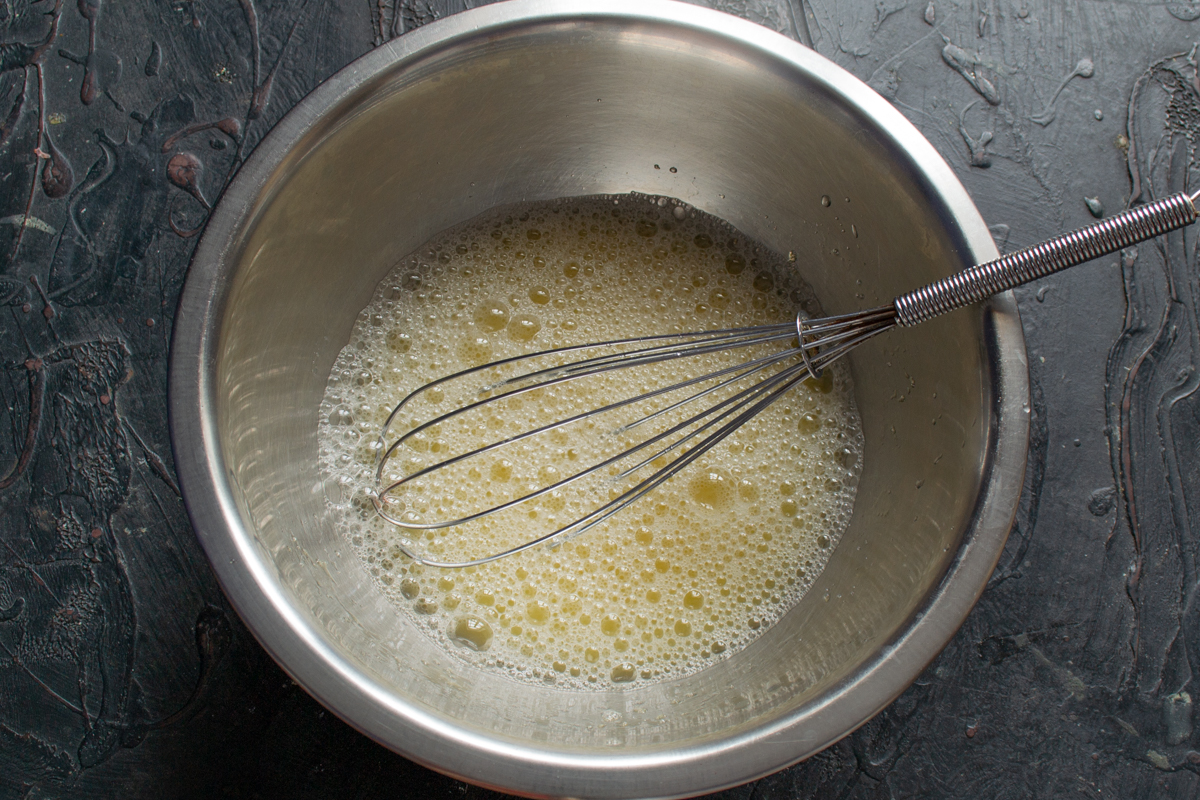
Pour in the room-temperature milk; this will create the perfect environment for the yeast to activate.
Pour in the vegetable oil, or use melted and cooled butter. If using vegetable oil, choose a neutral-tasting one.
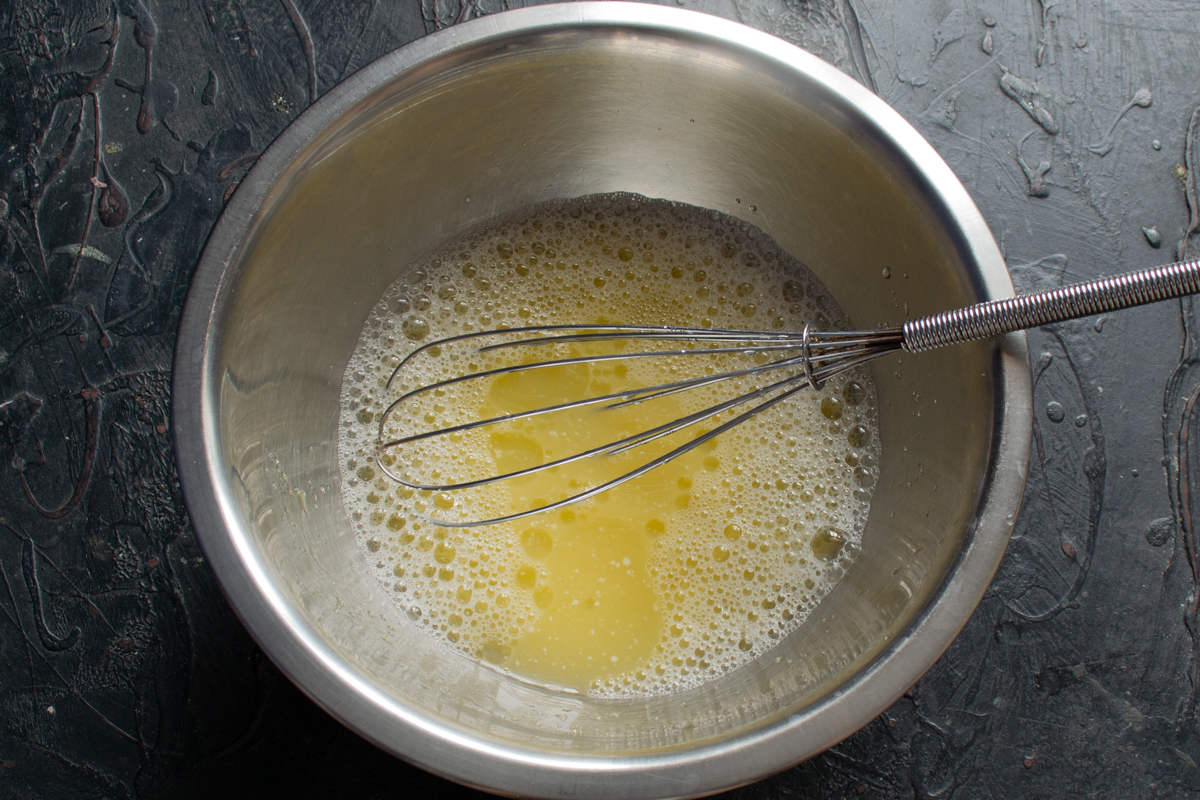
The oil gives the batter elasticity and makes the finished pancakes incredibly tender.
Combine the wet and dry ingredients by pouring the yeast and flour mixture into the bowl. Mix the batter with a spoon. It is impossible to knead this pancake batter by hand, but a hand mixer or stand mixer will work perfectly here.
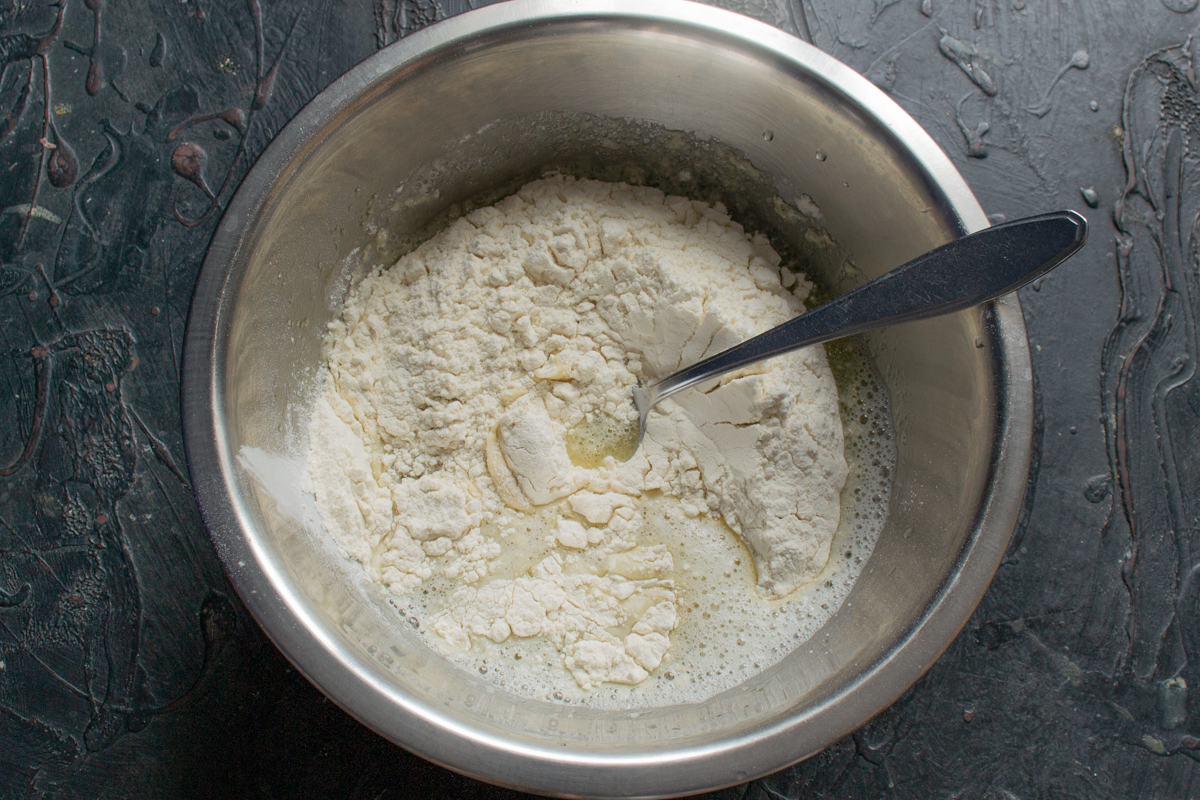
Gradually incorporate the dry ingredients into the wet ones to achieve a smooth consistency.
Beat the batter for about 7 to 10 minutes until it becomes completely smooth and uniform.
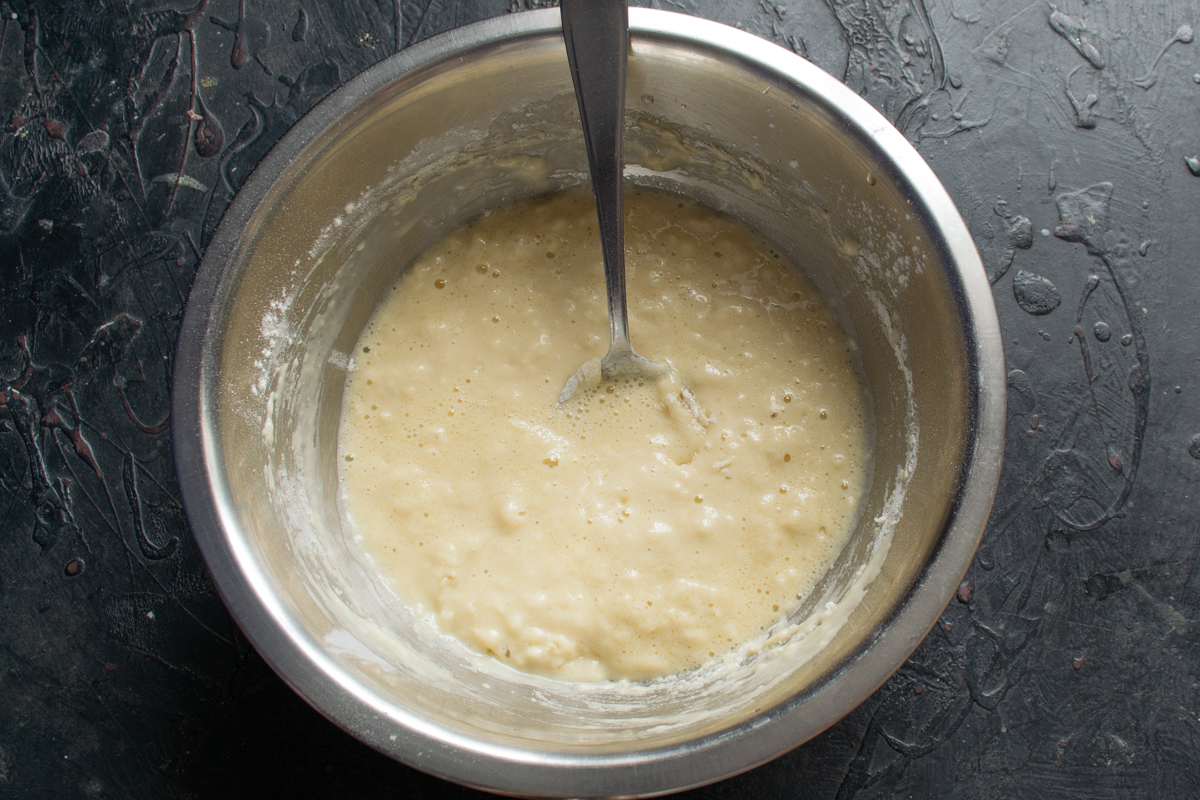
Thoroughly mix the batter until completely smooth, working out any small lumps.
Cover the bowl with a lid or plastic wrap and leave it in a warm, draft-free spot for 2 hours and 20 minutes. After about an hour, the batter will bubble and significantly increase in volume. Stir it again with a spoon, then let it rest in a warm place for its second rise.
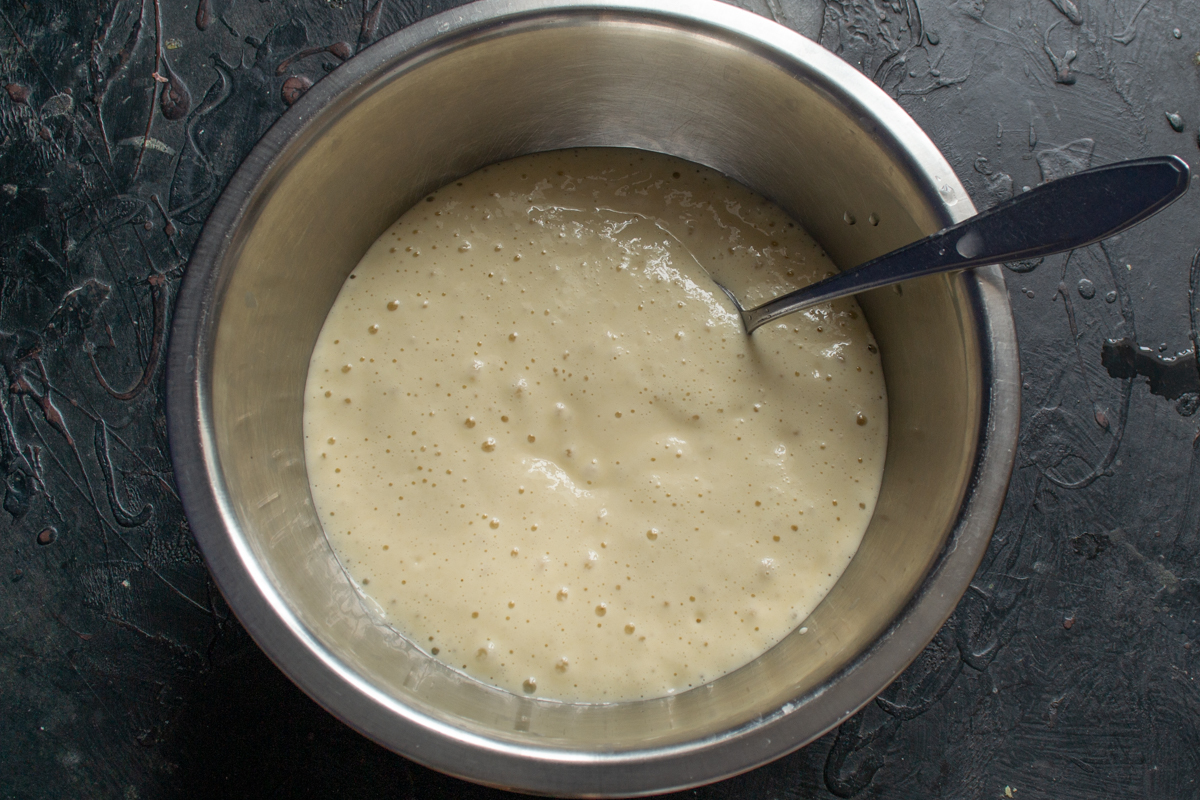
After resting in a warm spot, the batter becomes covered in bubbles and significantly increases in volume.
Place a heavy-bottomed skillet on the stove. Preheat the pan thoroughly for about 5 minutes. Using a silicone brush or a potato half, lightly grease the pan with neutral vegetable oil. Drop the batter with a tablespoon, using exactly one spoonful per pancake. Fry over medium heat until the bottom is deeply golden brown.
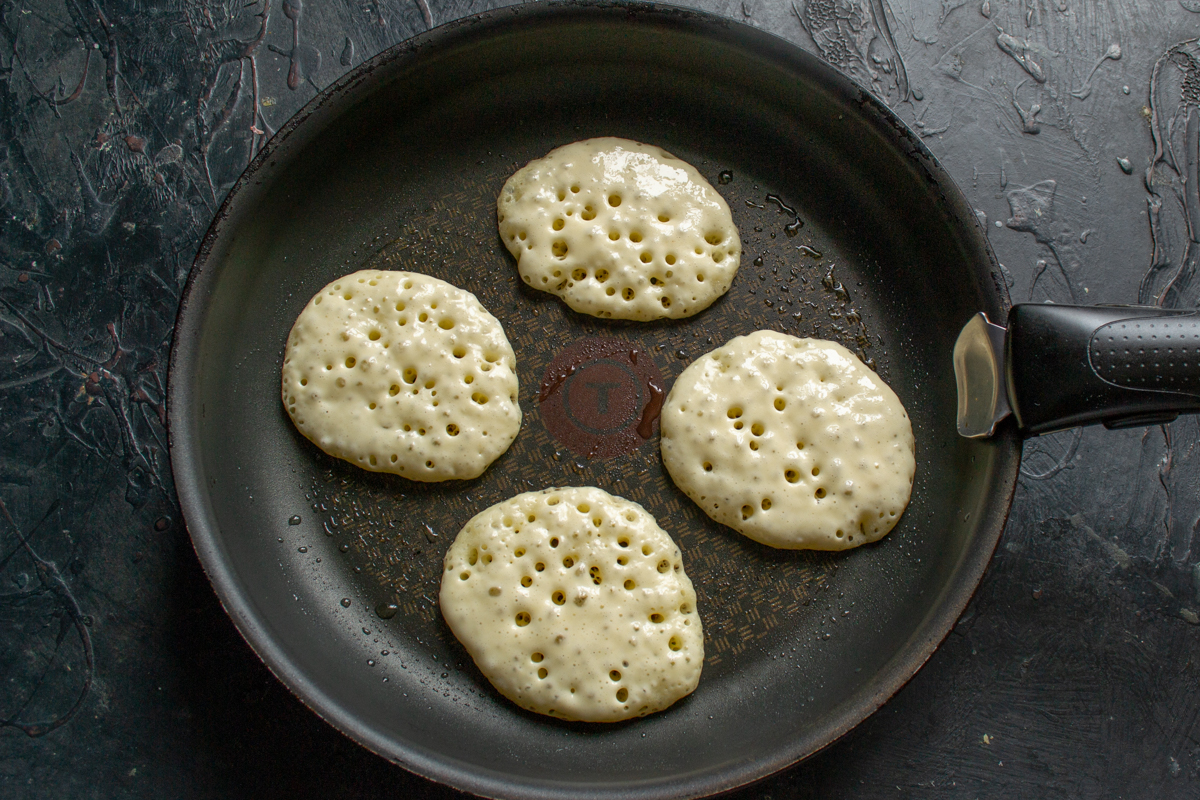
Drop the batter onto a hot skillet with a spoon and wait for the signature bubbles to appear.
Once the edges of the raw batter set and form a slight film, flip the pancakes and fry the other side.
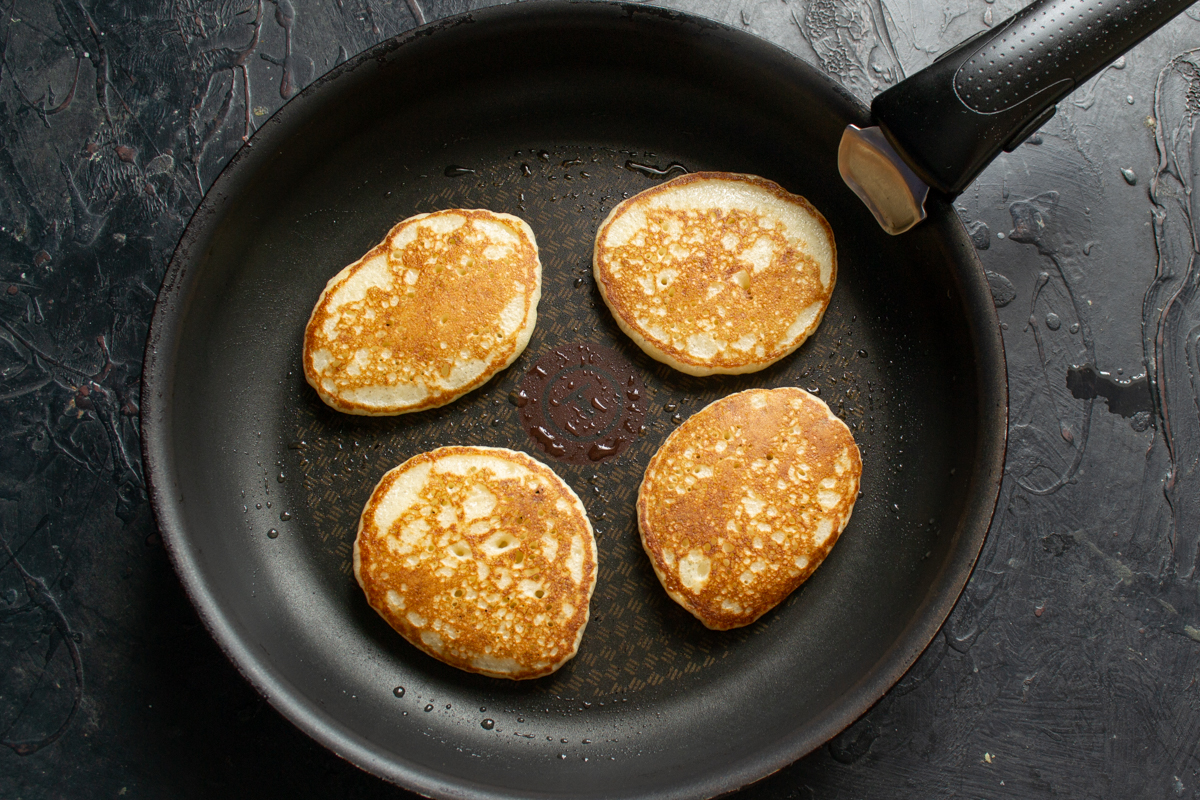
Flip the pancakes once the edges set, and fry until beautifully golden brown.
Remove the cooked pancakes from the pan. Stack them on a plate, placing a small pat of butter between each pancake.
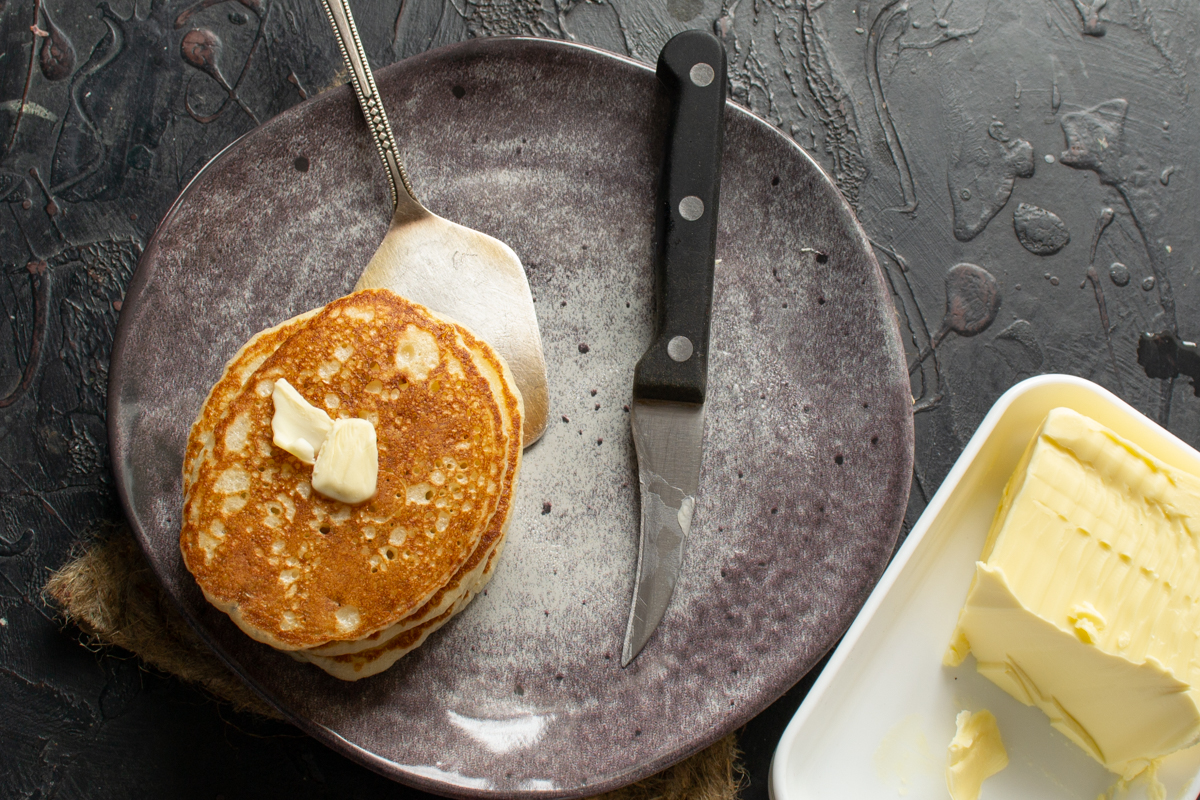
Butter melting over the hot pancakes gives them a wonderfully cozy, homemade flavor.
This recipe yields about 15 to 20 pancakes—unless, of course, someone sneaks them straight from the pan into their mouth.
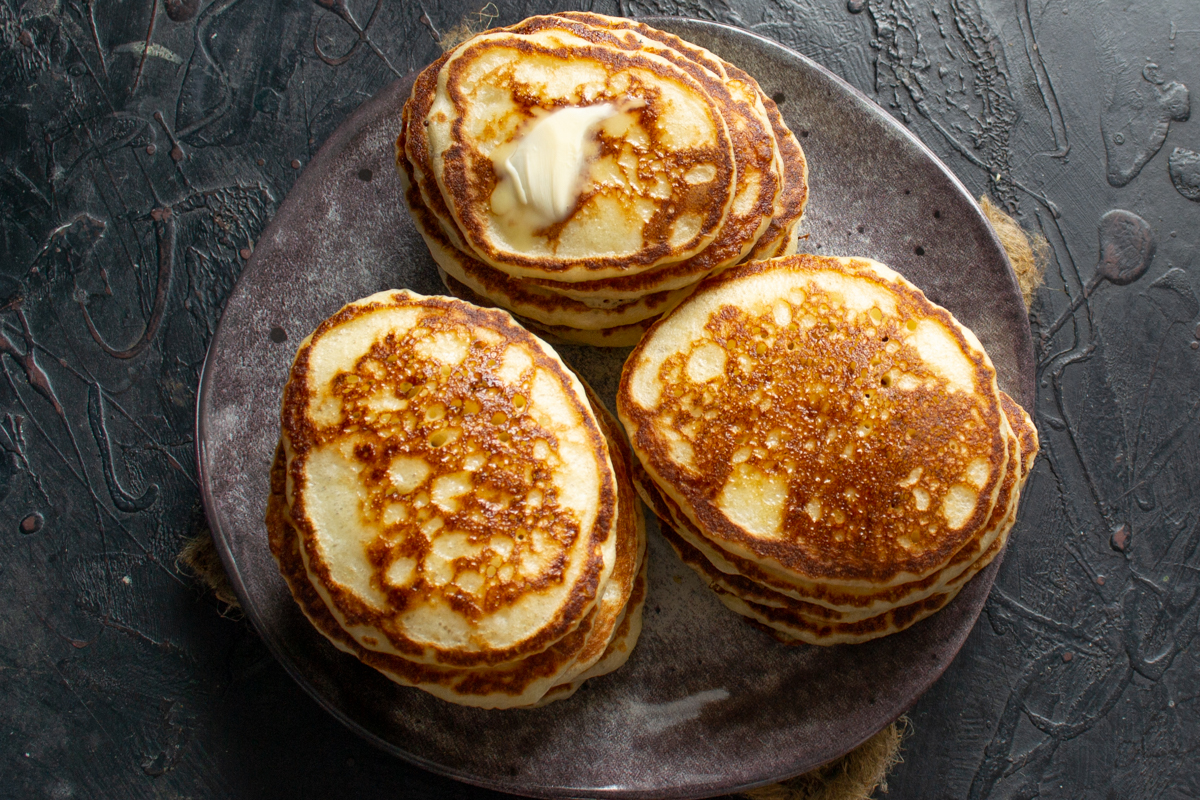
A whole mountain of airy pancakes is ready to be served. Enjoy them with sour cream, honey, or jam.
The texture of these airy yeast pancakes allows them to perfectly absorb any toppings. Traditionally, they are served piping hot, generously dolloped with thick farmers smetana (sour cream), linden honey, or homemade raspberry jam. If you want something more sophisticated, try serving them with a scoop of vanilla ice cream or salted caramel—the contrast of temperatures and flavors will turn a simple breakfast into a true dessert. If you have leftover pancakes, they retain their properties beautifully the next day. Simply cover them with a plate and store them in the refrigerator. Before serving, gently reheat them in a dry skillet under a lid or in the microwave to bring back their original softness. For those who love to experiment, you can fold finely diced apples or raisins directly into the batter before frying, adding extra juiciness and textural accents to the dish.
0 comments