
You stand at the deli counter. Before you lie three vacuum-sealed packages of pink dry-cured ham: one bears an Italian flag and the word “prosciutto,” another displays a Spanish flag and reads “jamón,” while the third is a domestic “dry-cured ham.” The prices vary by a factor of three. The question arises almost automatically: what exactly are you paying for? This is a completely fair question, and it has an honest answer. Understanding it simply requires knowing a bit more than what is printed on the label.
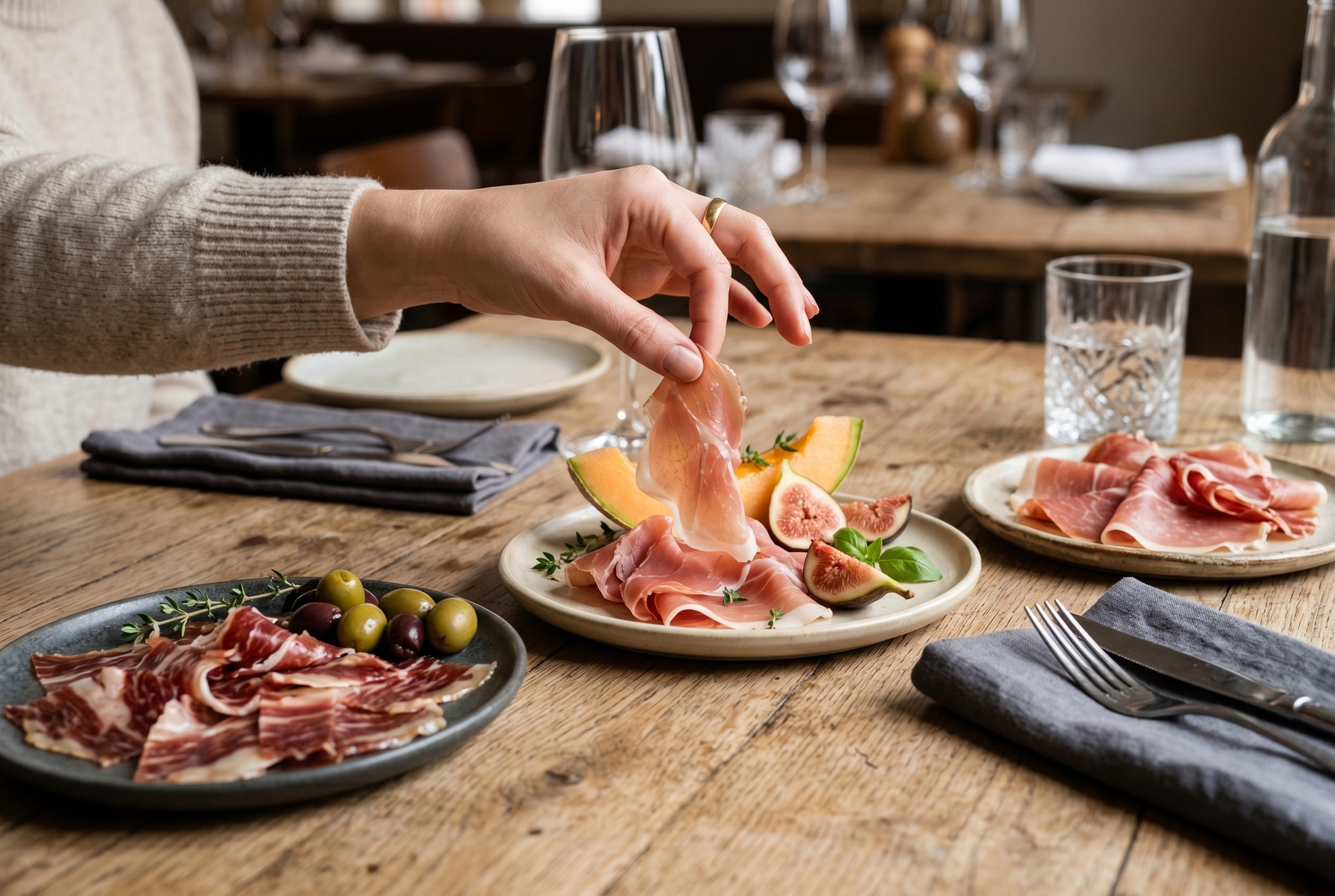
Italian prosciutto crudo is traditionally served with melon or figs to balance the salty taste of the meat with fruit sweetness.
Table of Contents
What Is Prosciutto
When an Italian mentions “prosciutto,” they are not always referring to a specific product; rather, it is a general term for Italian ham. More often, it describes an entire family of meats. Prosciutto cotto (cooked ham) appears pink and moist when sliced. This is what we typically just call “ham.” Prosciutto crudo, on the other hand, is dry-cured: producers age the meat in the air, adding nothing but salt. This is the variety we will explore.
Prosciutto crudo comes from the pork hind leg. Artisans rub the leg with sea salt and sometimes add a little black pepper, depending on the region, before hanging it in a well-ventilated room. From that point on, time, air, and enzymatic maturation do the work. Speeding up this process inevitably leads to a loss in quality.
The flavor of prosciutto crudo emerges from several combined factors: the breed of pigs, their diet, the local climate, the quality of the salt, and the aging time. Removing even a single element alters the final product. It does not necessarily become worse, but the taste changes entirely.
Prosciutto di Parma and San Daniele: One Country, Two Characters
The two most famous Italian prosciuttos with protected status are Prosciutto di Parma DOP and Prosciutto di San Daniele DOP. People often group them together, which is not entirely fair. While they share similar origins, they look and taste remarkably different upon slicing.
Parma prosciutto is fattier and boasts a denser flavor profile, featuring more salt and a clearer meaty taste. Producers age it for at least 14 months, and often much longer. They source pigs of several breeds, feeding them whey left over from Parmesan cheese production—a genuine part of the local agricultural ecosystem rather than a mere marketing gimmick. The Parma region remains humid, with constant winds blowing from the Apennines. This climate allows the meat to dry more slowly and develop a deeper flavor.
Producers craft San Daniele in northeastern Italy, within the Friuli region, where dry mountain air mixes with the humidity of the Adriatic Sea. Here, the prosciutto becomes softer and slightly sweeter. It contains less salt, and the minimum aging period mandated by regulations is 400 days, or roughly 13 months. A distinct visual feature also exists: the San Daniele leg retains its hoof, as required by strict production rules. This trait makes it easy to recognize even in a deli display.
When deciding how to serve them, Parma prosciutto pairs best with neutral items that do not overpower it, such as fresh mild bread, melon, or figs. San Daniele stands strong on its own, requiring no bread, melon, or any traditional accompaniments. However, this distinction remains subjective. Both varieties excel, and the choice ultimately depends on your mood and the other components on your plate.
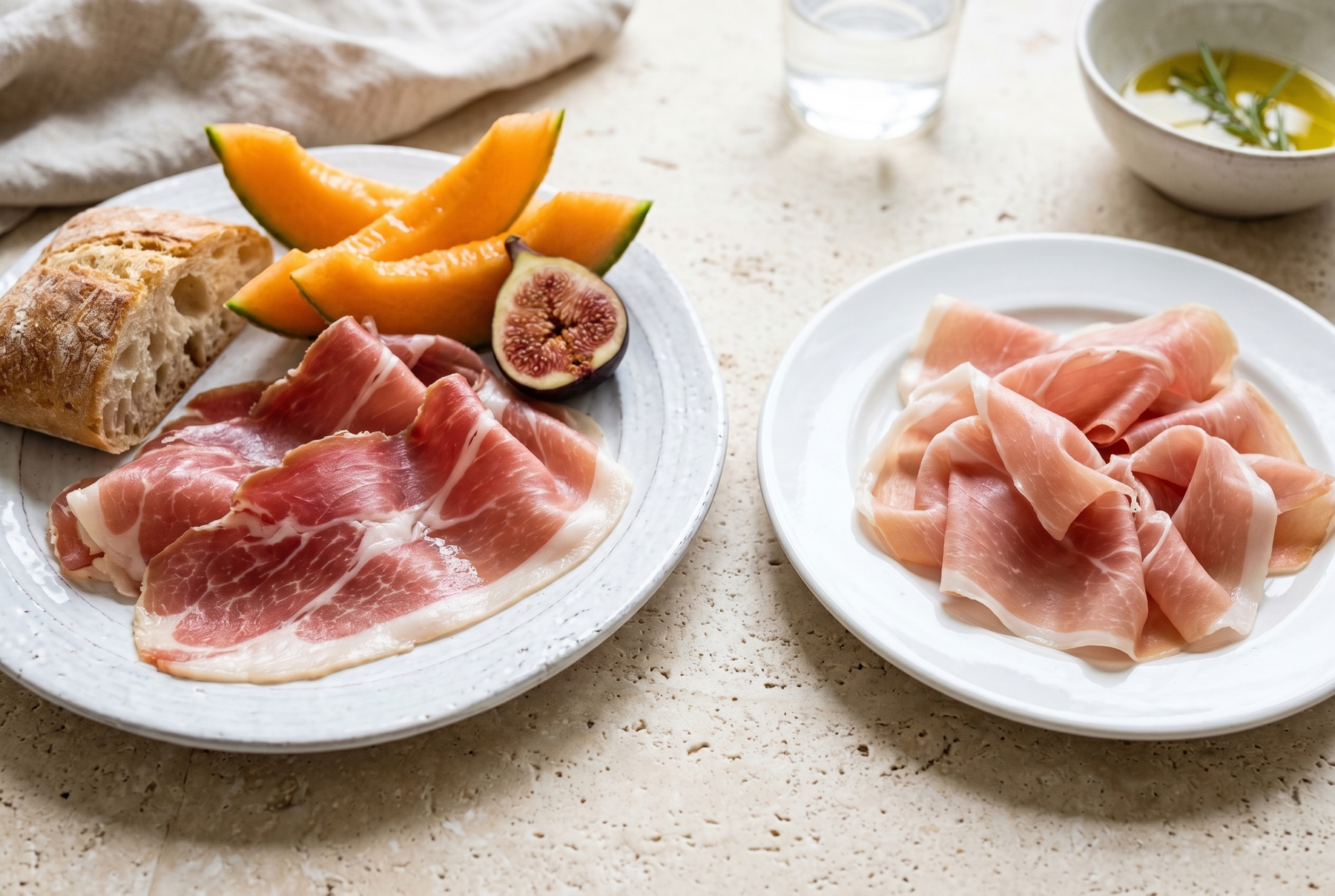
Despite their visual similarities, Prosciutto di Parma and San Daniele offer different flavor profiles due to regional climates and pig diets.
What DOP Means on Prosciutto
DOP stands for Denominazione di Origine Protetta (Protected Designation of Origin). This European Union legal status guarantees that producers made the item in a specific region, using designated raw materials, and following an approved traditional method. Independent certification boards strictly monitor this process.
Labels like “Parma-style prosciutto” or “Parma-type ham” lacking the DOP mark are merely attractive marketing phrases. They might conceal a decent product, but they do not represent authentic Prosciutto di Parma DOP. Different raw materials, alternative climates, and varying techniques ultimately yield a completely different taste.
Local markets often carry products with names mimicking Italian DOP delicacies. Some of these are quality items with transparent ingredients. However, genuine Parma DOP and San Daniele DOP rarely reach certain regional retail sectors due to international trade restrictions. When a seller claims a product is “the real deal,” asking for its exact origin is always a smart move.
Prosciutto, Jamón, and Culatello: Three Worlds from One Leg
Jamón, prosciutto, and culatello all classify as dry-cured pork hind legs. Yet, grouping them together is like tossing Cognac, Armagnac, and Calvados into a single “strong French spirits” category. It is technically accurate, but this formula completely ignores the raw materials, aging processes, and distinct flavors.
Jamón Ibérico begins with an entirely different pig. The Iberian breed possesses a unique trait where fat significantly infiltrates the muscle tissue, creating a marbling rarely seen in pork. Farmers pasture these animals in open fields and oak groves where they forage for acorns (known as the “bellota” category). This diet transforms the fat composition, making it softer, imparting a nutty flavor, and allowing it to practically melt at room temperature. The aging period for Jamón Ibérico de Bellota can reach up to four years. The resulting flavor is rich and dense, carrying a nutty bitterness and a lingering finish.
Jamón Serrano comes from white pigs raised on a grain-based diet. The aging period is shorter, the texture remains denser, and the flavor leans toward a simpler, saltier profile. Naturally, the price tag is significantly lower.
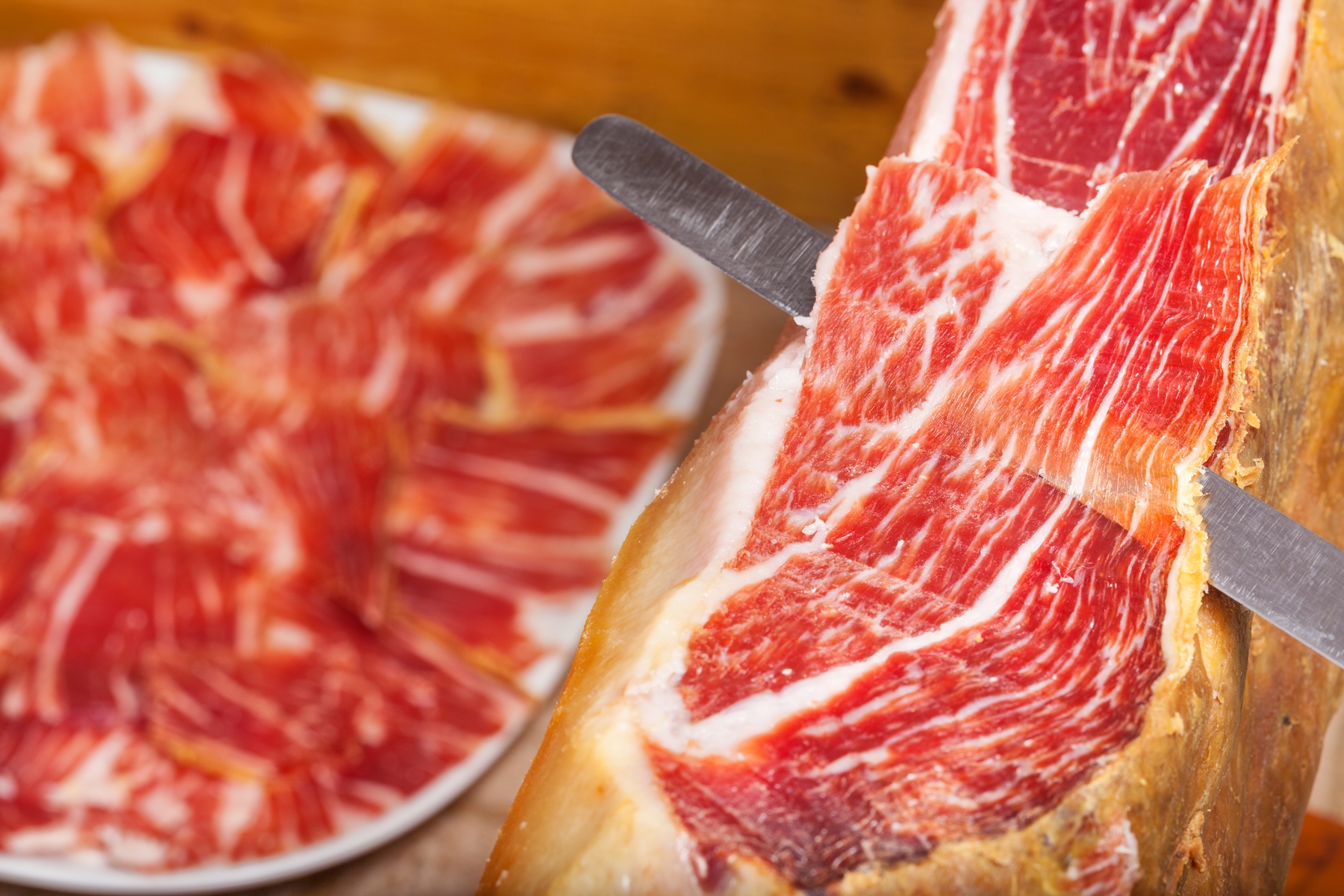
Jamón Ibérico differs noticeably from prosciutto with its intense color and nutty-tasting fat that begins to melt at room temperature.
To briefly summarize how prosciutto differs from jamón, the Italian cure appears lighter in both color and taste. The slices are paler, the salt presents more gently, the sweetness stands out, and the fat yields quickly to warmth. Prosciutto lacks the dense, nutty saltiness that acorn-fed Iberian pigs deliver. Its character is entirely different—calmer and more refined. Prosciutto behaves delicately, whereas jamón strikes the palate immediately.
Culatello remains relatively unknown outside of Italy. Artisans produce it in the Parma province, along the floodplains of the Po River near the village of Zibello. Instead of using the whole leg, they craft culatello strictly from the prime muscle, removing the bone and skin. Producers tie the meat by hand, encase it in a natural casing (traditionally a pig’s bladder), and age it in cellars with incredibly high humidity, shaped by the unique microclimate of river fogs. Official rules dictate a minimum aging of 10 months, but most products reaching buyers undergo 14 months to 3 years of maturation. Connoisseurs consider Culatello di Zibello DOP one of Italy’s most expensive delicacies. It rarely sees export because small production volumes barely satisfy local demand. The flavor bursts with rich fat and profound sweetness, the salt feels gentle, and the finish lasts wonderfully. Those who taste it often say that regular prosciutto feels like its younger sibling afterward.
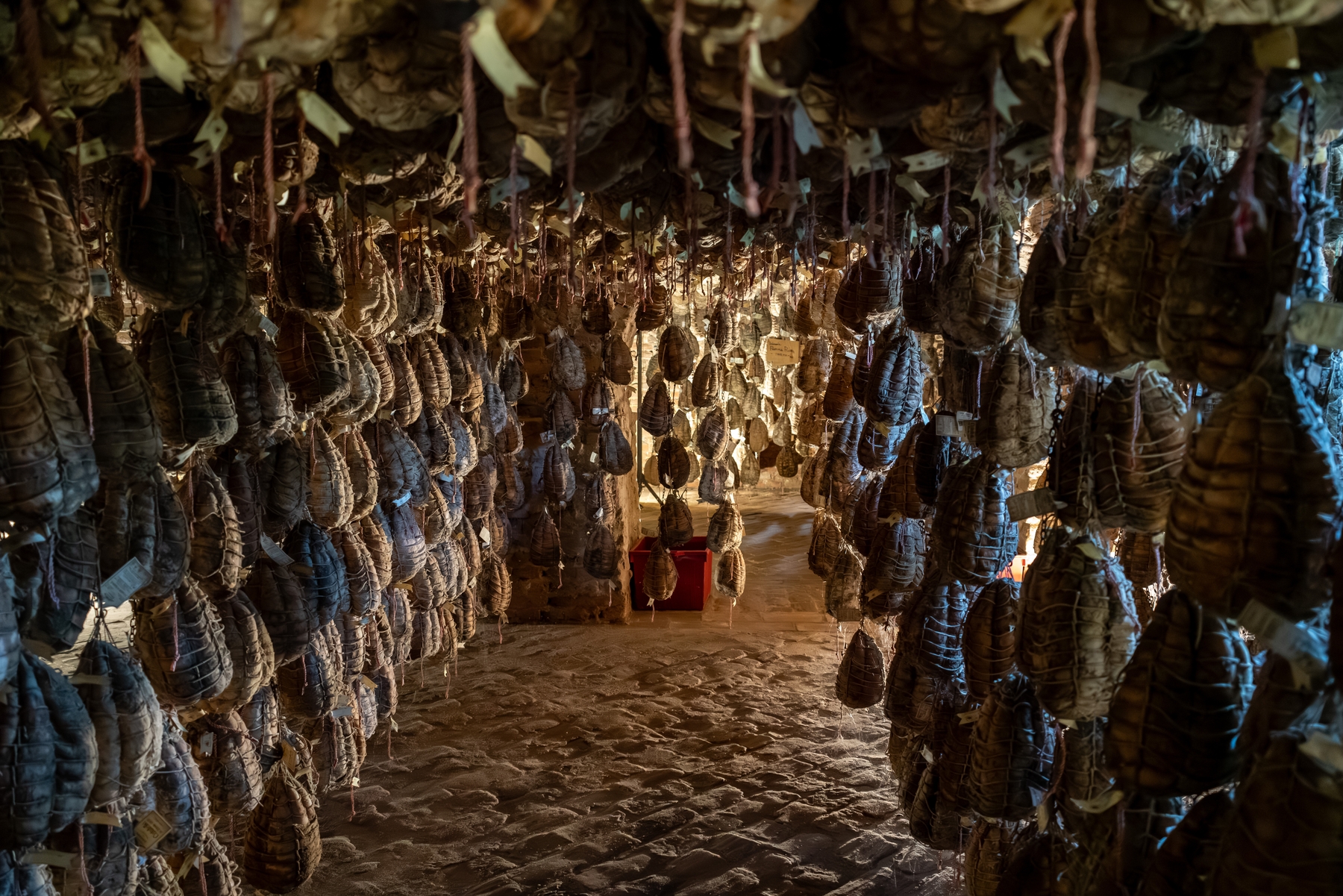
Culatello represents a rare and expensive delicacy that matures in the high-humidity environment of the Po River floodplains.
What You Are Paying For
Parma DOP requires a minimum aging of 14 months, while San Daniele DOP mandates at least 400 days. The finest legs age for 24 months or more. Speeding up this natural progression without sacrificing quality proves impossible. You simply have to wait.
During this time, the meat loses 25 to 35 percent of its original weight as moisture evaporates, deeply concentrating the flavor. Natural enzymes gradually break down proteins and fats into simpler compounds. This chemical evolution generates a depth of flavor that artificial additives cannot replicate in a few weeks. The fat acts as a crucial carrier of taste and texture, melting on the tongue and providing a prolonged finish. Salt functions as far more than just a seasoning; it draws out moisture, preserves the meat safely, alters the texture, and guides the maturation. Authentic Parma DOP and San Daniele DOP contain nothing but pork and salt, avoiding nitrites, nitrates, and stabilizers entirely.
A “quick substitute” boasting a similar name and a price tag three times lower is an entirely different product. It generally features a different ingredient list, alternative production methods, and shorter aging periods. This remains perfectly fine, as many consumers simply want cold cuts rather than culinary history. However, securing the authentic original requires investment. You are paying for highly specific elements: time, terroir, and strict regulations.
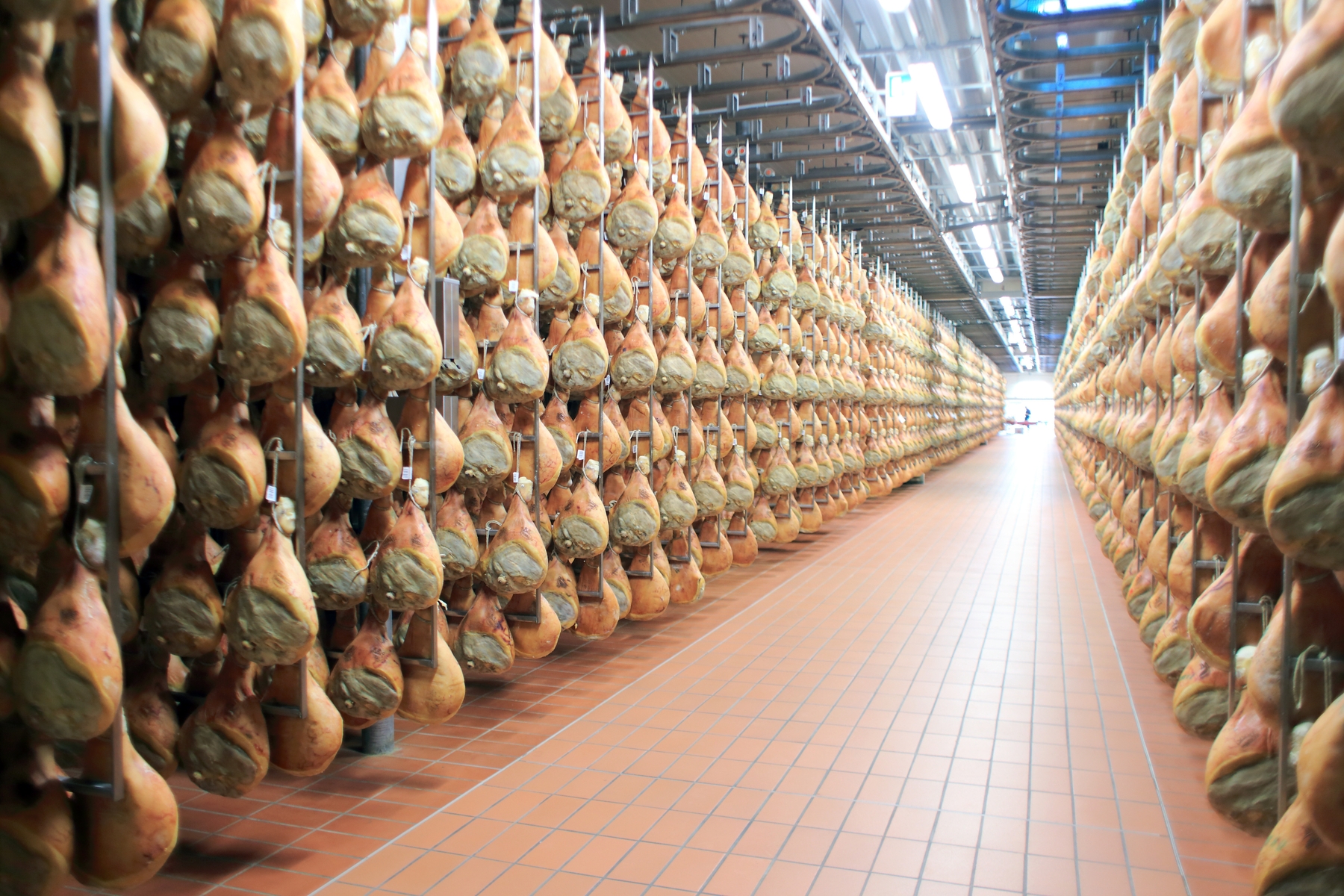
Time acts as the main ingredient. Over 14 to 24 months of aging, the meat loses up to a third of its weight, acquiring a concentrated flavor and tender texture.
How to Eat Prosciutto Correctly and Where It Usually Goes Wrong
The Main Mistake: Cold Prosciutto
Chilled fat turns dense and waxy, muting the flavor and making the meat taste bland and overly salty. Resting the prosciutto on a plate at room temperature for 15 to 20 minutes is essential. After this brief wait, the fat begins to glisten slightly, the slice regains its characteristic translucency, and the flavors open up beautifully.
Thickness Matters
Deli counters slice prosciutto incredibly thin, almost to the point of transparency. Everything relies on this thinness: a delicate slice warms up quickly, the fat softens, and the meat avoids any dry sensation. A meat slicer achieves a consistency that a knife struggles to replicate. Requesting the deli to slice it for you is always the best approach if you do not own a slicer at home.
What to Serve with Prosciutto
Pairing melon with prosciutto goes beyond mere tradition; the fruit’s sweet and subtly tart notes perfectly balance the meat’s salty richness. Figs follow the exact same logic. Fresh mozzarella offers a neutral, milky base that never competes with the ham. Plain breads, like unflavored ciabatta or focaccia, provide the necessary neutral canvas.
What Kills the Flavor
Vinegar in any form, spicy sauces, and harsh marinades instantly overpower the meat, turning delicate prosciutto into salty paper. Placing raw prosciutto onto a piping hot pizza is another common tragedy. The intense heat rapidly melts the fat and dries the edges, transforming a luxurious slice into a tough, salty meat shaving.
Italians enjoy prosciutto quite simply. A few slices grace a white plate alongside a piece of bread, perhaps accompanied by a drizzle of olive oil. They skip the complex architectural sauces and elaborate restaurant presentations. In some regions abroad, people frequently pile it onto buttered sandwiches with cucumber—which is not an absolute disaster, but it makes about as much culinary sense as washing down a fine Barolo with lemonade.
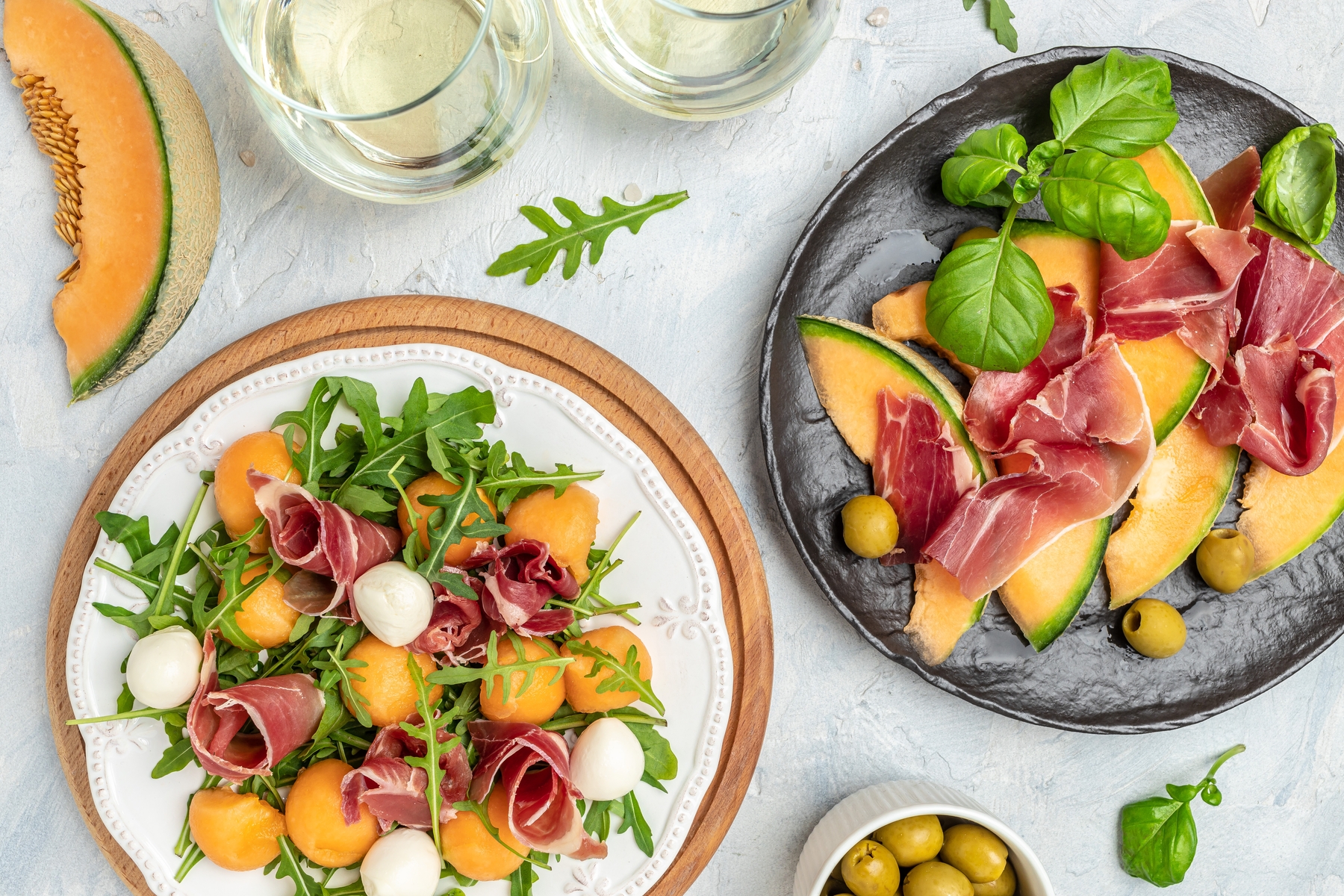
Fresh mozzarella and greens make excellent companions for prosciutto, creating a light and aesthetically pleasing Mediterranean-style appetizer.
How to Choose Prosciutto at the Deli Without a DOP Label
The reality is that finding authentic Parma DOP in a standard regional supermarket can prove challenging. Nevertheless, selecting a decent alternative remains entirely possible if you know what to look for.
Ingredients
This is the primary indicator. When seeking an alternative to Parma DOP or San Daniele DOP, the benchmark is straightforward: pork and salt. The presence of sodium nitrite, potassium nitrate, stabilizers, or dextrose points to industrial production methods. Spices and other permitted ingredients do not necessarily ruin the product; they might simply reflect a different regional tradition. However, they certainly do not belong to the Parma or Friuli schools of curing.
Aging Time
Quality prosciutto matures for at least a year. A label reading “aged for 3 months” simply indicates a fast-tracked imitation.
Color of the Slices
A healthy hue appears pinkish-red and even. Gray edges, dull coloring, excessively dark patches, or an unnaturally bright tint all signal storage issues or manufacturing flaws.
Smell Through the Packaging
Vacuum packaging should never emit a sour or chemical odor. A mild, clean meaty aroma is perfectly normal. Anything sharp or unpleasant is a clear warning sign.
The Producer
Italian producers operating for export, even without DOP status, generally adhere to more traditional techniques. The same applies to Spanish makers. Local domestic producers vary wildly; some craft excellent charcuterie, while others merely sell basic ham under a glamorous name.
Returning to the deli counter, you now understand that those three packages represent more than just three price tags. They embody different animals, distinct regions, varied techniques, and differing commitments to time. A quality prosciutto reveals its excellence without relying on marketing slogans: a delicate slice, even fat distribution, gentle saltiness, and the pure aroma of cured meat rather than a bagged marinade.
0 comments