
Most home kitchens usually stock two types of citrus: a lemon on the shelf and a lime somewhere in the crisper drawer. However, restaurant kitchens rely on a much wider variety of citrus fruits, each bringing something to the dish that a lemon simply cannot. Understanding citrus in the kitchen does not require a restaurant budget or a ticket to Tokyo; it only requires knowing how each fruit interacts with food.
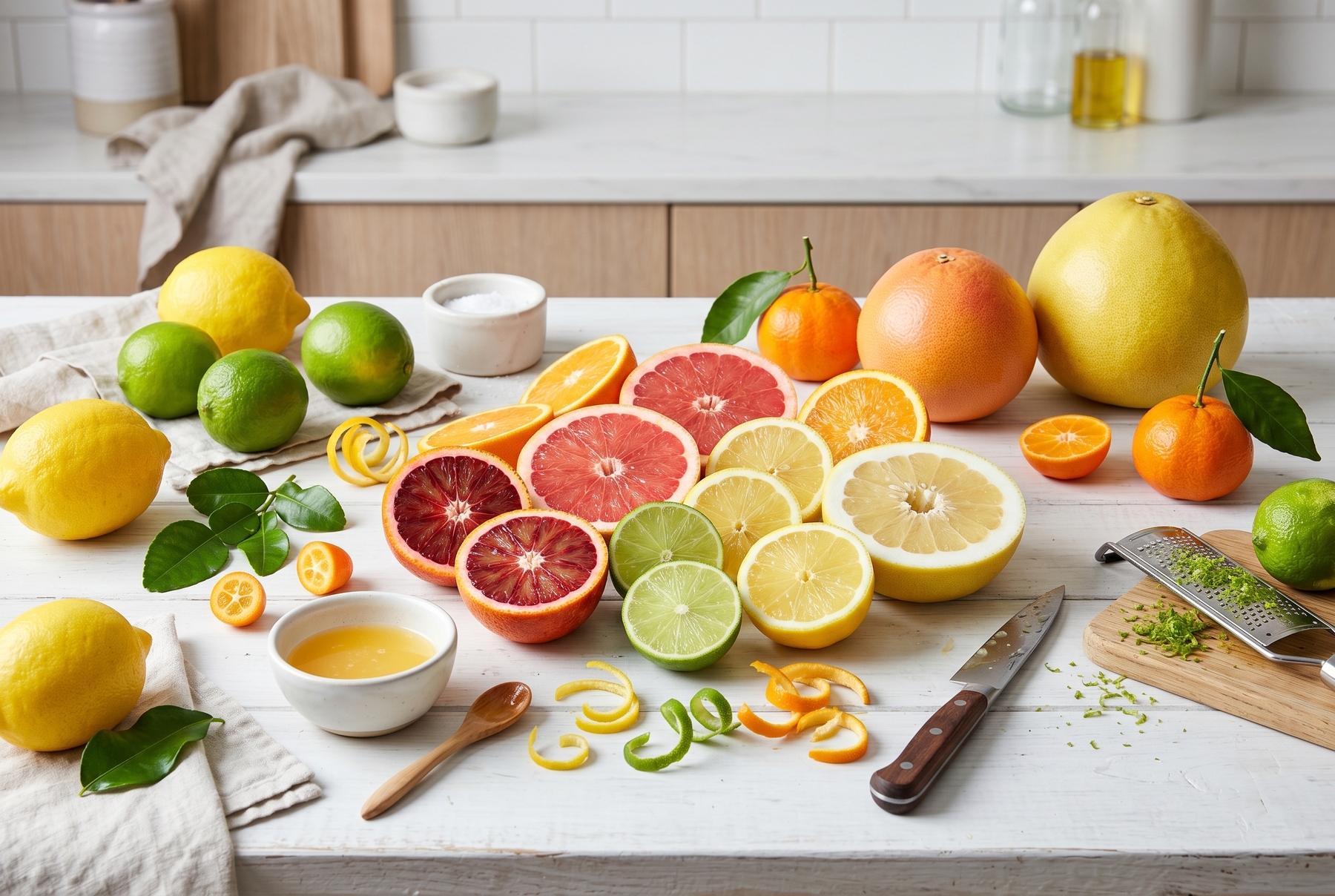
A diverse assortment of citrus fruits, from the familiar lemon to the exotic yuzu, each bringing a unique flavor and aroma to dishes.
Table of Contents
- Citrus Is More Than Just Acidity
- Lemon and Lime: Familiar but Different
- Yuzu: Mandarin, Pine, and Bitter Peel
- Makrut Lime: The Leaves Matter More Than the Fruit
- Bergamot: Citrus from a Teacup
- Pomelo: Not an Overgrown Grapefruit
- Grapefruit: Bitterness for Marinades and Cocktails
- Kumquat, Calamansi, Citron, and Blood Orange
- How to Choose the Right Citrus for the Task
- What to Look for and Where
Citrus Is More Than Just Acidity
It often seems that citrus fruits are interchangeable as long as their acidity is similar. In the kitchen, however, things do not work that way.
Every citrus fruit possesses a distinct aroma, flavor, and culinary role, revealing itself differently in juice and zest. They also vary in bitterness, sweetness, and how they react to heat. Lime quickly loses its fragrance when heated, developing a slight bitterness. Lemon holds up longer, but its scent becomes harsher after cooking. Yuzu loses its prized aroma rapidly when boiled, which is why it is usually added at the very end or kept entirely raw.
Preparing Thai curry with lemon instead of makrut lime leaves provides acidity, but it lacks that green, almost camphor-like aroma that gives Thai curry its depth. Similarly, using lime in guacamole does more than just add sourness. It brings together the avocado, chili, salt, and herbs, slightly slows down the browning process, and cuts through the richness of the avocado. Using lemon in guacamole results in a milder, quieter flavor—a perfectly fine result, but an entirely different one.
Lemon and Lime: Familiar but Different
Starting with lemon and lime, the difference between them is more significant than it appears.
Lemon varieties differ significantly. Grocery stores typically carry lemons like Eureka or Lisbon, which offer bright acidity, a slightly bitter albedo (the white pith beneath the fragrant outer peel), and a lingering aroma in dishes. The Meyer lemon behaves quite differently. It is milder, sweeter, almost entirely free of bitterness, with a thin skin and a pronounced floral note. While less common, finding it at a market is a great opportunity to use it in desserts and sauces where a standard lemon would impart too harsh an acidity.
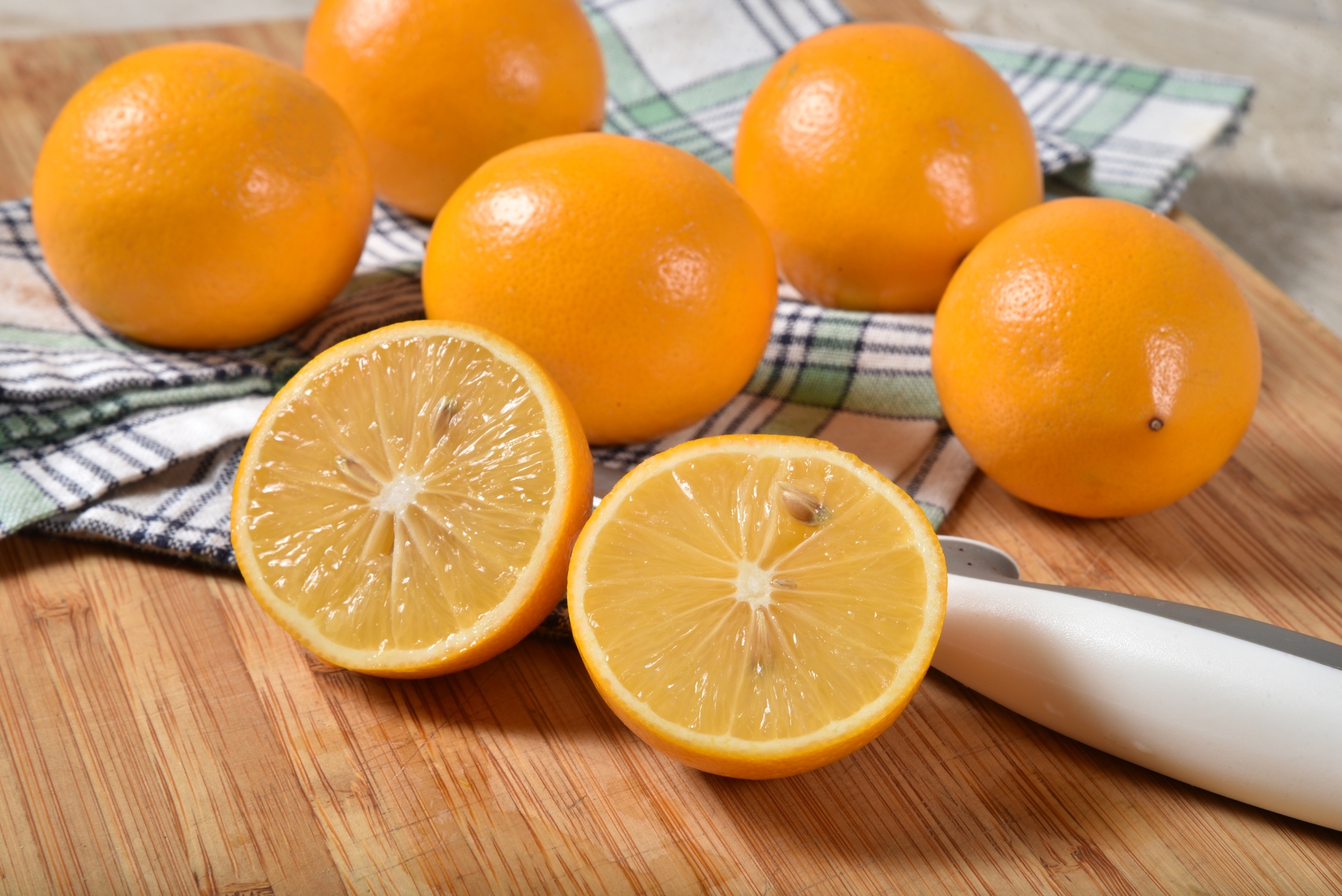
The Meyer lemon features a milder flavor and thinner skin, making it an ideal choice for delicate desserts.
A similar trap exists with lime. The Persian lime, the common supermarket variety, is usually large, thick-skinned, and moderately acidic. The Key lime is small, nearly round, with highly aromatic juice and thin skin. This is the exact variety used for the famous Key lime pie. Using a Persian lime instead yields a tart pie that lacks aromatic depth.
It is easy to forget that the zest and juice of a single fruit behave like two entirely different ingredients. Lemon zest smells vibrant in baked goods but adds no acidity. The juice is sour, but the scent of the lemon skin within it is faint, as most essential oils remain in the peel. When a recipe calls for both, using both ingredients is essential. If only the aroma is needed, the zest alone is sufficient.
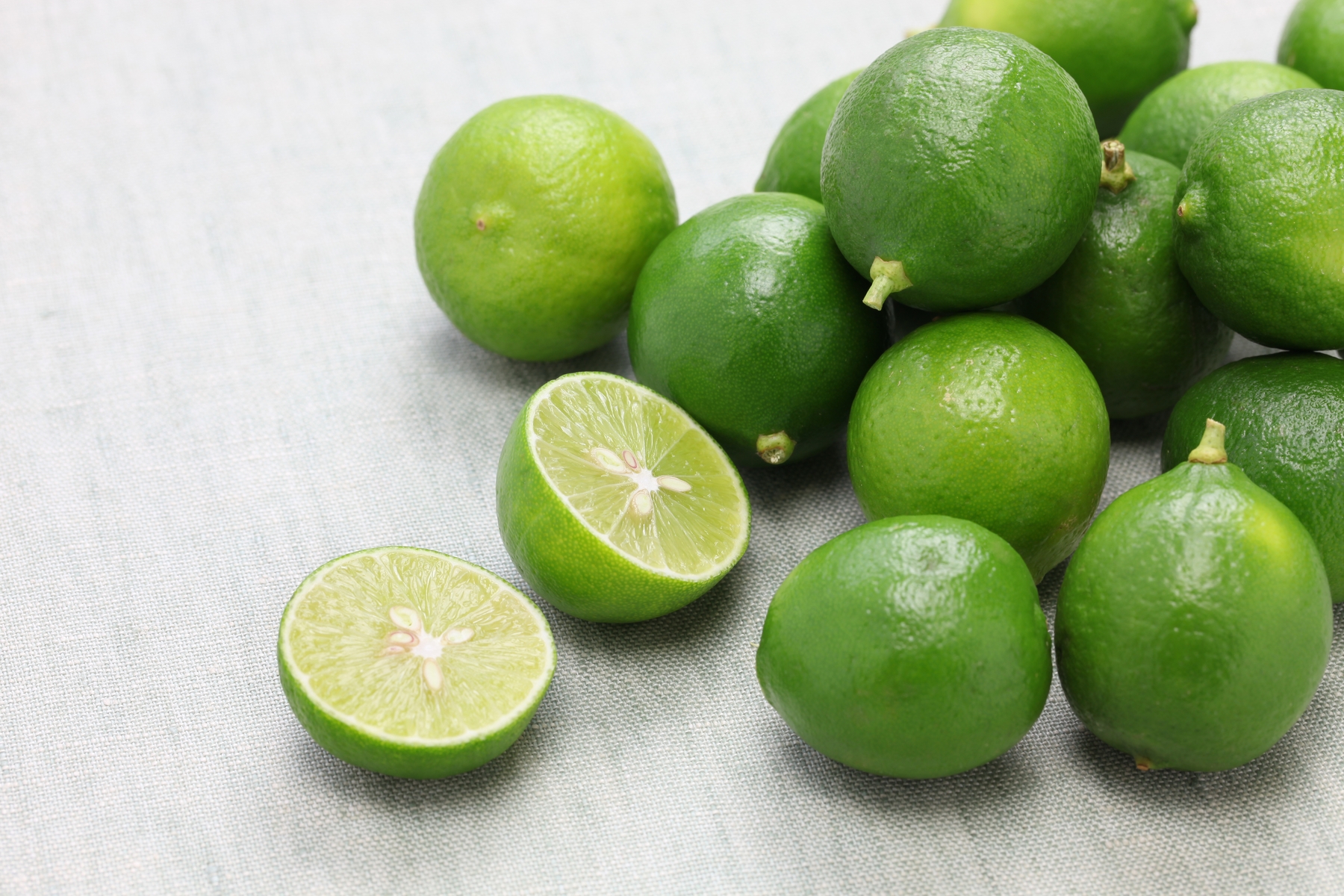
Key limes are prized for their intensely aromatic juice, serving as the foundation for the famous Florida pie.
Yuzu: Mandarin, Pine, and Bitter Peel
Yuzu smells like neither lemon nor lime. It carries notes of grapefruit, mandarin, blossoming orange branches, and a light touch of pine. It is difficult to describe but equally hard to confuse with anything else.
In Japanese cuisine, yuzu has long been a staple, appearing in ponzu (a citrus-infused soy sauce), yuzukosho (a fermented paste made from yuzu peel and chili peppers), and yuzu-su (sour yuzu juice used like vinegar). Outside of Japan, it gained prominence on restaurant menus during the 2000s, when Scandinavian and French chefs began actively incorporating Japanese ingredients. Today, it is used in desserts, cocktails, marinades, and dressings far beyond Japan’s borders.
Since fresh yuzu is difficult to find, recipes more commonly use its juice, paste, or zest, making preserved versions highly valuable.
- Bottled juice is the most common, available in Asian markets and online. It works beautifully for dressings, marinades, and cocktails.
- Yuzukosho paste is pungent and spicy; a small spoonful transforms a bowl of soup or a sauce.
- Dried or frozen zest is added to baked goods and hot dishes where the aroma is prioritized over acidity.
Replacing yuzu in a recipe can be achieved by mixing lemon and grapefruit juice (at about a 2:1 ratio), sometimes with a drop of mandarin juice. It comes close, though it lacks that distinct piney fragrance.
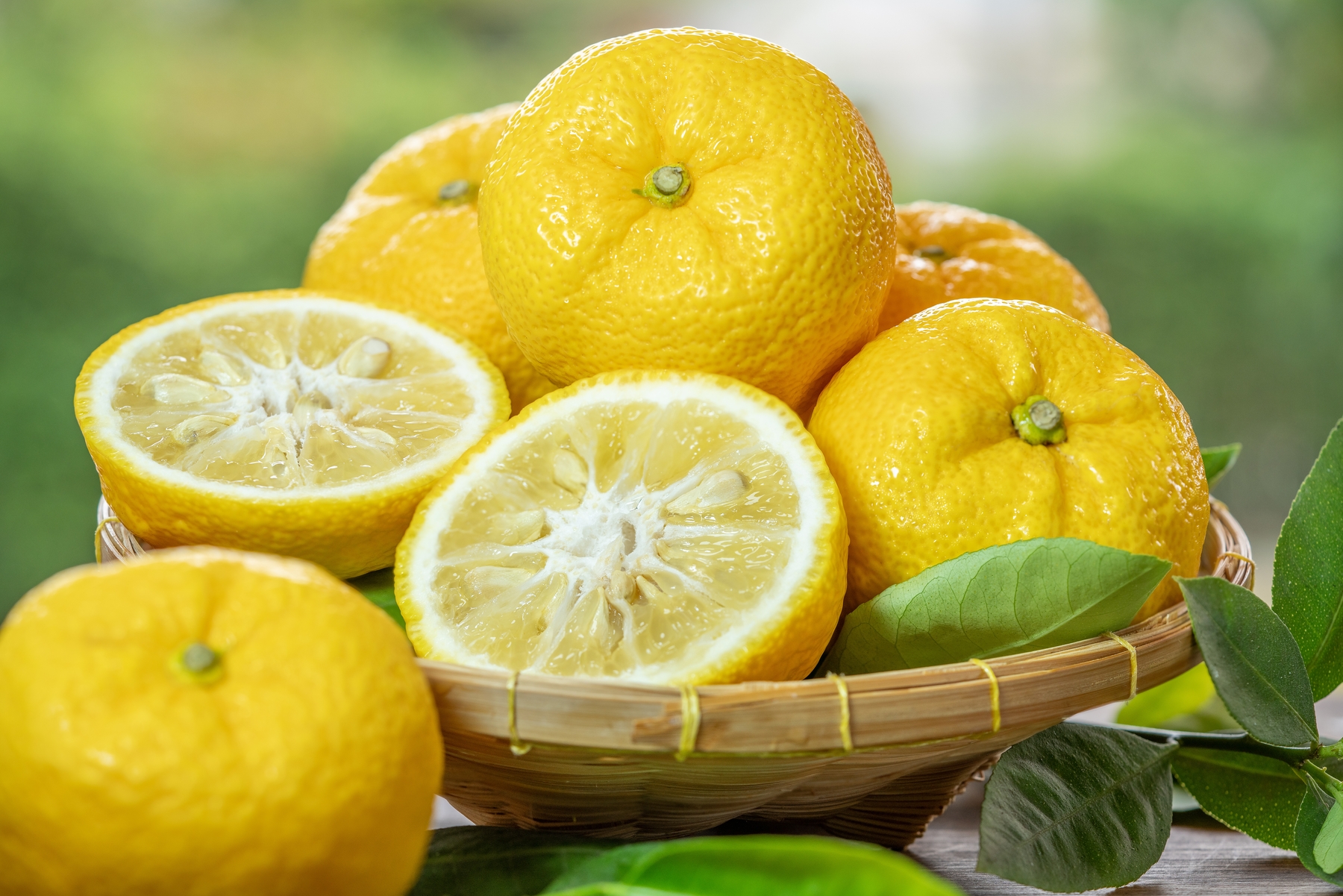
Yuzu boasts a complex aroma with notes of pine and mandarin, widely utilized throughout Japanese cuisine.
Makrut Lime: The Leaves Matter More Than the Fruit
The makrut lime is one of the few citrus fruits where the primary value does not lie in the fruit itself. It is bumpy, almost juiceless, with a very thick peel. While its zest is occasionally used, the leaves are what make the makrut lime so highly prized in the kitchen.
Rubbing a leaf between the fingers releases a burst of citrus, followed by camphor and sharp greenery. These leaves are essential in Thai curry pastes, tom kha soup, Laotian soups, and Vietnamese marinades. In broths, the leaves impart their aroma but remain tough and almost leathery. They are not meant to be eaten, much like bay leaves.
Fresh makrut lime leaves can be elusive. Dried versions are sold in specialty stores and online marketplaces, while frozen ones are less common but still available. Because dried leaves have a weaker aroma, doubling the volume is usually necessary. When making a Thai soup with only dried leaves on hand, adding them right at the beginning ensures they have enough time to release their remaining fragrance.
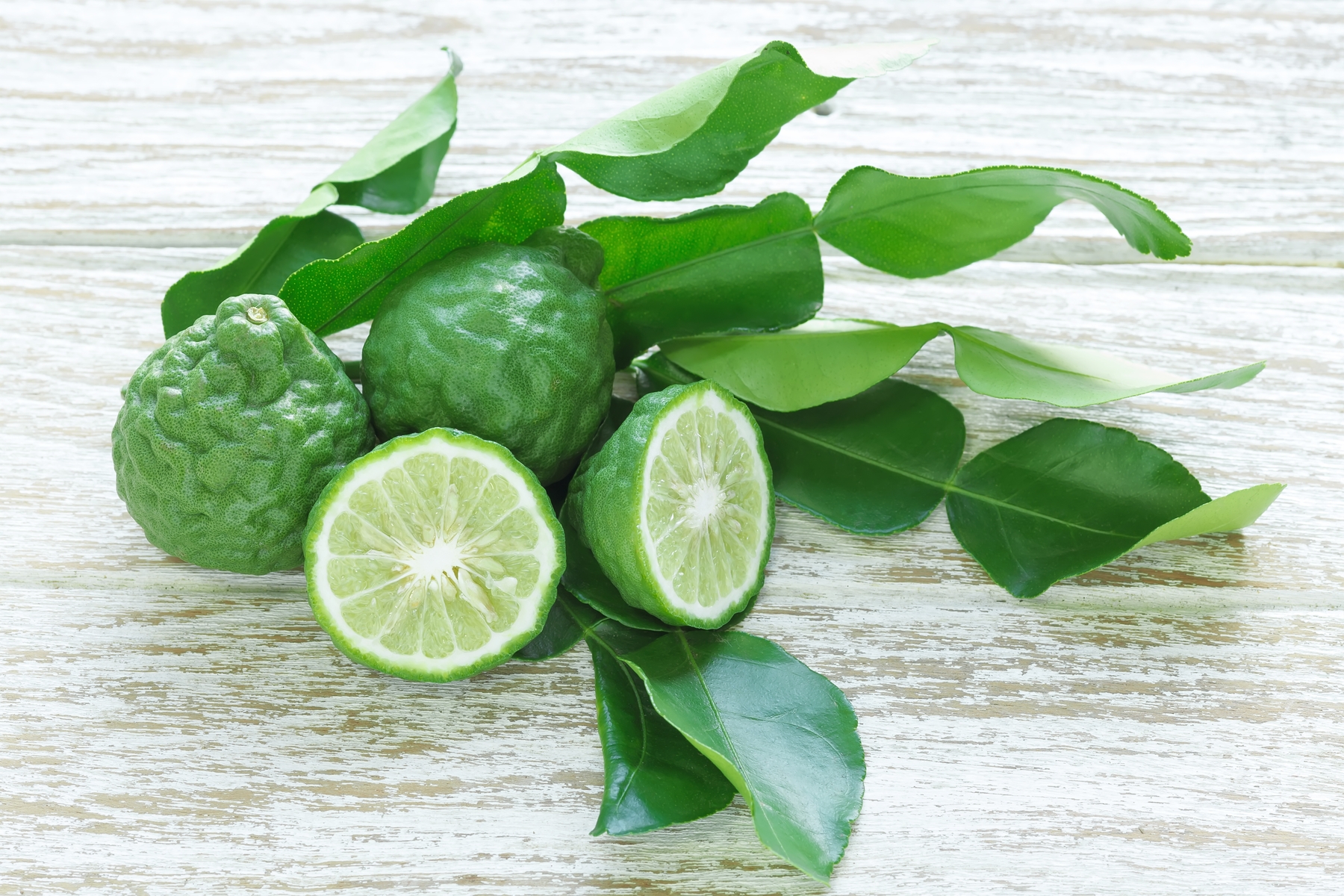
The highly aromatic makrut lime leaves are predominantly used in cooking, imparting an unmistakable Asian flair to dishes.
Bergamot: Citrus from a Teacup
Bergamot is often recognized by tea rather than by the fruit itself. Many know it from the scent of Earl Grey, as the tea is flavored with oil extracted from the bergamot peel. Raw bergamot is rarely eaten, as it is incredibly bitter, almost devoid of sweetness, and possesses a strong floral aroma.
In culinary applications, bergamot is most strongly tied to Calabria in southern Italy, where it is used in marmalades, liqueurs (such as Bergamino), confections, and occasionally seafood marinades. In restaurant kitchens, bergamot is typically chosen for its aroma rather than its acidity, with the zest infused into oils or a few drops of juice added to a dressing when a bitter, floral note is required instead of simple tartness.
Bergamot is most commonly found as an essential oil. Since many of these are non-food grade, reading the label carefully is crucial. Dried zest is occasionally available, while fresh fruit is a rare find at specialty markets. Finding fresh bergamot offers a wonderful opportunity to use the zest in baking, where it smells like a warmer, sharper version of Earl Grey.
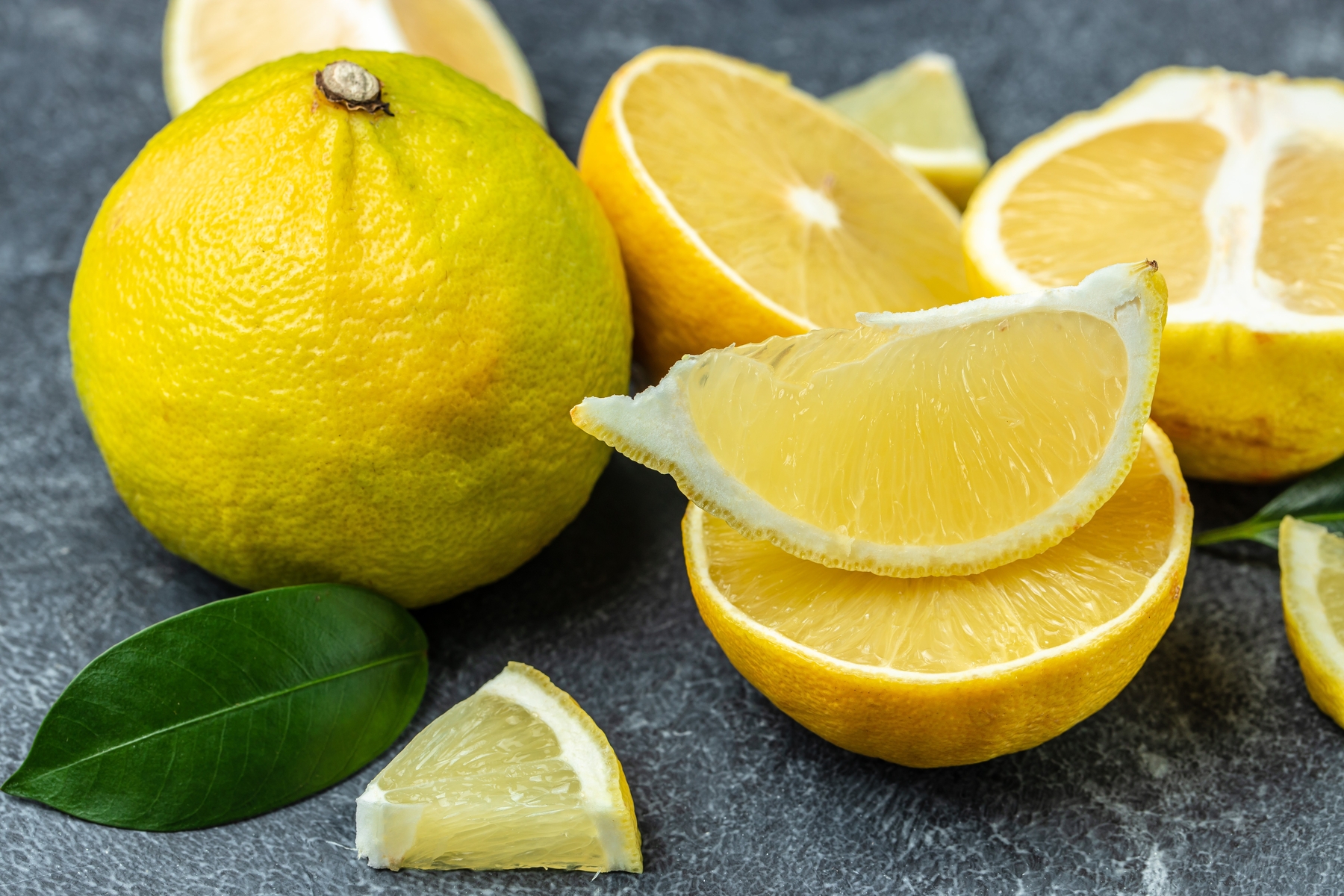
Bergamot is renowned for its essential oil, which infuses Earl Grey tea with its characteristic, recognizable aroma.
Pomelo: Not an Overgrown Grapefruit
Pomelo is often described as a “large grapefruit,” which is inaccurate. While pomelo and grapefruit are related, they behave completely differently on the plate.
Pomelo is much milder than grapefruit, with almost imperceptible bitterness. The flesh is firm and granular, with thick membranes that peel away easily. The rind is as thick as a cushion, and the fruit itself feels heavier in the hand than expected. In Southeast Asia, pomelo is a crucial citrus for savory dishes, serving as the foundation for the Thai salad yam som-o. The flesh is pulled apart into fibers by hand and mixed with toasted coconut, ground shrimp, lime dressing, and fresh chili, making its texture more important than its juice.
Pomelo is widely available in standard supermarkets, making it easier to select for salads than one might think. Especially during winter, it can be found in almost any large grocery store. Selecting a fruit with a thick, dense peel and noticeable weight is best. If the peel feels soft or yields easily under pressure, the flesh inside is likely already dry.
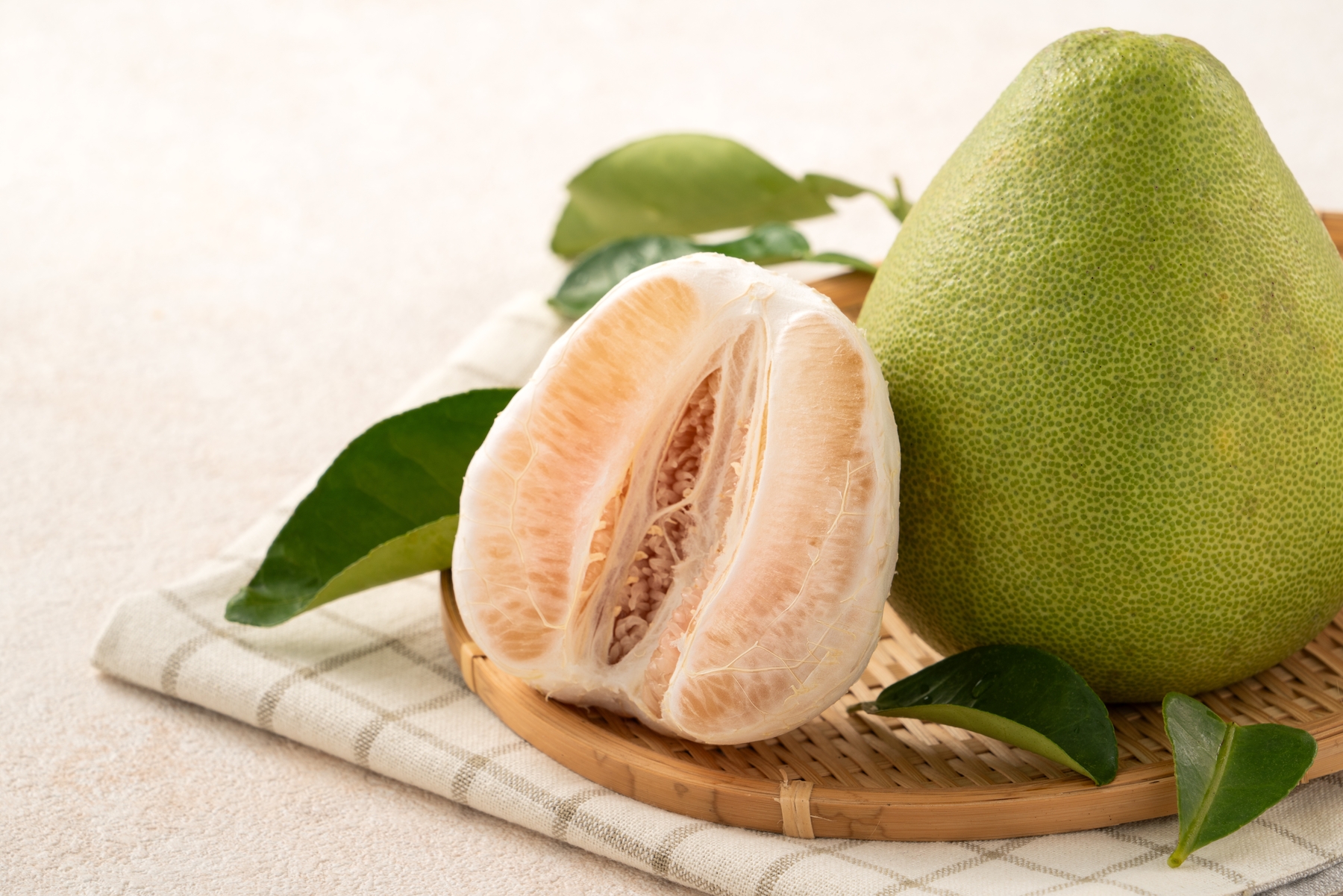
Pomelo flesh is less bitter than grapefruit and perfectly suited for Asian salads due to its firm texture.
Grapefruit: Bitterness for Marinades and Cocktails
Grapefruit is often pigeonholed as a breakfast food, yet it truly shines in culinary applications that require bitterness. Its bitter edge becomes an asset when paired with fat, salt, or sweetness.
In meat and fish marinades, grapefruit juice behaves differently than lemon juice. The acidity quickly works on the surface of the ingredient, while the bitterness lingers in the aftertaste. With fatty fish and pork, this bitterness holds up better than lemon, which merely accentuates acidity. In cocktails, grapefruit is irreplaceable; the Paloma, made of tequila, grapefruit soda, lime, and salt, is one of the simplest and most perfectly balanced cocktails around. The bitterness tethers the sweetness of the soda, leaving a combination of salt, bitter notes, coldness, and grapefruit sweetness in the glass.
Pink grapefruit is sweeter and less bitter than the white variety, making it a great starting point for those wary of bitterness.
Important warning: Grapefruit, pomelo, Seville oranges, and tangelos can interact with certain medications, including some statins and blood pressure drugs. Checking with a doctor or pharmacist is highly recommended for anyone taking regular medication.
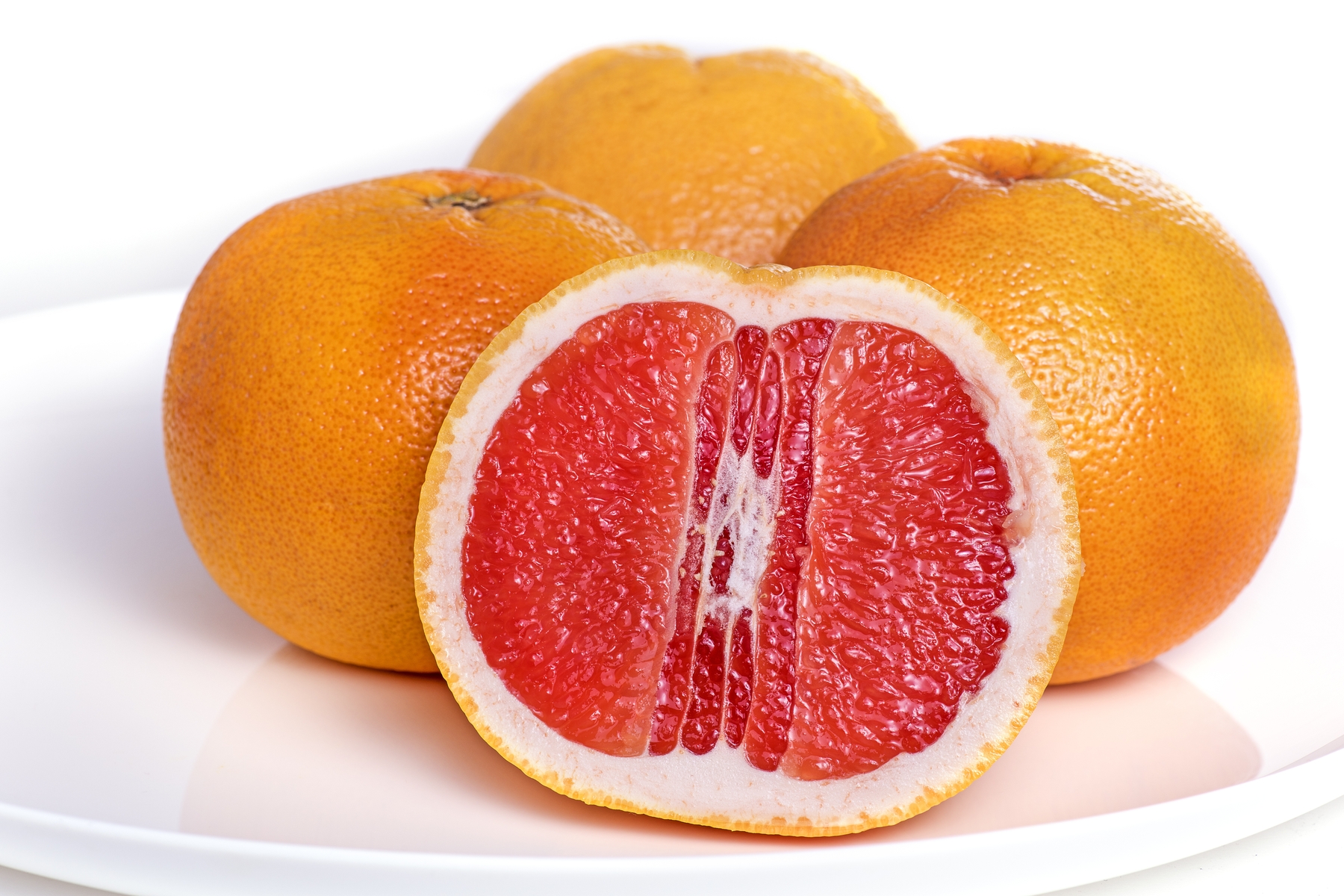
Grapefruit introduces a pleasant bitterness to dishes, providing a perfect balance for fatty fish or meats.
Kumquat, Calamansi, Citron, and Blood Orange
Here is a brief look at four more citrus fruits. Though they appear less frequently in average kitchens, they certainly deserve attention.
Kumquat is eaten whole: the peel is sweet, and the flesh is sour, which defines the entire kumquat experience. It works beautifully in jams, duck marinades, and desserts. It is sold seasonally in large stores and is sometimes available in a preserved form.
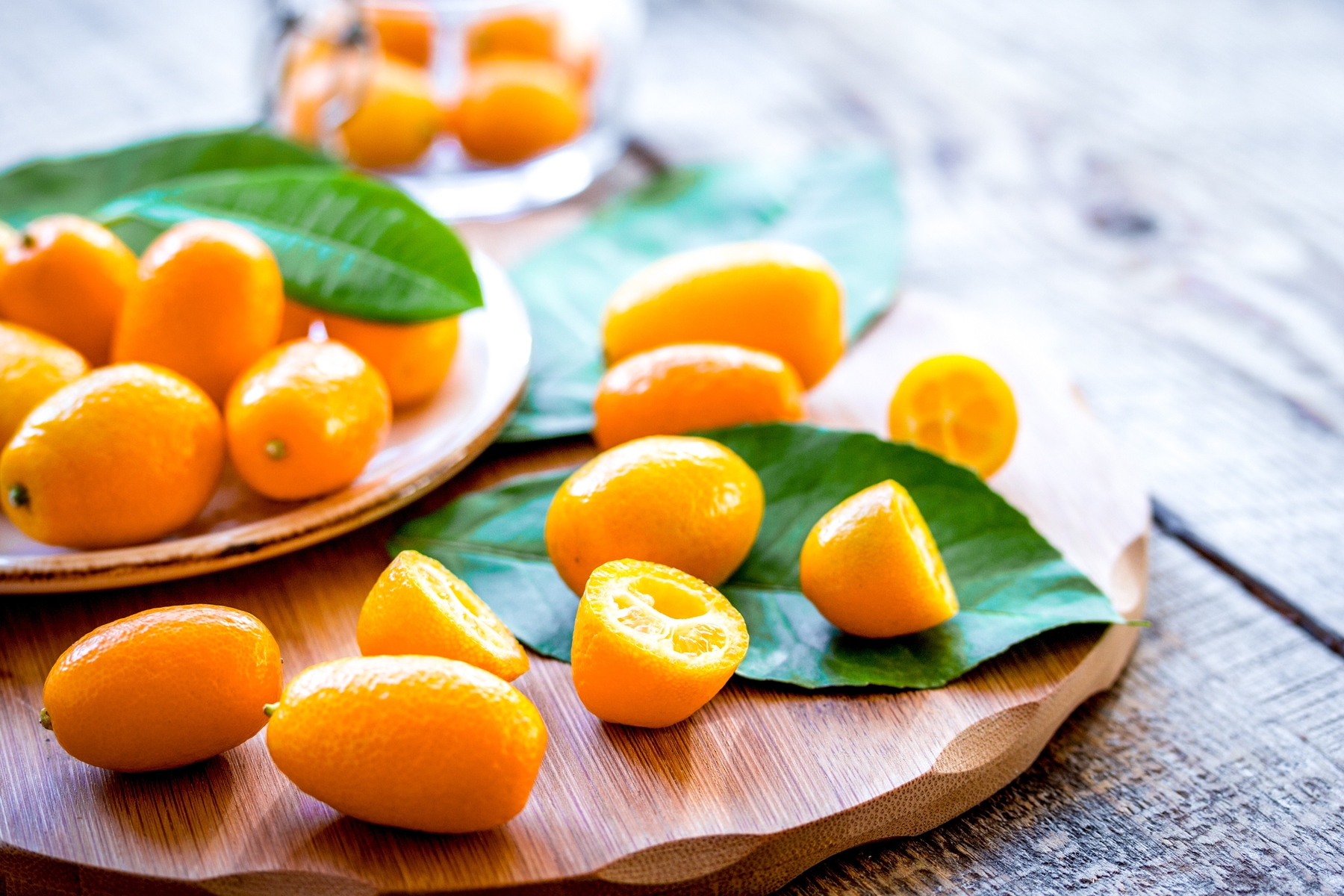
Kumquats are eaten whole, allowing the sweet peel to contrast beautifully with the tart flesh inside.
Calamansi is a small citrus fruit from the Philippines, highly acidic with a distinct orange aroma. In the Philippines and parts of Southeast Asia, it serves as the backbone for sauces and marinades. While fresh calamansi is rarely found globally, bottled juice or concentrate is available in Asian markets. Substituting with lime provides the necessary acidity, but the unique orange fragrance will be lost.
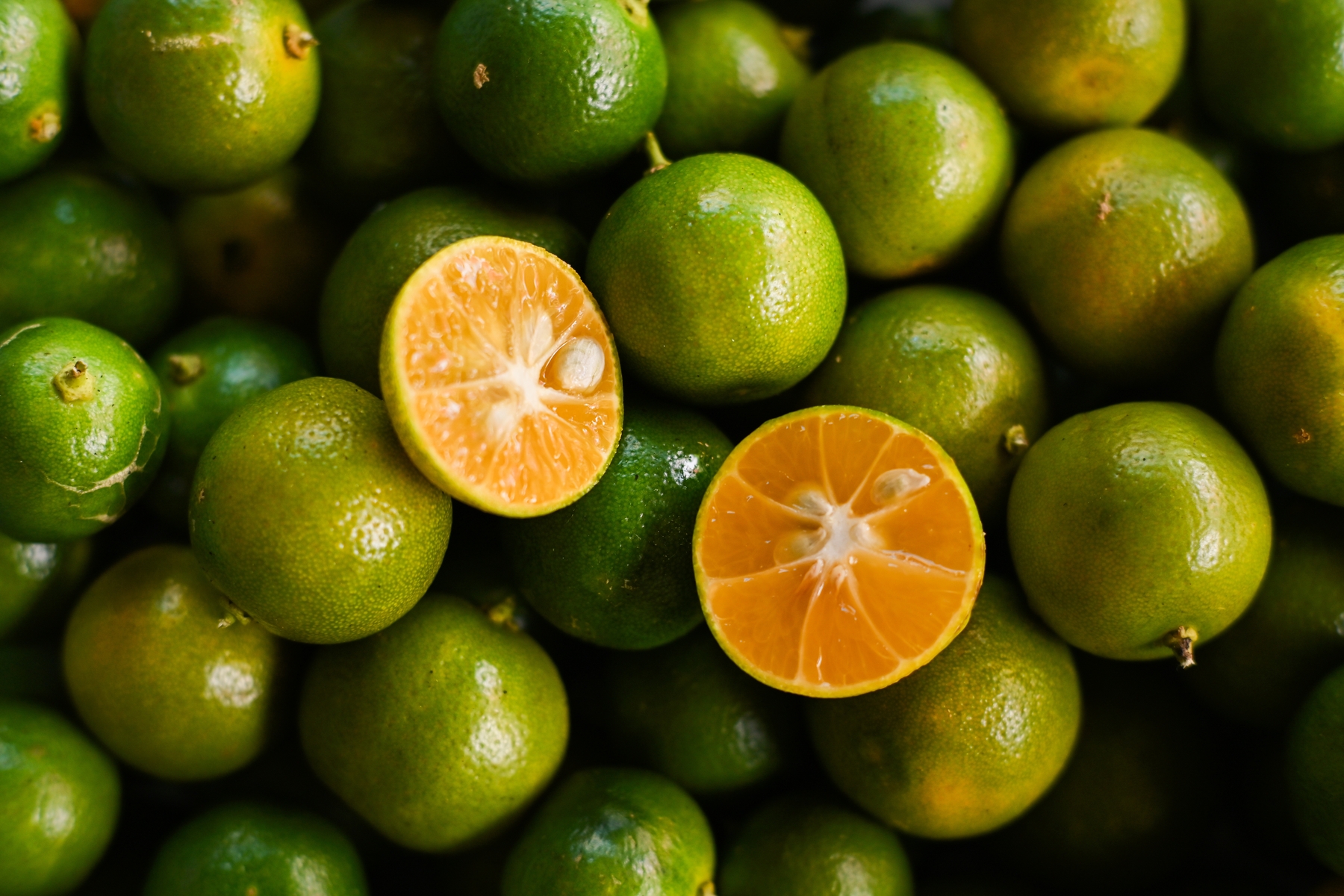
Calamansi is a hybrid citrus with a bright orange aroma and bold acidity, indispensable in Philippine cuisine.
Citron and Buddha’s hand yield almost no juice. Their main appeal lies in their thick, fragrant, and almost completely non-bitter zest. This zest is prized for baking, making candied fruit, and flavoring vodka and liqueurs. Finding these fruits often requires visiting specialized Asian grocery stores or online markets.
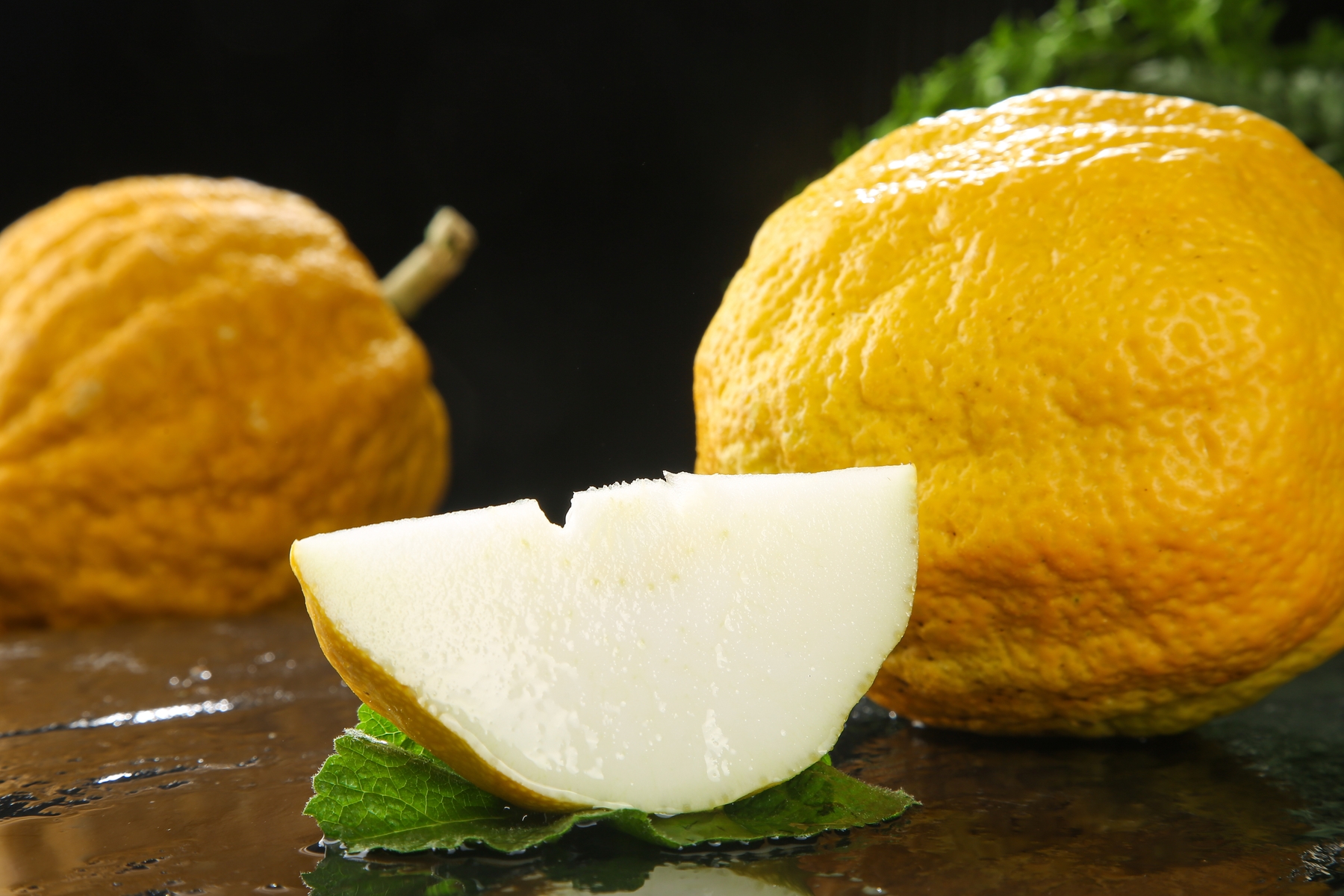
Citron contains almost no juice, but its highly aromatic and thick peel is the ultimate choice for making candied fruit.
Blood orange tastes similar to a regular orange but carries a distinct berry note, hovering somewhere between orange and raspberry. The red color comes from anthocyanins, which accumulate during temperature fluctuations, causing the color intensity to vary from fruit to fruit. It is frequently chosen for desserts and cocktails primarily for its color, as adding the juice to a clear beverage turns it a deep ruby hue.
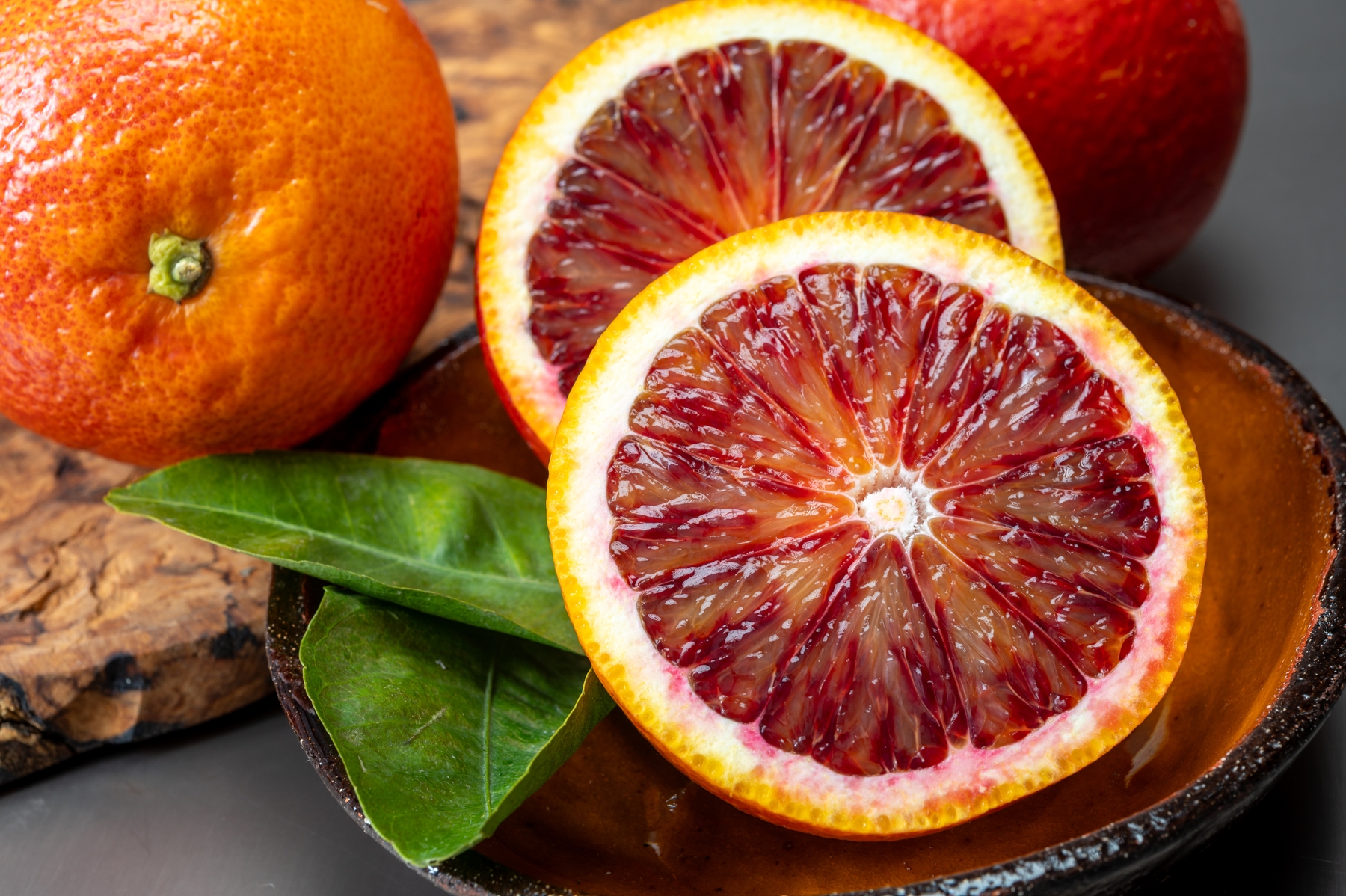
Blood oranges are valued for their deep ruby color and subtle berry undertones reminiscent of raspberries.
How to Choose the Right Citrus for the Task
Selecting the right citrus for a dish starts with determining exactly what the dish requires.
- Acidity without bitterness: Meyer lemon or Persian lime.
- Aroma without sharp acidity: Bergamot zest, yuzu zest, makrut lime leaves, or makrut lime zest.
- A touch of bitterness: Grapefruit is the best choice.
- The aroma of Thai soup or curry: Makrut lime leaves.
- Firm, non-acidic flesh for a salad: Pomelo.
When selecting the fruit, three factors matter most. Weight relative to size: a heavy fruit is usually juicier. The peel: a thin, smooth skin generally indicates more juice, while a thick, bumpy skin promises more zest. The aroma: pressing a fingernail into the rind and smelling it will instantly reveal the fragrance of a fresh fruit.
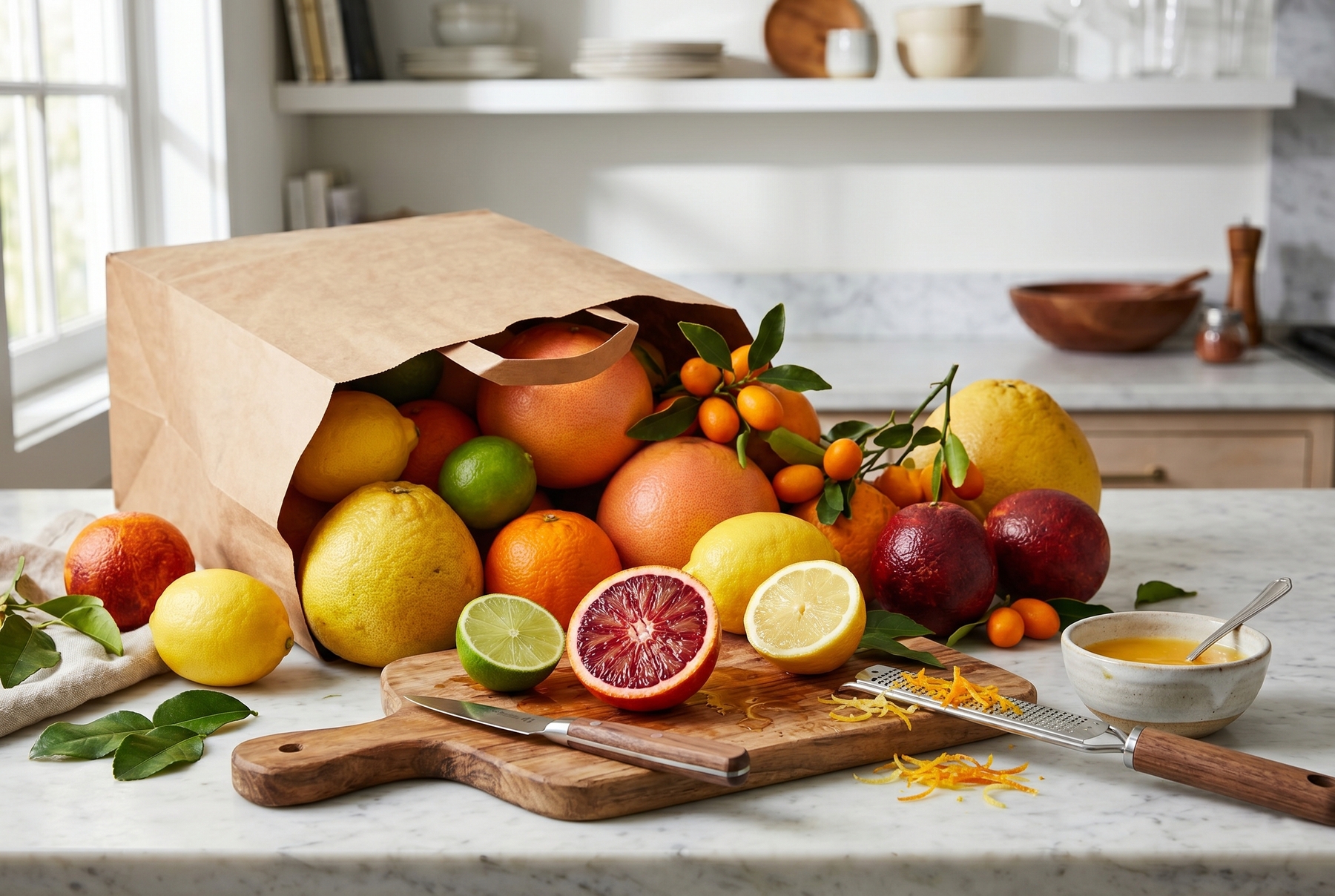
When selecting citrus fruits, paying attention to the weight and the aroma of the peel ensures the juiciest produce.
What to Look for and Where
Finding rare citrus fruits might require a bit of searching beyond the standard grocery store.
Regular supermarkets typically stock lemons (mostly European varieties), Persian limes, pomelos, grapefruits (pink and white), kumquats (seasonally in autumn and winter), and blood oranges (seasonally in winter).
Asian markets and specialty food stores in larger cities are the best places to find bottled yuzu juice, yuzukosho paste, makrut lime leaves (dried and frozen), calamansi (juice or concentrate), and dried bergamot zest.
Online marketplaces are excellent sources for yuzu juice, yuzukosho, dried zest and other preserves, makrut lime leaves, occasional small batches of the fruit itself, calamansi extract, and seasonal citron or Buddha’s hand.
Fresh Meyer lemons and Key limes are quite rare, occasionally appearing at farmers’ markets from small-scale purveyors. Following the social media pages of Asian grocery stores is often the best strategy, as they announce new shipments much faster than updating their websites.
Frozen makrut lime leaves retain their aroma far better than dried ones. Spotting them in a store is a good reason to buy two packs; they keep for months in the freezer, and a single pot of soup only requires two or three leaves.
0 comments