
People often consider the oven to be a complicated tool, requiring attention, experience, and intuition. Yet, it remains a rare kitchen appliance that is best left alone. The stovetop keeps you tied to the flame, demanding that you stir, turn down the heat, or move things around. The oven simply does its job. The only crucial part is loading it correctly.
Most people use the oven for weekly baking at best, or perhaps for reheating pizza. They fear drying out the meat, undercooking the vegetables, or simply guessing wrong. The issue lies not in the equipment or the recipes. Most often, there is just a lack of a clear assembly blueprint.
Sticking to four main components makes all the difference: a skillet, a vegetable bed, a protein, and a sauce. The protein can be chicken, fish, sausages, or small meatballs—the blueprint remains unchanged. Once the purpose of each layer becomes clear, an oven-baked dinner ceases to be intimidating.
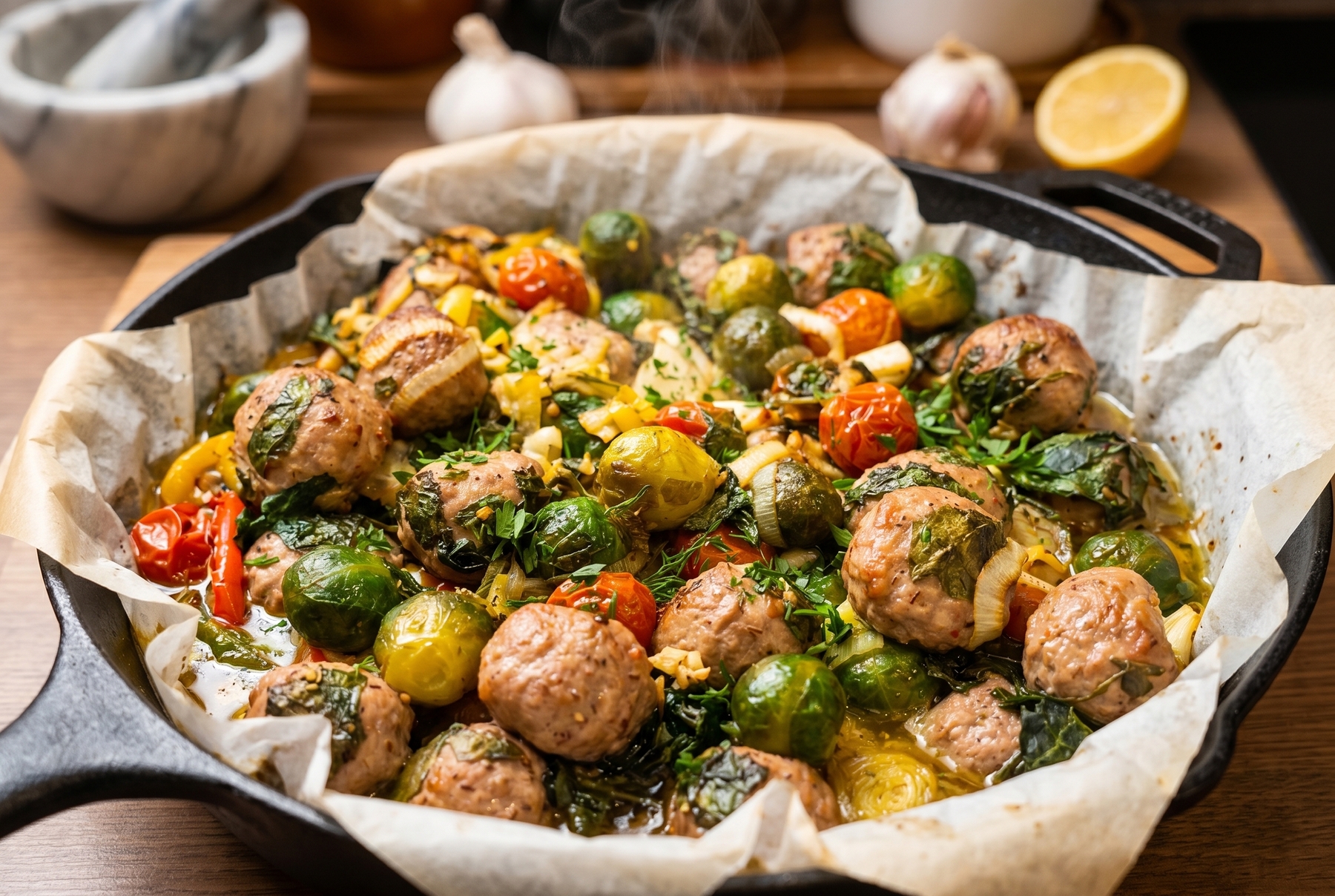
A finished meal in a cast-iron skillet: vegetables and protein roast together, creating a perfect balance of flavor and juiciness.
Table of Contents
Why A Skillet Instead Of A Baking Sheet
A baking sheet heats evenly but fails to retain heat. A baking dish is convenient for storage but awkward to work with: it lacks a handle, making it clumsy to put in and take out. Working with a cast-iron skillet or thick-walled stainless steel in the oven is much easier.
Convenience comes first. The handle is always right there, and the skillet naturally lives on the stovetop. Assembling the dish directly in it and transferring it to the oven eliminates the need to move food around, dirty extra dishes, or fuss unnecessarily.
A cast-iron skillet retains heat and warms the bottom evenly. This assembly works better in it than on a baking sheet. Vegetables heat up gradually from the bottom, avoiding burnt edges or raw centers. The sides keep the moisture trapped inside, ensuring the steam from the vegetables stays right next to the meat or fish.
If searing the protein on the stovetop for a crust is desired, the skillet allows for it. However, in most cases, this step is entirely skippable, as the oven handles it beautifully on its own.
Cast iron, stainless steel with a metal handle, and certain cast aluminum models with stated heat resistance work well. A Teflon skillet with a plastic or wooden handle has no place in the oven. The coating can degrade well before the meat reaches its perfect doneness.
Lining the skillet with parchment paper is a great workaround for a finicky pan or to avoid scrubbing baked-on juices from the edges later. It remains an optional step, but highly convenient for a weeknight dinner: the vegetables and juices stay contained, and the skillet washes up effortlessly.
The Bed: A Side Dish That Cooks Itself
People often forget one key detail about a vegetable bed for roasting: it is not just a non-stick liner. It serves as the side dish. It cooks right alongside the protein, absorbing all the juices from the bottom of the skillet, completely eliminating the need for an extra pot.
The bed also solves a technical problem, as vegetables release moisture upon heating. Spinach, tomatoes, onions, zucchini, bell peppers, eggplants, and cauliflower release steam in the very first minutes.
The protein sits partially submerged in this environment from the bottom and sides, while the steam prevents it from drying out. The main criterion remains simple: the vegetable must release moisture rather than lying there as dry weight. Starchy vegetables, like potatoes, present a bigger challenge. They take longer to heat through and produce almost no steam, often requiring a companion vegetable.
The bed catches all the juices, fat, and aromas during the roasting process. By the end, the bottom contains more than just vegetables. It holds the foundation of a sauce: savory juices, oil, garlic, and burst cherry tomatoes.
The choice of vegetables dictates the direction of the dish. Spinach with garlic and cherry tomatoes leans toward the Mediterranean. Cabbage with cumin and onions delivers a Central European flavor profile. Tomatoes with chickpeas and bell peppers create something between the Levant and an Italian trattoria. This serves as the primary way to change the meal: swap the vegetables, keep the protein.
Spinach And Cherry Tomatoes As A Starting Point
For the basic version, grabbing spinach, cherry tomatoes, and a few Brussels sprouts works beautifully, as they pair with almost any protein. Adding cabbage or zucchini, sweet bell peppers, leeks or halved shallots, a couple of garlic cloves, and perhaps a handful of canned chickpeas builds volume. Chickpeas add substance, turning the bed into a hearty side dish.
Cherry tomatoes resist falling apart prematurely during roasting. They burst at exactly the right moment, providing acidity and a touch of sweetness. Spinach loses volume but remains incredibly juicy, refusing to burn or impart bitterness.
Eyeballing the proportions works perfectly fine, but a general guideline applies: the vegetable bed should cover the bottom of the skillet in an even, dense layer a couple of centimeters (about an inch) thick. The protein should nestle into it halfway. This acts as a side dish, not mere decoration, meaning there should be enough to fill a plate.
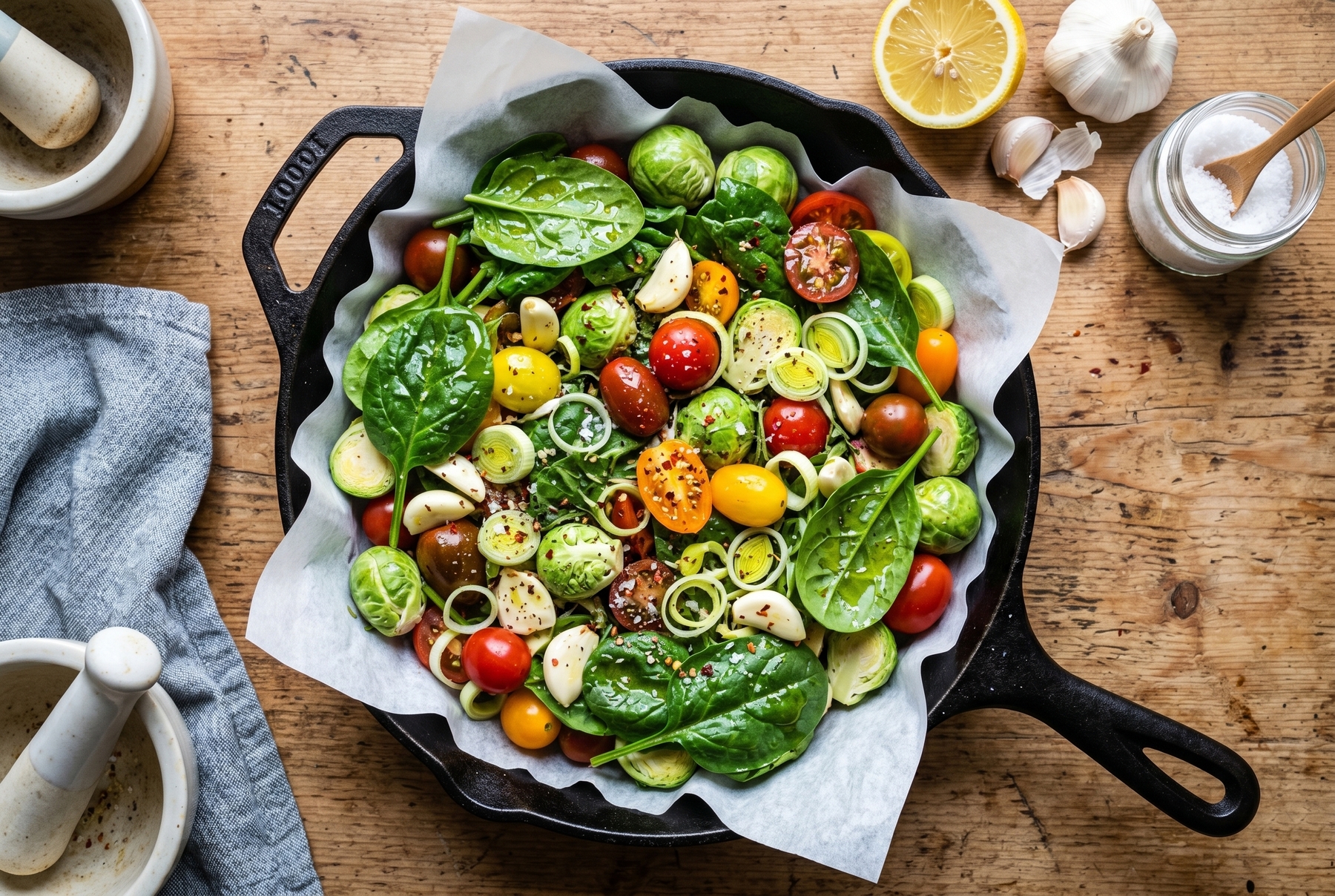
The vegetable bed acts not only as a foundation but as a complete side dish that absorbs all the savory juices during cooking.
The Protein: What Goes On Top
This is not a strict recipe, but rather a set of guidelines.
Chicken Thighs
Choosing chicken thighs for the first attempt is the smartest move. The skin sits on top, with the fat securely inside. Thighs easily forgive an extra five minutes in the oven and stubbornly refuse to dry out.
Pressing them into the vegetables skin-side up is the way to go.
Chicken Breast
Chicken breast demands precision. It cooks rapidly and dries out without any warning.
At 200 °C (390 °F), a boneless chicken breast needs roughly 20 minutes, depending entirely on its thickness.
Fish Fillets
Fish fillets resting on vegetables cook the fastest in the oven, usually taking 12 to 15 minutes. Missing the mark here without a moist vegetable bed happens easily, as fish dries out before one has a chance to react.
Salmon, cod, and tilapia behave differently, yet the underlying principle remains identical.
Sausages, Kupaty, And Meatballs
Sausages, kupaty (Georgian-style fresh sausages), and small meatballs offer the ultimate lazy weeknight option. Nestling them into the bed allows their fat and juices to drip down, deeply flavoring the vegetables. The vegetables only benefit from this exchange.
Chickpeas Or Tofu
Opting for chickpeas or tofu creates an excellent vegetarian version. The chickpeas require thorough drying beforehand, and the tofu needs a proper pressing. Otherwise, a puddle will form at the bottom.
The general rule is straightforward: the protein must submerge about halfway into the vegetable bed, remaining exposed on top. The steam gently cradles it from the bottom and sides. Above, the high heat dries the surface, creating a beautiful crust.
The skin must always face up. Salting the meat in advance, even just 20 to 30 minutes prior, proves far more crucial than preparing a marinade. The salt draws moisture to the surface, and later, a portion of that moisture seeps right back in, carrying savory aromas with it.
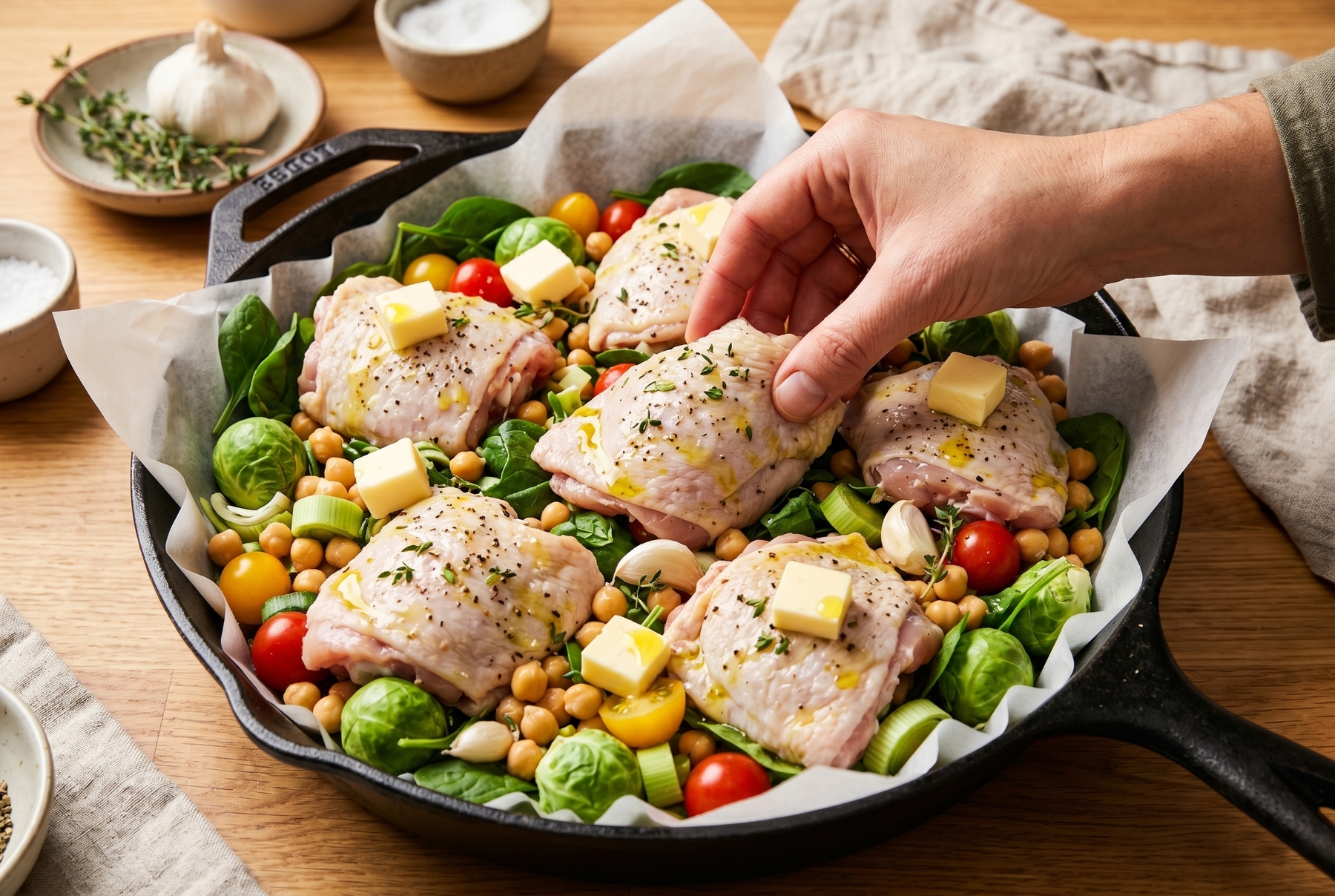
The protein should be nestled halfway into the vegetables. Small cubes of butter help create an appetizing golden crust.
Temperature And Time: Where To Start
Starting at 200 °C (390 °F) covers the majority of skillet oven dinners. Setting the oven to conventional top and bottom heat works best, while turning off the convection fan yields superior results.
Time depends entirely on the thickness of the cut, rather than its weight. A chicken thigh measuring three to four centimeters (about 1.5 inches) thick will cook in approximately 30 to 35 minutes. A thin fish fillet needs merely 12 to 15 minutes. A bone-in breast requires closer to 35 to 40 minutes.
Baking charts offer little help here. Visual and physical cues indicate doneness, and they differ vastly between chicken and fish. For chicken, a meat thermometer provides the most reliable answer: 74 °C (165 °F) in the thickest part. For fish, reaching 63 °C (145 °F) or ensuring the flesh has turned opaque and flakes easily with a fork signals perfection.
Vegetables have their own signals as well:
- The cherry tomatoes have burst and slightly caramelized around the edges.
- The edges of the vegetable bed have begun to brown slightly, and the aroma from the oven has become rich and roasted, rather than raw.
When these signs align, it is time to open the oven door.
Five minutes before the end, adding a final element elevates the dish completely. Grated Parmesan, fresh herbs scattered directly over the hot ingredients, or a drizzle of finishing oil works wonders. Skipping it is perfectly fine. However, incorporating Parmesan, fresh herbs, or high-quality oil adds a masterful final touch to the plate.
The Juices On The Bottom Form A Near-Sauce
After roasting, dark, savory juices remain at the bottom: rendered fat, oil, burst cherry tomatoes, and bits of roasted garlic. Pushing the vegetables aside with a spoon allows these juices to pool in one spot. Whisking them right there in the skillet creates a brilliant, instant sauce.
If a different flavor profile is desired, three quick moves accomplish just that:
- Placing the skillet on the stovetop and pouring a spoonful of heavy cream straight into the hot juices. Stirring for 30 seconds over low heat creates a rich, creamy sauce.
- Squeezing in half a lemon and adding a tablespoon of olive oil. Mixing it directly in the skillet yields a bright, acidic sauce with a distinctly Mediterranean feel.
- Adding a spoonful of mustard along with a couple of tablespoons of broth or even water. Returning the pan to the heat and stirring creates a fantastic French-leaning sauce. This pairs exceptionally well with chicken.
The foundation remains exactly the same, yet the flavor transforms entirely.
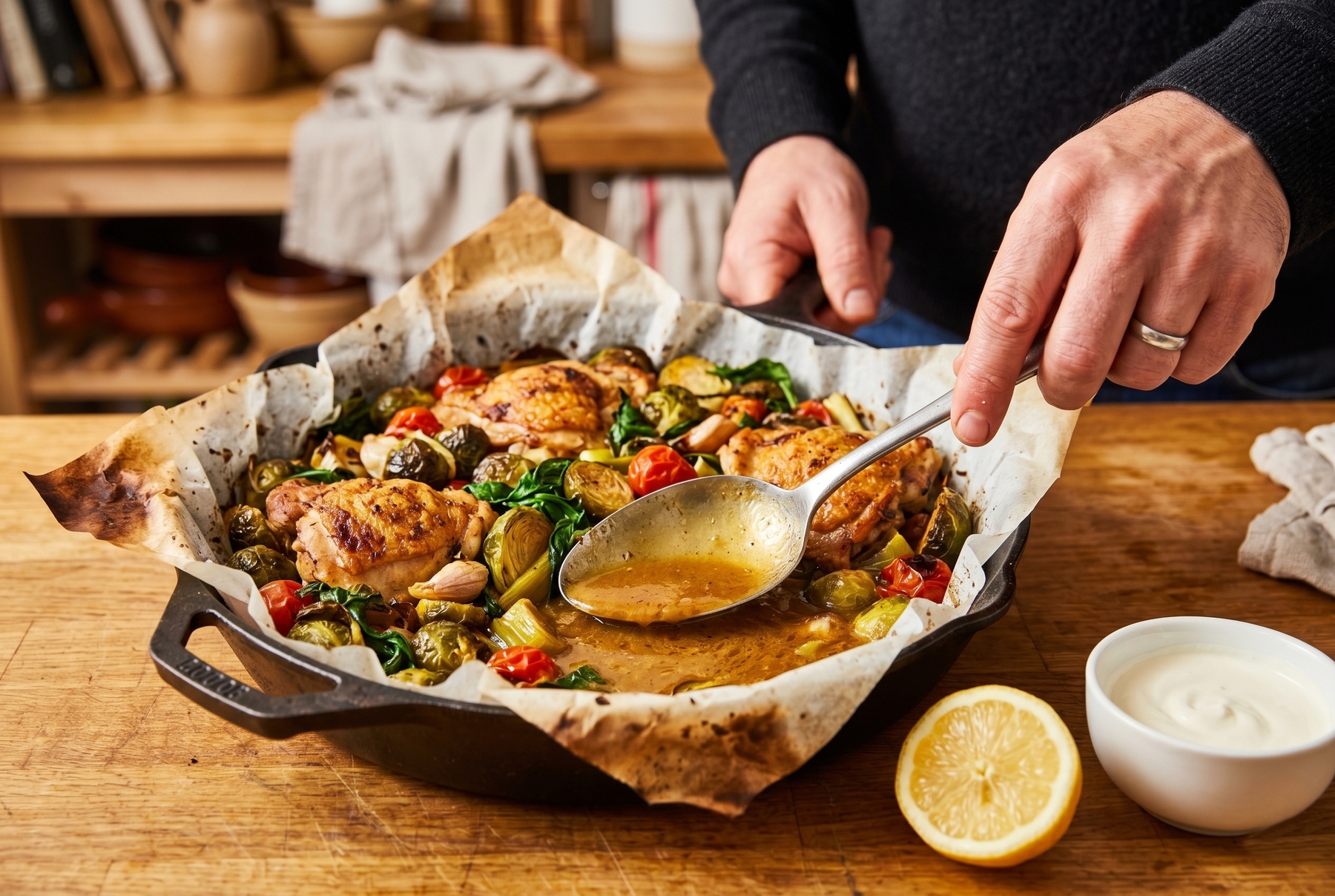
The juices remaining at the bottom of the skillet offer concentrated flavor that easily transforms into a sauce right on the stovetop.
How To Assemble An Oven Skillet In Five Minutes
In the kitchen, this beautifully simple dinner unfolds as follows.
First, the oven is preheated to 200 °C (390 °F). If the protein is resting in the fridge, bringing it out while chopping the vegetables is a smart move. While it does not guarantee perfectly even cooking, taking the severe chill off helps significantly.
The vegetable bed goes in first. Arranging the vegetables in the skillet in an even layer sets the stage. Next, nesting the protein into the bed ensures it sinks about halfway down while remaining exposed on top.
Salt, olive oil, garlic, thyme, and a pinch of chili flakes follow. If a softer, creamier flavor is desired, placing a few small cubes of butter on top of the chicken or vegetables does the trick. Building the structure first and then seasoning everything at once guarantees that the spices hit both the protein and the vegetables, while the oil coats the entire surface beautifully.
Adding one final accent just before the oven elevates everything: a spoonful of soy sauce over the protein, a touch of mustard, a dash of fish sauce, hot honey, or miso paste thinned with oil. This remains entirely optional. Yet, sometimes, this precise spoonful of flavor becomes the most memorable part of the meal.
This method did not come from following a recipe. One day, placing a skillet in the oven and walking away to answer client emails simply made sense. Returning 35 minutes later revealed a perfectly finished meal. There was no hovering over the stove, no constant stirring, and absolutely no smell of burning food.
Since then, a good portion of weeknight dinners begins right in a skillet.
Mistakes That Ruin The Skillet
There are only a few. Each ruins dinner in its own unique way.
Too Much Liquid In The Bed
Regular tomatoes instead of cherry ones, thawed frozen spinach, or pre-stewed vegetables will create a sad puddle at the bottom. The result leans toward braised rather than roasted. It remains edible, but misses the mark entirely.
Too Few Vegetables
The bed needs to function as a side dish. Tossing five or six cherry tomatoes into a large skillet hardly qualifies as a bed. The protein will sit on bare cast iron, the bottom will burn, and the side dish will be non-existent.
A Cut That Is Too Cold Or Too Thick
An excessively cold or overly thick piece of meat might require slightly more time than usual. Relying solely on a timer falls short here: checking the internal temperature or the physical state of the food ensures success. It provides absolute certainty.
A Temperature Below 180 °C (350 °F)
Fear of overcooking often leads people to set the oven to 160 °C (320 °F) “just to be safe.” Consequently, the vegetables slowly wilt instead of caramelizing, and the meat takes on an unappetizing gray hue while losing its proper texture.
The oven should roast fiercely, not gently rock the food to sleep.
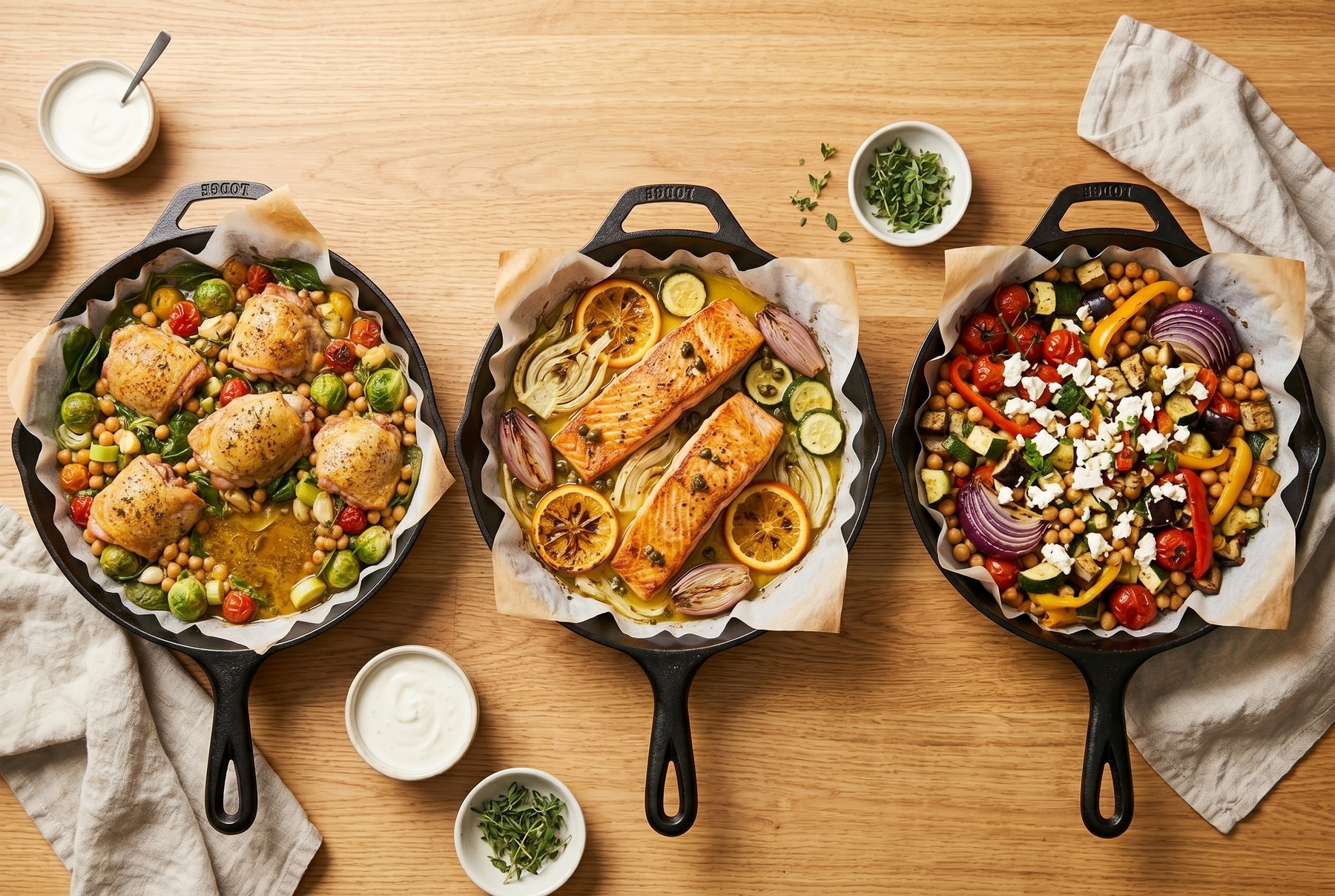
A single basic blueprint allows for dozens of different dishes: from classic chicken to festive salmon or vegetarian options.
Three Skillets For Different Moods
A Weeknight Dinner
- Spinach
- Cherry tomatoes
- Brussels sprouts
- Leeks
- Canned chickpeas
- Garlic
- Chicken thighs, kupaty (fresh sausages), or small meatballs
- Olive oil
- Salt
- Chili flakes
Arranging the spinach, cherry tomatoes, Brussels sprouts, leeks, chickpeas, and garlic in a dense layer on the bottom sets the base. Pressing the chicken thighs into the bed skin-side up, or simply scattering the sausages or meatballs among the vegetables, comes next. Adding olive oil, salt, chili flakes, and a few small cubes of butter, if desired, finishes the preparation.
For Guests
- Fennel
- Orange slices
- Zucchini
- Shallots
- Capers
- Salmon fillets
- A splash of white wine
Tossing the fennel, orange, zucchini, shallots, and capers into the skillet creates a vibrant bed. Pressing the salmon fillets about halfway into the vegetables secures them. Pouring a splash of white wine directly into the skillet just before roasting elevates the flavors.
Meatless
- Zucchini
- Eggplant
- Tomatoes
- Sweet bell peppers
- Red onions
- Canned chickpeas (rinsed and dried)
- Feta cheese
Gathering the zucchini, eggplant, tomatoes, sweet bell peppers, red onions, and chickpeas in the skillet builds a hearty foundation. Pressing the block of feta right into the center five minutes before the end of cooking ties it all together.
The oven does not demand a constant presence. That remains its greatest charm. The dinner takes a mere five minutes to assemble. After that, it simply cooks itself.
Walking away and returning half an hour later works perfectly. The skillet will present beautifully browned edges, burst cherry tomatoes, and rich, savory juices pooled at the bottom.
0 comments