
A pepper shaker sits in almost every kitchen. It is usually right next to the salt shaker, out of sheer habit. Recipes constantly instruct us to salt and pepper our food. The motion becomes automatic. A pinch of black powder falls into the pot, over eggs, or into a marinade. Nobody expects the pepper to actually change anything anymore.
Pepper stopped being an event a long time ago. It has become an obligation.
Centuries ago, a handful of dried black peppercorns was worth its weight in silver. Ships altered their courses just to access pepper plantations. People paid rent and fines with pepper; medieval European cities genuinely accepted it as hard currency. Then it became cheap and accessible. It stayed in the kitchen, but we almost stopped noticing it.
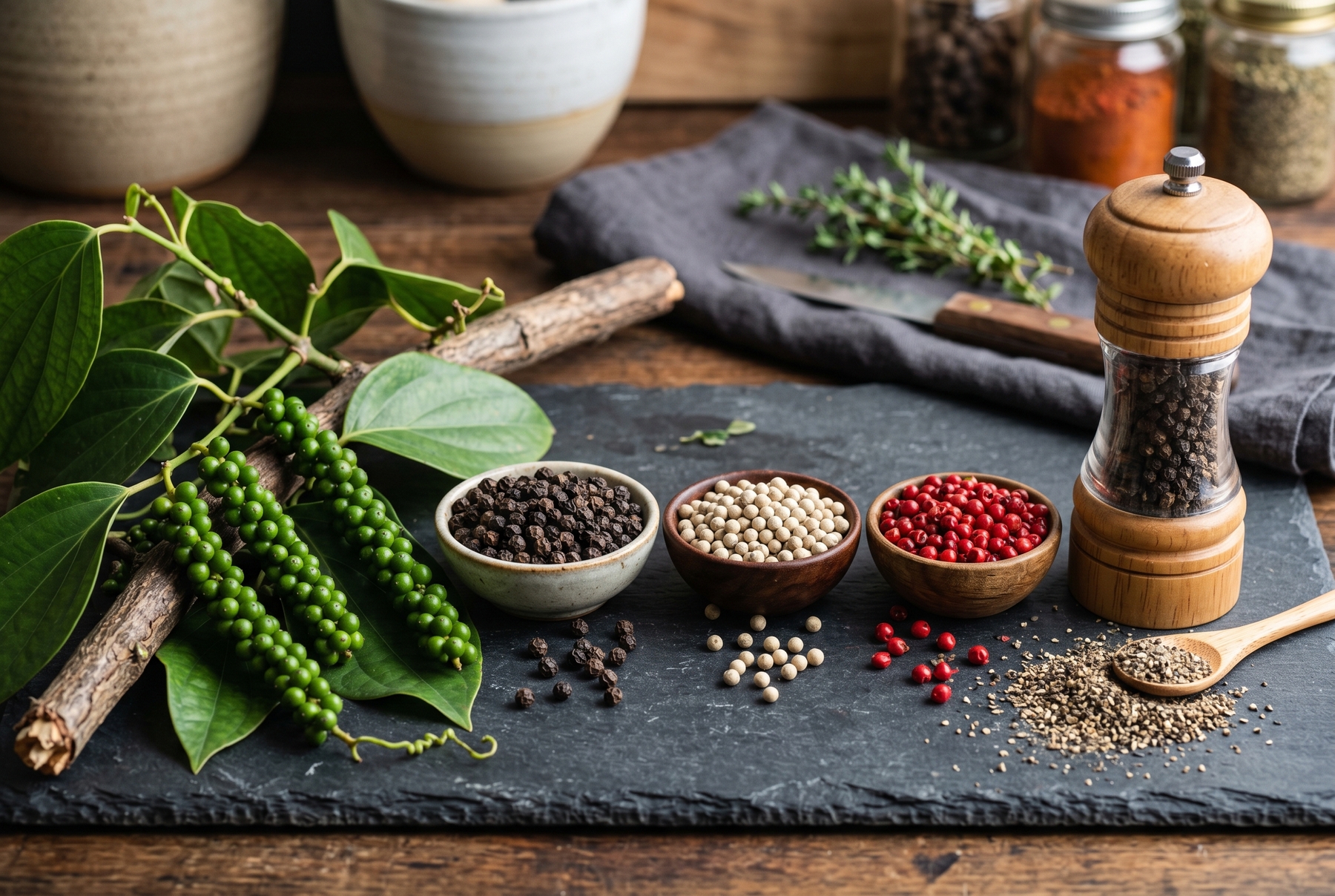
All types of true pepper—black, white, green, and red—grow on the exact same vine, but differ in harvest time and processing methods.
Table of Contents
- The Pepper We Stopped Noticing
- Types of Peppercorns: One Vine, Four Spices
- Black Peppercorns: Familiar, Yet Complex
- Green Peppercorns: Vibrant, Herbal, and Entirely Different
- White Pepper: How It Differs from Black and Where to Use It
- Red Peppercorns: How They Differ from Pink
- Kampot Pepper: When a Name Actually Means Something
- How to Choose and Store Good Peppercorns
- A Few Experiments That Will Change How You See Pepper
The Pepper We Stopped Noticing
Most people only know pepper in one state: over-dried peppercorns or old ground powder with almost no aroma. Opening a standard jar of ground black pepper that has sat on a shelf for six months reveals almost no scent. Sometimes it smells faintly of dust, sometimes of the jar itself. This is not a spice. It is the memory of a spice, drained of everything that made it interesting.
The signature pepper aroma relies on essential oils, and they evaporate quickly. Whole peppercorns hold onto them much longer. Ground pepper loses almost everything within a few months of opening the package. This is why freshly ground pepper smells entirely different from powder poured from a jar opened a year ago. The difference is not subtle or reserved for connoisseurs—it is obvious to anyone who places both side by side and takes a breath.
But that is only the beginning of the story. The black pepper we are used to considering a single product is actually several distinct spices.
Types of Peppercorns: One Vine, Four Spices
Black, green, white, and red peppercorns all originate from the same vine. They are the berries of a plant quite literally named black pepper (Piper nigrum). This tropical vine wraps around supports, and its fruits hang in dense, small clusters. The difference between the four types of pepper lies in when the berry was harvested, how it was processed, and what happened to it afterward. The ripeness of the berry and its processing alter the product so completely that four different spices emerge in the kitchen, each with distinct flavors, uses, and behaviors in a dish.
This is not the same as chili, paprika, allspice, or the pink pepper found in fancy blends. Those are entirely different plants with different flavor profiles. They have no relation to true pepper. In everyday life, the word ‘pepper’ lumps together completely unrelated products, which is one reason people rarely understand what actually sits on their spice rack.
Everything else relies on one simple fact: pepper is a berry packed with essential oils, piperine, and a character that shifts depending on ripeness and processing.
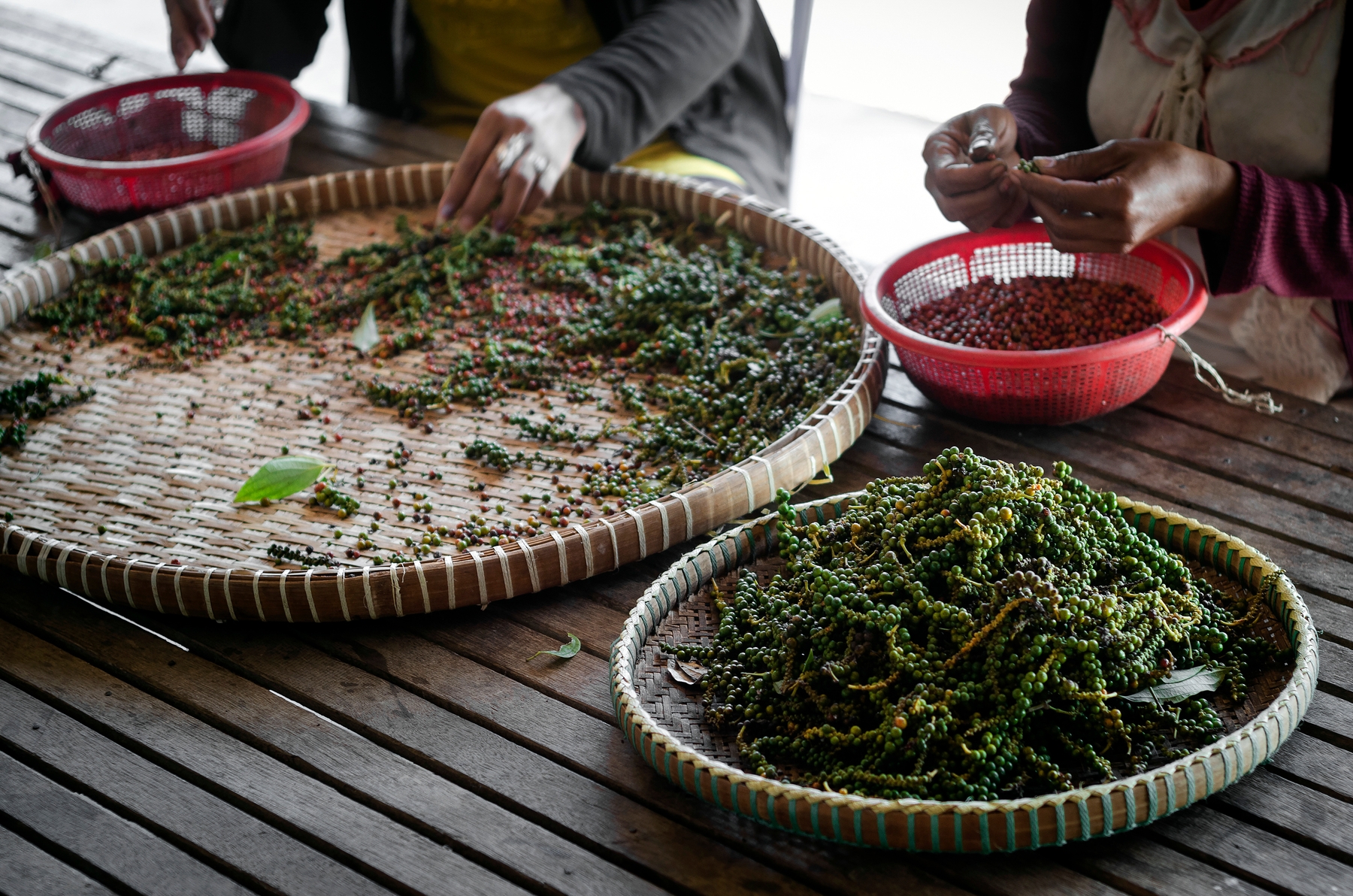
The manual sorting process allows workers to select the finest berries for further drying and processing.
Black Peppercorns: Familiar, Yet Complex
Farmers harvest black pepper at a very specific moment: the berries are fully formed but not yet overripe. Usually, they look at the entire cluster, picking it when one or two berries start to turn yellow or red, while the rest remain green but dense and heavy. Harvesting the berries too early results in weak heat and a dull flavor. Overripe berries go into making other products. Black pepper requires the perfect middle ground.
After the harvest, workers separate the berries from the cluster. Sometimes they blanch them, but most often, they simply spread them out to dry in the sun. The outer shell darkens and shrivels around the seed. This process creates the familiar peppercorn with its wrinkled surface. The shell and the layer just beneath it hold the vast majority of the aroma.
High-quality black pepper releases its aroma the second it is crushed or ground. It smells intense and sharp, with undertones that depend on its origin: some carry hints of citrus and pine, others reveal smoke and dried fruits, while a few offer notes of earth and pine nuts. It brings warmth without roughness and brightness without aggression.
It is indispensable wherever you find fat, salt, and heat. A steak without freshly ground black pepper is a steak that has not reached its full potential. It elevates meatballs, roasted chicken, broths, kholodets (meat aspic), and borscht when added at the very end. It works perfectly in a shashlik (kebab) marinade, on potatoes, in buckwheat with mushrooms, and over eggs. It shines in garlic and butter pasta or mixed into an herbed farmer’s cheese spread. Black pepper fits in almost everywhere—the only question is when to add it.
When to Grind and When to Add
Grinding pepper right at the moment of use yields the best results. The aroma fades fast: ten minutes later, it is noticeably weaker, and after an hour, it is completely different. This is no exaggeration.
In a marinade or during a slow braise, pepper can work throughout the entire cooking process, releasing its flavor gradually. Over high heat, however, pepper burns easily and turns bitter. For a steak, it is better to apply coarse freshly ground pepper in the final seconds or right after taking it off the heat. In soups and sauces, adding it at the end prevents the aroma from boiling away completely.
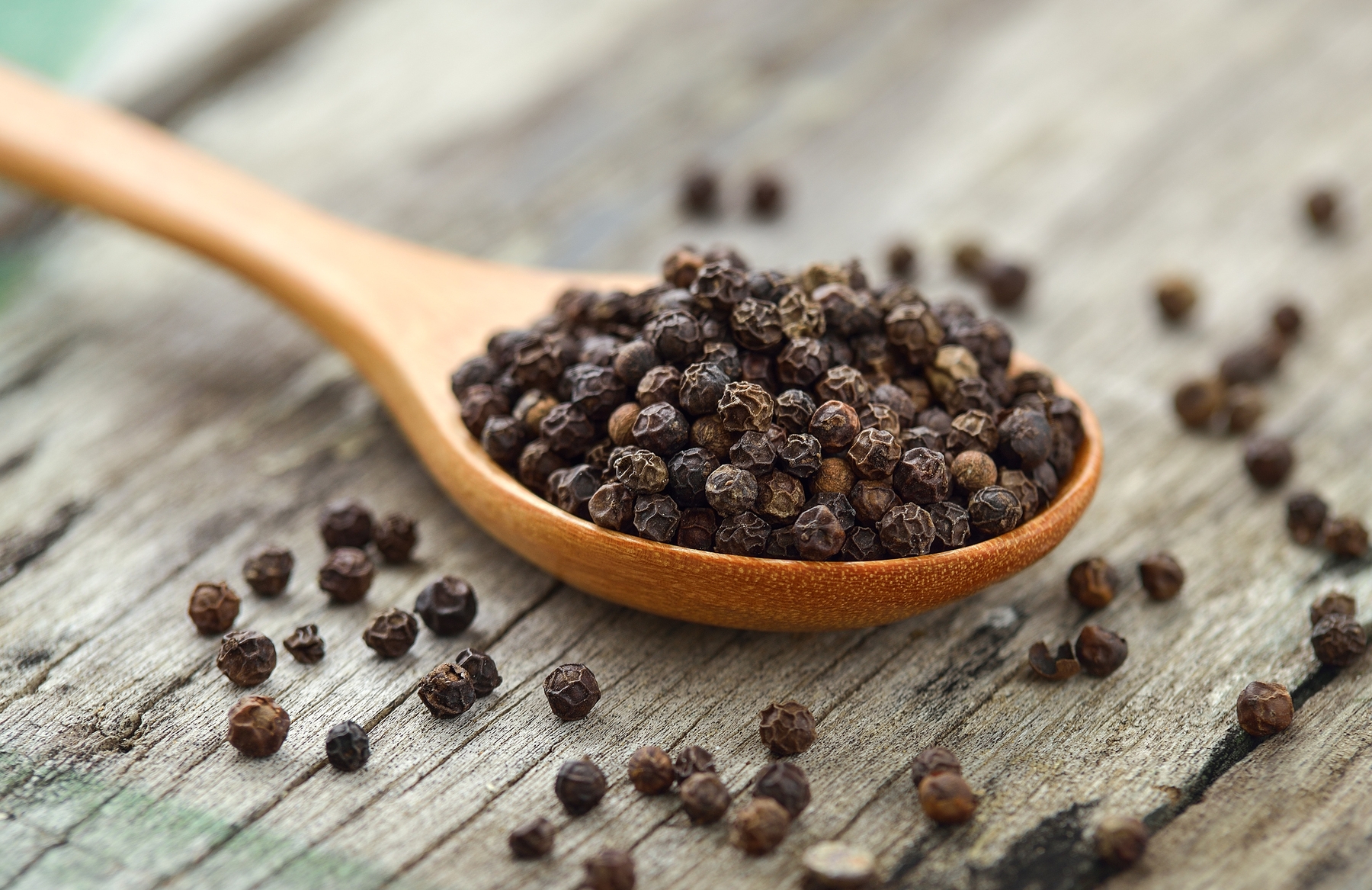
High-quality black pepper features a distinctive wrinkled shell, which holds the vast majority of its essential oils.
Green Peppercorns: Vibrant, Herbal, and Entirely Different
Green pepper consists of unripe berries plucked from that same pepper vine. Producers use them fresh and preserve them in several ways: freezing, freeze-drying, brining, or sometimes drying them using a special method that retains their green color. The result changes slightly each time, but the core truth remains: green pepper smells and behaves differently than black pepper.
It is almost a completely different spice.
It is juicy, herbal, and fruity. It lacks that dusty dryness that black pepper develops after sitting for too long. The heat is milder, yet the sensation is brighter, fresher, and more alive. The contrast resembles the difference between dried basil from a jar and fresh leaves right off the plant: it is not always better, but in certain dishes, it completely transforms the flavor.
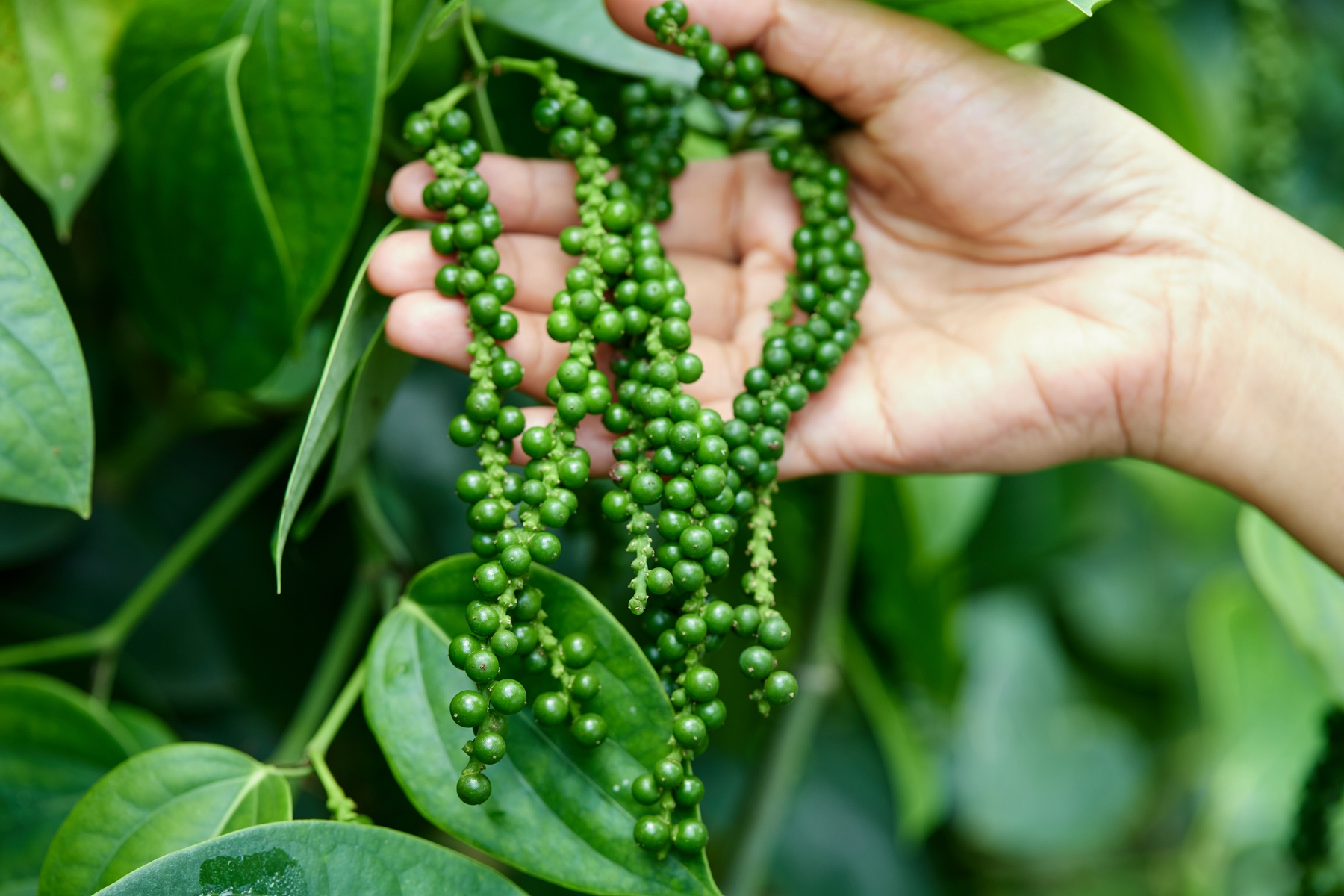
Green pepper consists of unripe Piper nigrum berries, celebrated for their uniquely vibrant herbal aroma.
Years ago in Laos, I walked into a street food joint—the kind with plastic chairs. I ordered the first thing that looked familiar: a beef and potato stew. They brought out a wide bowl. The potatoes were overcooked, the beef was tough, and there was barely any broth. It looked completely unremarkable.
But it was scattered with green peppercorns. I took a bite. And I stopped.
The pepper hit not with heat, but with aroma: fresh, citrusy, and herbal. Dried pepper retains almost none of that. The potatoes suddenly became interesting. The meat, which had seemed hopelessly tough a minute ago, felt exactly right alongside this pepper. A crisp, spicy note blossomed in the broth. I kept eating, bewildered by how such a simple bowl held so much flavor.
I asked the woman behind the counter about the spice. She pointed to a cluster of green berries in a plastic bowl. It was just pepper. Unripe, fresh, picked that morning. Locals toss it into soups, braise it with meat, or pound it into pastes—as casually as we might add dill or parsley.
It became clear then: what I had considered pepper my whole life and what grew on the vines here shared nothing but a name.
Where to Buy Green Peppercorns
The absolute best option is fresh green pepper. It delivers an herbal brightness that other preservation methods only partially retain. It sometimes shows up in Asian markets, either in whole clusters or as loose berries. In major cities, you can order it online from specialty suppliers, and it occasionally appears at markets with a good selection of exotic produce. If you manage to find it fresh, buy it without hesitation.
Frozen green pepper makes a great alternative. It loses its crunch but keeps most of its aroma. The freeze-dried version is a bit drier, but it still smells noticeably fresher than black pepper.
Brined green peppercorns in jars are the most common find, and they work well too. The brine alters the character slightly, adding a salty tang, but the vibrant peppery note remains intact. If fresh is unavailable, brined is a perfectly worthy substitute.
How to Use Green Peppercorns in Cooking
The golden rule is to avoid killing it with long boiling. Its value lies in its lively aroma and texture, both of which disappear under prolonged heat. It is best to stir it into a sauce just minutes before finishing. For fish, add it right before serving or halfway through cooking, once the temperature has dropped from its peak. Fold it into an omelet at the very end.
Green pepper truly shines in the presence of fat and cream. Crush a few peppercorns with a knife, toss them into a skillet where you just seared some meat, pour in heavy cream, and warm it through for a minute—you have a perfect sauce. Fish (especially fatty ones like salmon, trout, or mackerel), poultry, shrimp, pâtés, mashed potatoes, and Asian noodles all benefit beautifully. Wherever you need a fresh pepper aroma without that dry, dusty note, green outperforms black.
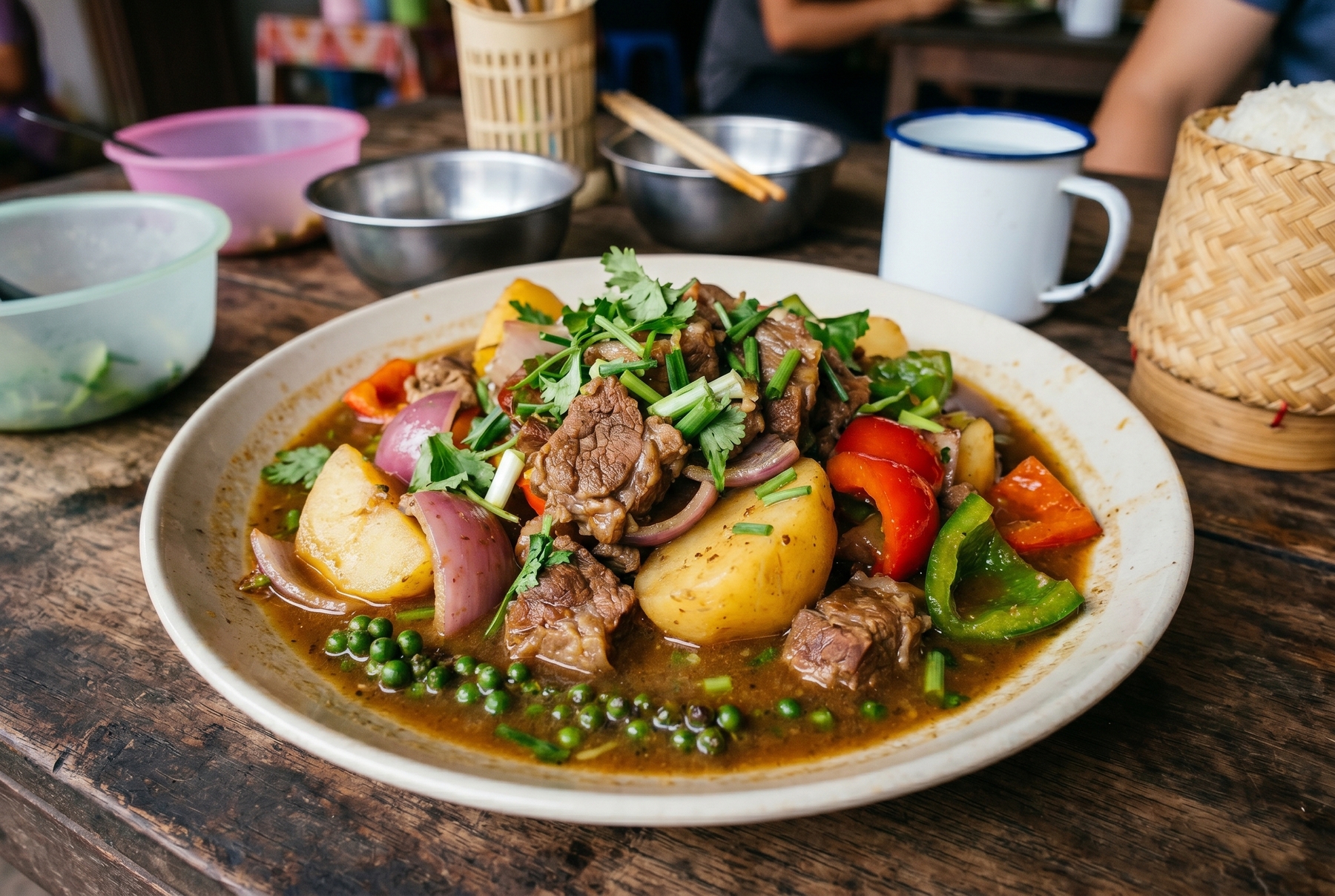
In Asian cuisines, cooks frequently use fresh green pepper, tossing it into sauces and stews for a bright, lively flavor.
White Pepper: How It Differs from Black and Where to Use It
Producers make white pepper from fully ripe berries by removing their outer shells. To achieve this, they soak the berries in water for several days, sometimes up to a week. The shell softens and is removed either mechanically or by hand. The light-colored seed that remains is then dried, giving us white pepper.
Its aroma is fermented and less direct than that of black pepper. It occasionally presents animalistic, cheesy, or subterranean notes, reminiscent of wet earth or a cellar. This is a direct result of the processing: soaking triggers fermentation, introducing nuances that black pepper simply does not possess. A good white pepper will not overpower a dish; instead, it lingers as a mild heat in the background. Cheap, old white pepper can smell musty. It is better to throw that away. The aroma should be distinct, but never dirty, moldy, or rancid.
Where It Works Best
It belongs anywhere you want to avoid black specks and sharp pepperiness. Think béchamel, hollandaise, light cream sauces for fish, mashed potatoes, and cream soups. It is perfect for delicate fish like cod, pike-perch, or halibut. Chicken broth seasoned with white pepper feels much smoother than when made with black pepper.
Chinese and Vietnamese cuisines rely on white pepper extensively, featuring it in soups, fried rice, dumpling fillings, and noodle dishes. In those kitchens, they use it generously and without hesitation.
A common mistake is buying white pepper in bulk and storing it for years. It loses its aroma even faster than black pepper. If it smells like an old sock or like nothing at all, it is no longer a spice.
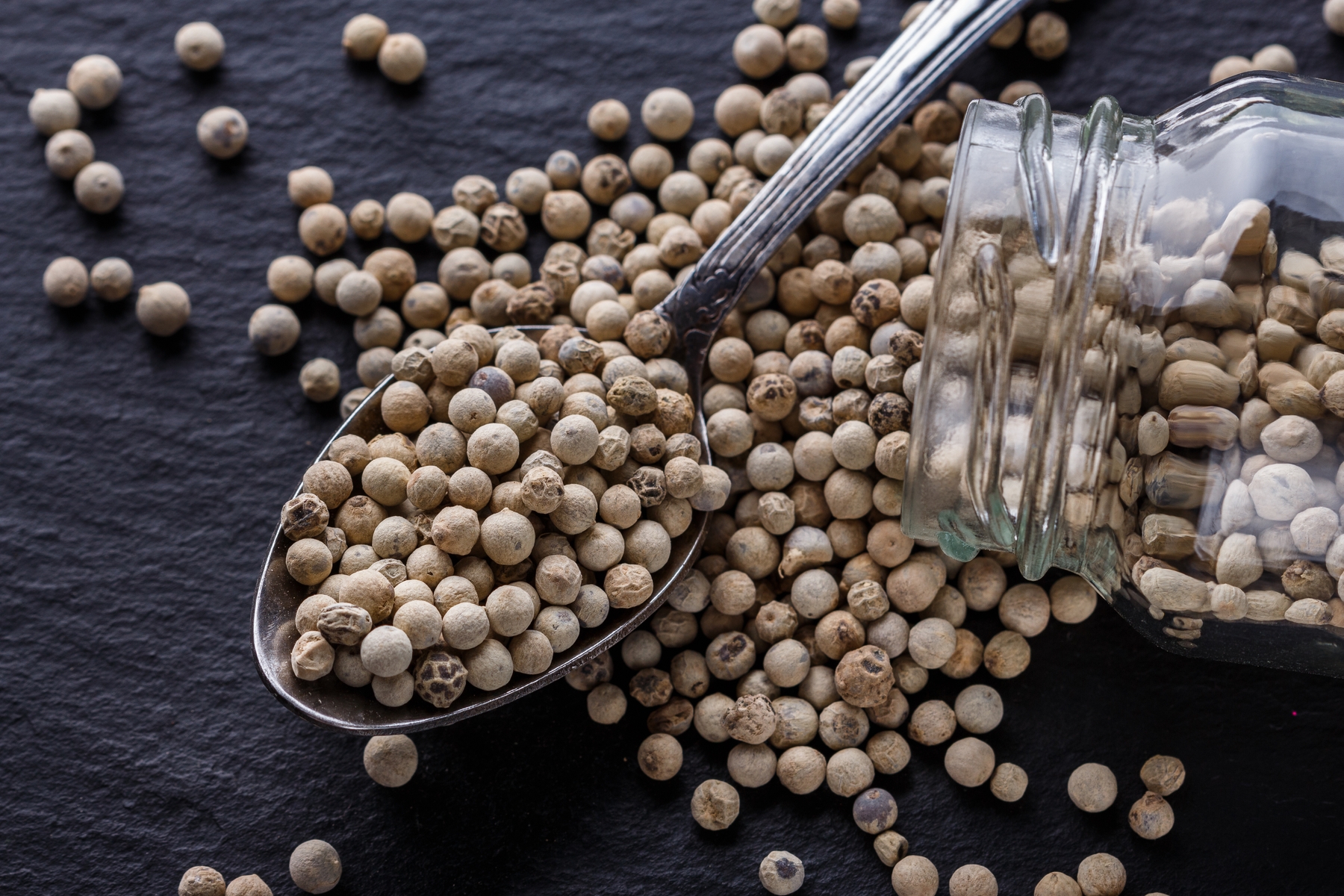
White pepper consists of fully ripe seeds stripped of their outer shells, possessing a delicate, fermented aroma.
Red Peppercorns: How They Differ from Pink
True red peppercorns are a rare find. They are fully ripe berries from the same pepper vine, processed in a way that preserves their reddish outer shell. You might find them dried, freeze-dried, salted, or brined. However, the ‘red’ or ‘pink’ pepper found on most supermarket shelves is usually something else entirely: pink pepper from the Schinus genus.
These pinkish-red Schinus berries possess a resinous, floral scent, sometimes with hints of citrus. They are the fruits of the Peruvian pepper tree (Schinus molle) or the Brazilian pepper tree (Schinus terebinthifolius). Pink pepper belongs to the Anacardiaceae family, sharing a botanical lineage with cashews, pistachios, and mangoes. True red pepper from the Piper nigrum vine has no relation to this botanical group.
Schinus pink pepper offers a mild flavor and delivers almost no peppery punch. It works well in spice blends, desserts, and sauces for fish and seafood.
True red peppercorns remain scarce and usually cost more than the pink variety. If you manage to find a high-quality batch, it is best utilized as a finishing spice over cheese, fruit sauces, or delicate meats and fish—anywhere you want a peppery aroma with a fruity edge, but without overwhelming heat.
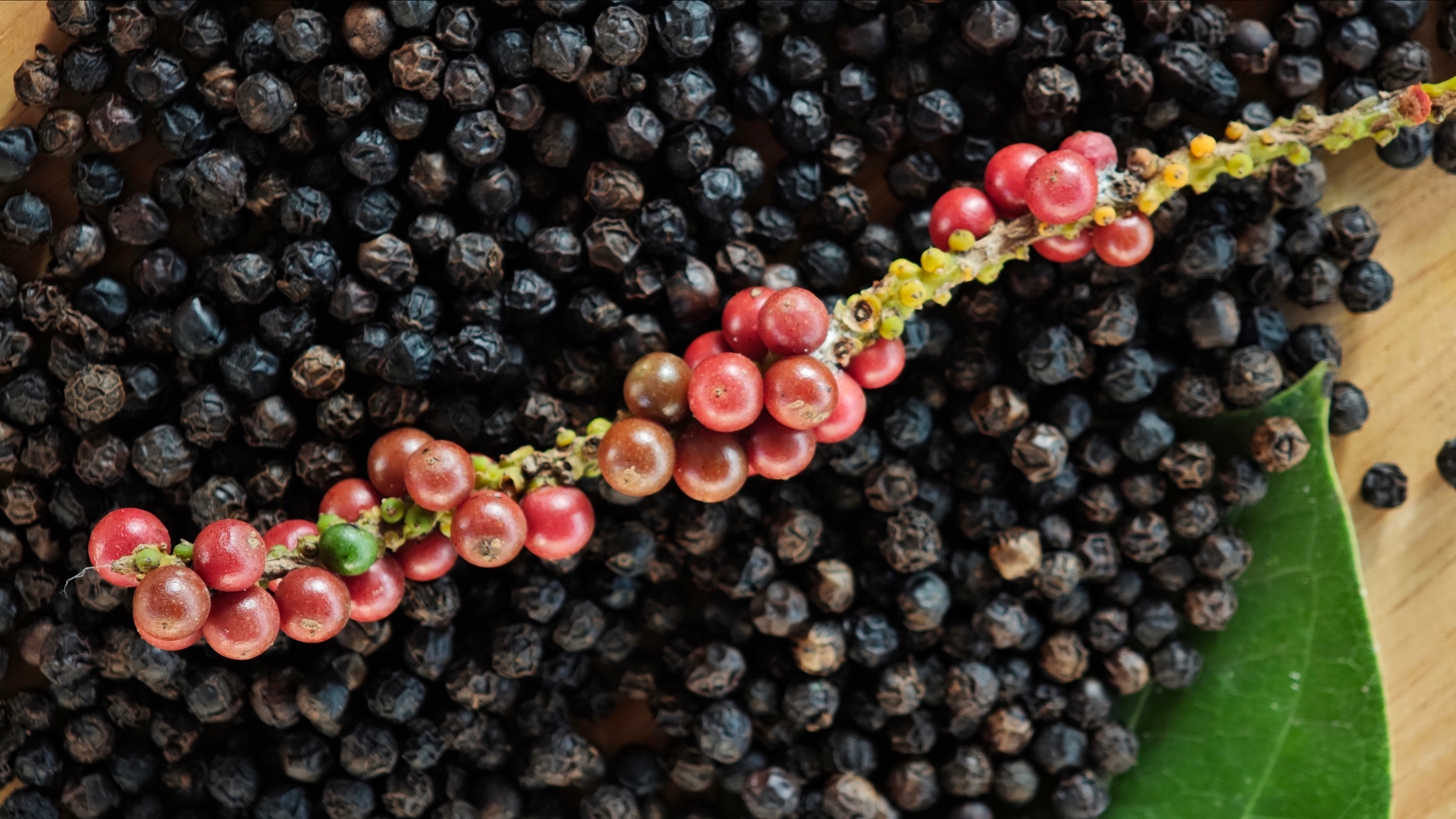
True red pepper consists of fully ripened vine fruits that have retained their outer shell after processing.
Kampot Pepper: When a Name Actually Means Something
Kampot Pepper is a protected geographical indication for pepper grown in a specific region of southern Cambodia. This area encompasses districts in the Kampot province and parts of the neighboring Kep province. This is not just a pretty name on a label; it is a registered geographical indication with strict rules governing origin, cultivars, production methods, and quality control.
The product’s character is shaped by the local climate, soil, and processing techniques. Kampot pepper can exhibit floral, eucalyptus, citrus, resinous, and woody notes. The heat is gentle, and the aroma carries an underlying fruity sweetness. In a premium Kampot pepper, these qualities emerge immediately upon grinding—the scent is dense, devoid of any dust or mustiness.
When the Name Guarantees Nothing
The word ‘Kampot’ on a package does not automatically guarantee quality. Excellence relies heavily on the producer, freshness, storage conditions, and the vendor’s integrity. A poorly stored Kampot pepper will easily lose out to a fresh Vietnamese or Indian variety. A stellar Kampot pepper, however, sets the standard: it shows you exactly what pepper can be when handled with serious care.
And yes, just to clarify: kompot (the Eastern European fruit drink) belongs in a pitcher. Kampot belongs in Cambodia. They are entirely different things.
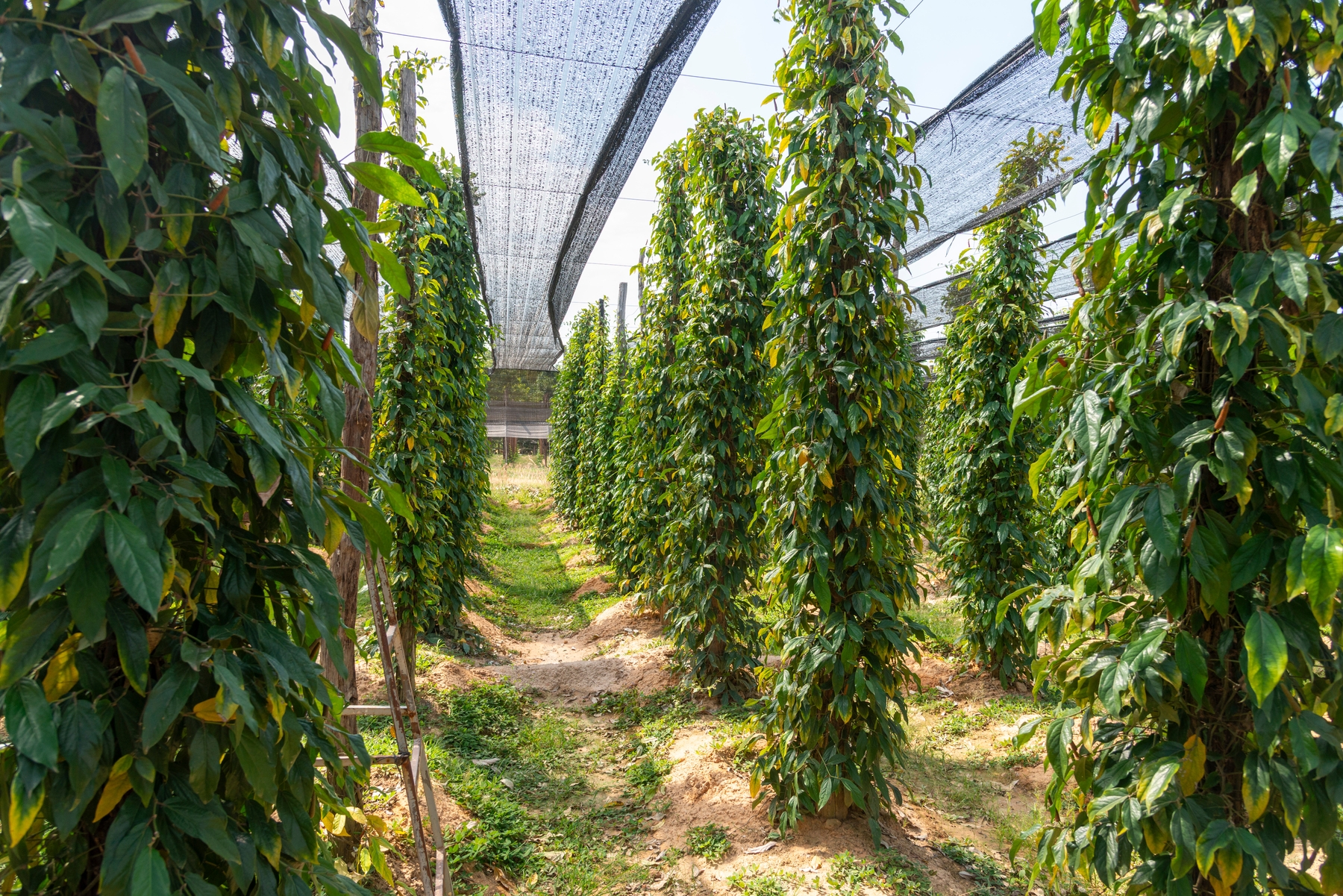
Farmers grow the famous Kampot pepper under specific regional conditions, imparting unique eucalyptus and citrus notes.
How to Choose and Store Good Peppercorns
What to Look for in the Store
Whole peppercorns are almost universally better than pre-ground powder. They retain their aroma much longer and are significantly harder to dilute with dust or debris. Ground pepper offers convenience, but you should only buy it in small packages and use it up quickly.
When checking the packaging, pay attention to the packing date, the airtight seal, the origin (at least down to the country), and ensure the peppercorns are whole without cracks or dust settling at the bottom. Once opened, the aroma dictates everything. If it smells weak or musty, it is best to leave that pepper alone. With regional peppers (Kampot, Tellicherry, Malabar), it is crucial to know the producer, the specific origin, and the harvest date. If a label simply says ‘black pepper’ with no further details, it is likely a blend of unknown origins.
Your Pepper Mill Matters More Than You Think
A grinder dictates not only the size of the flakes but also how the pepper integrates into the dish. A steak requires a coarse grind, almost cracked peppercorns, creating a textural flavor that spikes and mellows. A sauce needs a medium or fine grind. A salad benefits from a fresh grind directly over the plate right before serving. If your mill only produces dust, the problem lies with the mill, not the pepper.
How Much to Buy and What to Do With the Old Stuff
It is far better to buy a small package of fresh pepper than a massive jar that will outlive the season and your favorite skillet. Storage is simple: keep it in a dark, dry place inside an airtight container, far away from the stove. Never shake it directly from the jar over a steaming pot—moisture will get inside, and the aroma will degrade much faster.
If you still have old pepper lying around, you do not necessarily have to throw it away, provided there is no mold or off-putting odor. It might be weak as a spice, but it still works in broths, marinades, and brines—any application that requires a background spice rather than a sharp, distinct hit.
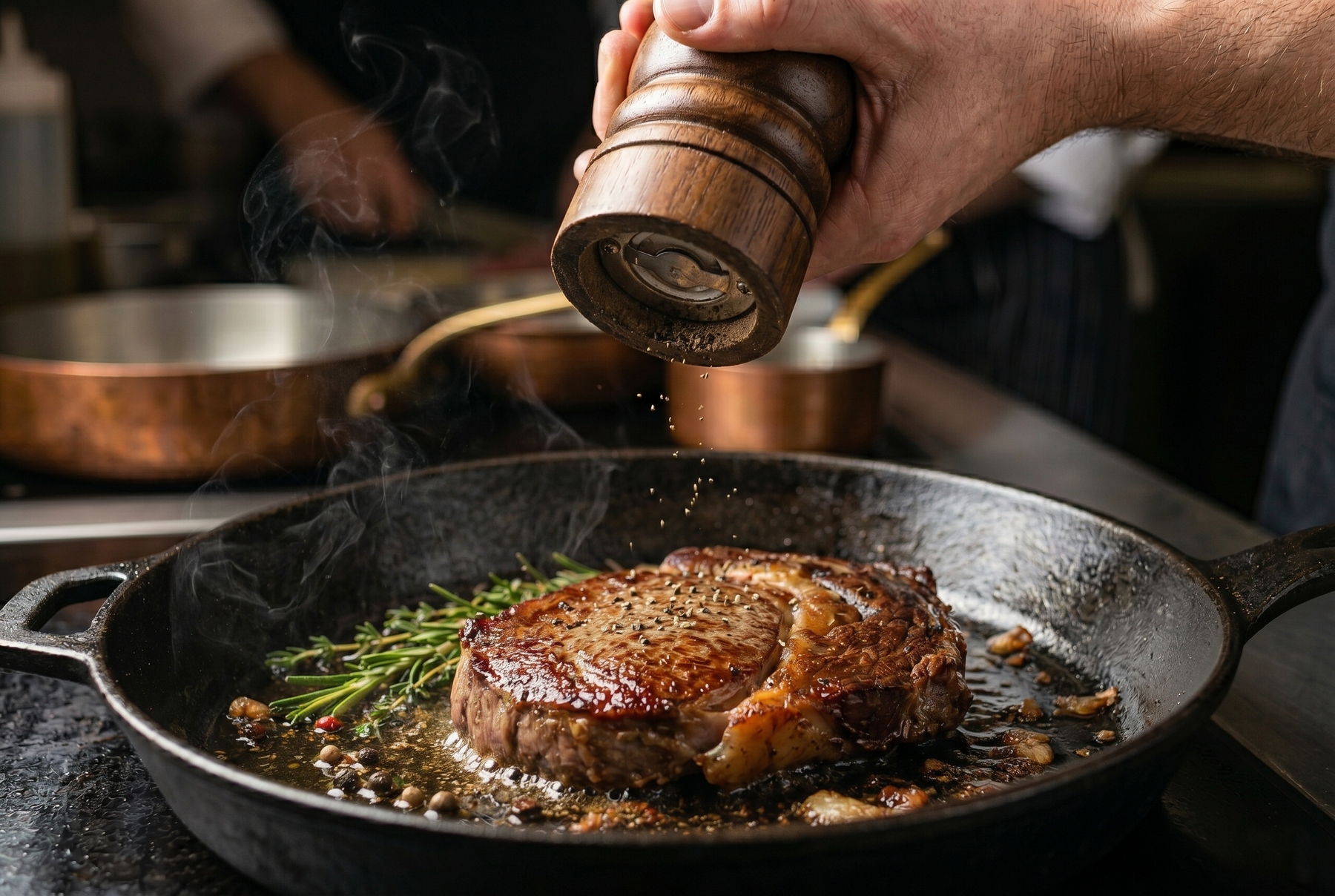
It is always best to add freshly ground pepper at the very end of the cooking process to preserve its volatile essential oils.
A Few Experiments That Will Change How You See Pepper
Take a hard-boiled egg or a boiled potato. Sprinkle it first with old ground pepper from an open jar. Then, try freshly ground peppercorns on another bite. Smell them. Taste them. The difference will be undeniably obvious, no culinary terminology or tasting charts required.
Place a few peppercorns on a cutting board and press down with the flat side of a knife. Do not grind them; literally crush them. You will get large, uneven pieces. Rub them into a steak before searing or toss them into a salad. The flavor profile changes entirely—it becomes irregular, with brilliant bursts of heat wherever a larger piece lands.
Try adding pepper at the end of the cooking process rather than the beginning. Apply it to soups, pastas, roasted vegetables, or a grilled cheese sandwich. A fresh grind at the very last moment prevents the volatile oils from boiling away or blending too deeply with everything else. It stays on top, releasing its aroma right above the plate.
And make sure to try fresh green pepper in a cream sauce. Sear your meat and set it aside. Into the skillet with the remaining pan juices, add a spoonful of green peppercorns (lightly crushed with a fork), pour in some heavy cream, and let it warm through for a minute. This is not some complex recipe from a high-end restaurant cookbook. This is simply the magic that happens naturally when you work with vibrant, living pepper.
Pepper used to be an incredibly expensive spice. It shaped trade routes, inspired naval expeditions, and served as hard currency. People measured it, weighed it, and stored it with deep respect. Then it became cheap, ubiquitous, and automatic. A pinch in the pot. A flick of the wrist. Zero expectations.
You do not need to become a pepper collector. It is enough to simply understand that pepper can be vibrant, diverse, and incredibly expressive. That a fresh grind smells entirely different from the powder sitting in an open jar. That green pepper delivers a flavor no other spice can replicate. That white pepper steps in perfectly where black pepper would be too brash. And that true red pepper actually exists, even though it is almost constantly confused with pink pepper.
Buy some high-quality whole black peppercorns. Try green pepper at least once. Do not be afraid of white pepper. And always take a moment to smell your pepper before letting it fall into your food.
0 comments