
Bell peppers stuffed with carrots and onions for winter are a true vitamin powerhouse, where the sweetness of the pepper beautifully intertwines with a savory punch of garlic. Interestingly, bell peppers are renowned for their high Vitamin C content, retaining a significant amount even after cooking. In this recipe, we use zucchini to give the filling an extra layer of juiciness and create a natural vegetable sauce base. The aroma of roasting vegetables mingling with subtle notes of vinegar and spices will fill your kitchen with warmth, promising a spectacular addition to your winter pantry.
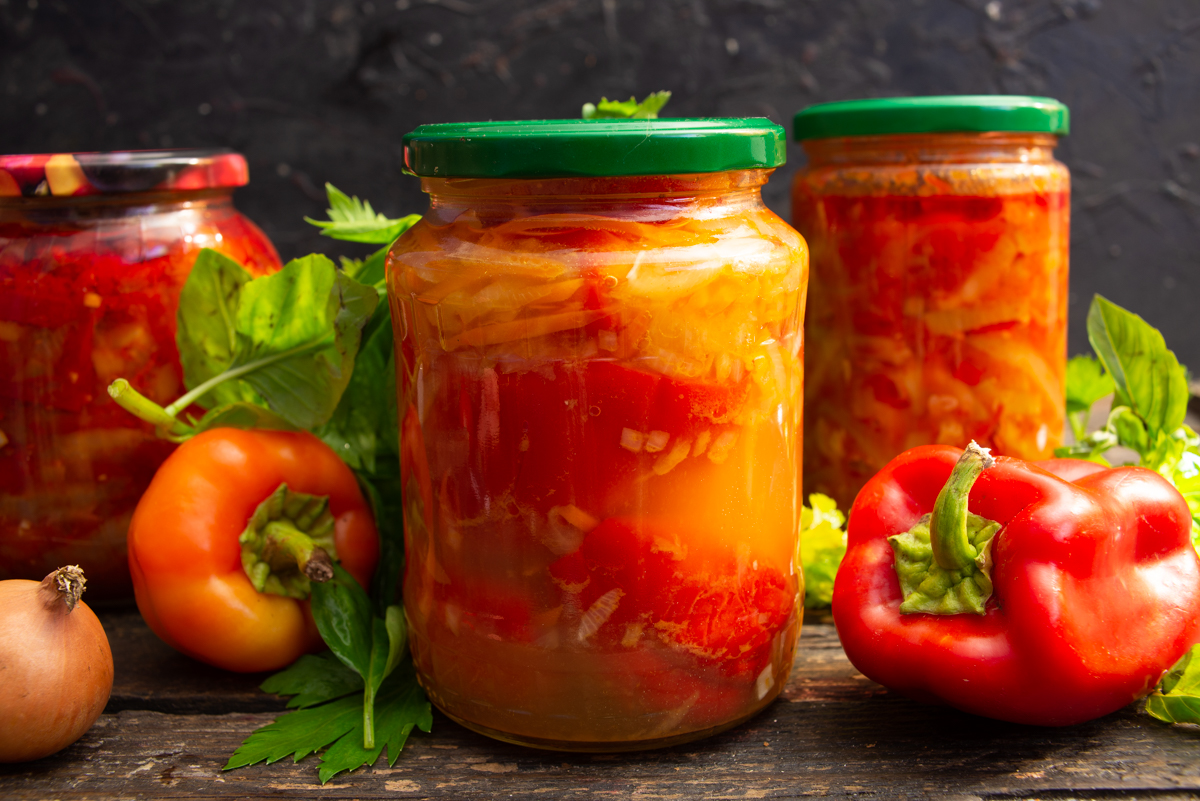
Appetizing peppers stuffed with vegetables are ready for long-term storage. This appetizer will become a real centerpiece on your winter table.
Ingredients
- 500-600 g (1.1-1.3 lbs) bell peppers (about 5 small peppers)
- 120 g (4.2 oz) carrots
- 120 g (4.2 oz) zucchini (or summer squash)
- 120 g (4.2 oz) onions
- 1/2 chili pepper
- 2 cloves garlic
- 2 tsp salt
- 1 tbsp sugar
- 1 tsp paprika
- 30 g (2 tbsp) vegetable oil
- 30 g (2 tbsp) 9% white vinegar
How to make bell peppers stuffed with carrots and onions
Slice the tops off the bell peppers, core, and remove the seeds. Rinse under running water to wash away any remaining seeds. You can finely chop the trimmings and add them to the filling.
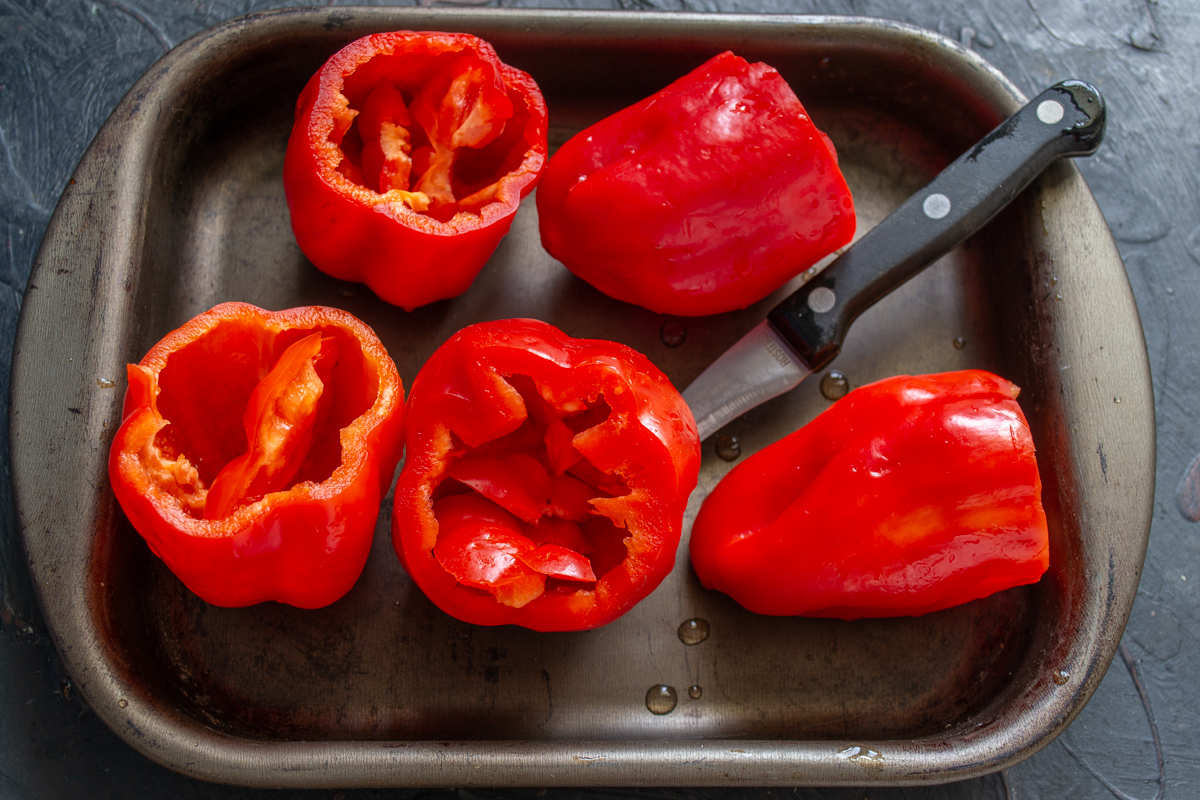
First, prep the peppers: remove the stems and seeds, then thoroughly rinse each pepper before stuffing.
Let’s assemble the filling. Julienne the carrots into thin strips or grate them using a large box grater.
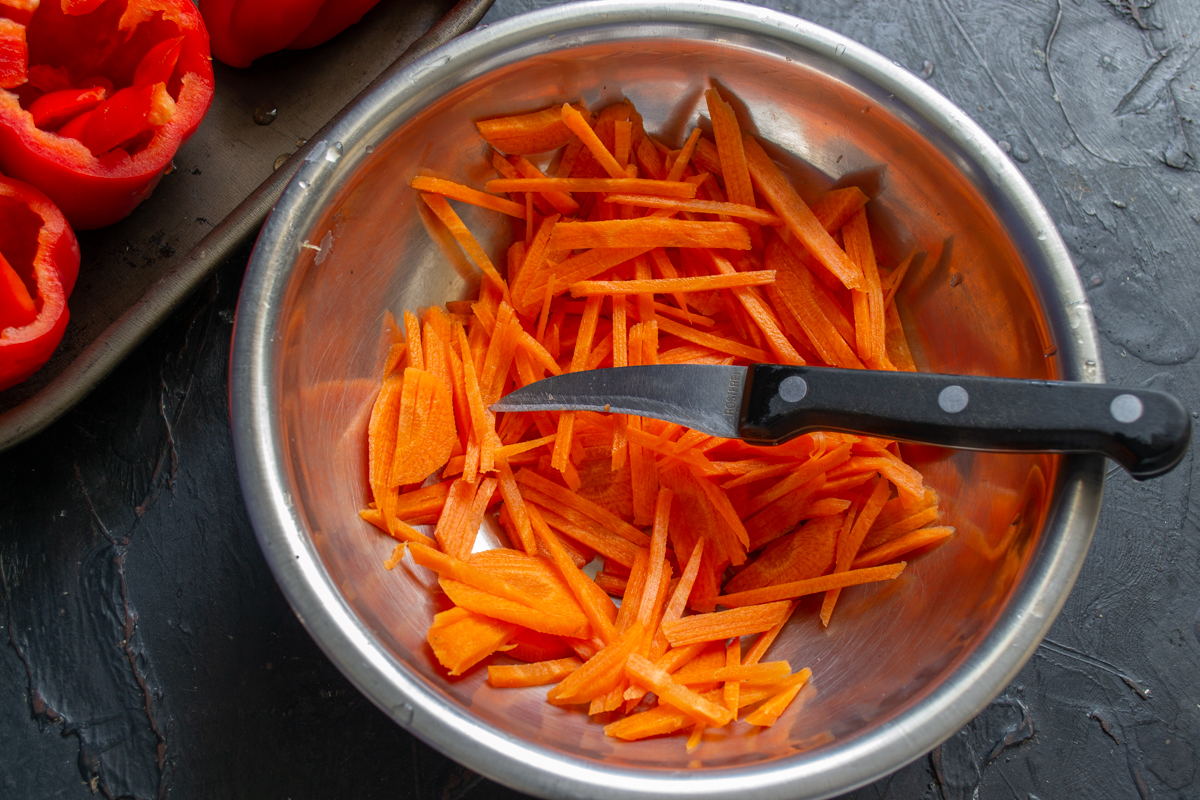
For the best texture, it's best to julienne the carrots into thin strips or grate them on a large box grater.
Add finely chopped onion to the carrots.
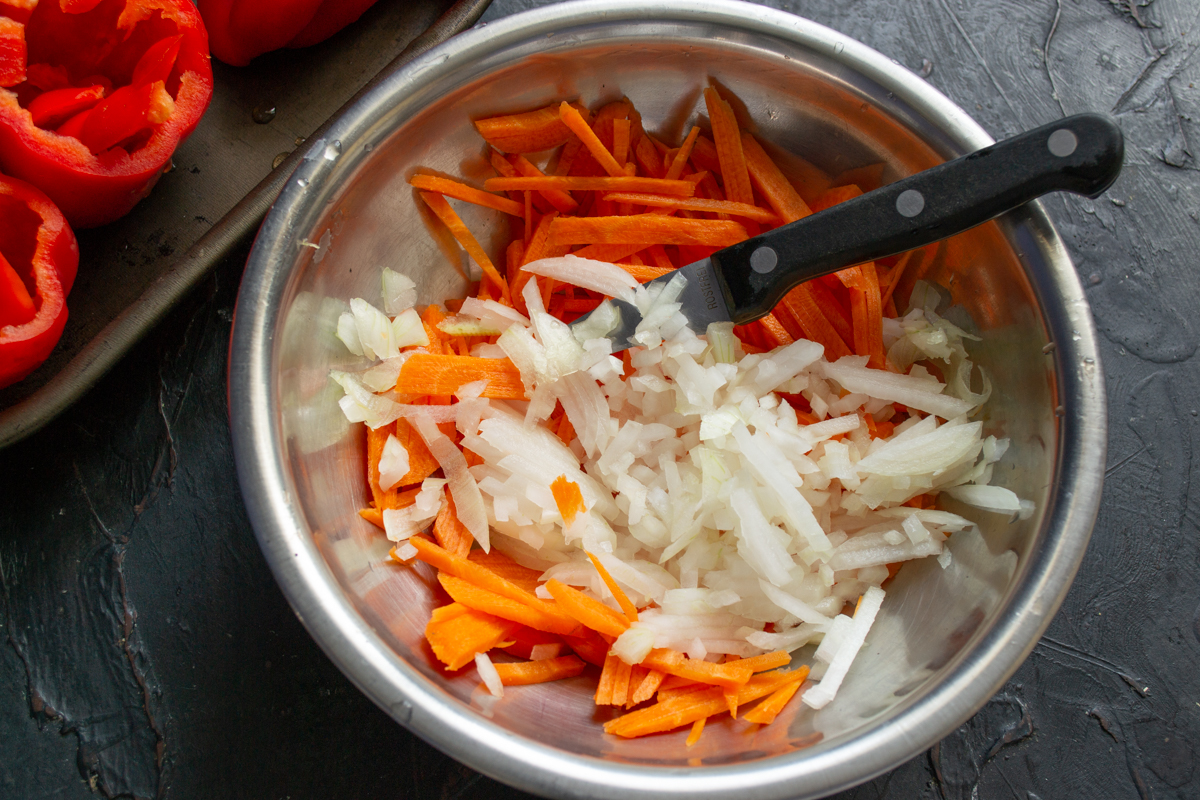
Add finely chopped onion to the carrots—this forms the classic vegetable base for our filling.
Peel and seed the zucchini (or summer squash), then grate or finely julienne the flesh just like the carrots. Add the prepped zucchini to the rest of the vegetables. Season with salt, sugar, and paprika. Crush the chili pepper slightly, snip off the stem, and shake out the seeds. Finely chop half of the chili and the garlic cloves, then fold them into the vegetable mixture.
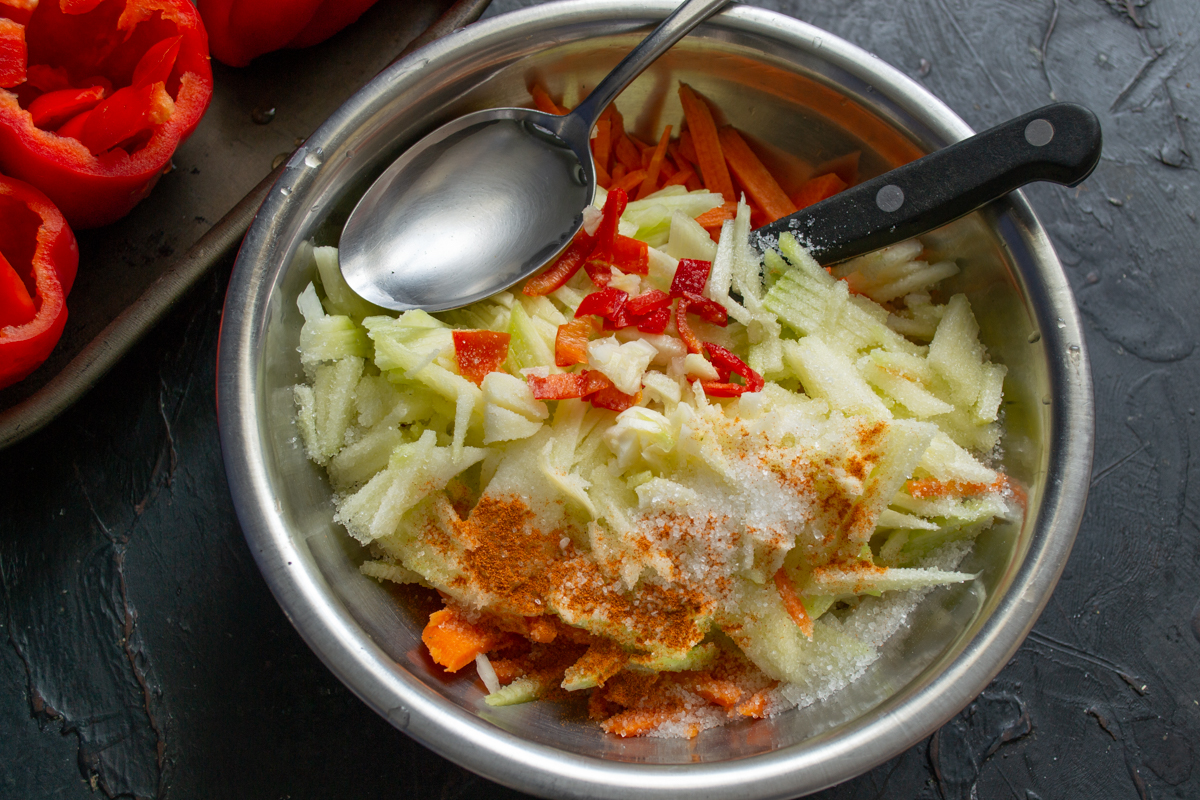
Add the grated zucchini, garlic, chili, and spices to the vegetables. This makes the filling juicy, aromatic, and slightly spicy.
Pour in 1 tablespoon of 9% white vinegar (this is half the total amount called for in the recipe). Mix the filling thoroughly, lightly massaging it with your hands to help the vegetables release their juices. Let it rest for 10-15 minutes—this softens the veggies and makes stuffing the peppers much easier.
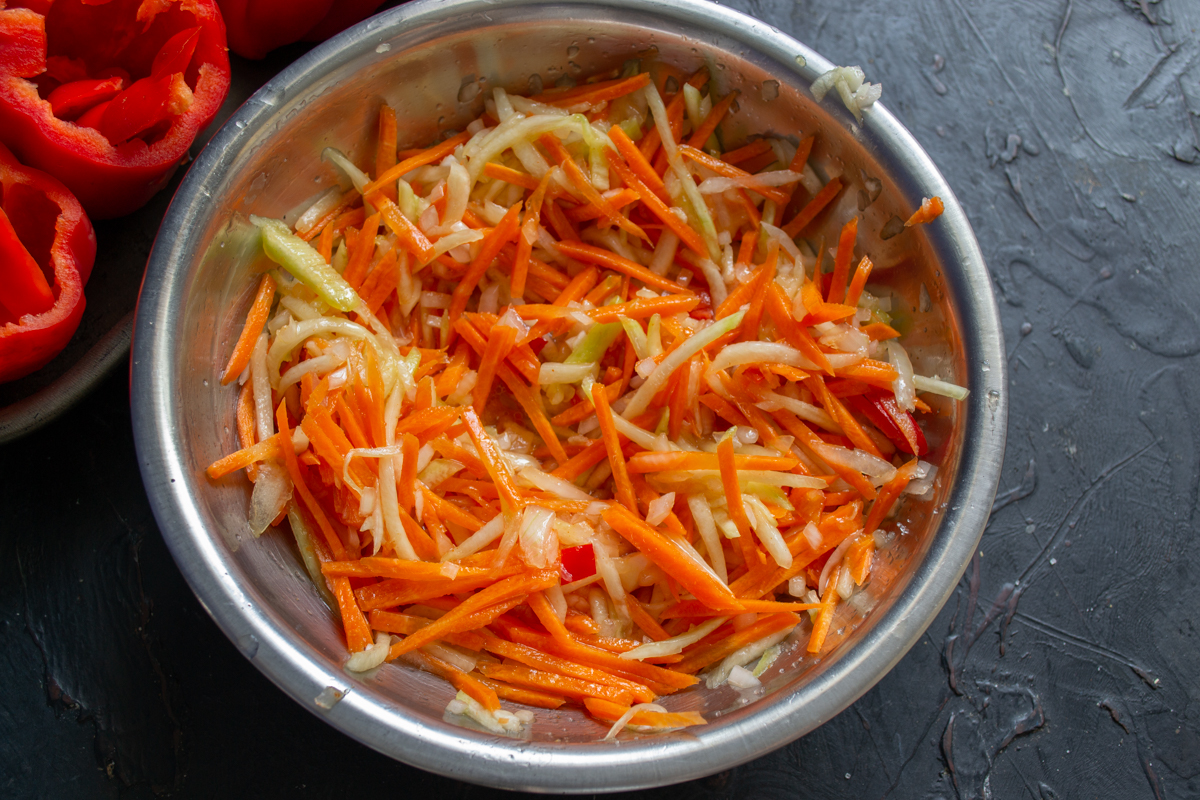
Add the vinegar and let the vegetables rest for 10-15 minutes. They will release their juices and soften, making the peppers easier to stuff.
Stuff the bell peppers tightly with the vegetable mixture and arrange them on a baking sheet. Drizzle lightly with vegetable oil. You don’t need much—just enough to lightly coat the peppers so they don’t scorch on the pan.
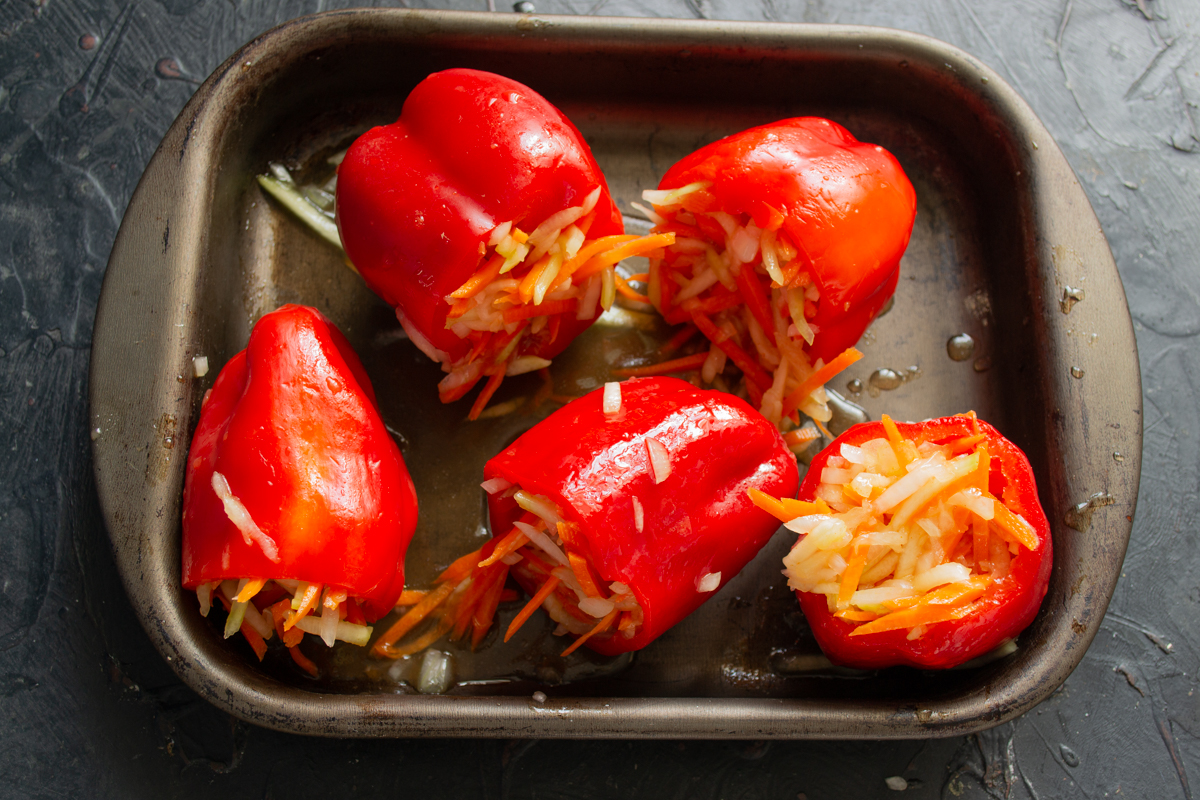
Tightly pack the peppers with the prepared vegetable filling and arrange them on a baking sheet lightly greased with vegetable oil.
Cover the baking sheet of stuffed peppers with aluminum foil. Preheat your oven to 180°C (350°F). Bake the peppers in the preheated oven for 20 minutes. The vegetables won’t fully cook in this time, but they will soften nicely.
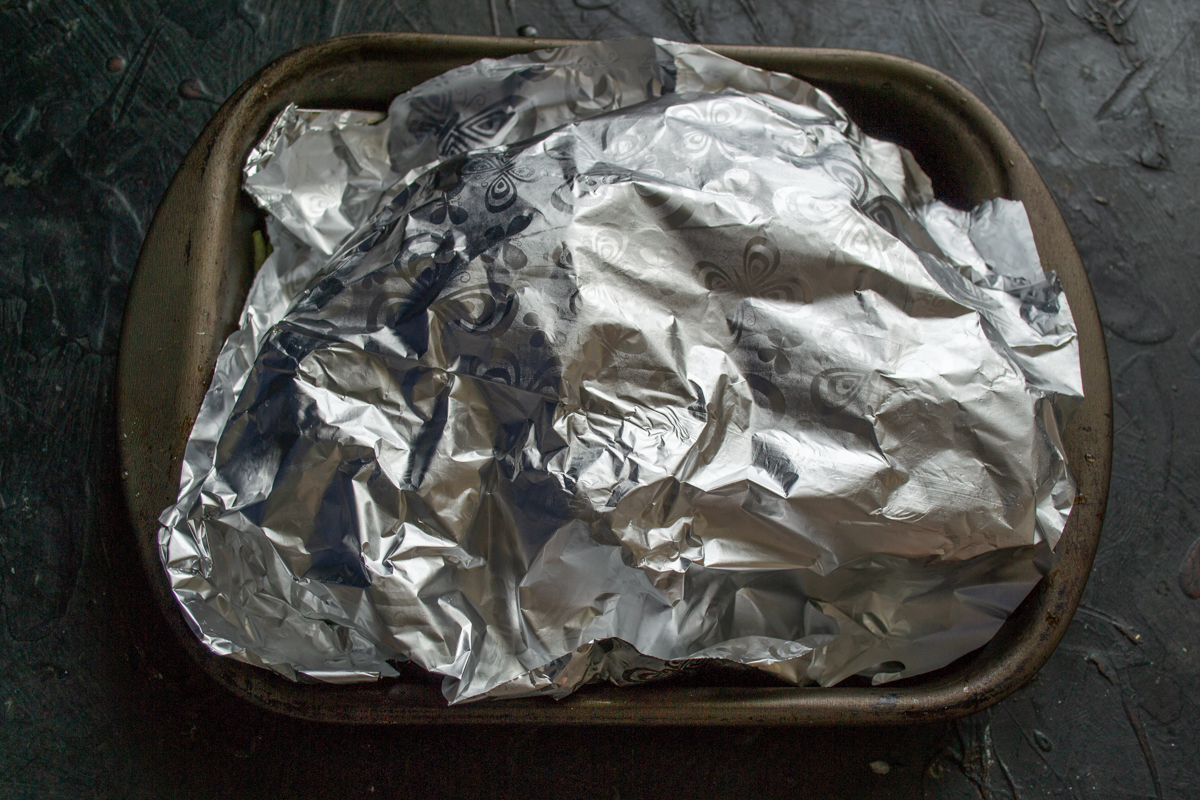
Cover the peppers with aluminum foil and place in the oven for 20 minutes. This helps the vegetables soften while retaining their juiciness.
Remove the peppers from the oven. Thoroughly wash a glass canning jar, rinse it with boiling water, and sterilize it over steam or in the oven.
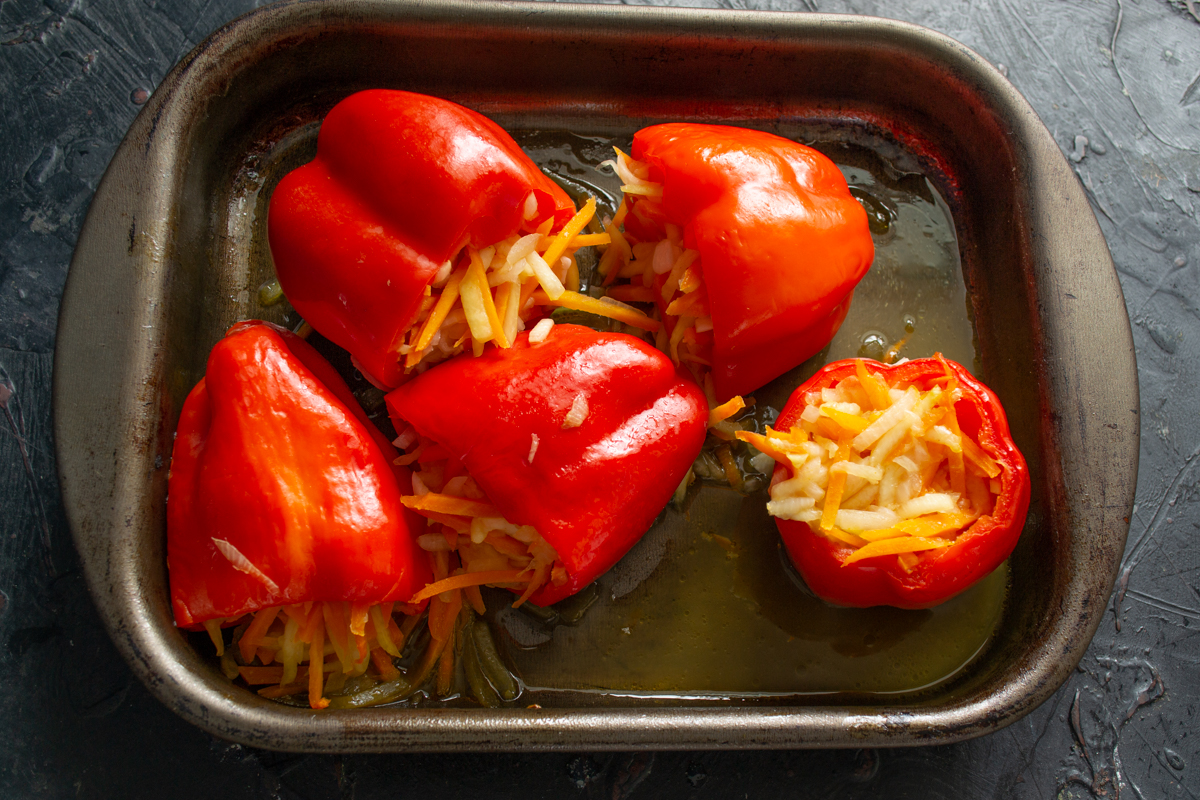
After baking, the peppers become soft and pliable. Now they can be carefully packed into sterilized jars.
Pour the remaining vinegar into the bottom of the sterilized jar. Pack the stuffed peppers into the jar tightly, pressing down so the vegetables release their natural juices. This creates peppers preserved in their own juice. Fill the jar all the way to the top. Usually, the released vegetable juice is enough to fill the jar. If you find you need a little more liquid, just top it off with a splash of boiling water.
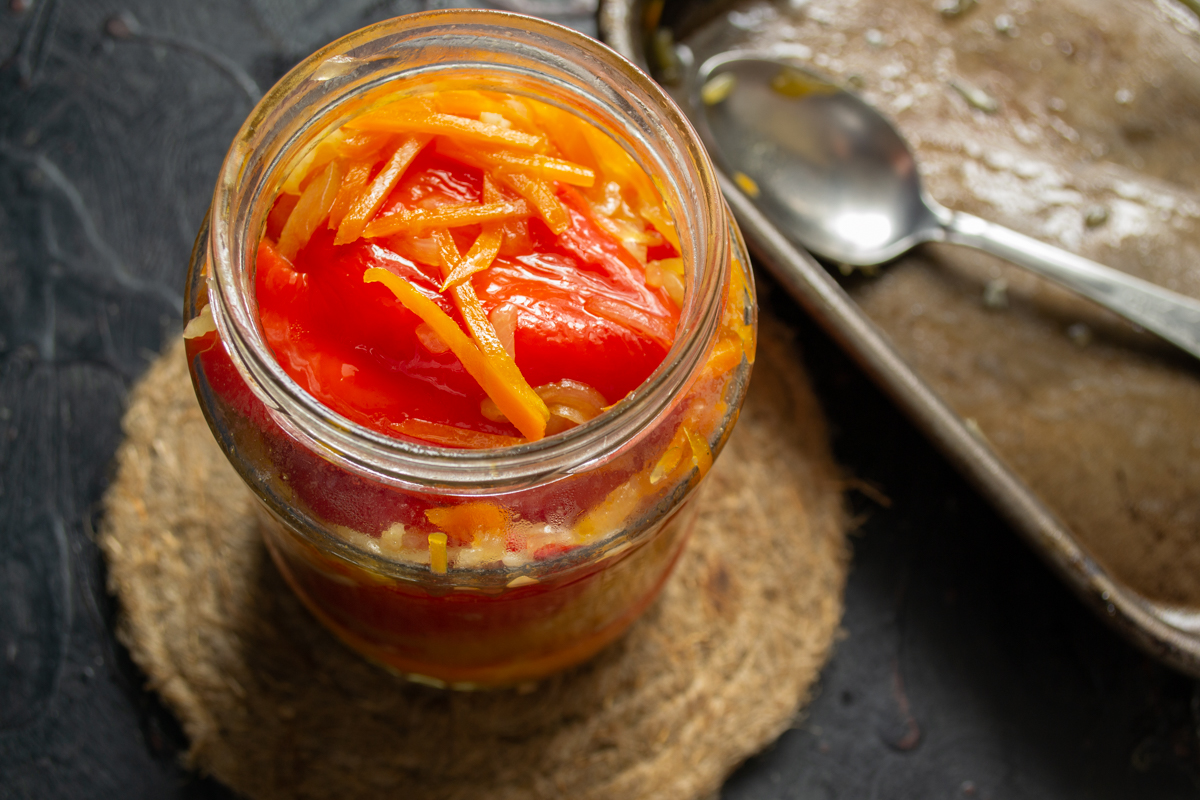
Pack the peppers tightly into the jars, pressing down so that the released vegetable juices completely fill any empty spaces.
Cover the jar loosely with a boiled canning lid. Place a kitchen towel at the bottom of a large pot and set the jar of stuffed peppers on top. Pour in hot water (around 50-60°C or 120-140°F) until it reaches just below the lid. Bring to a boil and process (sterilize) for 20 minutes. Carefully remove the jar from the pot, seal the lid tightly, and flip it upside down. Wrap it in a thick blanket and leave it to cool completely. These sterilized preserves can be safely stored at room temperature in your pantry.
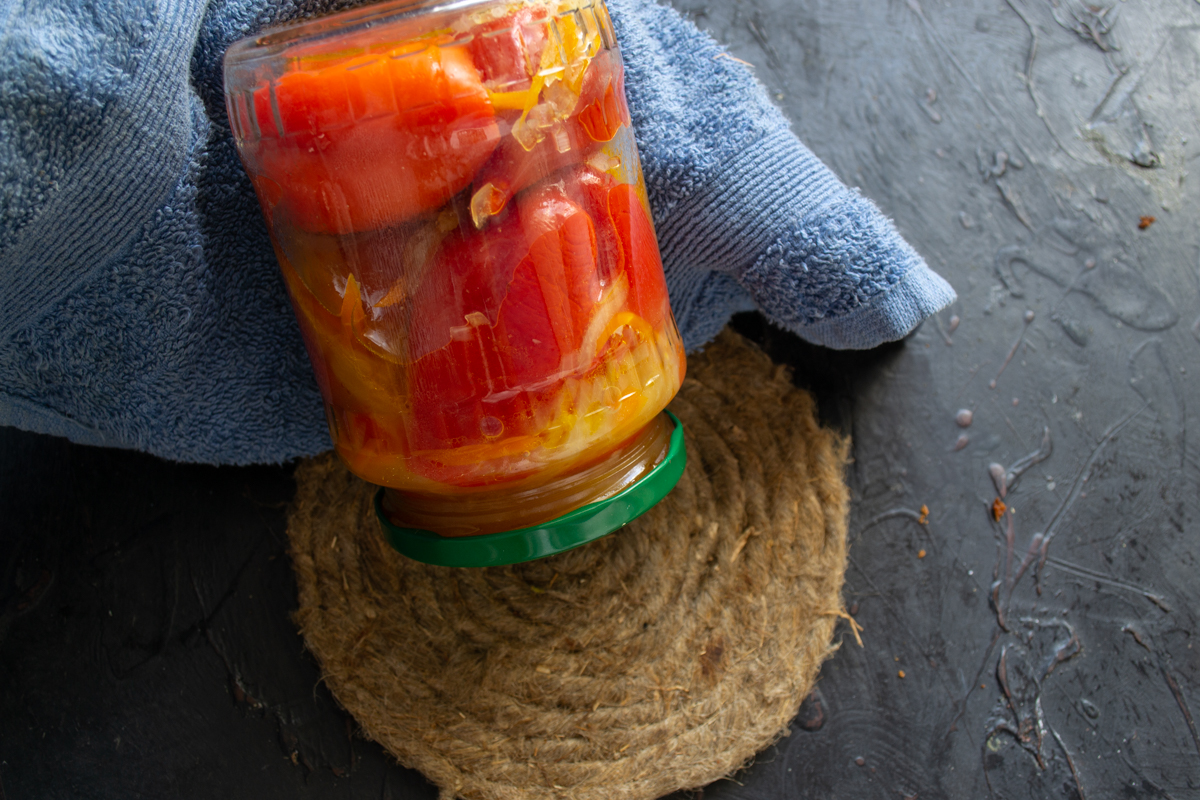
After processing, seal the jars, flip them upside down, and leave them covered with a warm blanket until completely cooled.
These winter-ready stuffed peppers are best served chilled as a standalone appetizer, garnished with fresh parsley or dill. They also pair wonderfully with hot boiled potatoes or fluffy rice, where the savory vegetable juice from the jar makes a fantastic light gravy. If you love deeper, more robust flavors, try adding a little celeriac or parsnip to the filling—it will lend the preserve a refined, nutty undertone.
You can store these sealed jars at room temperature in a dark pantry, but be sure to chill the peppers in the fridge for a couple of hours before serving. The cold enhances the crunch of the carrots and makes the marinade taste even brighter. To ensure the peppers hold their shape and don't fall apart, choose thick-walled peppers of roughly the same size—this guarantees even cooking and a beautiful presentation for your homemade preserves.
0 comments