
A person opens a tab with a cake recipe. Scrolling down reveals twelve ingredients, three temperature settings, the phrase ‘whip to soft peaks,’ and the word ‘temper.’ The tab is quickly closed.
Fear appears before the first step. The difficulty lies not in the eggs, the mixer, or the recipe itself. The daunting part is the illusion that a recipe allows no room for a missed minute or a slight temperature variation. It feels like one mistake will unravel everything: the cream will split, the evening will go wrong, and the familiar thought will click in the mind—complex recipes are simply not for me.

The fear of a complex recipe often arises before picking up a knife or a mixer. Carefully studying the steps helps reduce anxiety.
Table of Contents
- Why a Recipe Intimidates Before You Even Open the Flour
- What Exactly Intimidates: Ingredients, Doneness, Words, or Judgment
- How to Read a Recipe Before Reaching for a Bowl
- The Rule of One New Challenge at a Time
- What Helps Eliminate Kitchen Guesswork
- How to Survive a Mistake
- How to Choose Your First Complex Recipe
- Rituals for Calm Cooking
- Cheat Sheet: How to Approach a Recipe Without Panic
Why a Recipe Intimidates Before You Even Open the Flour
Recipes often assume the reader already knows what finished dough looks like, the specific sound that signals a pan should leave the heat, or the difference between ‘golden’ and ‘browned.’ In reality, a person stands by the stove wondering if it is time or if they should wait. The timer dictates five minutes, but the onions remain pale and sharp.
The Recipe As an Exam
Anxiety strikes in the kitchen just as it does before any new task. The brain encounters too many unknowns and opts for the quietest choice: not starting at all.
A soufflé might collapse, meat can dry out, and cream might split without offering an immediate clue as to what went wrong. Guests are arriving in an hour, and an ordered pizza might replace the promised ragout on the table.
Consequently, the baking dish stays in the cupboard, and the baker never discovers how the dough behaves in the oven.
A Complex Recipe Breaks Down Into Small Decisions
The most intimidating recipe resembles an overwhelming monolith. However, any complex dish breaks down into manageable stages: observing a color change, removing a pan from the heat, or simply waiting.
Carbonara seems strictly for professionals when described as a whole: pasta, guanciale (a cured Italian meat) or bacon, eggs, cheese, pepper, and tempering.
Breaking it down reveals simpler steps: boiling pasta (a familiar task), frying bacon (also familiar), mixing eggs with cheese (whisking in a bowl), and combining everything over residual heat (removing from the stove, adding, and stirring). Each stage provides visual cues: the pasta cooks, the fat renders, and the eggs blend with the cheese.
Recipes frequently read as if the author forgot the reader does not live in a professional kitchen. Benchmarks blur, terms remain unexplained, and times are approximate. Experiencing this confusion is perfectly normal. The text simply fails to guide effectively.
What Exactly Intimidates: Ingredients, Doneness, Words, or Judgment
The Fear of Ruining Expensive Products
A premium piece of beef costing a premium price genuinely creates more anxiety than a chicken breast. A marbled steak, a whole fish, high-quality chocolate, or Gruyère cheese makes any mistake noticeably more expensive. Driven by the ingredient’s cost, a cook might reach for a package of convenience food instead of a frying pan.
Selecting a simpler ingredient for the first attempt builds confidence. Using regular beef instead of a marbled cut, an inexpensive fish rather than dorado, or preparing half a portion instead of a whole one lowers the stakes. Practicing on something that feels less precious brings peace of mind.
The Fear of Missing the Moment of Doneness
Phrases like ‘until golden,’ ‘until thickened,’ or ‘until done’ cause frustration because they lack specific details.
Golden means pale yellow to one cook and dark amber to another. Thickening might be light (like runny sour cream) or dense (like a paste). The doneness of meat depends entirely on whether one prefers a pink center or a well-done finish.
Indicators are more useful than minutes. Onions are ready not just when they turn translucent, but when they emit a sweet, slightly caramelized aroma and lose their crunch. Garlic in a pan is done when its scent peaks before turning bitter (an extra ten seconds pushes it into bitterness). A sauce has thickened properly if it leaves a clear path on the back of a spoon and does not immediately flow back.
Keeping a timer nearby is helpful, but ultimately, smell, sound, color, and texture matter more.
The Fear of Words That Sound Harder Than the Action
Culinary terminology often sounds far more intimidating than the actual action. In reality, these words describe simple physical processes.
Sautéing simply means gently heating vegetables in oil until soft, without browning them. Deglazing involves adding liquid (wine, broth, or water) to a hot pan to lift all the flavorful browned bits from the bottom. Emulsifying binds fat and liquid together so they do not separate, creating mixtures like mayonnaise, hollandaise, or vinaigrette. Tempering slowly warms a cold ingredient by gradually whisking in small amounts of a hot liquid to prevent curdling.
The Fear of Judgment (Self and Others)
Often, the fear stems not from the recipe, but from the anticipated reaction. A family might say ‘fine,’ but the cook hears ‘mediocre.’ Guests offer a polite ‘delicious,’ yet the host still second-guesses the result. Sometimes, the cook eats a slice and focuses entirely on a crack in the crust rather than the flavor.
If a dish falls short, analyzing the process helps identify the cause: temperature, speed, chopping size, or cooking time. A cream might have split due to excessive heat or adding butter too quickly. The next attempt will naturally involve a slower addition.
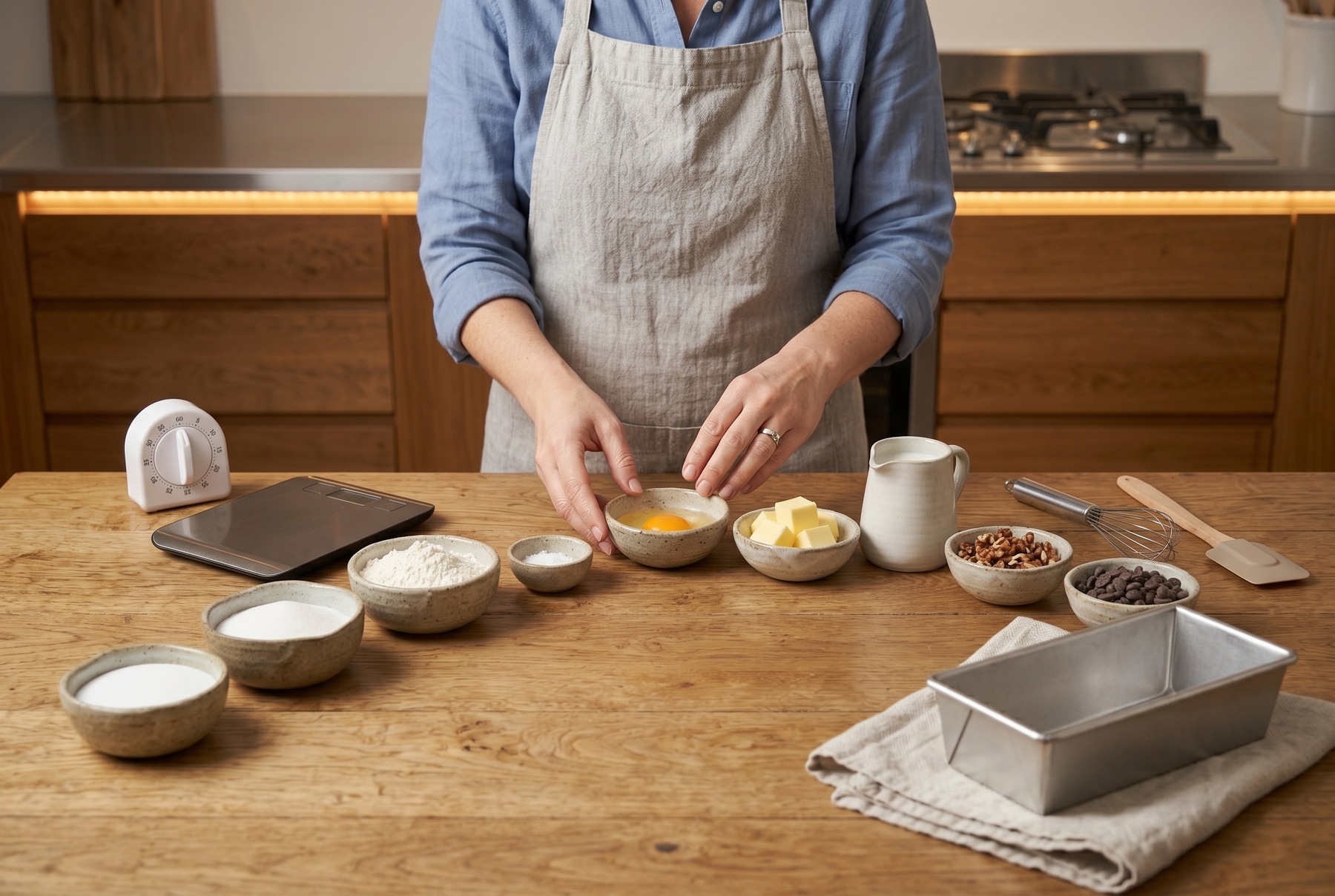
The principle of mise en place eliminates unnecessary fuss: when all ingredients are weighed and laid out in advance, complete focus on the process becomes possible.
How to Read a Recipe Before Reaching for a Bowl
Deconstructing a complex recipe is the best approach: spending five minutes reading often saves half an hour at the stove.
First Pass: Understand the Plot
Reading the recipe completely allows the cook to identify the main focus: is it the dough, the sauce, the temperature, the time, the marinade, or the sequence of actions?
In risotto, the key is adding liquid gradually and maintaining a texture poised between porridge and soup. For a cheesecake, avoiding overbaking and cooling it slowly prevents the top from cracking. Pilaf relies on the order of layering and the precise moment when the rice absorbs water without turning mushy. Caramel requires standing by the stove constantly: its color shifts faster than expected.
After this initial read, it becomes easier to spot which steps allow for a distraction and which require constant attention.
Second Pass: Mark the Points of No Return
Braising, marinating, and chilling proceed slowly. However, caramel, garlic, and cream can transform in seconds.
Cream thickens rapidly, caramel darkens in ten seconds, and garlic in a pan transitions through three states almost instantly: pale, aromatic, and burnt. Adding eggs to a hot mixture carries the risk of scrambling them if the heat is too intense. During their final ten minutes, baked goods often teeter on the edge between perfectly done and burnt.
Reviewing these crucial steps twice is a smart strategy. Better yet, prepping everything in advance ensures no one is hunting for a spoon while oil smokes in the pan.
Third Pass: Prepare a Station of Calm
Chefs call this concept mise en place—literally ‘everything in its place.’ This principle serves a simple purpose: minimizing frantic kitchen sprints. Chopping ahead of time, measuring ingredients, taking out cookware, preheating the oven, clearing the workspace, and placing a towel and a scrap bowl nearby all contribute to a smoother process.
Having everything at hand reduces the chances of darting between the cabinet, the sink, and the stove. If fetching a whisk requires an awkward reach, the butter might already be smoking by the time it arrives.
The Rule of One New Challenge at a Time
Tackling a new dish with an unfamiliar technique and expensive ingredients right before guests arrive is not advisable. For a first attempt, such a combination proves too stressful.
Lowering the Stakes
A new recipe should introduce only one unfamiliar element. If the dough is new, the filling should be simple. If the sauce is a first attempt, pairing it with a familiar side dish helps. When roasting a duck for the first time, leaving the glaze, dumplings, and flambéing for another occasion makes sense.
Experience accumulates gradually. Learning to make choux pastry comes first, followed by filling it, and eventually adding a glaze. Not everything needs to happen at once.
Rehearsal Is a Strategy, Not a Weakness
Making half a portion, testing a single component separately, simmering a test batch of sauce for everyday pasta, or assembling a mini-dessert in a glass instead of a full cake are all excellent strategies.
The initial attempt at a complex recipe serves as an introduction to the process: discovering how the dough behaves, noticing when the sauce thickens, understanding the time commitment, and identifying when stepping away is impossible.
Where to Simplify
Opting for high-quality store-bought puff pastry, pre-made broth, or a simple side dish reduces the workload. The presentation format can also be simplified: choosing individual pastries instead of a whole cake, or serving fillets rather than a whole fish.
This approach preserves energy for the steps that truly demand it. It proves especially helpful when cooking after a long workday rather than on a free Saturday.
What Helps Eliminate Kitchen Guesswork
Time Is Only a Suggestion
Ovens, stovetops, and pans behave differently: a thin aluminum skillet overheats quickly, while a heavy cast-iron pan retains heat much longer. The moisture content of flour, the size of chopped vegetables, and the thickness of meat also alter the required time.
A timer provides a baseline. From there, sensory cues take over: smell, color, texture, and sound (sizzling, thickening, darkening, sticking). If a recipe instructs to ‘fry onions for five minutes,’ and after five minutes the onions remain pale and sharp, the frying must continue.
Sensory Indicators
- Onions taste sweet and become soft (losing their crunch).
- Garlic smells robust but not yet bitter.
- Dough still feels slightly sticky but easily releases from the hands.
- A sauce leaves a clear path on the back of a spoon without running back instantly.
- Meat sizzles in the pan rather than boiling in its own juices. Boiling indicates low heat or an overcrowded pan.
- Caramel smells nutty, not smoky: a smoky scent usually signals bitterness.
Trusting these signs yields better results than relying solely on a timer’s digits.
Tools That Remove Guesswork
- A kitchen scale (replaces the ambiguous ‘cup of flour,’ which varies for everyone).
- A meat thermometer (eliminates guessing doneness).
- A timer (prevents forgetting about the oven).
- A silicone spatula (scrapes every bit of sauce from the sides and bottom).
- A sharp knife (a dull one crushes food and requires extra pressure).
- Parchment paper (prevents dough from sticking).
Tools take the guesswork out of the equation: scales display precise grams, thermometers reveal exact temperatures, and timers keep track of the oven.
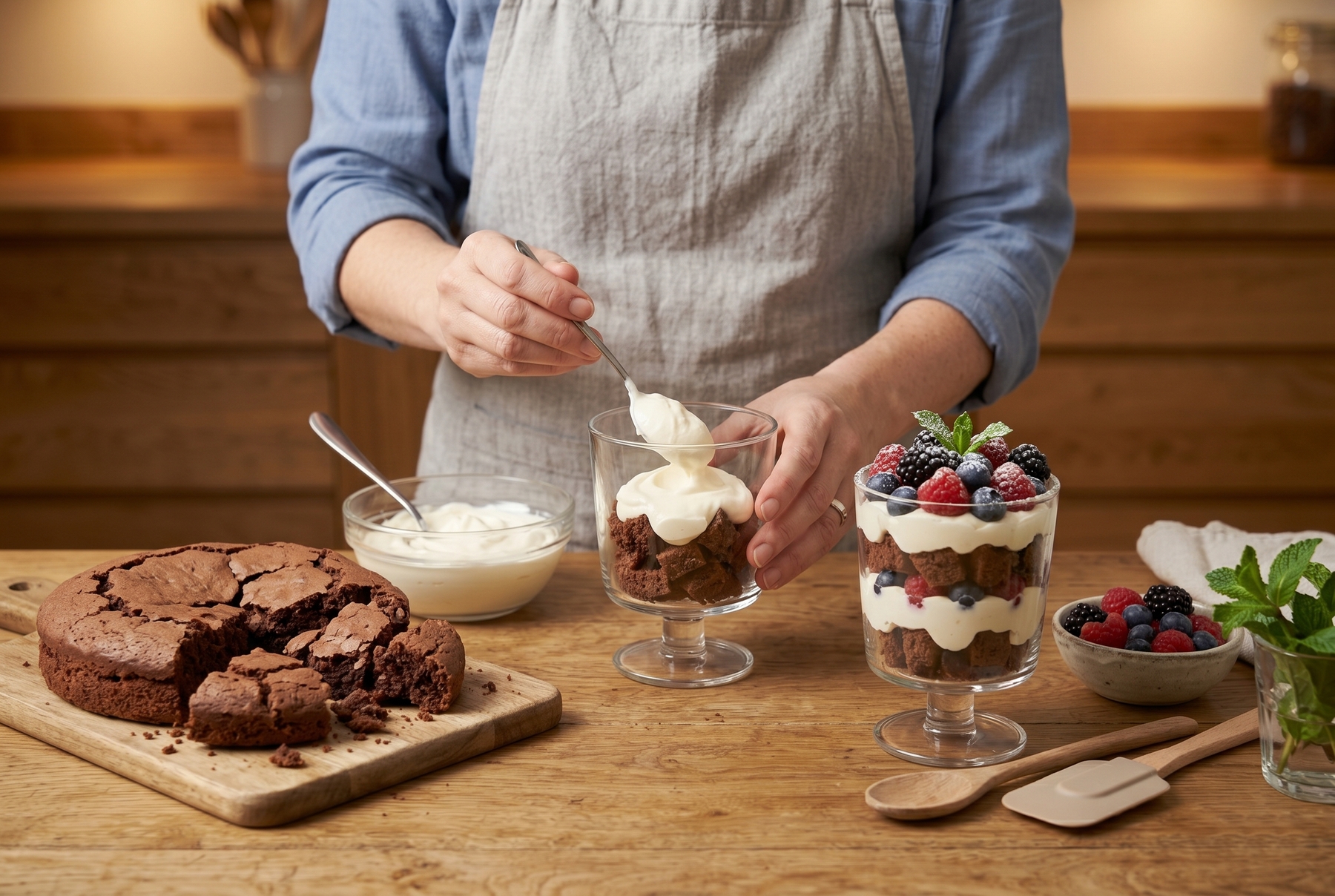
Even if a dish does not turn out perfectly, it can often be saved. For example, a cracked cake layer easily transforms into a striking layered dessert in a glass.
How to Survive a Mistake
Stop First
Panic easily exacerbates the situation: cooks might start adding random ingredients, turning up the heat, and stirring aggressively. The urge to fix things immediately is strong, but these sudden movements often ruin the dish entirely.
Taking the pan off the heat, tasting the food, observing the texture, and allowing half a minute to think provides clarity.
What Can Be Saved
Oversalted soup finds balance with added water or broth, or by incorporating unsalted ingredients like potatoes or grains. Slightly dry meat pairs well with a rich sauce or gravy. A cracked cake layer easily transforms into a trifle (layered with cream in a glass). A broken sauce might come back together by slowly whisking in a teaspoon of cold water. A burnt top can be sliced off with a knife (provided the bitter flavor has not permeated the whole dish).
Sometimes a dish cannot be saved, but spending three minutes assessing the situation is rarely a waste.
What Is Better to Let Go
Not everything requires saving. A rancid flavor or a deep, ingrained burnt taste simply means it is time to start over.
How to Choose Your First Complex Recipe
Signs of a Reliable Recipe
A beginner-friendly recipe details the stages thoroughly, provides sensory indicators of doneness (not just ‘until golden,’ but ‘when it smells sweet and loses its crunch’), avoids demanding ten rare ingredients, and allows for advance preparation. High-quality photos or videos add value. Conversely, promises that a complex dish comes together in just a few minutes serve as a red flag.
Detailed written recipes prove more reliable than short videos where crucial parts of the process end up on the cutting room floor.
Where to Start
- Yeast buns or focaccia (rather than complex puff pastry).
- Risotto (constant stirring teaches the cook to feel the texture).
- Pastry cream (a base for many desserts that provides an understanding of how eggs and temperature interact).
- Braised beef or slow-cooked chicken (time-consuming but calm; making a mistake is difficult).
- Homemade mayonnaise (ideal for those ready to tackle emulsions and accept that the first try might fail).
What Not to Cook for the First Time for Guests
- Macarons (fussy batter demanding precise technique and patience).
- Soufflé (rises beautifully but collapses disappointingly).
- Caramel decorations (risking burns and tears).
- Large cuts of meat requiring exact temperatures (steak, rack of lamb, duck breast—all demand a rehearsal).
- A multi-tiered cake (an engineering challenge).
- Dishes with multiple hot elements finishing simultaneously (while one cooks, the other goes cold).
Attempting a complex recipe without an audience first makes it easier to spot where the process gets temperamental.
Rituals for Calm Cooking
Remove the Noise
Tackling a complex recipe while overwhelmed rarely ends well. Open browser tabs, buzzing phones, multitasking with cleaning, engaging in deep conversations, and hungry family members popping into the kitchen every five minutes all add to the stress.
Playing calm music without jarring transitions sets the mood. Eating a snack beforehand helps, as hunger amplifies anxiety. Dedicating an hour free from cleaning, texting, or other chores allows for focus. Warning the family that the kitchen is temporarily closed minimizes interruptions.
Lower Expectations
The first attempt serves not to achieve perfection, but to get acquainted with the process. A helpful mindset is: today, I am simply observing how this works.
If it turns out perfectly, that is excellent. If it turns out mediocre, that is also fine; the cook now possesses more knowledge.
Keep Notes
Documenting the actual time taken (usually longer than the recipe states), any adjustments made, difficult moments, the heat settings used, the family’s feedback, and which visual cues worked provides immense value.
This practice transforms anxiety into practical notes: the next time, the cook intimately knows their own stove, oven, and pan.
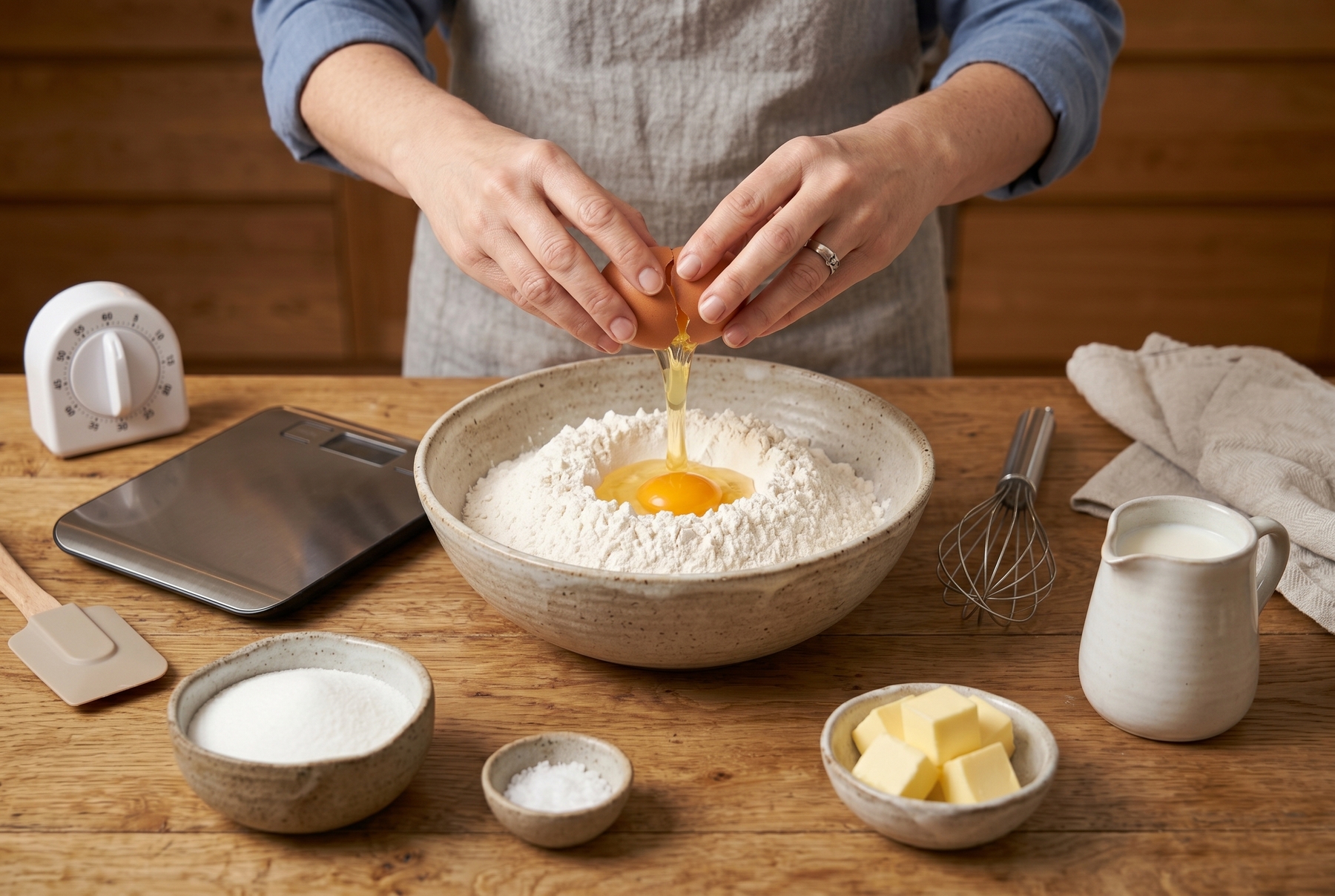
Every complex recipe consists of simple, understandable actions. The key is to start and pay close attention to how the ingredients change in your hands.
Cheat Sheet: How to Approach a Recipe Without Panic
- Read the recipe in its entirety before starting the first step.
- Highlight any new techniques.
- Verify that all ingredients are available.
- Prepare the cookware.
- Identify the risk points (where distractions are forbidden).
- Build in a time buffer (if a recipe promises an hour, allocate an hour and a half).
- Lower the stakes (make half a portion, use affordable ingredients, or try a simpler version).
- Keep a rescue plan handy (knowing what to do if something goes wrong).
- Avoid cooking a dish for the first time for a major event.
Confidence in the kitchen blooms when a mistake no longer threatens to ruin the entire process.
A complex recipe gradually evolves from a stressful exam into a clear route. The first journey requires a map and compass, the second relies on experience, and the third happens entirely from memory.
The bowl already sits on the table, the flour is sifted, and the eggs rest nearby. All that remains is taking the first step.
0 comments