
Sweet samosas with raisins and poppy seeds are a refined twist on the famous Indian pastries traditionally celebrated for their crispy crust and rich flavor. While original samosas are often deep-fried, our recipe uses the oven, resulting in a lighter dessert that still boasts an incredible texture thanks to the paper-thin phyllo dough. Using store-bought phyllo saves a tremendous amount of time, allowing you to focus entirely on crafting the perfect filling. The combination of plump raisins, earthy poppy seeds, and warm cinnamon creates a deep, intense aroma that fills your home with coziness while baking, turning an ordinary tea time into a true celebration.
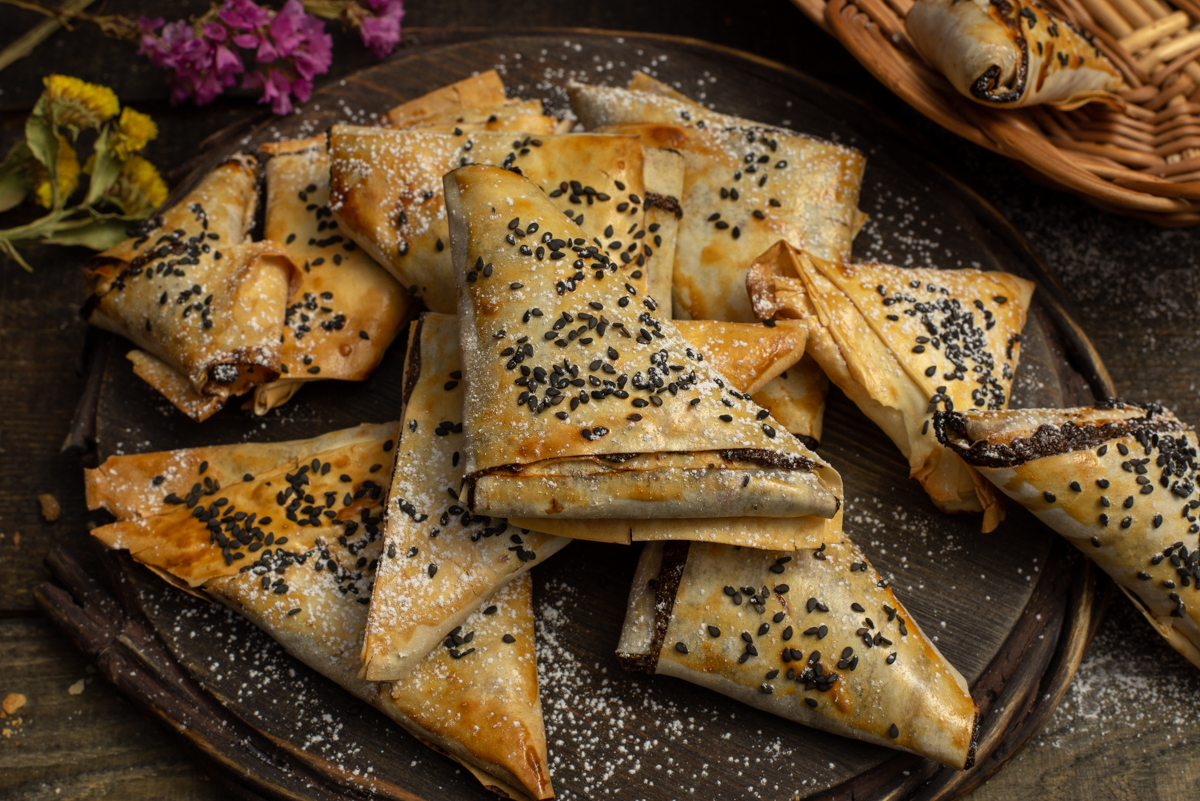
Crispy and sweet samosas with an aromatic poppy seed filling make the perfect dessert for tea time.
Ingredients
- 2 sheets of phyllo dough (30x40 cm / 12x16 inches)
- 40 g (3 tablespoons) unsalted butter
- 1 egg
- 3 teaspoons black sesame seeds
- 150 g (1 cup) raisins
- 80 g (1/2 cup) poppy seeds
- 60 g (1/4 cup) granulated sugar
- 1/2 teaspoon ground cinnamon
- 200 ml (3/4 cup) water
- Powdered sugar (for dusting)
How to Make Sweet Samosas with Raisins and Poppy Seeds
Make the filling. Soak the raisins in hot water, then rinse them thoroughly after a few minutes. Always wash dried fruits and nuts before use, as their storage and transportation conditions are often less than ideal.
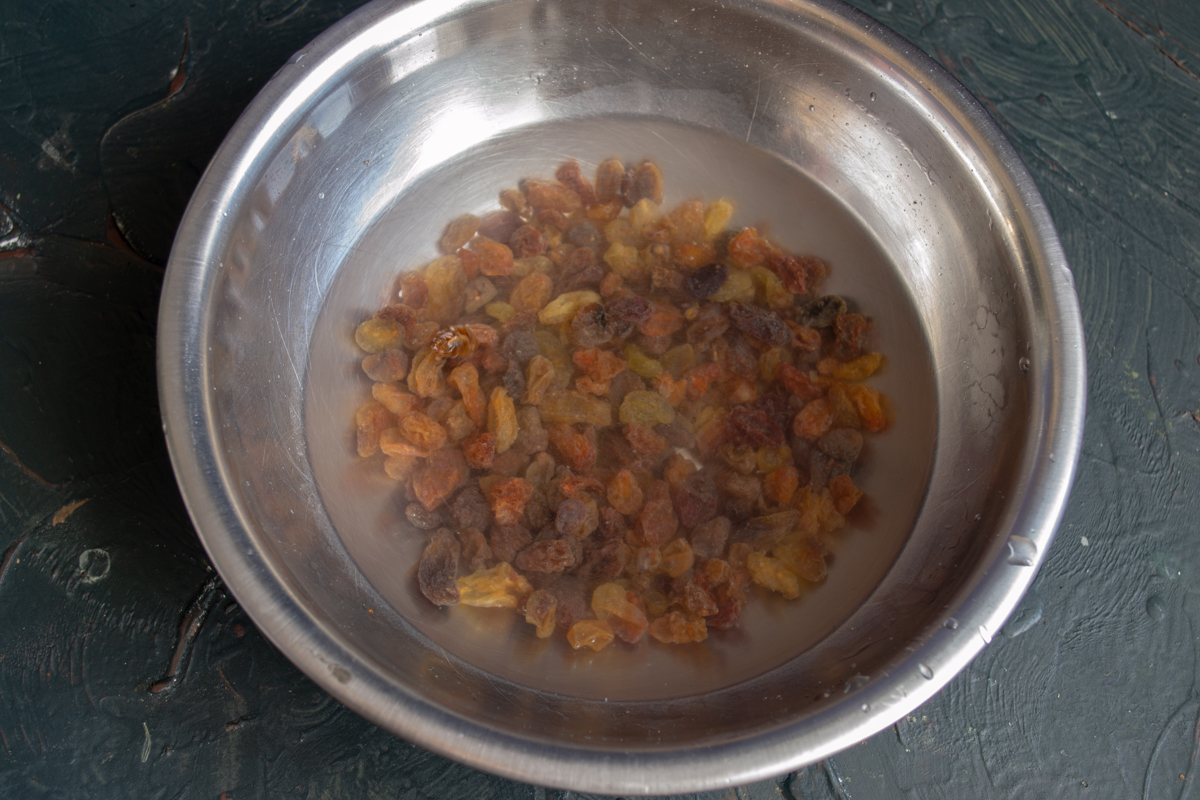
Soaking not only softens the raisins but also thoroughly cleans them before cooking.
Pour cold water over the poppy seeds, let them sit for a few minutes, and carefully drain off the water along with any floating debris. Transfer the poppy seeds to a fine-mesh sieve and give them an extra rinse with cold water.
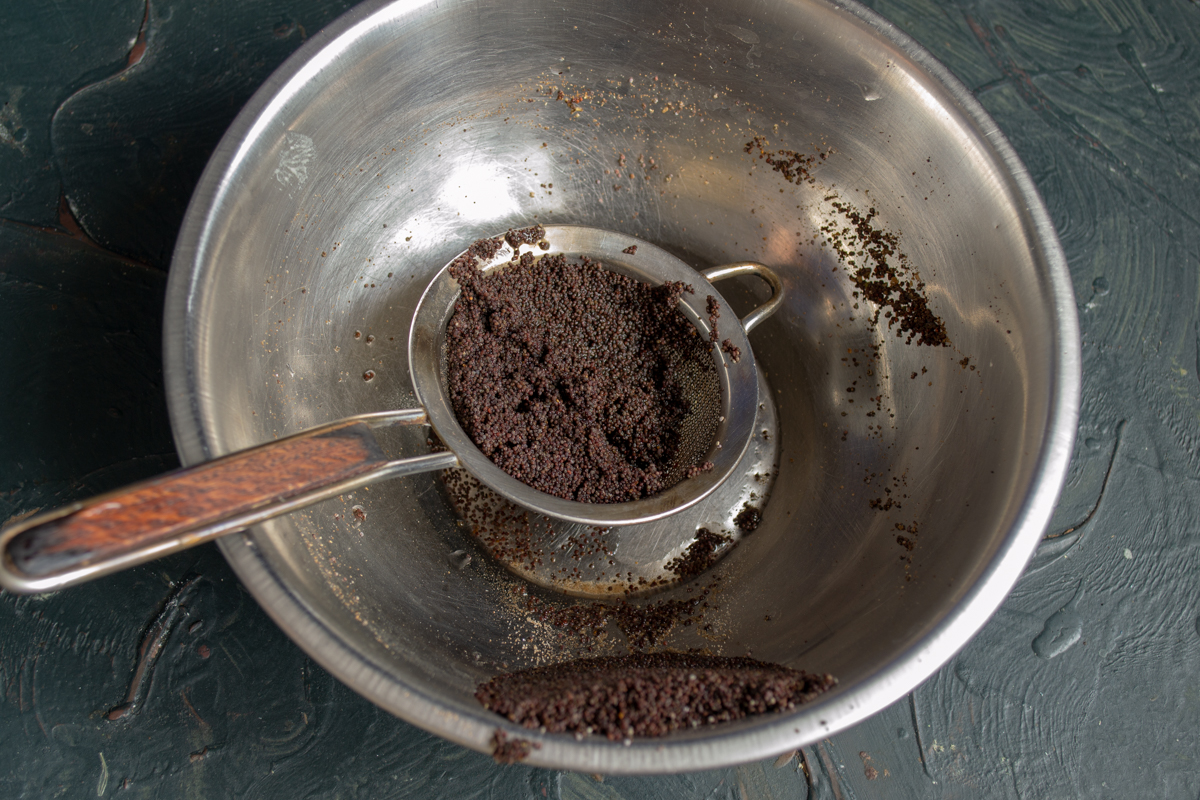
Use the finest mesh sieve to carefully rinse the poppy seeds and remove dust or small debris.
Place the raisins and poppy seeds into a saucepan and add the granulated sugar. If you are not among those who avoid boiling honey, you can replace half of the sugar with honey for an even richer flavor.
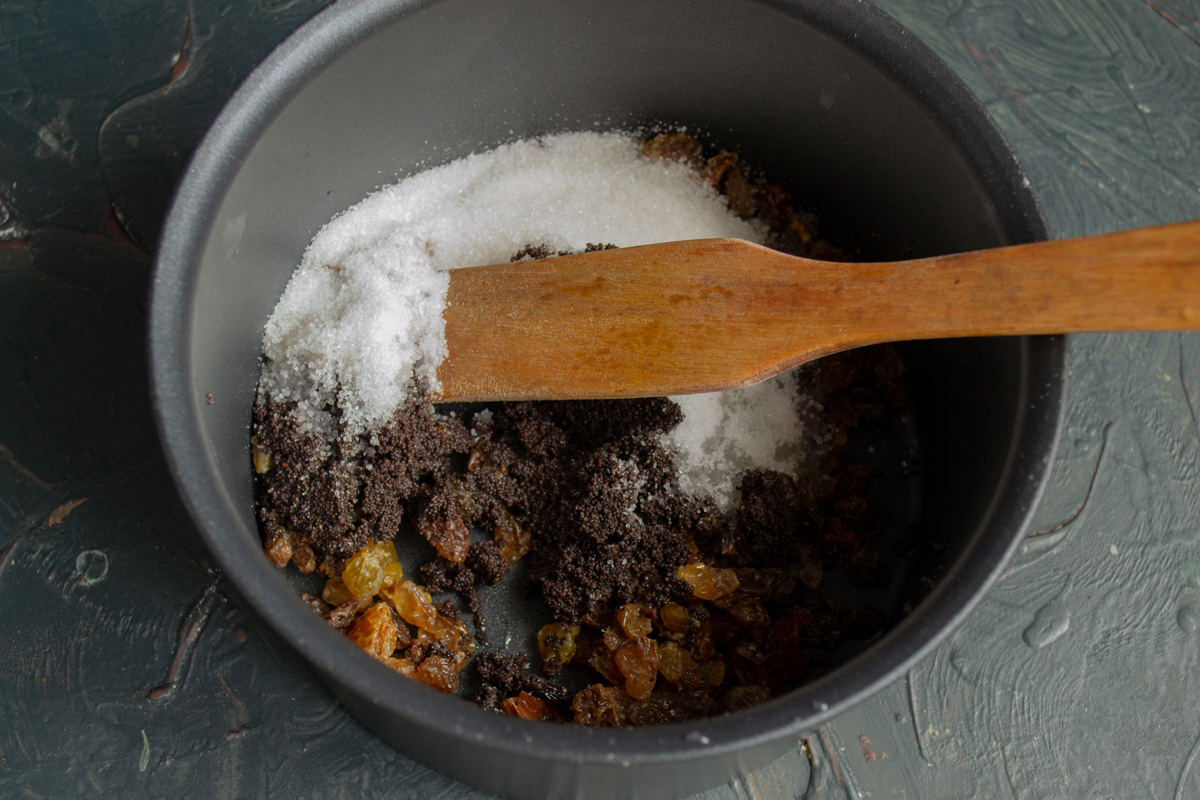
Combine the poppy seeds, raisins, and sugar to form the base of our sweet filling.
Pour in the hot water and stir in the ground cinnamon. Bring the mixture to a boil, then simmer over low heat for about half an hour until all the water has evaporated. You should be left with a thick, sticky paste.
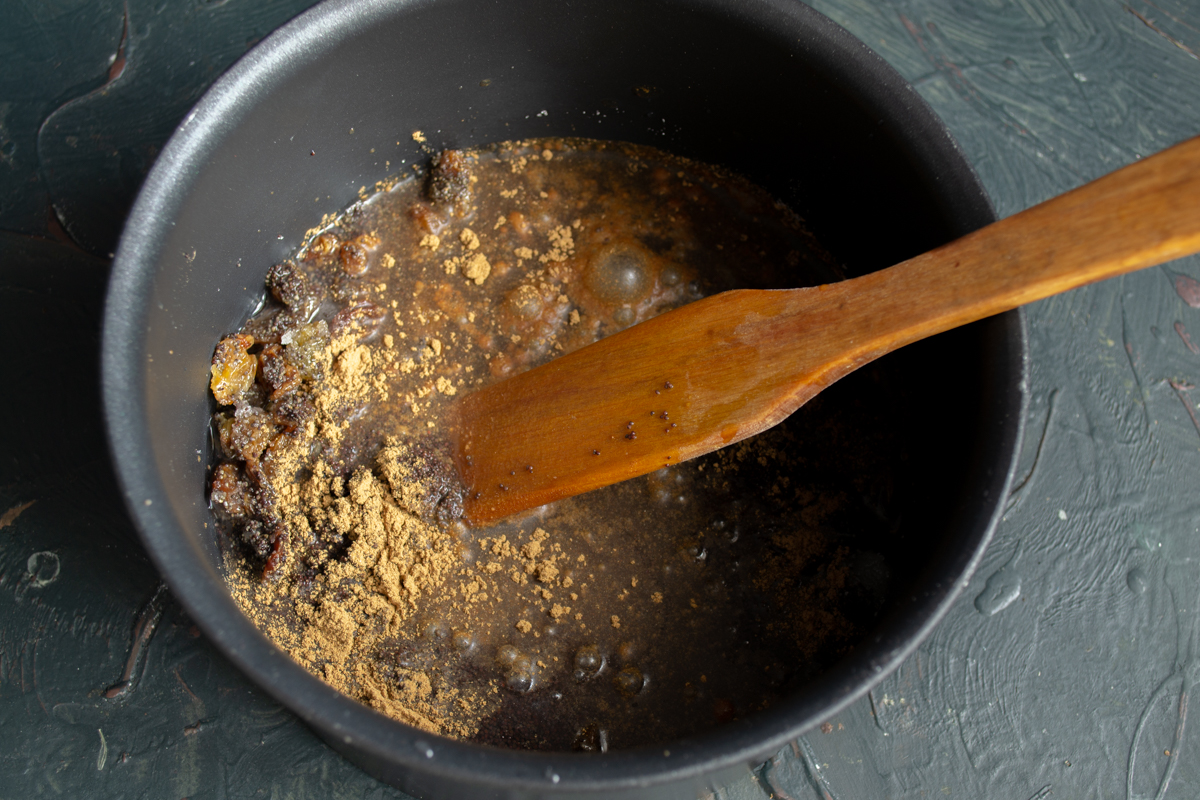
Simmer the mixture until all the liquid has evaporated and the filling becomes thick.
Transfer this mixture into a food processor and blend for a few minutes. This will yield a cohesive, sticky filling with clearly visible poppy seeds.
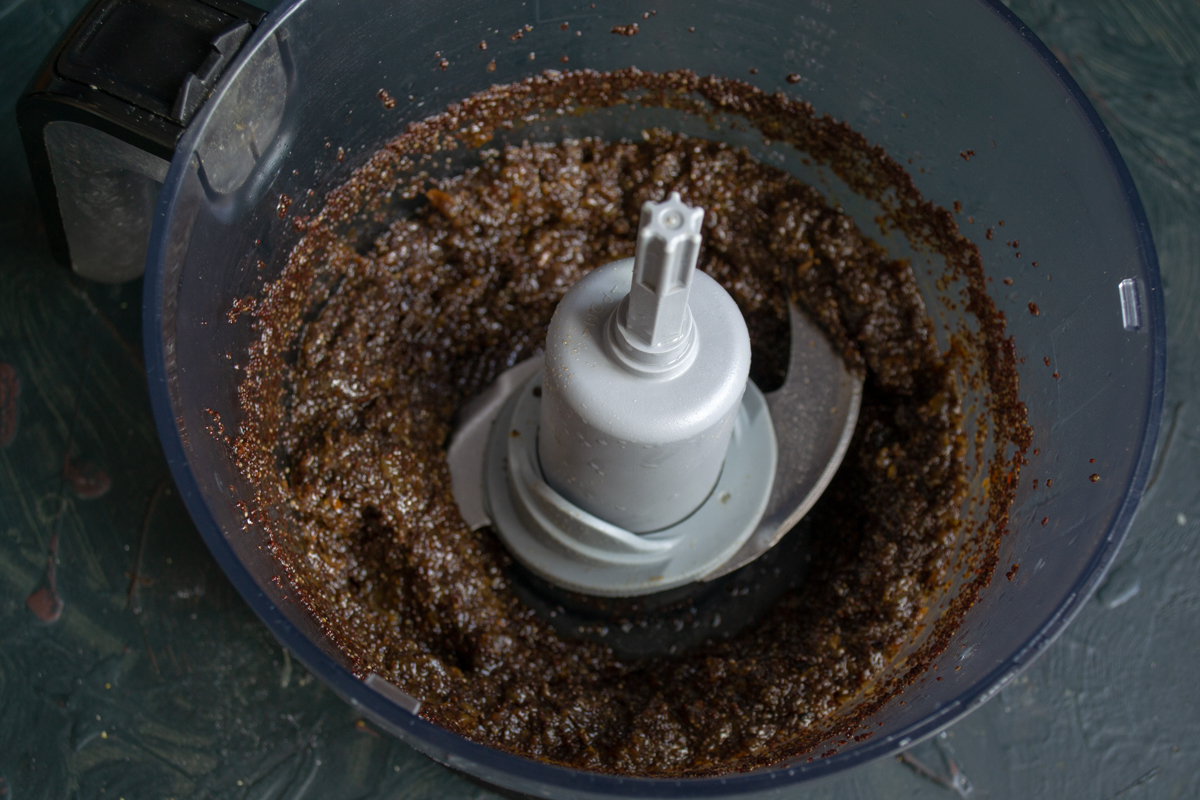
The food processor gives the filling a sticky texture that is easy to spread over the dough.
Remove the frozen phyllo dough from the freezer half an hour before cooking and let it thaw at room temperature. Unroll a sheet onto a cutting board and brush it with melted butter. Spread a thin layer of the filling over the buttered dough. While you work with one sheet, keep the remaining dough covered with a thick kitchen towel to prevent it from drying out.
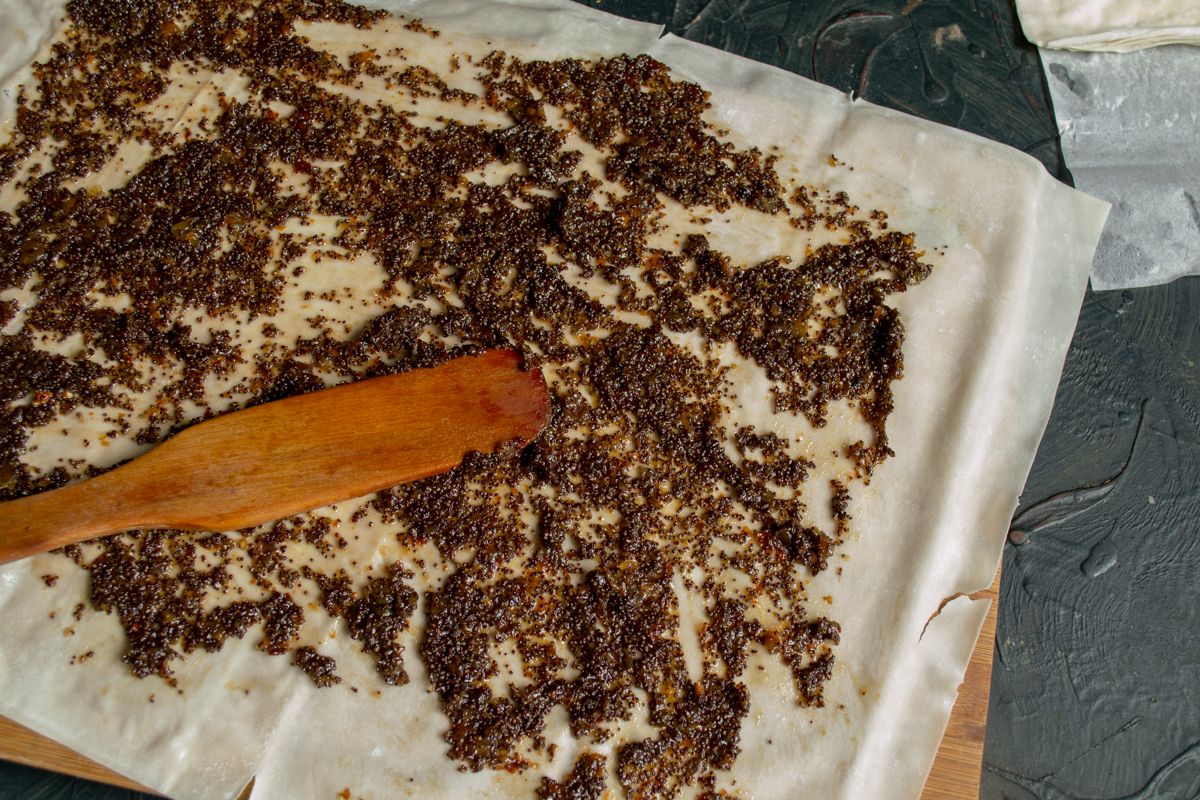
It is important to spread the filling evenly so that every bite is packed with flavor.
Place the next sheet of phyllo on top of the filling, press it down gently, and brush with melted butter. Trim the edges of the sheets with a knife if necessary.
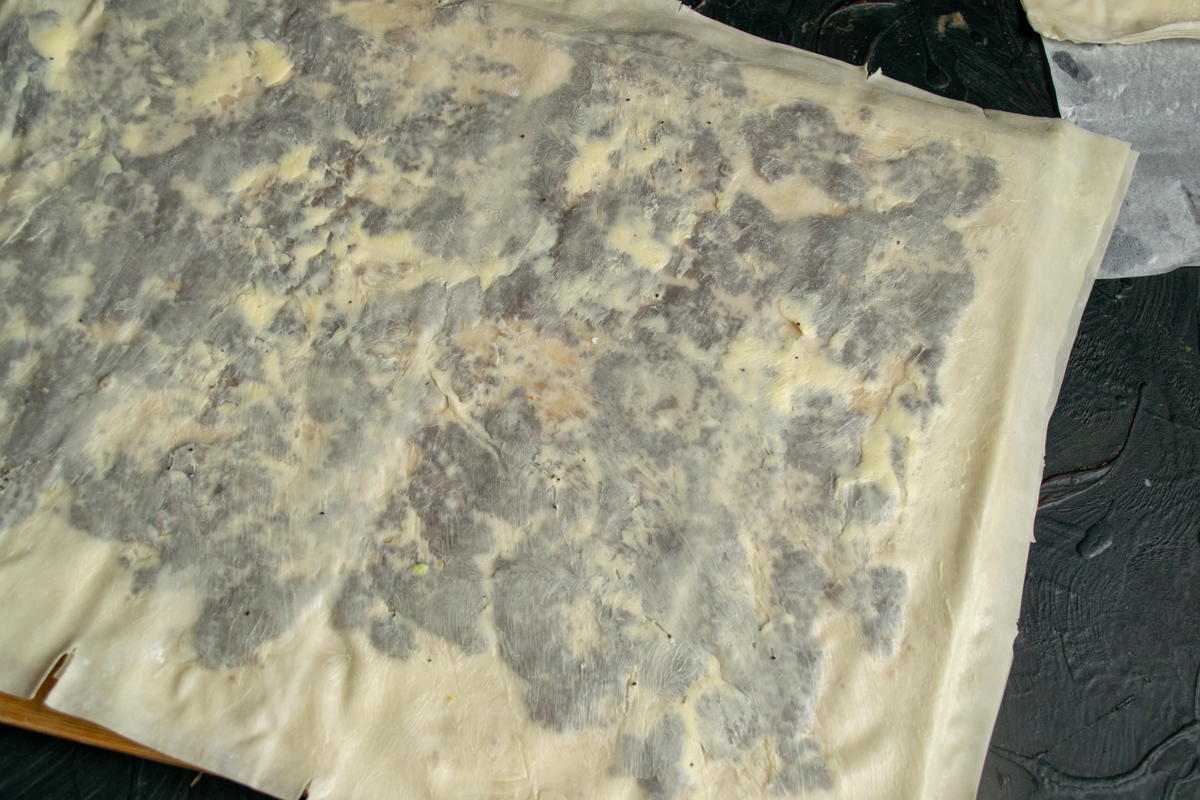
Brushing butter between the layers of phyllo dough guarantees that famous crispiness.
Use a wide, sharp knife or a pizza cutter to slice the filled pastry along the short side into strips about 8 to 10 centimeters (3 to 4 inches) wide.
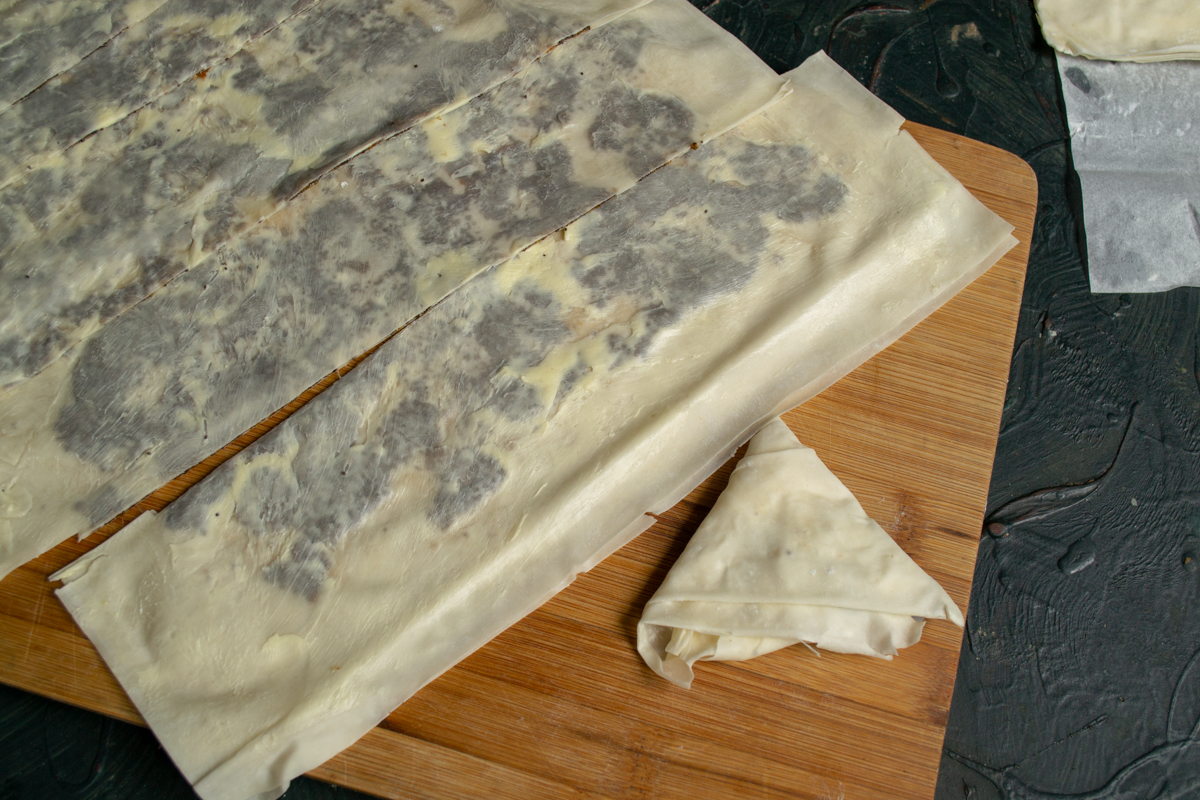
Cut the layered dough into strips, which will become the base for our triangular pastries.
Fold the pastry strips into triangles, tucking the loose ends of the dough inside.
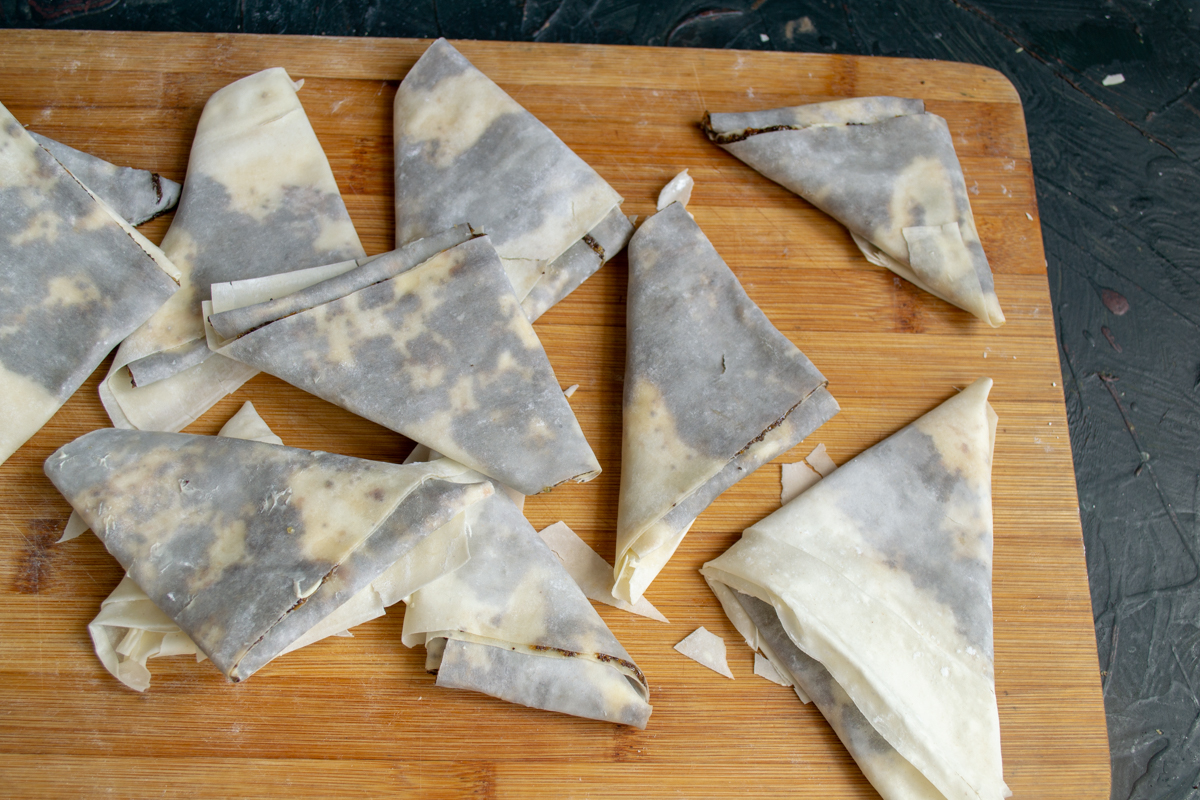
Carefully fold the strip, shaping it into a tight triangle with the filling securely inside.
Crack a chicken egg into a small bowl and beat it lightly. Brush the samosas with the egg wash on one side. Line a baking sheet with parchment paper and arrange the samosas on it, leaving some space between them.
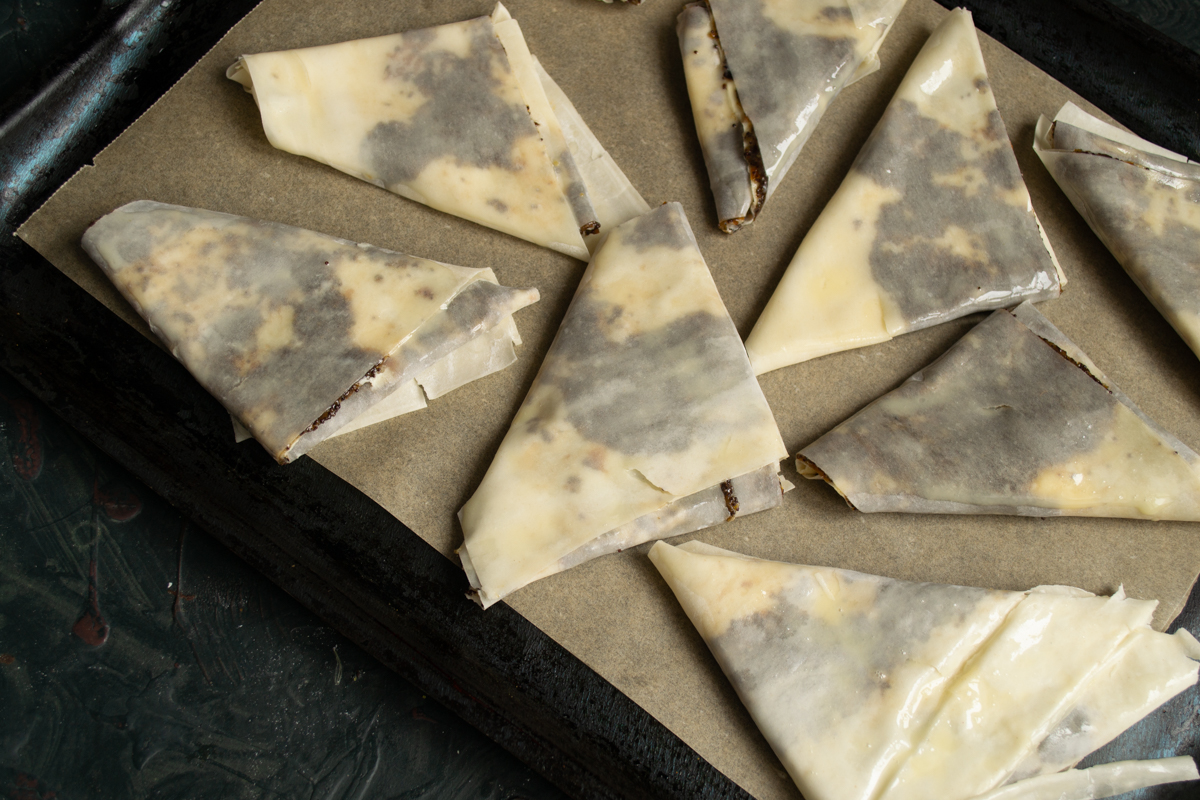
Brush each pastry with egg wash to achieve an appetizing shine after baking.
Sprinkle the pastries with black sesame seeds. Preheat your oven to 200 degrees Celsius (400 degrees Fahrenheit). Place the baking sheet on the middle rack of the preheated oven.
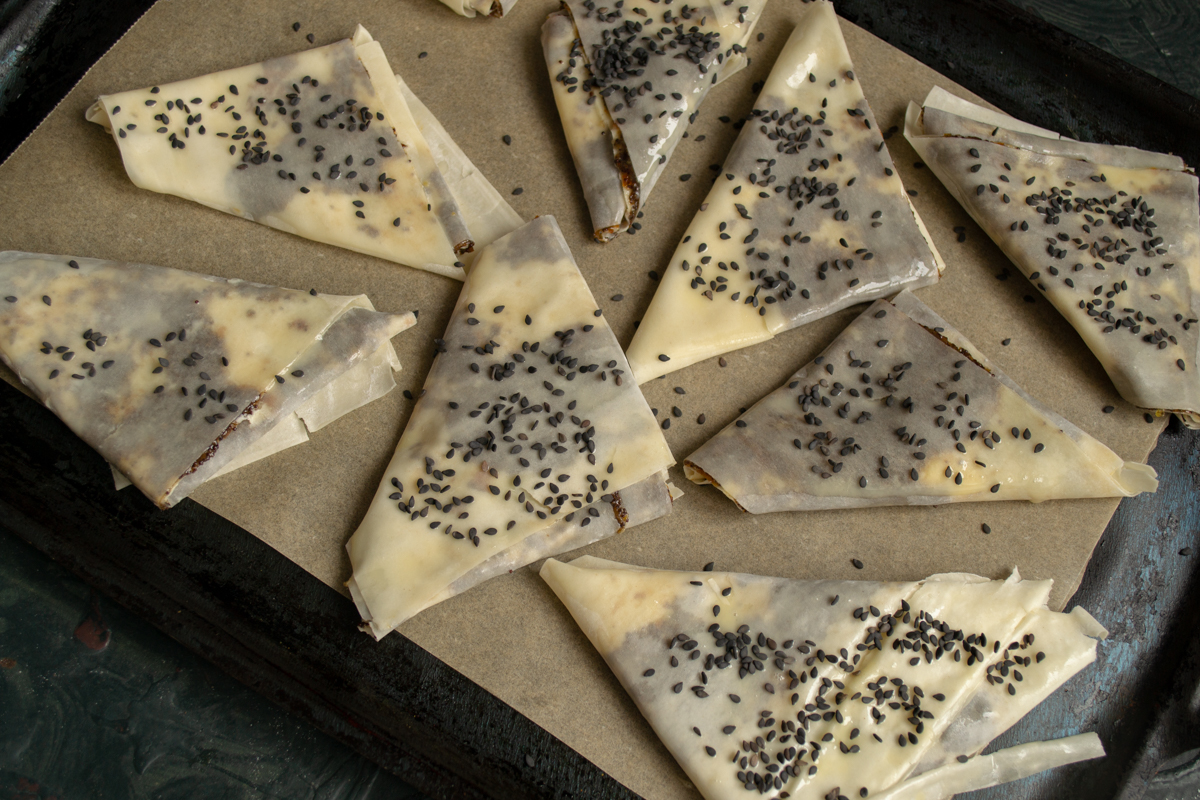
Black sesame seeds give the baked goods an elegant look and a subtle nutty aroma.
Bake for 18 to 20 minutes until golden brown. Remove from the oven immediately and let them cool directly on the baking sheet.
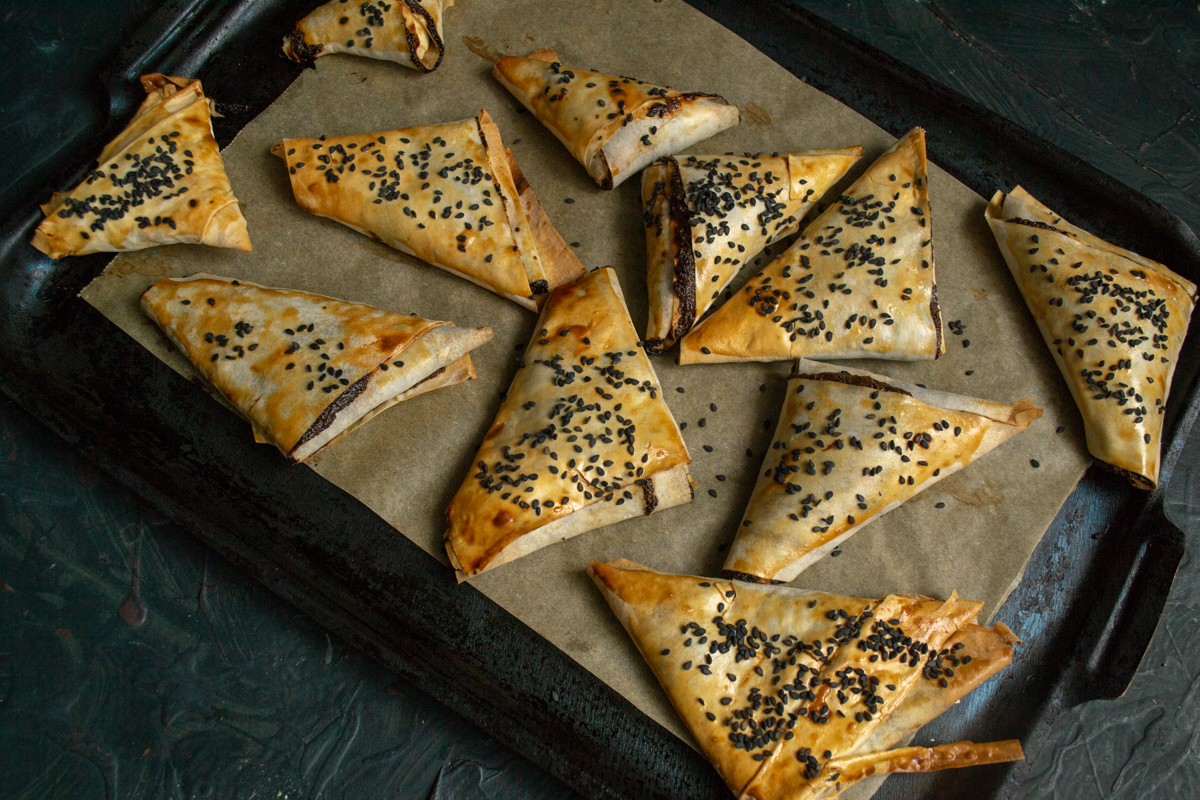
Once the pastries turn golden brown, take them out and let them cool slightly.
Dust the sweet samosas with raisins and poppy seeds with powdered sugar. Serve with tea or coffee; they are also absolutely delicious with a glass of milk or hot cocoa!
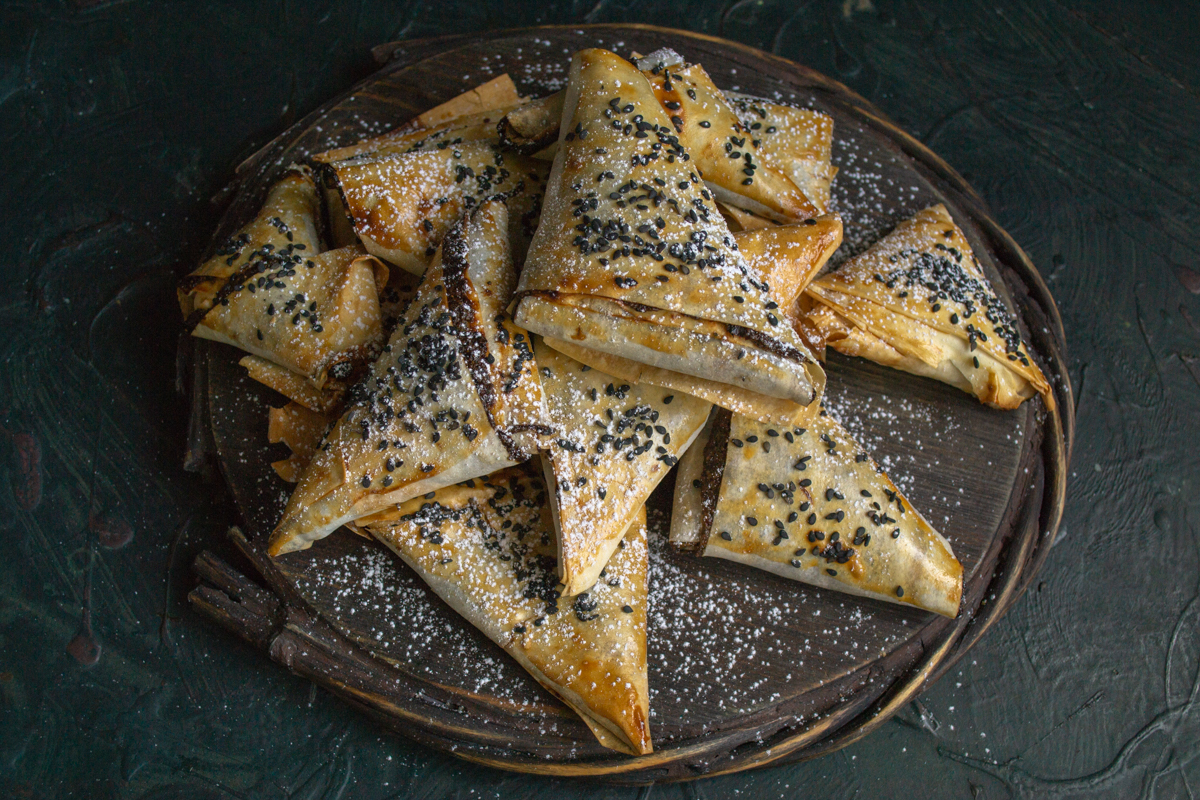
Serve these samosas warm or cold; they remain absolutely delicious either way.
It is best to serve these sweet samosas with raisins and poppy seeds slightly warm, when the contrast between the crispy pastry and the soft filling is at its peak. They pair beautifully not only with classic black tea or coffee but also with a glass of cold milk or a mug of thick hot cocoa. To give the dessert an even more festive look, be sure to dust the pastries with powdered sugar right before serving—it highlights their golden color and adds a final touch of sweetness. If you happen to have leftover samosas, store them in an airtight container at room temperature for up to two days. To bring back their original crunch, simply pop them into a preheated oven for 3 to 5 minutes before enjoying. For a fun variation next time, try adding some chopped walnuts or orange zest to the filling; it will bring new flavor notes and make the dish even more exciting.
0 comments