
Chicken liver pâté with gelatin is a modern take on a classic homemade appetizer, where a rich, jellied broth provides structure instead of traditional butter. Chicken liver has long been prized in European cuisine for its delicacy and quick cooking time, while adding parsley roots and garlic during boiling helps fully release its noble aroma. Using gelatin not only reduces the dish's overall calorie count but also gives it a glossy finish and a silky texture that is impossible to achieve with standard blending. Serving it in a dense loaf looks incredibly striking, elevating a simple breakfast into an elegant, French terrine-style meal.
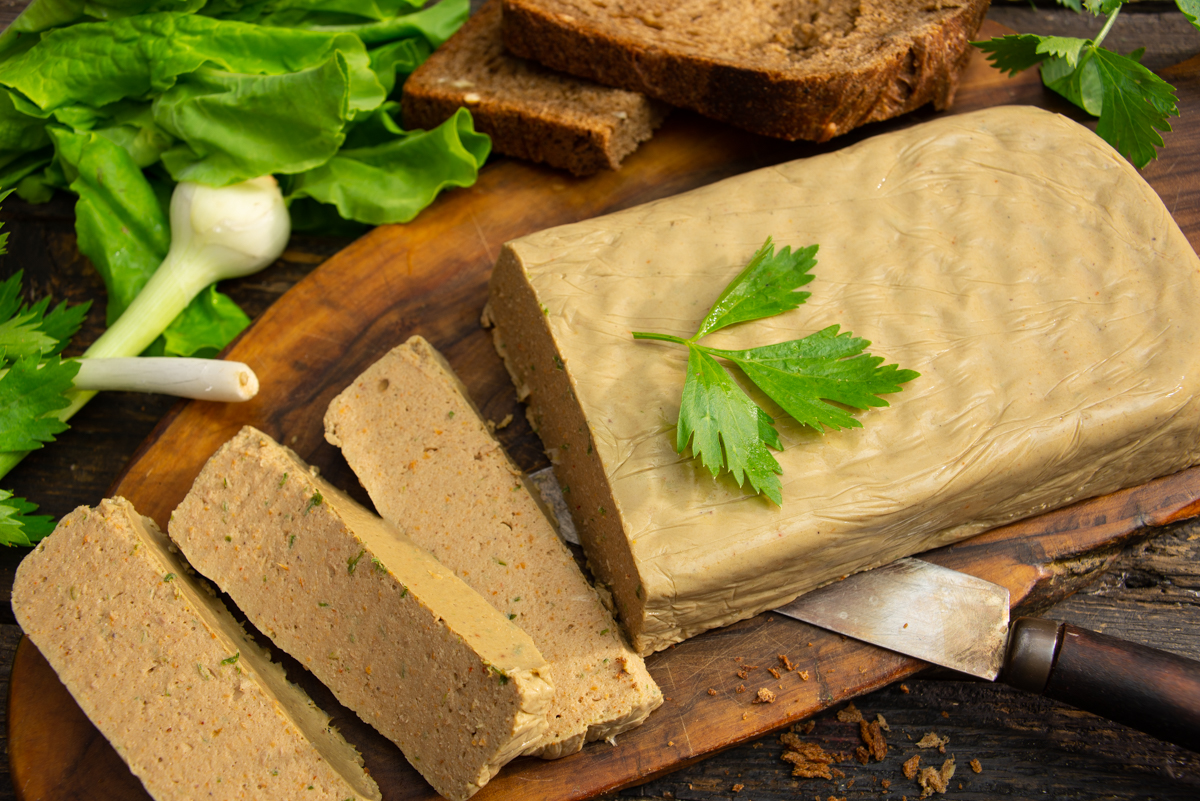
A delicate and aromatic homemade chicken liver pâté set with gelatin makes a perfect appetizer for any occasion.
Ingredients
- 500 g (1.1 lbs) chicken liver
- 1 carrot
- 1 onion
- 1 bunch of green onions
- 1 egg
- 15 g (0.5 oz) powdered gelatin
- 100 ml (3.4 fl oz) water
- Parsley root, garlic, and bay leaves for the broth
- Salt and black pepper to taste
- 1 teaspoon sweet paprika
- Vegetable oil for frying
How to Make Chicken Liver Pâté with Gelatin
Place the chicken liver in a saucepan and pour in 500 ml (17 fl oz) of cold water. If using frozen offal, take it out of the freezer and leave it in the refrigerator for 4-5 hours to thaw.
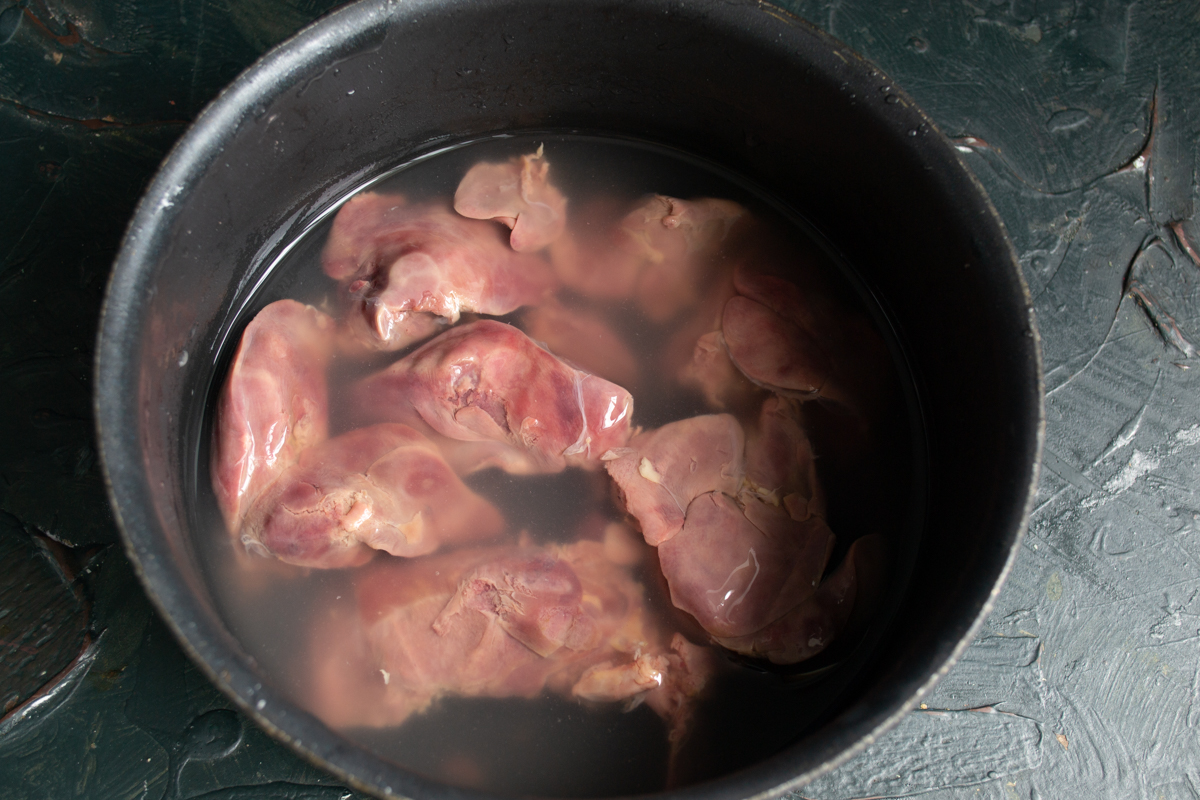
Cover the chicken liver with cold water. Ensure the offal is completely thawed before cooking.
Add parsley roots, two bay leaves, and two sliced garlic cloves. Season with salt to taste.
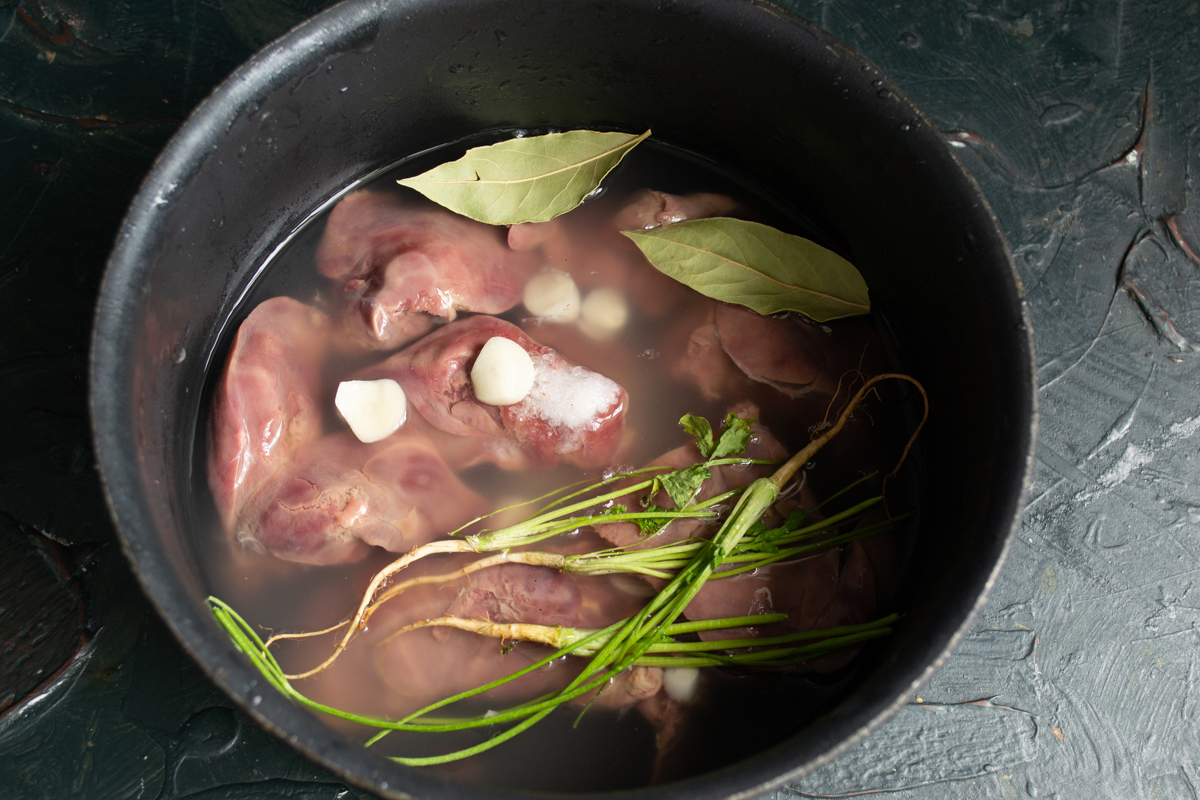
Spices and roots enrich the flavor of the liver and neutralize any strong offal aromas.
Bring to a boil, simmer over low heat for 10 minutes, then let the liver cool in the broth.
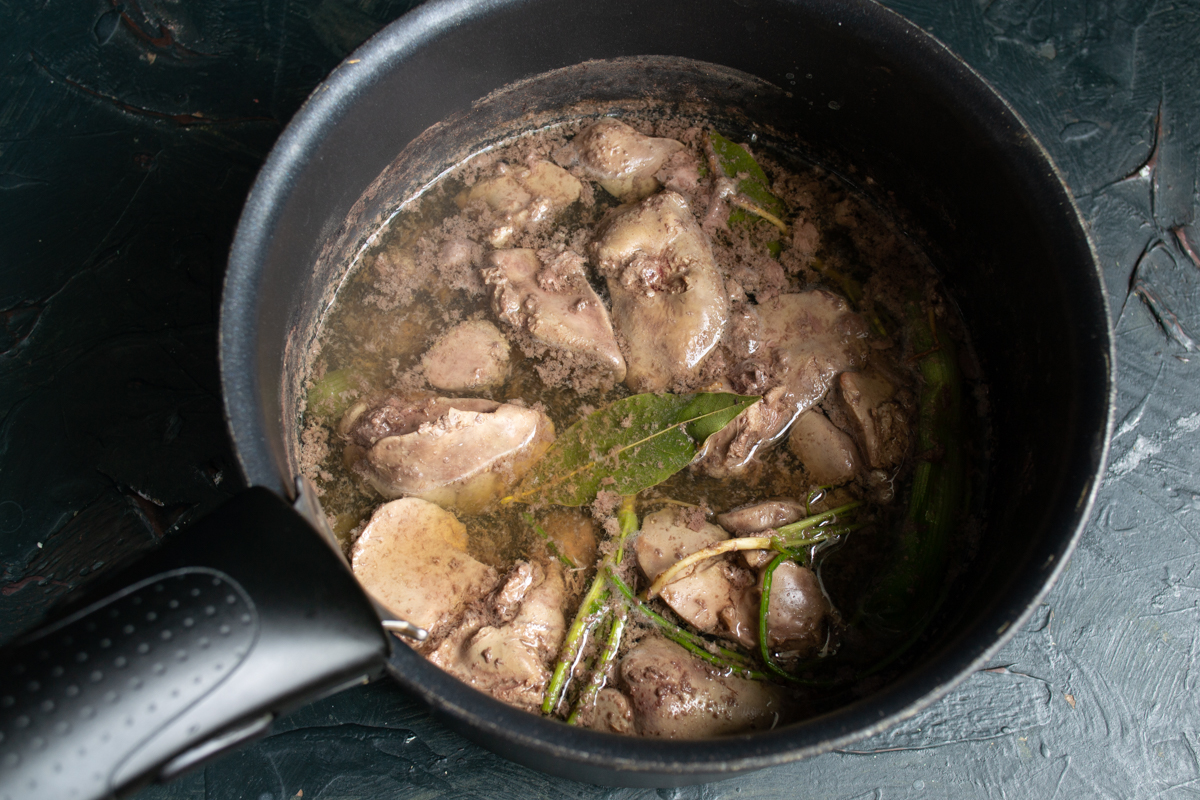
Boil the liver for about 10 minutes. Letting it cool in the broth helps retain its juices.
Soak the powdered gelatin in cold boiled water for 20 minutes. Once it blooms, you will need to dissolve it in the hot broth!
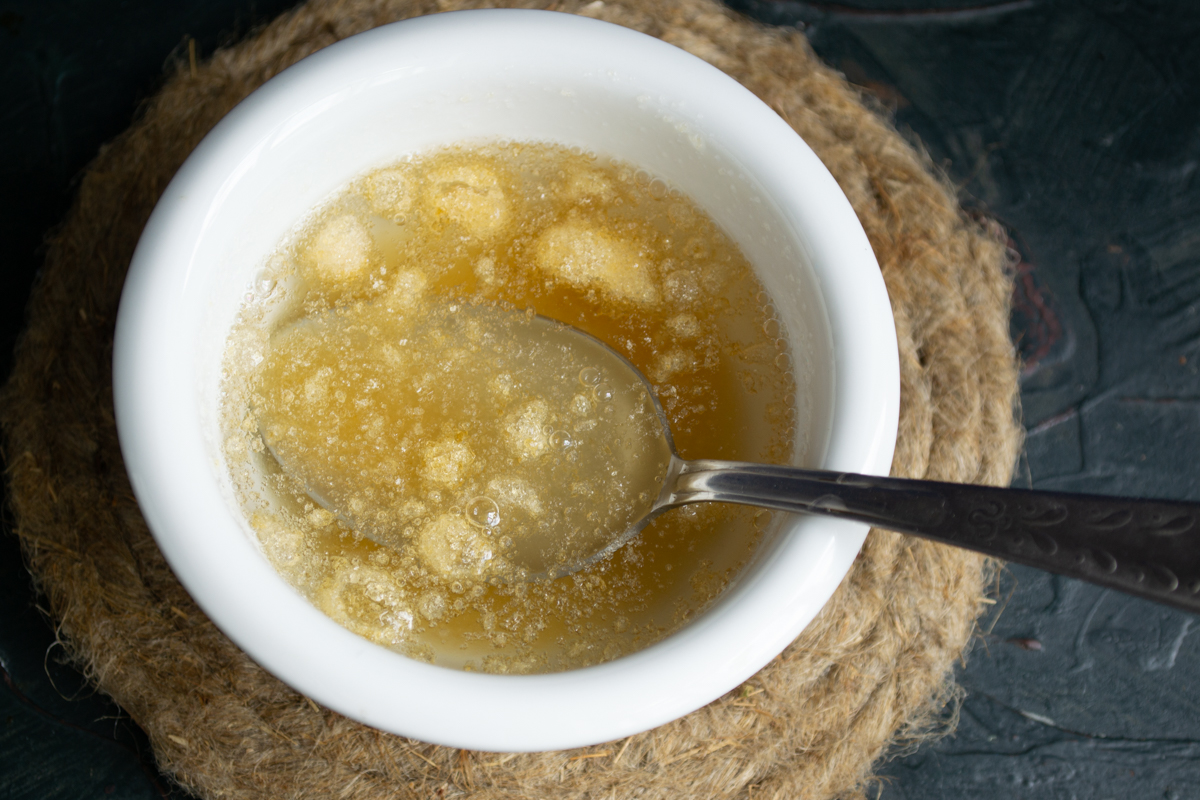
Soak the gelatin in cold water until it blooms. Later, we will dissolve it in the hot broth.
Finely chop the onion. Grate the carrot on a coarse grater. Heat two tablespoons of refined vegetable oil in a skillet, add the onion and carrot, and sauté over moderate heat for 10 minutes.
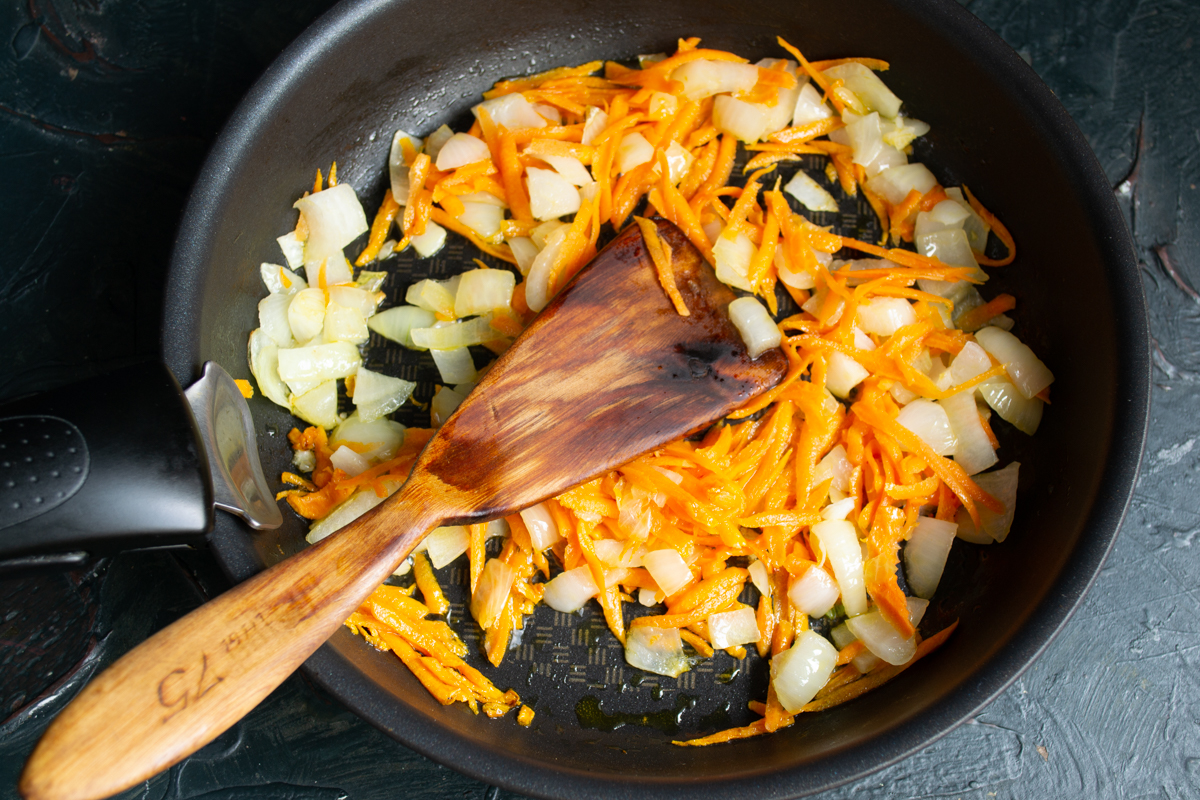
Sauté the chopped onions and grated carrots over moderate heat until golden brown.
Finely chop a small bunch of green onions, add them to the sautéed vegetables, and cook everything together for a few more minutes.
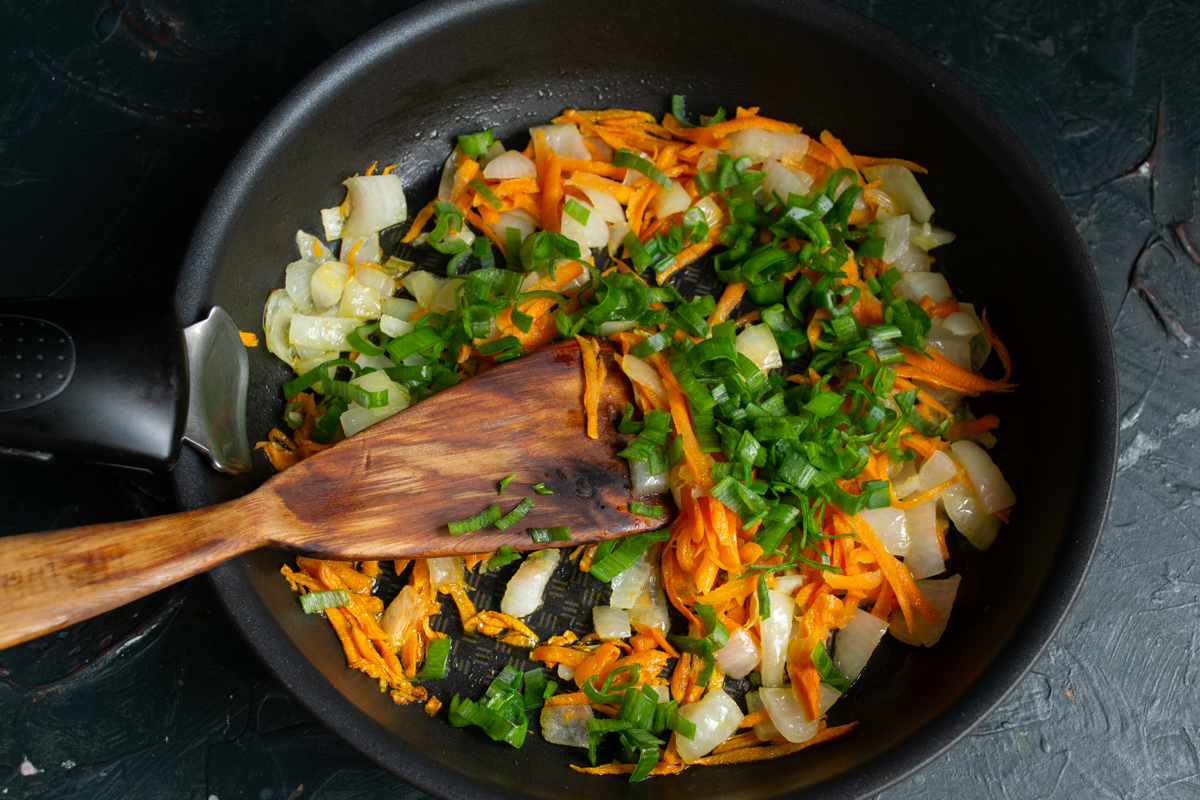
Green onions will add a vibrant freshness and a pleasant aftertaste to the pâté.
Remove the boiled liver from the broth and strain the liquid through a fine mesh sieve. Pour 200 ml (6.8 fl oz) of the strained broth into a saucepan, bring to a boil, remove from heat, and add the bloomed gelatin. Stir well until the gelatin is completely dissolved.
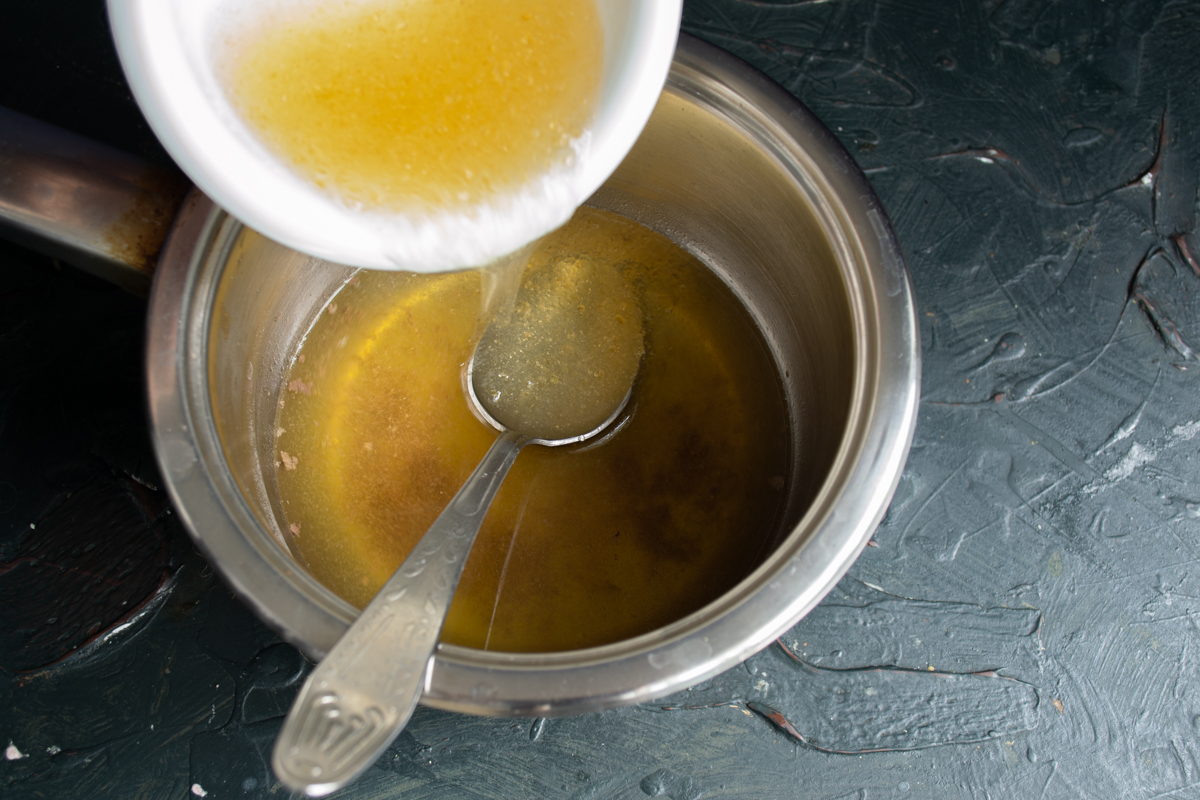
Stir the bloomed gelatin thoroughly into the hot broth until it dissolves completely.
Combine the boiled liver, sautéed vegetables, and a hard-boiled egg. It is best to process these ingredients using a blender, as a meat grinder will not achieve that perfectly silky texture.
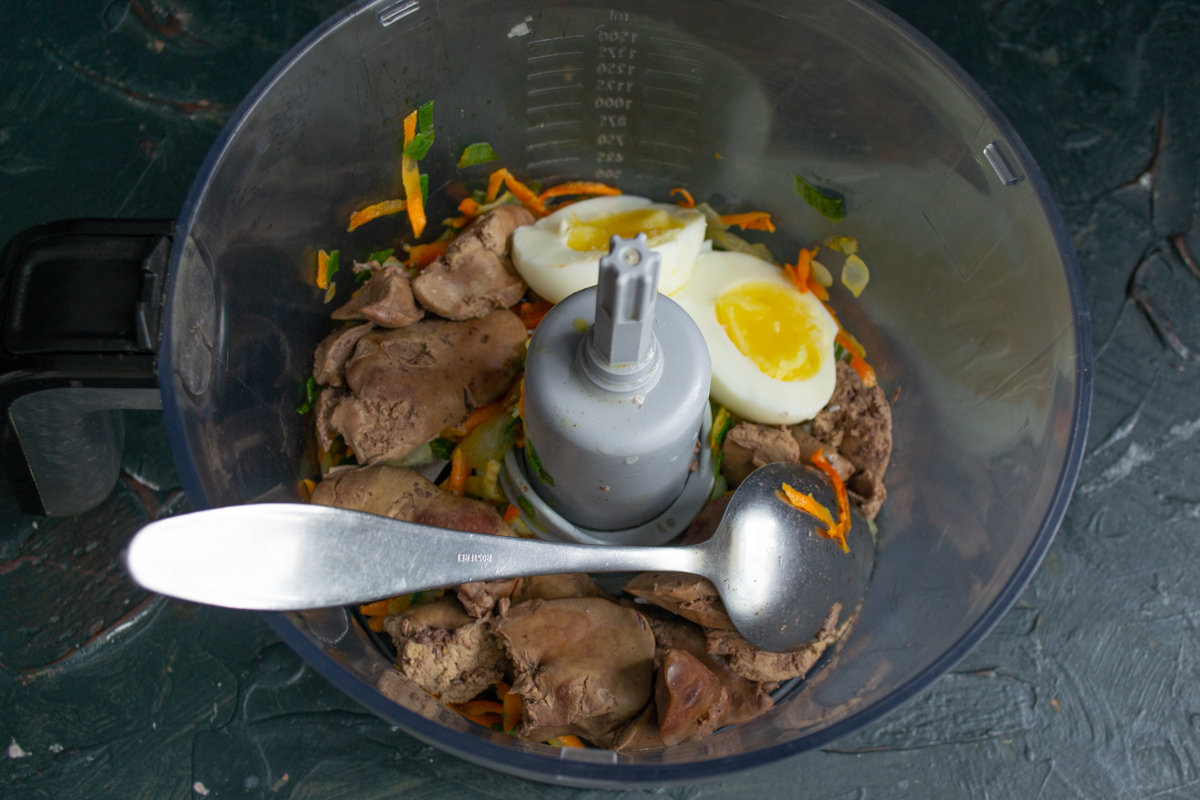
Combine the main ingredients in a blender. A boiled egg gives the pâté extra softness.
Pour the gelatin broth over the liver and vegetables.
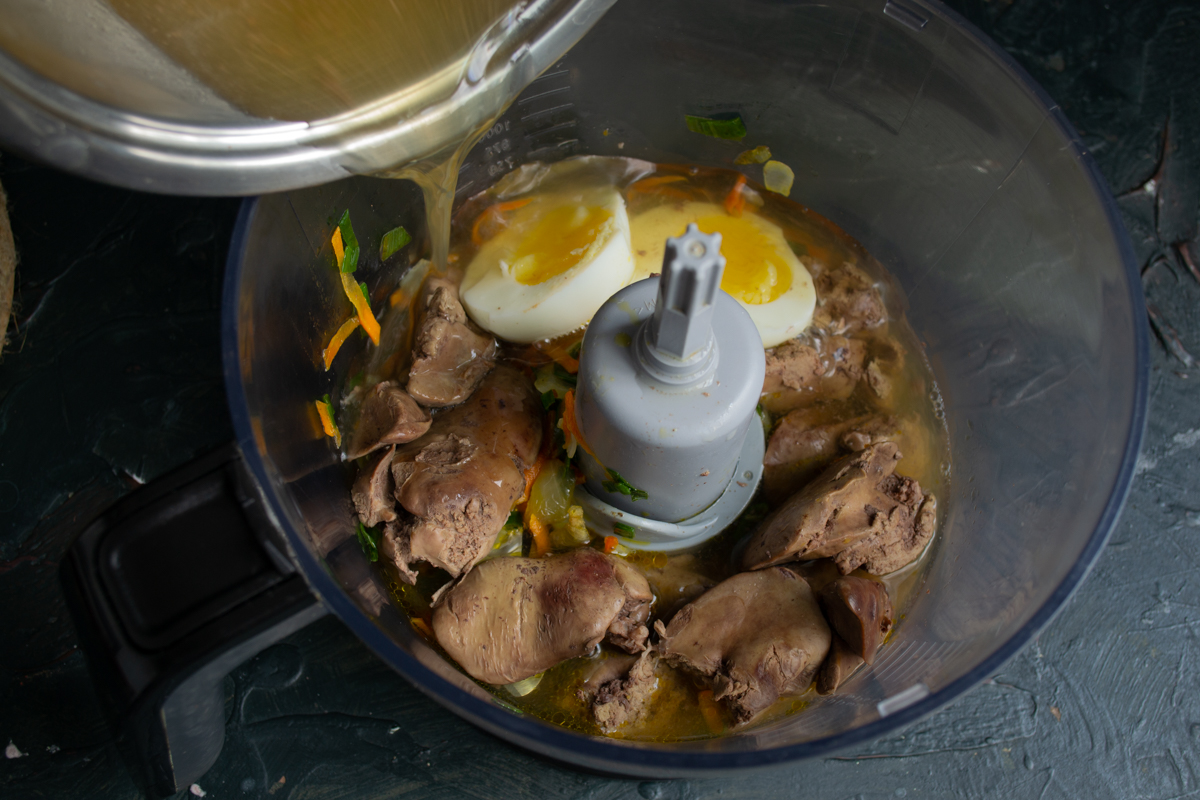
Pour in the gelatinous broth, which will help the pâté set into a beautiful shape.
Season with salt, black pepper, and ground sweet paprika to taste. Blend everything until completely smooth. At this stage, the pâté will be as liquid as soup.
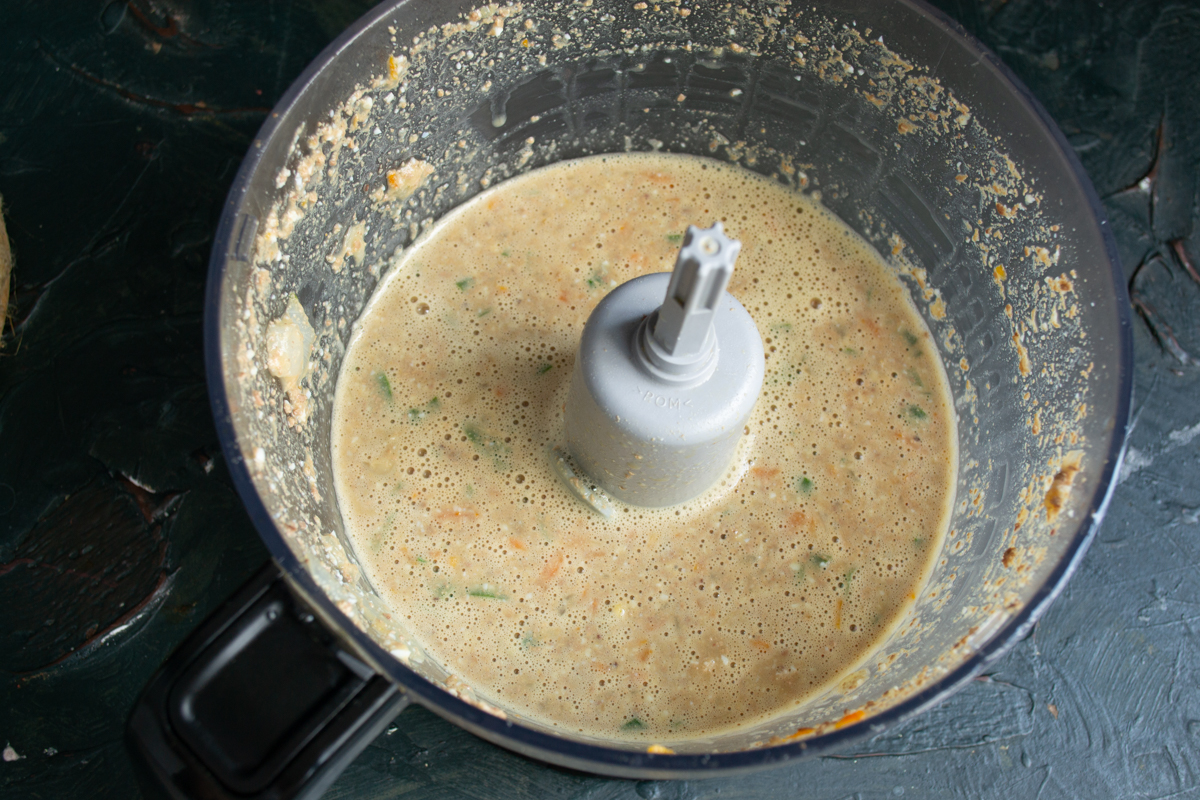
Blend until perfectly smooth. The pâté will be quite liquid at this stage, which is completely normal.
Line an 11×22 cm (4×8-inch) loaf pan with several layers of plastic wrap. Pour the pâté mixture into the pan and refrigerate for 8-10 hours.
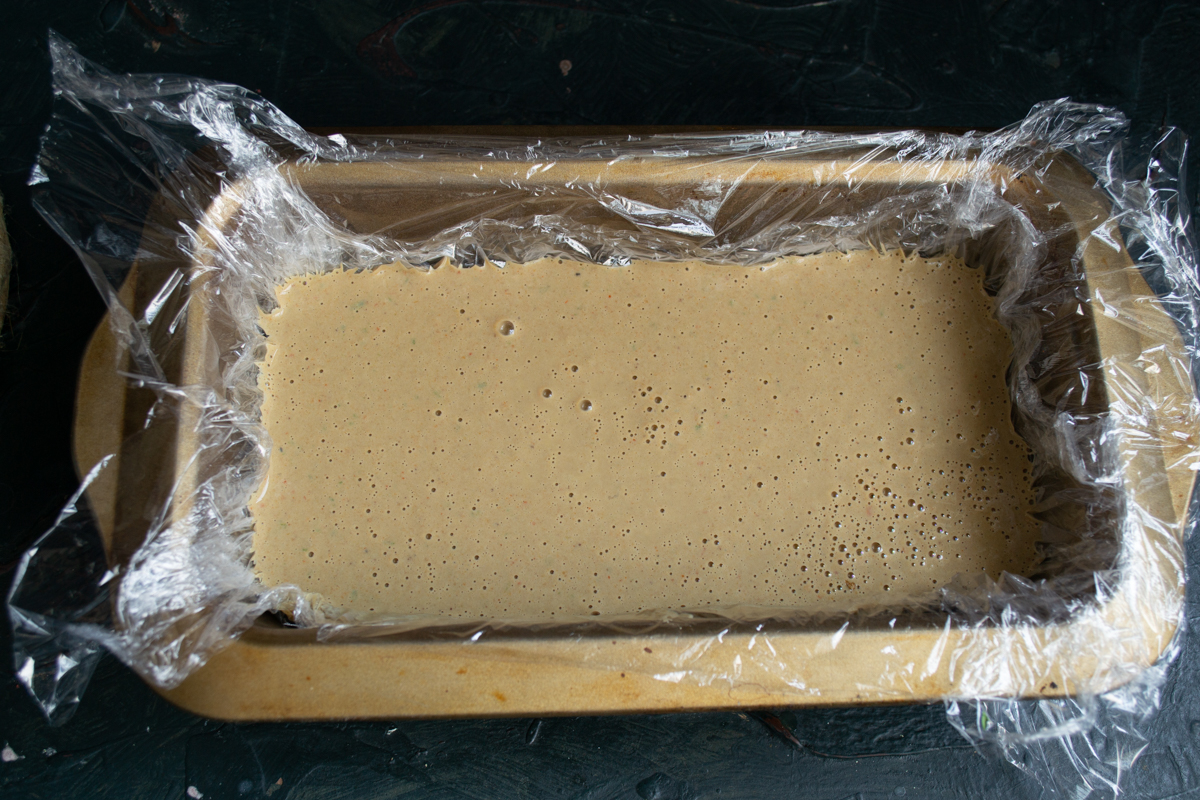
Lining the pan with plastic wrap will make it easy to remove the finished pâté.
After several hours, the pâté will set completely and can be removed from the mold.
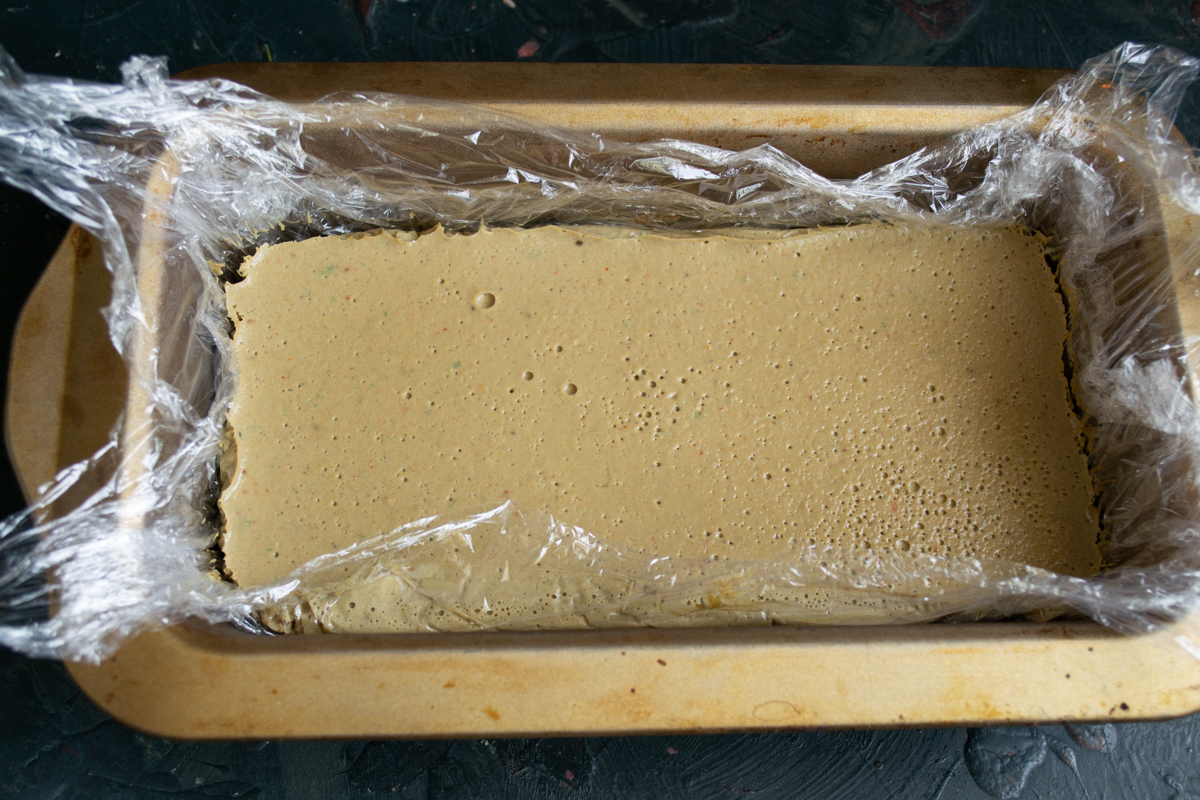
After 8-10 hours in the refrigerator, the gelatin sets, and the pâté becomes firm.
Invert the pan onto a cutting board and carefully peel off the plastic wrap.
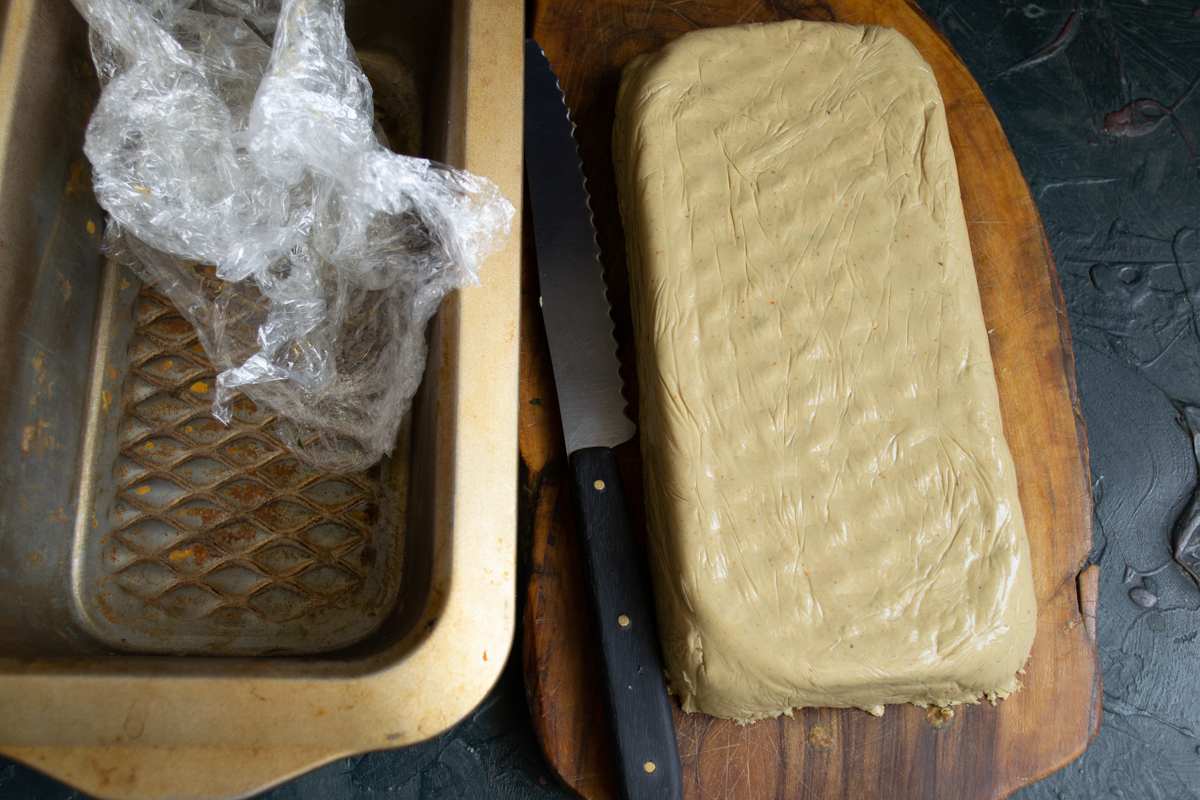
Carefully invert the mold and peel away the plastic wrap. The pâté holds its loaf shape perfectly.
Slice the chicken liver pâté into thick pieces and serve with rye bread, a fresh salad, and green onions. Bon appétit!
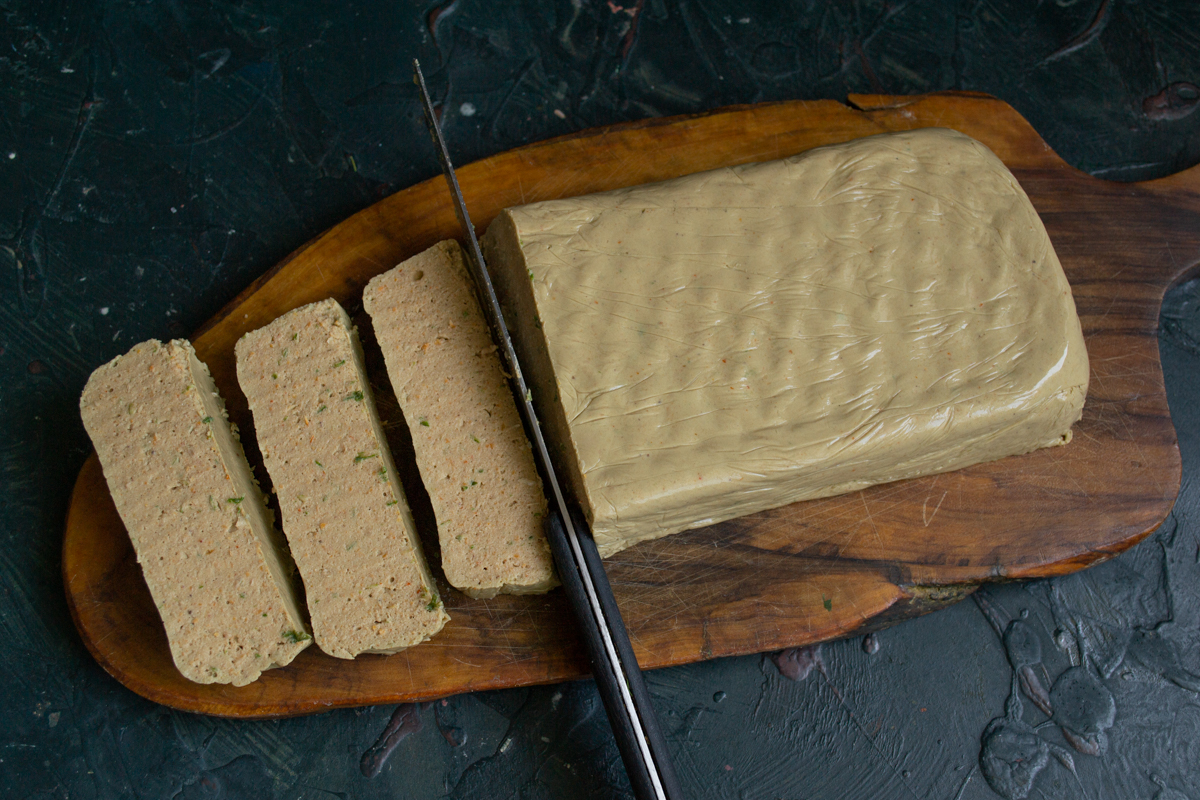
Cut the pâté into thick slices. It reveals a wonderfully delicate and smooth texture inside.
Chicken liver pâté with gelatin is best served well-chilled, sliced with a wide, sharp knife. For the perfect gastronomic pairing, offer toasted rye or whole-grain bread alongside capers, pickles, or a touch of lingonberry sauce—its tartness beautifully cuts the richness of the liver. If you want to experiment with shapes, try pouring the mixture into small ramekins or even a clean plastic bottle to get neat, round slices reminiscent of a delicate liver sausage. Store the finished dish in the refrigerator covered with plastic wrap for no more than three days to prevent the surface from drying out. If you prefer a more spiced flavor profile, add a pinch of nutmeg or a splash of cognac during blending—these ingredients are traditional companions for offal. Remember, the secret to a perfect slice lies in patience: let the gelatin fully stabilize overnight, ensuring every piece is flawlessly smooth and aesthetically pleasing.
0 comments