
A banana goes in. A handful of frozen strawberries follows. Milk is poured by eye. An apple joins the mix because it has been sitting around too long. Oats are added for health benefits. The blender goes on maximum speed.
The result is something grayish-pink, slightly grainy, and about as sweet as a kindergarten fruit compote. It is drunk without pleasure, but with the firm belief that it is healthy—the favorite mantra of those who are just mastering the blender and sincerely believe that the path to wellness lies through suffering.
The ingredients are not to blame. The strawberries are good, the banana is ripe, and the milk is fresh. The mistake lies elsewhere: few people consider the role of each component in the glass. Everything is mixed according to the principle of throwing in whatever is healthy, predictably resulting in a fruity porridge. It is impossible to sip through a straw, and eating it with a spoon is boring.
A truly delicious homemade smoothie operates differently. It possesses a distinct structure: a liquid base, a flavor component, a textural element, and a flavor balance. Understanding these roles ensures that a smoothie turns out delicious every single time.
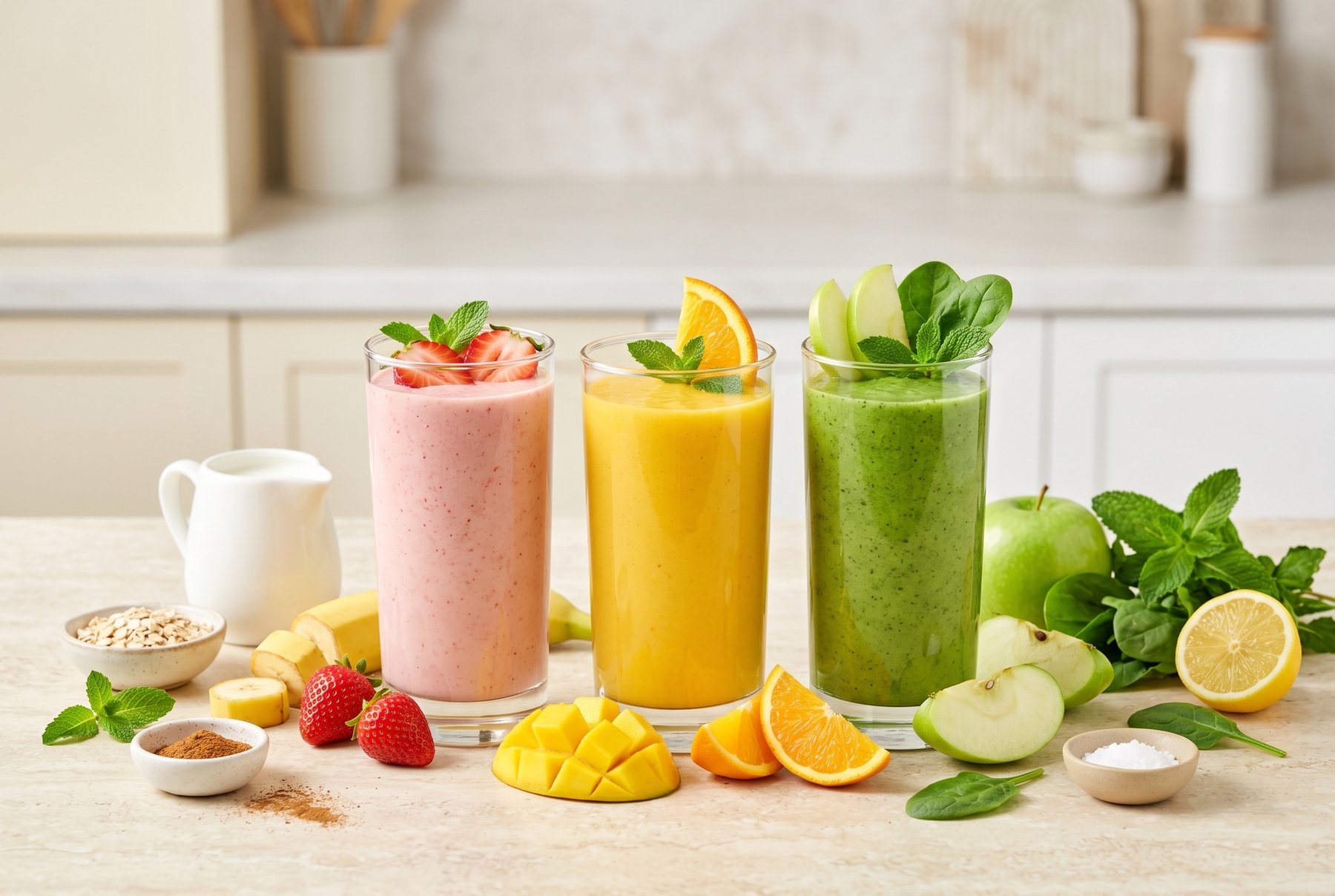
A smoothie can take any form, from a delicate berry blend to an invigorating green drink. The key involves understanding the role of each ingredient in the mix.
Table of Contents
- What a Smoothie Actually Consists Of
- The Universal Proportion for One Large Smoothie Portion
- The Liquid Base: How It Changes the Character of the Drink
- The Flavor Component: What Works With What
- Texture: From Light Refreshments to Breakfast in a Glass
- Why Smoothies Sometimes Turn Out Badly
- The Order of Loading Ingredients Into the Blender: A Small Detail With a Noticeable Effect
- Five Reliable Everyday Smoothie Recipes
- How to Make a Smoothie in a Blender Without a Recipe: Four Steps
- A Separate Note on Salt in Smoothies
- What to Do When a Smoothie Turns Out Badly or Gets Ruined
- A Mini Cheat Sheet: Pairs That Work
What a Smoothie Actually Consists Of
Breaking down any good smoothie reveals the same underlying components: something liquid, something flavorful, something that provides the right consistency, and a final touch without which everything else fails to come together.
The Liquid Base. Milk, kefir (a fermented milk drink), yogurt, water, plant-based milk, or sometimes cold tea or diluted juice. Without a liquid base, the blender either refuses to start properly or grinds everything into a heavy paste that requires a fork. The liquid base sets the character of the beverage before a single piece of fruit is even added. Kefir introduces a fresh tartness, milk softens the flavors and makes them slightly dessert-like, while water keeps the taste pure without overpowering the other ingredients.
The Flavor Component. Fruits, berries, vegetables, and greens represent the very reason the drink is made. Bananas, strawberries, blueberries, spinach, cucumbers, and carrots dictate the primary flavor. A common mistake is considering frozen berries as a thickener; their true role remains as a flavor component. They simply make the smoothie colder and slightly denser.
The Textural Element. Avocados, oats, soft cottage cheese, nut butter, and chia seeds add thickness, creaminess, and satiety. This element is not always necessary. If the glass already contains a banana, thick yogurt, or frozen berries, the texture partially builds itself. Adding oats, cottage cheese, and peanut butter on top of that creates a mass so viscous that it simply stalls the blender.
The Flavor Balance. Lemon juice, a pinch of salt, honey, dates, cinnamon, ginger, vanilla, mint, or cocoa provide the final stroke that brings the entire picture together. Without this element, a smoothie might have the correct proportions but still taste as flat as unsalted soup.
The Universal Proportion for One Large Smoothie Portion
The working formula is as follows:
- 150–200 ml (5–6.8 fl oz) of liquid base
- 150–200 g (5.3–7 oz) of flavor component: fruits, berries, vegetables, greens
- 0–100 g (0–3.5 oz) of textural element: as needed
- 1–2 flavor accents: acid, spice, honey, salt, cocoa, mint
The textural element starts at zero because it is an optional component. A banana already acts as a thickener. Frozen strawberries provide chill and density. Thick yogurt introduces creaminess. Oats, cottage cheese, or nut butter are not mandatory layers but rather solutions to specific desires, such as wanting a breakfast replacement or a thicker, more filling drink.
A single ingredient can perform two roles simultaneously, and it should only be counted once. A banana serves as both a sweet fruit and a thickener. Yogurt acts as a liquid base and a source of creaminess. Frozen cherries provide berry flavor while substituting for ice.
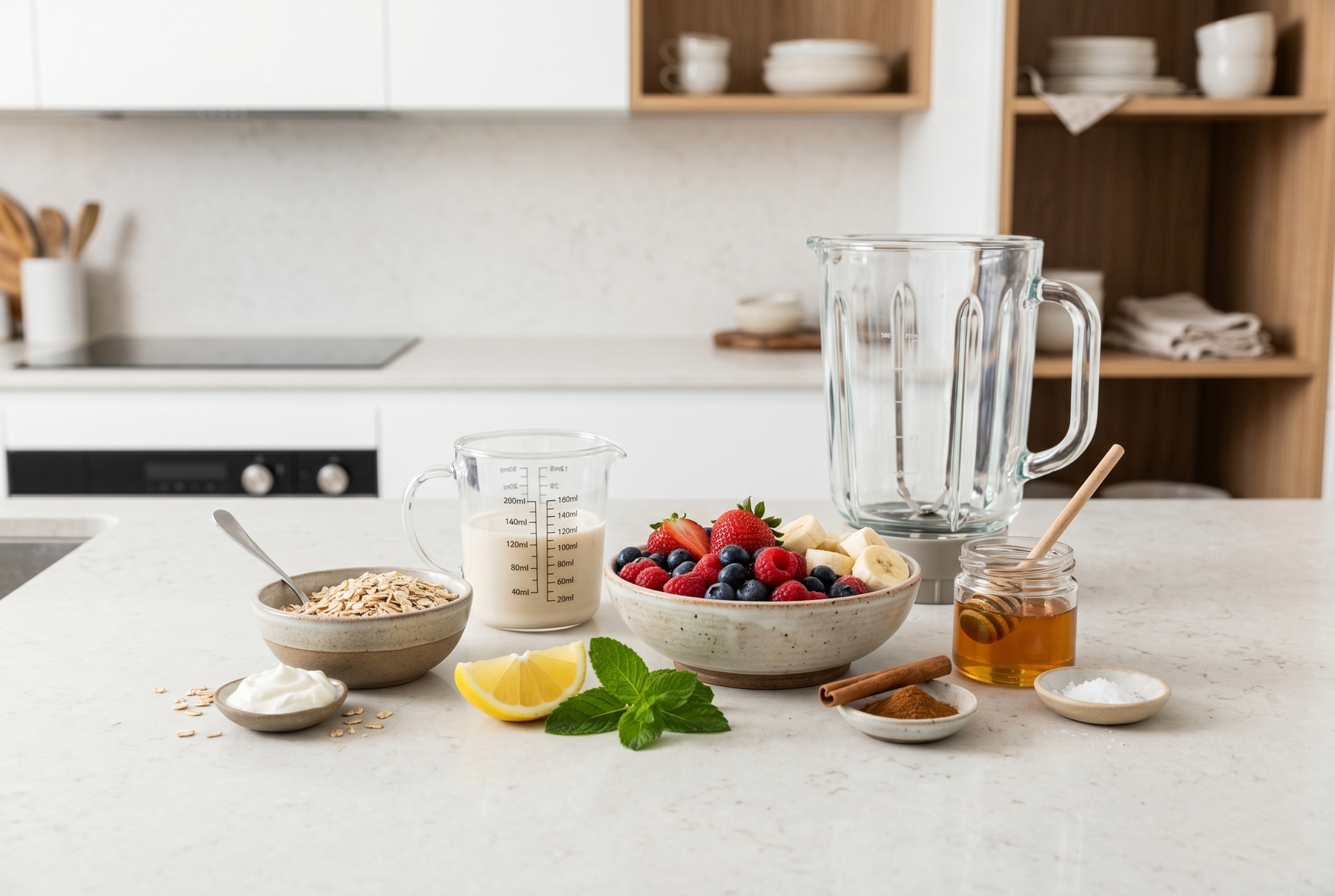
The foundational set of ingredients for a perfect beverage includes a liquid base, fresh fruits, textural elements, and natural additions for flavor balance.
The Liquid Base: How It Changes the Character of the Drink
Most people reach for whatever is in the fridge without giving it much thought. However, the liquid base is exactly what determines whether the smoothie will be refreshing, dessert-like, tart, or almost like a milkshake.
Milk: When You Want Softness and a Dessert Vibe
Cow’s milk remains the most straightforward base. It provides a familiar creaminess and pairs beautifully with bananas, strawberries, cocoa, oats, and peanut butter. A milk-based smoothie leans toward a dessert-like, well-rounded flavor profile. The fat content plays a role: 2% milk yields a lighter result than whole milk, which creates a denser and richer taste.
Three combinations consistently perform well: milk with banana and cocoa, milk with strawberries and vanilla, and milk with pear and oats.
Kefir: For Fresh Berry Smoothies
Kefir (a tangy cultured milk beverage) offers a distinct tartness, which is its primary defining quality. Berry smoothies made with kefir taste fresh and slightly sharp. Strawberries, raspberries, blueberries, and cherries all pair wonderfully with kefir. Problems arise when kefir meets highly acidic berries like blackcurrants, sea buckthorn, or cranberries. The sharpness quickly transitions into an uncomfortable, biting acidity.
The solution involves adding half a banana, using a sweet pear, pouring in a touch of honey, or mixing the kefir with yogurt. Implementing all these solutions at once is unnecessary; selecting just one does the trick.
Yogurt: Working on Two Fronts Simultaneously
Natural yogurt functions as both a liquid base and a creamy texture simultaneously. Achieving the wrong consistency with a yogurt-based smoothie is difficult, as it inherently provides the necessary viscosity. It pairs harmoniously with berries, peaches, pears, bananas, and cottage cheese. Greek yogurt grants the smoothie a particular density, turning it almost into a dessert in a glass that begs to be eaten with a spoon.
Ryazhenka: The Underrated Trump Card
Ryazhenka (baked fermented milk) is suitable for much more than just drinking plain. In a smoothie, it operates differently than kefir or yogurt, offering a mild fermented sweetness and a subtle baked milk flavor—something akin to a cross between caramel and warm milk, even though the beverage itself remains cold. It shines brightest in lazy breakfast-style smoothies.
Four combinations are absolutely worth trying: ryazhenka with banana and cinnamon, ryazhenka with baked apple and oats, ryazhenka with pear and vanilla, and ryazhenka with pumpkin puree and nutmeg. Using baked pumpkin in a smoothie sounds strange right up until the very first sip. Once roasted, the squash becomes soft, sweet, and practically creamy.
Water: When Uncompromising Lightness Is Needed
Water adds nothing on its own, and that stands as its greatest asset. It does not drag the smoothie into dairy or fermented territory, nor does it overpower the flavor. This neutrality means water requires vibrant companions. A neutral base demands bold ingredients: lemon, mint, ginger, cucumber, apple, or spinach. A light green smoothie made with water—pale, almost translucent, smelling of fresh grass and citrus—drinks entirely differently from heavier options. It delivers genuine refreshment.
Plant-Based Milk: Choosing Based on the Task
Oat milk offers a soft, mild grain sweetness that complements bananas and berries. Almond milk is light and nearly neutral, making it appropriate for cocoa and blueberries. Coconut milk is expressive and almost assertive; it pairs perfectly with mango, pineapple, and banana, but feels out of place in a light cucumber-mint smoothie. Soy milk stands as the densest and most nutritious option, but it carries a distinct natural flavor that does not appeal to everyone.
Juice: An Enhancer, Not a Base
Juice should rarely be used as the sole liquid base. It quickly makes the smoothie overwhelmingly sweet and one-dimensional. The most effective approach involves using 50 ml (1.7 fl oz) of juice as a flavor accent, with the remainder consisting of water, yogurt, or plant-based milk. Orange juice mixed with carrots and ginger, or apple juice diluted with equal parts water alongside spinach and mint—these represent formats where juice truly belongs.
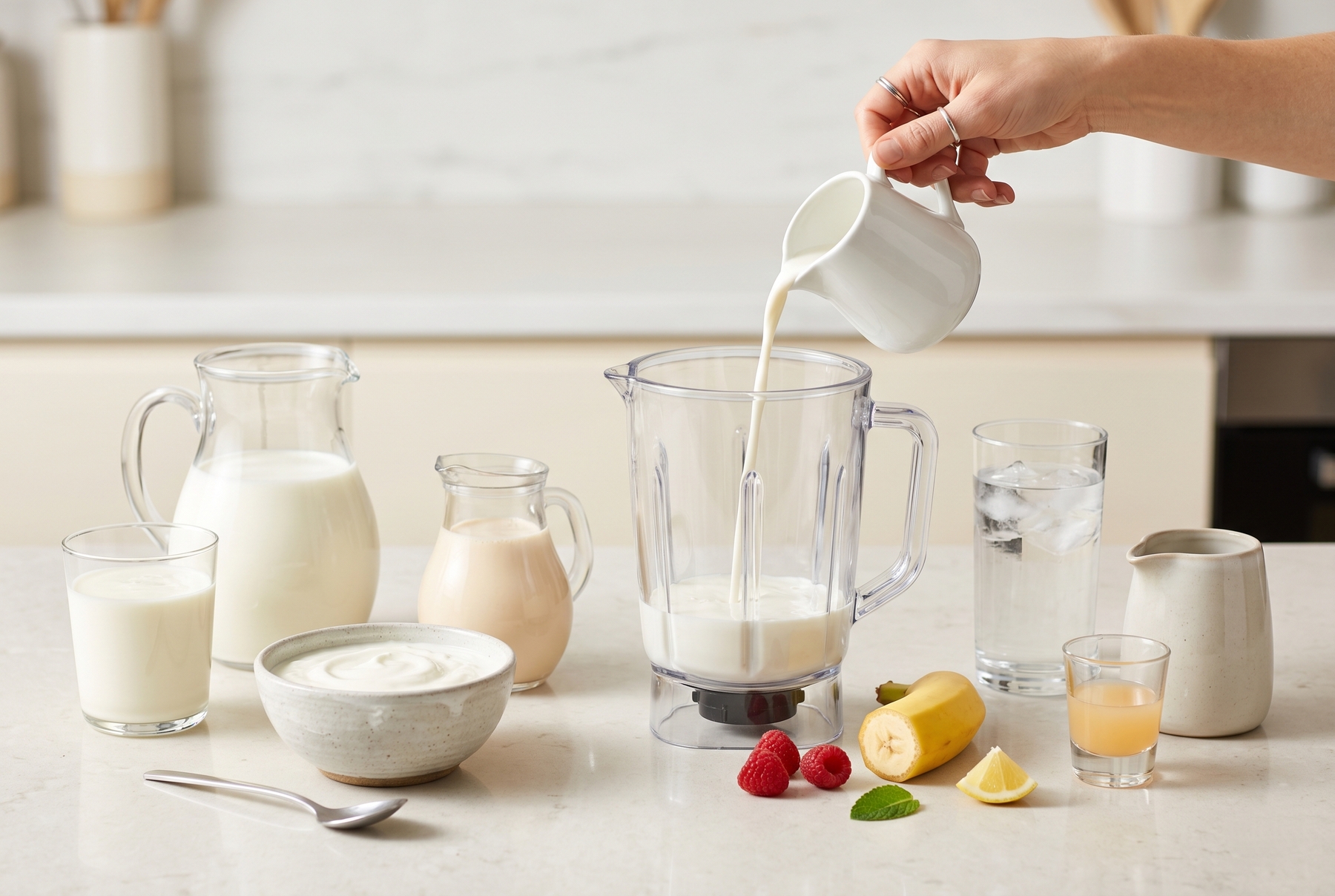
The liquid base defines the character of the beverage: milk creates a dessert-like profile, kefir introduces freshness, and water preserves the pure taste of the fruits.
The Flavor Component: What Works With What
Sweet Fruits: A Soft Base
Bananas, pears, mangoes, peaches, and sweet apples provide a rounded flavor and soften acidity. Bananas require careful handling: they easily become the dominant voice, even when intended as a background note. An overripe banana—characterized by dark, soft spots on the peel—almost guarantees it will take center stage. Attempting to make a blueberry smoothie with a large, overripe banana inevitably results in a banana smoothie that happens to contain some blueberries.
Mango behaves much more interestingly in a smoothie than a banana: it delivers an expressive tropical flavor while elevating, rather than muffling, the other ingredients. Mango pairs beautifully with coconut milk, lime, cilantro, and ginger.
Tart Berries: Brightness With a Condition
Blackcurrants, cranberries, sea buckthorn, cherries, and raspberries offer character and sharpness. They demand a sweet pairing. Without a sweet companion, tart berries transform a smoothie into something left unfinished. A beautiful balance is achieved alongside bananas, sweet pears, yogurt, honey, or dates. Dates work exceptionally well here, providing a soft caramel sweetness without the sometimes intrusive flavor of honey. A pinch of salt also performs remarkably; it does not eliminate the acidity but renders it less sharp and far more pleasant.
Frozen Berries: Flavor Plus Temperature
A crucial nuance regarding frozen berries is that they make the smoothie colder and thicker, meaning slightly more liquid is usually required compared to using fresh fruit. For less powerful blenders, letting the berries sit at room temperature for 5–7 minutes proves beneficial. Otherwise, the motor strains, and the smoothie becomes inconsistent, yielding a mixture that is smooth in some places and unexpectedly crunchy in others.
Vegetables: Demanding the Right Pair
Cucumbers, carrots, beets, celery, and pumpkin all work in smoothies, but each operates in its own way. Cucumbers combine wonderfully with apples, lemons, and mint; this trio transforms the vegetable into a refreshing cocktail. Carrots almost always require oranges and ginger. This is a classic combination: predictable yet flawless. Beets stand as strong players. They dye everything a rich burgundy and introduce an earthy note that not everyone appreciates; this earthiness is best softened with apples or berries. Baked pumpkin—soft, sweet, and almost puréed—pairs perfectly with ryazhenka and cinnamon.
Greens: Starting With Spinach
Spinach rarely argues with the flavor of fruits. It imparts a beautiful, bright grassy-green color and remains nearly undetectable on the palate, provided the leaves are young. Mature spinach introduces bitterness, which must be considered. Parsley, basil, and cilantro represent character-driven ingredients that demand a clear understanding of their purpose. Cilantro with mango and lime presents an excellent idea in a smoothie. That same cilantro combined with strawberries, however, raises serious doubts.
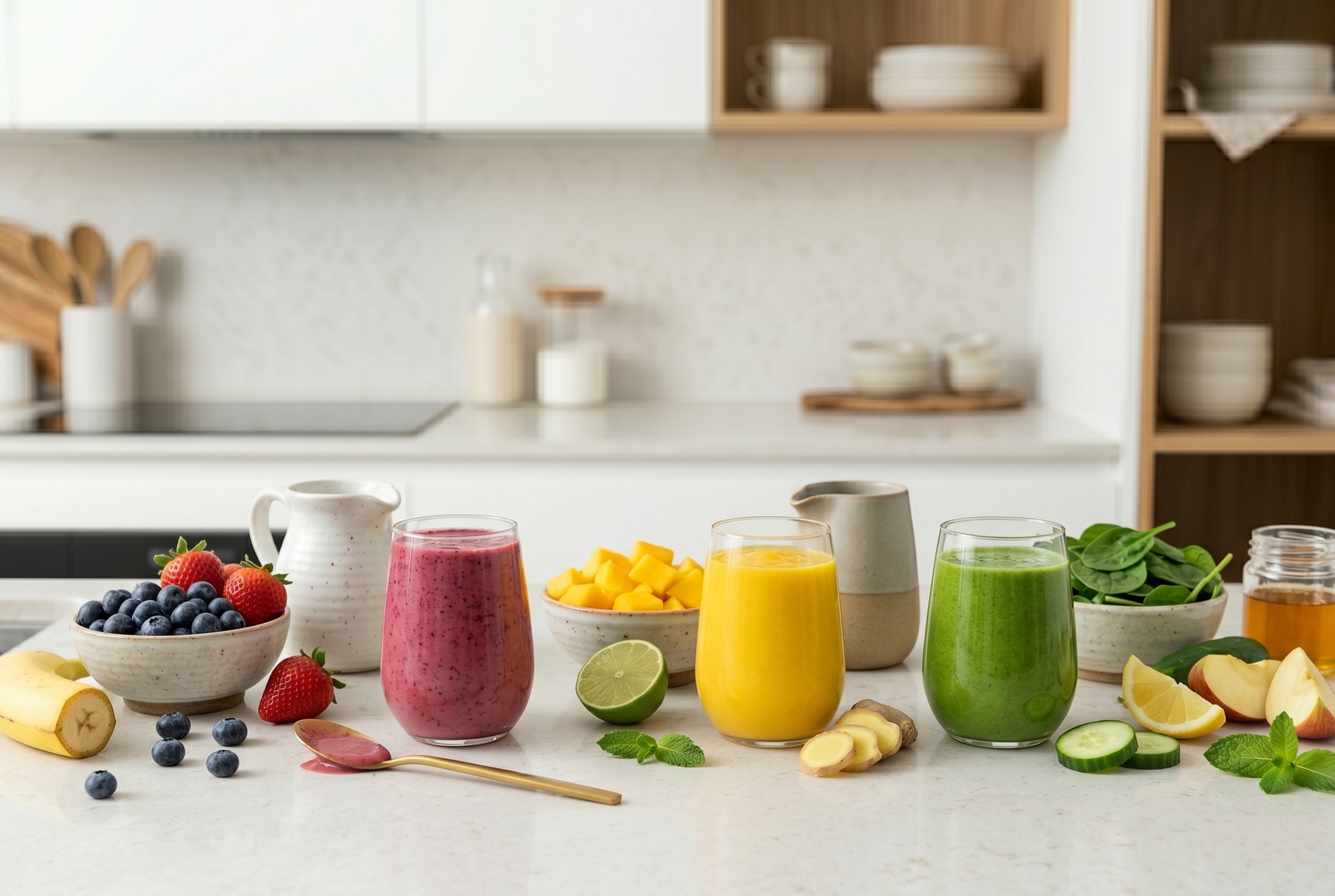
Properly paired fruits and vegetables create a harmonious taste, while fresh greens add vibrancy without introducing unnecessary calories.
Texture: From Light Refreshments to Breakfast in a Glass
The Light Sipping Smoothie
The formula here remains simple: plenty of liquid, minimal density, and absolutely no thickeners.
- 180–220 ml (6–7.5 fl oz) of liquid base
- 150–180 g (5.3–6.3 oz) of fruits or berries
- No dense additives
An excellent example combines water, apple, a third of a cucumber, lemon juice, and a few mint leaves. The resulting color is a pale, almost watery green. It drinks effortlessly and avoids heaviness. It does not replace breakfast, nor does it pretend to.
The Creamy Smoothie
Everything here revolves around a single dense element: half a banana, avocado, soft cottage cheese, thick ryazhenka, or yogurt. One such element delivers the necessary consistency without excess weight.
- 150–180 ml (5–6 fl oz) of liquid base
- 150–200 g (5.3–7 oz) of flavor component
- 50–80 g (1.7–2.8 oz) of creamy element
A prime example involves milk, strawberries, and half a banana. The drink becomes soft pink with a delicate creaminess. It glides through a straw effortlessly.
The Hearty Breakfast Smoothie
The objective shifts here: the goal is not just to drink something pleasant, but to feel satiated. This requires genuine protein or slow-digesting carbohydrates.
- 150 ml (5 fl oz) of liquid base
- 150 g (5.3 oz) of fruits or berries
- One or two hearty elements: oats, cottage cheese, Greek yogurt, nut butter, chia seeds, or ground flaxseed
The most important rule is selecting just one or two options rather than dumping everything in together. Adding oats, cottage cheese, nut butter, and chia seeds simultaneously creates a dense, viscous mass that requires a spoon—an activity that quickly becomes tedious. Selecting one or two additions and matching them with just enough liquid ensures everything blends into a smooth, homogeneous mass.
An ideal example features ryazhenka, banana, two tablespoons of oats, and cinnamon. Letting the mixture sit for a couple of minutes after blending allows the oats to swell, slightly thickening the smoothie. This kind of breakfast prevents hunger for the next three hours.
The Dessert Smoothie
This variation calls for a dairy or fermented milk base, a sweet fruit, an aromatic accent, and a touch of fat for a well-rounded flavor. Milk paired with banana, a teaspoon of high-quality cocoa, a teaspoon of peanut butter, and a pinch of salt creates magic. The salt is far from accidental: it eliminates the flatness of the sweetness and gives the flavor deep volume. Without it, the smoothie simply tastes sweet. With it, the drink closely resembles a genuine dessert.
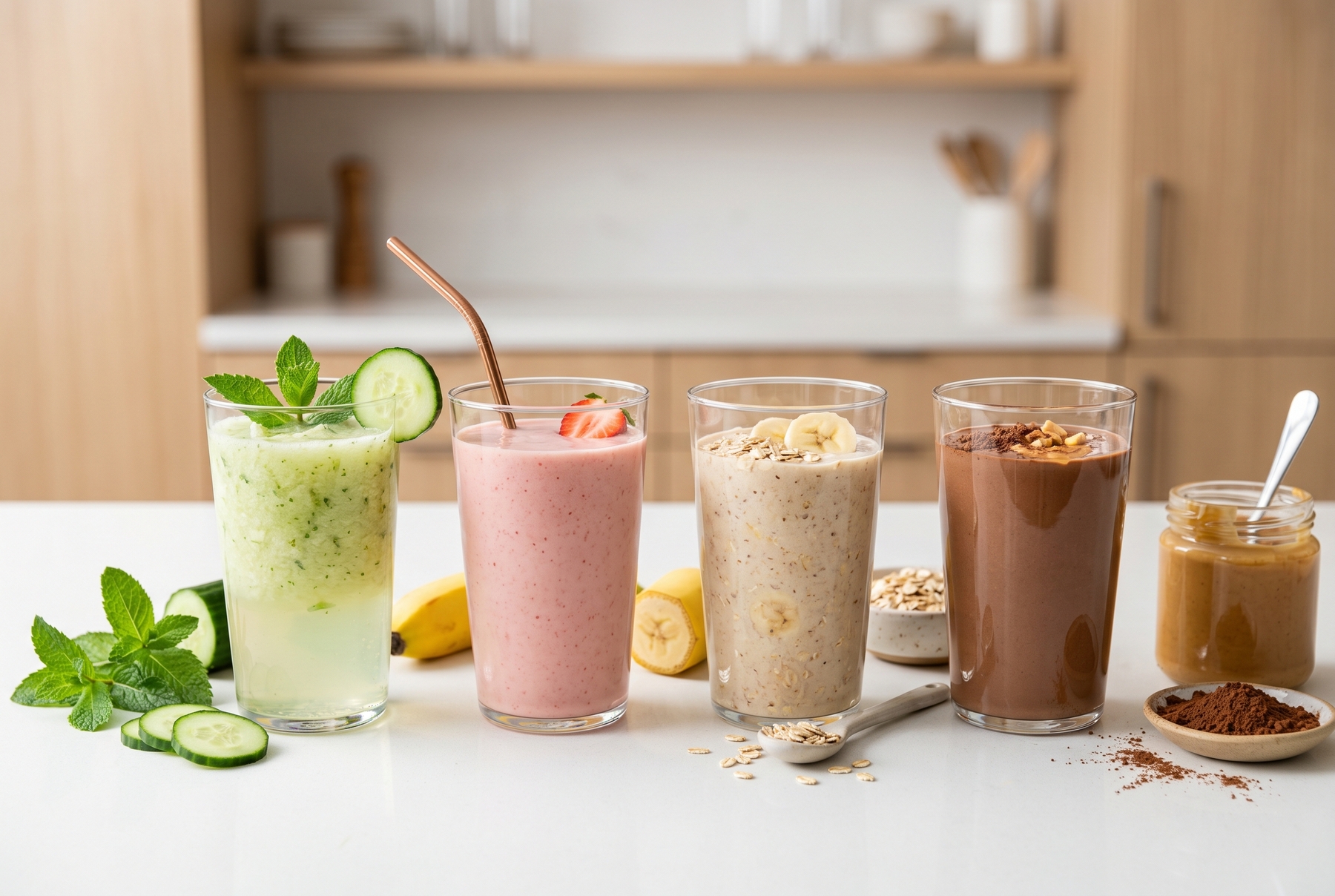
The choice of a textural element determines whether the result is a refreshing drink or a complete breakfast that provides satiety for several hours.
Why Smoothies Sometimes Turn Out Badly
Overly Sweet. Combining a banana, sweet milk, honey, ripe mango, and orange juice in one glass causes the sweetness to layer heavily and become cloying. The immediate fix involves adding lemon juice or a few tart berries. Alternatively, simply replace the juice with water next time.
Excessively Tart. Too many blackcurrants, cranberries, cherries, or overly fermented kefir lead to this issue. The solution requires adding a banana, some honey, or a date. Dates offer a soft caramel sweetness without an obvious honey flavor, working perfectly in these scenarios.
Watery and Empty. This happens when there is too much liquid, too little fruit, and no dense components. The fix takes a mere second: incorporate a banana, frozen berries, or a spoonful of cottage cheese.
Heavy and Indecipherable. The reverse situation occurs with too many dense ingredients and insufficient liquid. The solution demands gradually pouring in the base and blending—one or two tablespoons at a time. Pouring in half a glass at once often results in over-dilution.
Simply Boring. All the ingredients are correct, the proportions are normal, yet the taste remains flat. This most likely signifies a lack of acidity and salt. Lemon juice or a pinch of salt brings the smoothie back to life. This works almost universally, and it remains surprising how frequently this step is skipped.
A Strange Color. Red berries mixed with spinach yield a color that defies flattering description: something brownish with a hint of swamp. Achieving a beautiful result requires keeping color groups together. Spinach with mango and pineapple creates a vibrant yellow-green. Blueberries with yogurt turn a lovely violet-lilac. Strawberries with bananas produce a soft, almost milky pink.
The Order of Loading Ingredients Into the Blender: A Small Detail With a Noticeable Effect
This detail proves especially crucial for standard household blenders. The liquid base always goes into the pitcher first. The blades start much more easily when they have liquid in which to begin their movement. Next come the soft ingredients: yogurt, cottage cheese, avocado, or a soft ripe banana. Following that are the fruits and berries, whether fresh or frozen. Finally, everything heavy and dense goes in last: ice, nuts, oats, seeds, and frozen mango chunks.
Dumping ice and frozen berries in first, and then pouring liquid over the top, creates a risk that the lower blades will fail to grip the mass properly. The blender roars, but the smoothie stands perfectly still. The bottom layer overheats while the top remains completely untouched.
Another point regarding frozen products: a powerful blender handles ingredients straight from the freezer. Less powerful models benefit from letting the ingredients sit for 5 minutes at room temperature.
Five Reliable Everyday Smoothie Recipes
The Berry Kefir Smoothie. Combine 180 ml (6 fl oz) of kefir, 150–180 g (5.3–6.3 oz) of strawberries or cherries, half a banana if the berries are particularly tart, and a touch of honey. Blending until smooth yields a crimson, slightly cloudy drink resembling a good homemade fruit punch. This is best enjoyed cold.
The Ryazhenka Breakfast. Use 150 ml (5 fl oz) of ryazhenka, one banana or pear, two tablespoons of quick oats (traditional rolled oats will remain crunchy), and a dash of cinnamon. Letting the mixture sit for two minutes after blending allows the oats to expand, thickening the smoothie beautifully.
The Green Smoothie Without the Lawn Flavor. Blend 180 ml (6 fl oz) of water or apple juice (diluted halfway with water), one peeled apple, a handful of young spinach, a third of a cucumber, a splash of lemon juice, and a few mint leaves. The spinach absolutely must be young: large, mature leaves introduce bitterness and an unpleasant grassy aftertaste.
The Cottage Cheese Berry Smoothie. Mix 150 ml (5 fl oz) of milk or yogurt, 100 g (3.5 oz) of soft, spreadable cottage cheese (avoid grainy varieties), 120–150 g (4.2–5.3 oz) of berries, and a little honey or one small banana. Grainy cottage cheese performs poorly: even after thorough blending, small curds remain noticeable on the tongue.
The Chocolate Dessert Smoothie. Combine 180 ml (6 fl oz) of milk or oat milk, one ripe banana with dark spots on the peel (ensuring it is sweeter and softer), a teaspoon of unsweetened cocoa powder, a teaspoon of peanut butter, and a pinch of salt. This requires immediate consumption after blending, as it begins to separate after a few minutes.
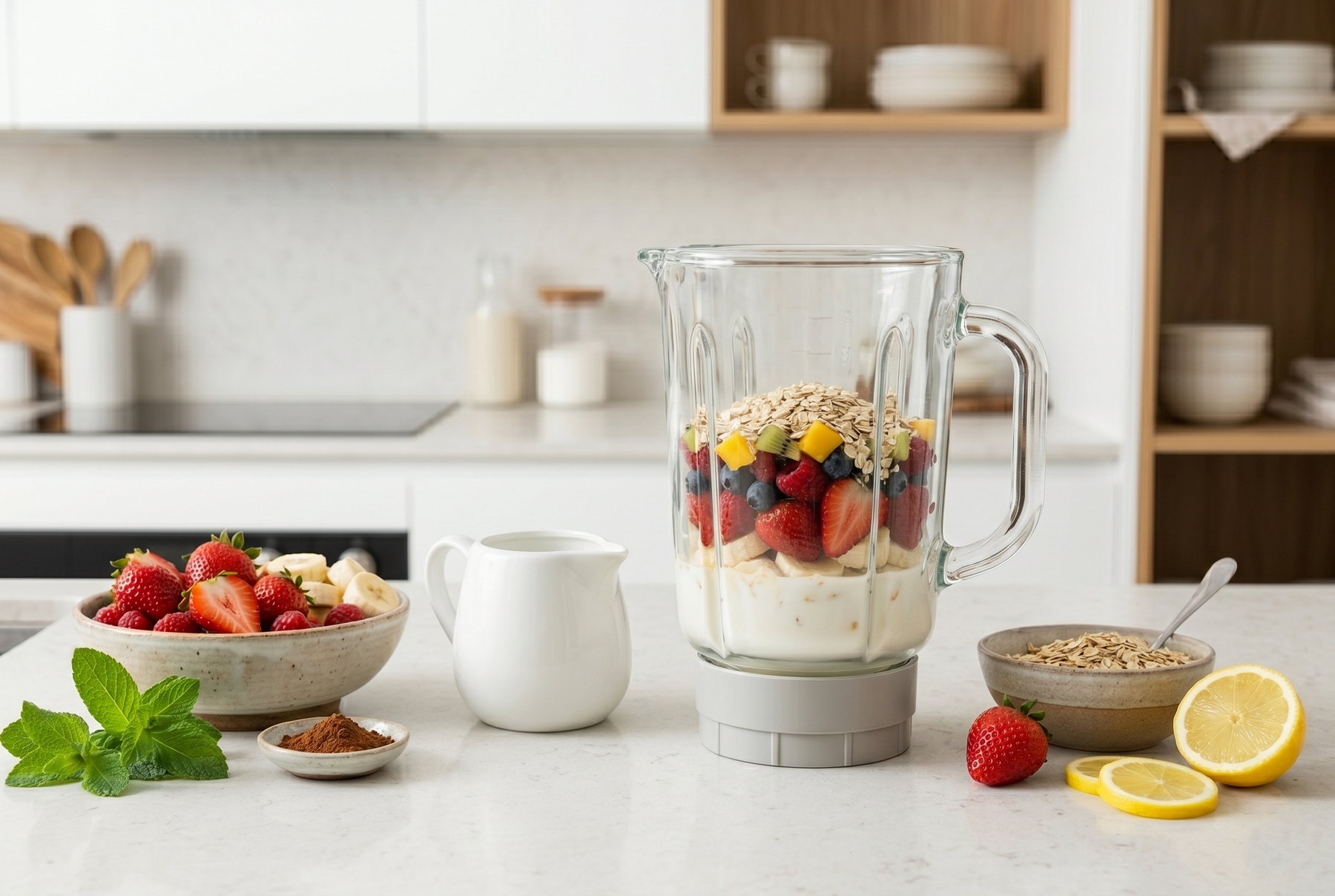
Following the correct loading sequence—starting with liquid, then soft fruits, and finishing with hard elements—ensures the blender operates at peak efficiency.
How to Make a Smoothie in a Blender Without a Recipe: Four Steps
Step 1. Choose the Liquid Base. Milk serves soft, dessert-like profiles. Kefir provides a fresh tartness. Yogurt delivers thickness and creaminess without extra additions. Ryazhenka adds a comforting warmth even to a chilled beverage. Water saves the day when keeping things light is the priority. Plant-based milks adapt to the task: coconut suits tropical fruits, while oat milk pairs with berries and bananas.
Step 2. Choose the Flavor Component. Sweet fruits build a soft foundation. Tart berries introduce brightness, provided they have the correct sweet pairing. Vegetables offer freshness when matched carefully. Greens supply vibrant color and a light herbal stroke, ideally combined with something acidic.
Step 3. Decide if Additional Texture Is Required. If the smoothie already features a banana, thick yogurt, or frozen berries, a thickener is likely unnecessary. When a dense snack is desired, incorporating only one filling ingredient works best, rather than piling everything into the pitcher.
Step 4. Perfect the Flavor. This step often gets skipped, much to the detriment of the drink. Acid, salt, spice, honey, or cocoa transform a smoothie from healthy to craveable. Tasting the mixture before pouring it into a glass makes all the difference. When something feels off, lemon juice usually fixes it. If the smoothie tastes sweet but flat, a pinch of salt corrects the balance.
A Separate Note on Salt in Smoothies
It sounds bizarre right up until the moment it is tasted. In a dessert smoothie, a pinch of salt functions exactly as it does in fine chocolate: it does not make the drink salty, but rather cuts through the monotonous sweetness to pull deeper flavor nuances to the surface that would otherwise remain hidden. This effect is particularly pronounced alongside cocoa and peanut butter.
Salt operates differently in berry smoothies: it softens sharp acidity, making it less biting. It rounds out the tartness rather than erasing it. This technique proves incredibly useful when working with kefir and highly acidic berries.
The dosage remains strictly a pinch. Not a teaspoon, not half a teaspoon. Merely the amount that fits between three fingers.
What to Do When a Smoothie Turns Out Badly or Gets Ruined
Is it too thick? The solution requires adding the liquid base gradually, one or two tablespoons at a time, blending after each addition. Pouring half a glass in at once ensures a watery disaster seconds later.
Is it too thin? Adding a single dense element—a banana, frozen berries, yogurt, or a spoonful of cottage cheese—rectifies the issue. Blend thoroughly and repeat if necessary.
Does it taste bad even though the steps were followed? The fix involves adding balance rather than another healthy ingredient. Lemon juice, a pinch of salt, cinnamon, or mint—just one of these usually does the trick. Taste the mixture and add more if needed.
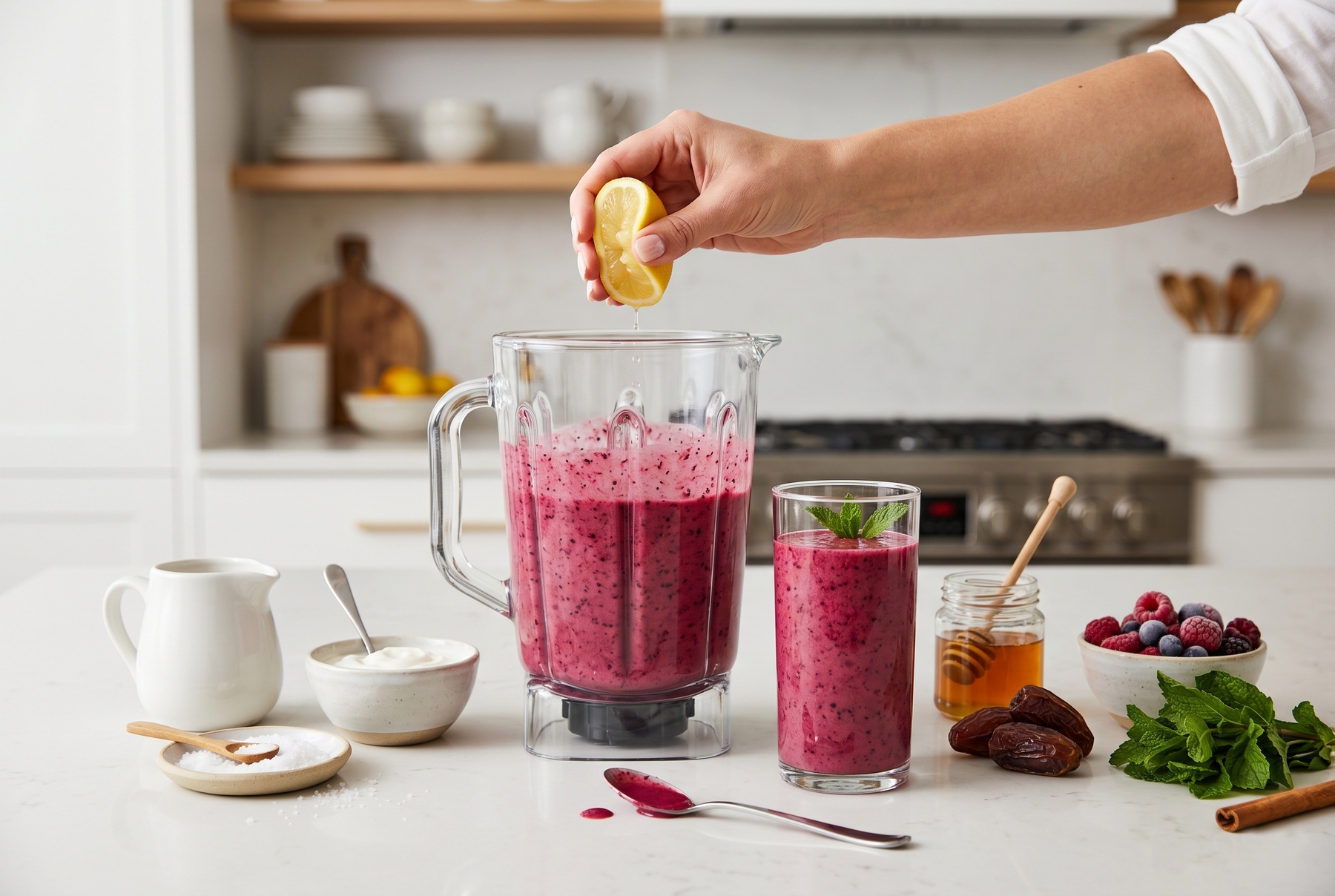
A splash of lemon juice or a pinch of salt acts as a simple trick that revitalizes a flat taste and makes a homemade smoothie feel truly professional.
A Mini Cheat Sheet: Pairs That Work
These serve as starting ideas rather than strict recipes.
Kefir + Blueberries + Banana. Violet-blue, fresh, and slightly tart. Add honey if desired.
Ryazhenka + Pear + Vanilla. Delicate, with a subtle milky flavor. It requires almost no extra sugar, as the pear provides enough sweetness.
Milk + Strawberries + Vanilla. A timeless classic. It blends quickly and drinks effortlessly.
Water + Apple + Spinach + Lemon + Mint. Green and deeply refreshing. This performs best served cold over ice cubes.
Yogurt + Peach + Ginger. A perfect summer option. Ginger demands careful, piece-by-piece addition and frequent tasting, as it quickly dominates the profile.
Milk + Banana + Cocoa + Peanut Butter + Salt. A dessert profile that closely mimics a shake. Utilizing a ripe banana with dark spots ensures a sweeter result.
Ryazhenka + Pumpkin (Baked) + Cinnamon + Nutmeg. An autumnal variation that sounds unusual but turns out spectacular.
A smoothie should never serve as punishment for yesterday’s pastry. Otherwise, it simply becomes an expensive way to drink sadness through a straw.
0 comments