
A person buys oysters for the first time. A beautiful evening is planned, the table is set, a bottle is chilling in the fridge. They open the box—and freeze. The shells sit like tiny closed fortresses: wet, heavy, and cold. There are no instructions. It remains unclear where to even begin.
Oysters are not complicated at all. The problem is that too much theater has accumulated around them. It seems as if one needs to know something special that they were never told: the right posture, the right time of day, the exact angle to hold the shell. One must pronounce “mignonette” with the proper facial expression. One must be born in Normandy, opening mollusks barehanded over the waves since childhood.
In reality, four things are needed: a fresh product, cold temperatures, a decent knife, and a steady hand. An oyster does not need to be conquered. It simply needs to not be ruined.
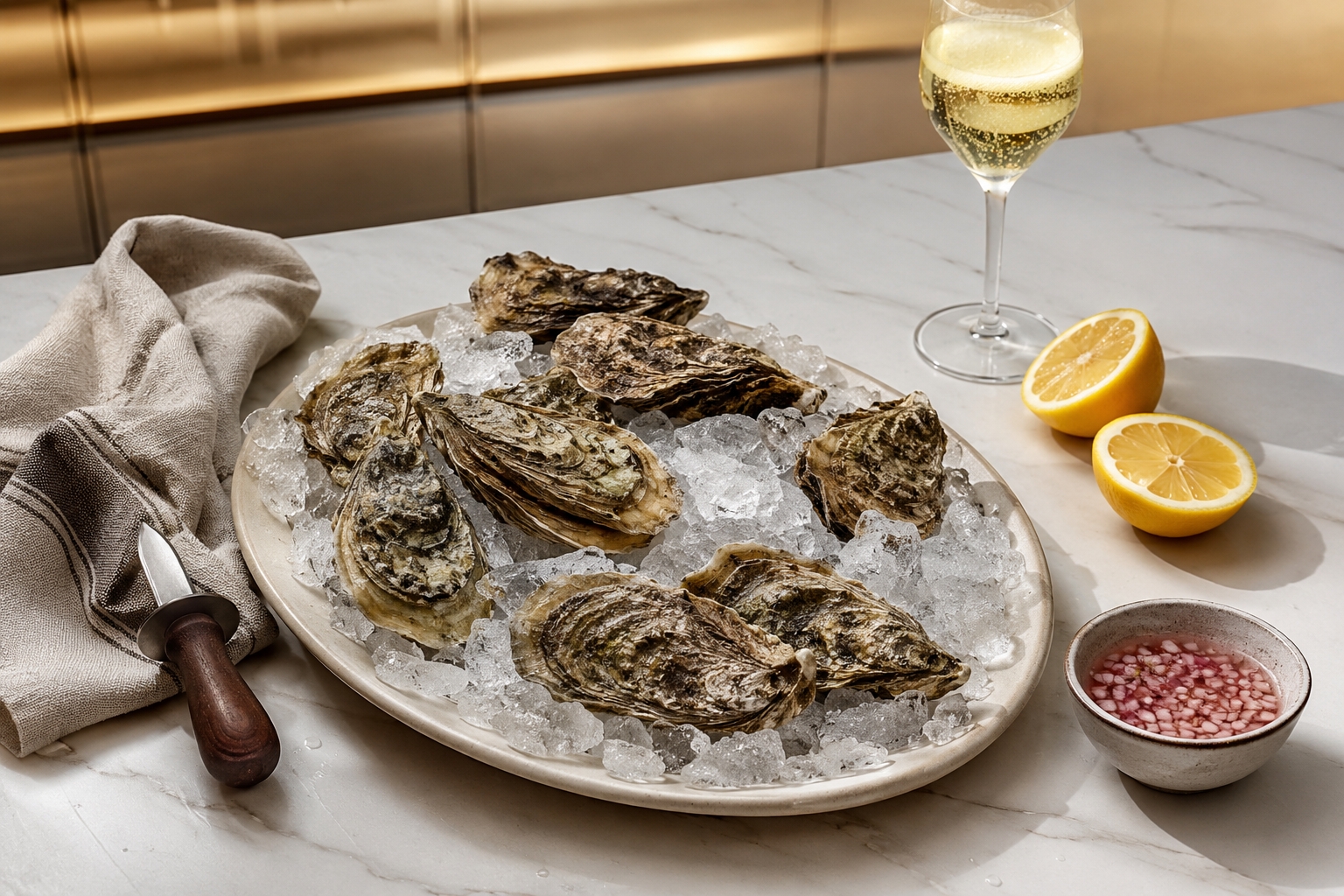
The perfect way to serve oysters: plenty of crushed ice, fresh lemon, and a glass of chilled white wine for a flawless evening.
Table of Contents
- Why Oysters Must Be Handled Quickly
- How to Choose Oysters
- Who Should Avoid Taking Risks with Raw Oysters
- How to Store Oysters at Home: Cold and Humidity
- What Kind of Knife Is Needed for Oysters and What to Prepare for Opening
- How to Open an Oyster: Six Steps
- How to Serve: Ice, Sauce, and Nothing Extraneous
- How to Eat Oysters Properly: A Few Practical Matters
- What Oysters Taste Like
- Baked Oysters: A Good Option
- Mistakes Almost Everyone Makes
- Quick Cheat Sheet
Why Oysters Must Be Handled Quickly
Why This Entire Ritual Even Exists
The ceremony surrounding oysters did not emerge from snobbery. The mollusk is alive. The shell is sharp. The liquid inside is not merely brine, but a component of flavor that is easily lost. Temperature is critical: a warm oyster changes rapidly and not for the better. Therefore, they are served on ice, opened right before eating, and never left sitting on the table while the glasses get warm.
Ice is not a decoration. It is necessary so the oyster can sit on the table.
The Cook’s Task Here: Do Not Improve, Do Not Ruin
Oysters are not cooked in the traditional sense of the word. They are preserved. The task of the person holding the knife and lemon is to safeguard what is already inside the shell—the cold oceanic flavor, the correct texture, that very liquor that smells of iodine and seaweed.
Overheating them, rinsing them under the tap, or drowning them in half a lemon—these are not just rookie mistakes. These are surefire ways to destroy the product you just paid for.
How to Choose Oysters
Where to Buy Them in the Real World
Oysters are best found in specialized fishmongers, gastro-markets, or from dedicated suppliers. The location itself does not guarantee quality. What matters is something else: oysters must not sit around, the display case must be cold, and the seller must have a good reputation and documentation for the batch.
A good seller knows where the oysters are from, when they arrived, and how much time they have left. A bad one answers vaguely or looks away.
What to Ask at the Counter
Where the oysters are from and when they arrived. Whether they can be eaten raw (some suppliers carry oysters intended only for thermal cooking). How they were stored before reaching you. When it is best to eat them.
What a Normal Oyster Looks Like
The shell must be tightly closed. If the valves are slightly open, they should close with a light tap. It feels heavy for its size: there is liquid inside, and you can feel this in your hand. Smell: the ocean, iodine, fresh water, sometimes something cucumber-like and cool. There is no rotten fishy odor and nothing resembling the smell of a beachside garbage can after a hot day.
After opening: clear or slightly milky liquor, the meat is moist and firm, with no dried-out edges.
The main rule: appearance does not guarantee safety. Raw oysters can contain Vibrio and other microorganisms. A beautiful closed shell with a good smell is an encouraging sign, but not a guarantee of sterility.
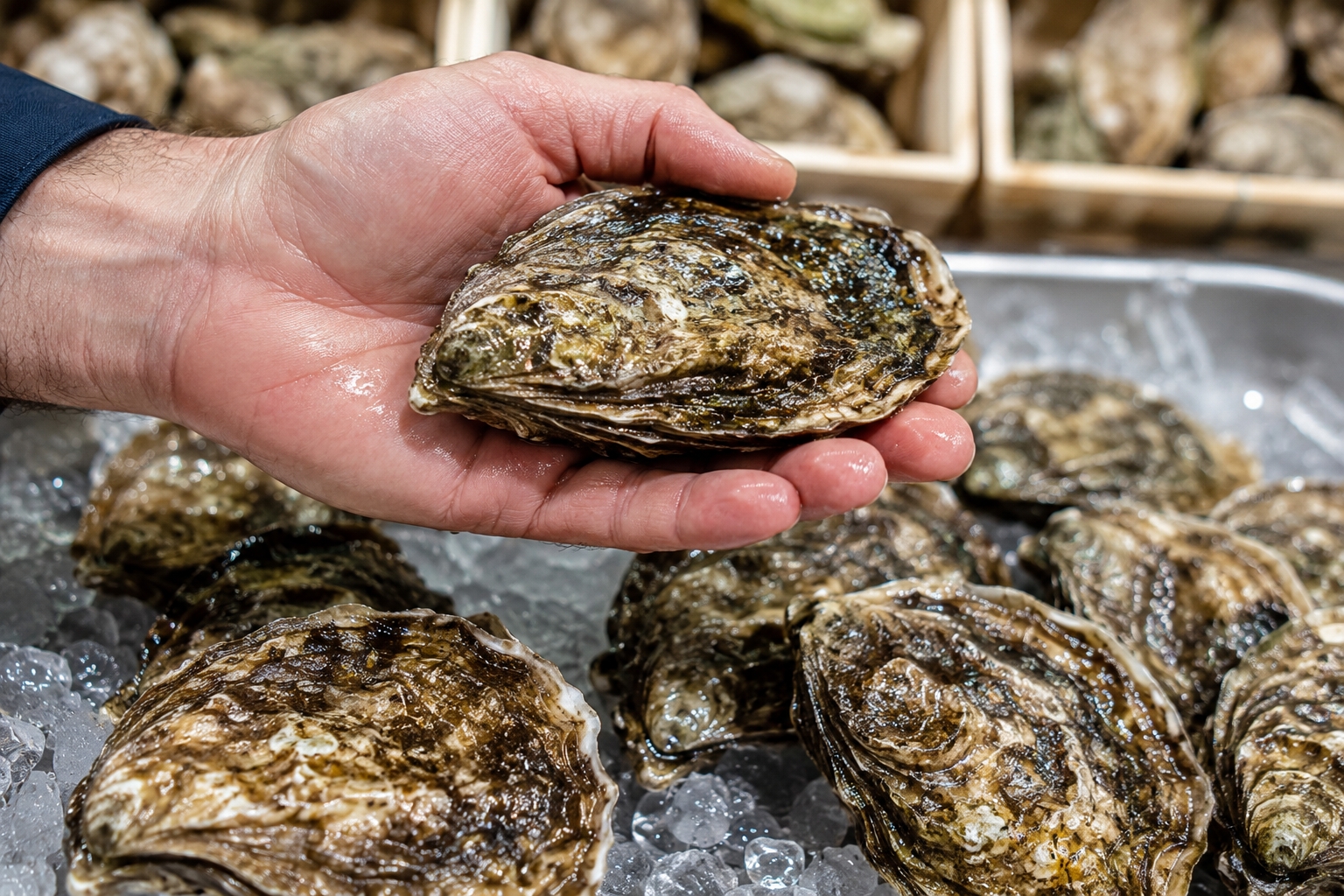
When choosing, ensure the shell is tightly closed and feels heavy in the hand—this means the precious liquor has been preserved inside.
Who Should Avoid Taking Risks with Raw Oysters
A Brief Word on Risks
Raw oysters are not for everyone—and this is simply a matter of information. For individuals with weakened immune systems, liver disease, diabetes, severe chronic conditions, as well as pregnant women and the elderly, it is safer to choose cooked oysters. Vibrio vulnificus—one of the pathogens that can be present in raw mollusks—poses a serious danger to people in risk groups.
A Few Common Misconceptions
Lemon does not disinfect an oyster. Hot sauce does not kill bacteria. Alcohol does not make a raw mollusk safe. If Tabasco sterilized seafood, health departments would have been wearing sombreros long ago. All of these are flavor enhancers, not disinfectants.
A good smell indicates freshness. A bad smell indicates the oyster must be thrown away. But the absence of a bad smell does not mean everything inside is microbiologically perfect.
How to Store Oysters at Home: Cold and Humidity
How to Keep Oysters Properly Until Serving
In the refrigerator, cup side down—this keeps the juice inside the shell. Cover with a damp (not wet, but specifically damp) towel. Do not wrap them in an airtight plastic bag: the mollusk is alive and needs air. Do not place them in water: fresh water kills them quickly. Do not freeze them if you plan to eat them raw.
The maximum shelf life depends on the packaging and the date of harvest. A good guideline is up to 5–7 days under proper conditions, but it is better to confirm with the seller. Open them immediately before serving.
How to Tell if an Oyster Has Gone Bad and When to Throw It Away
The shell is open and does not react to tapping. An unpleasant smell. The meat is dry or dried out around the edges. Cloudy, obviously bad liquid inside. A cracked shell.
Oysters are not the kind of product where one should skimp. If in doubt, throw it out.
What Kind of Knife Is Needed for Oysters and What to Prepare for Opening
The Knife Is More Important Than Courage
An oyster knife with a short, sturdy blade and a hand guard. A thick kitchen towel folded into several layers. A cut-resistant glove—desirable, especially the first time. A cutting board. A bowl for empty shells. Ice for serving.
Opening them with a regular kitchen knife is a bad idea. The blade can slip unpredictably, and you risk seriously cutting your hand.
How to Open an Oyster: Six Steps
Step 1. Find the Hinge
Every oyster has a narrow back end—the point where the two shells connect. This is the entry point. Not the middle of the shell, not the wide edge. Specifically the hinge—the narrow joint at the back.
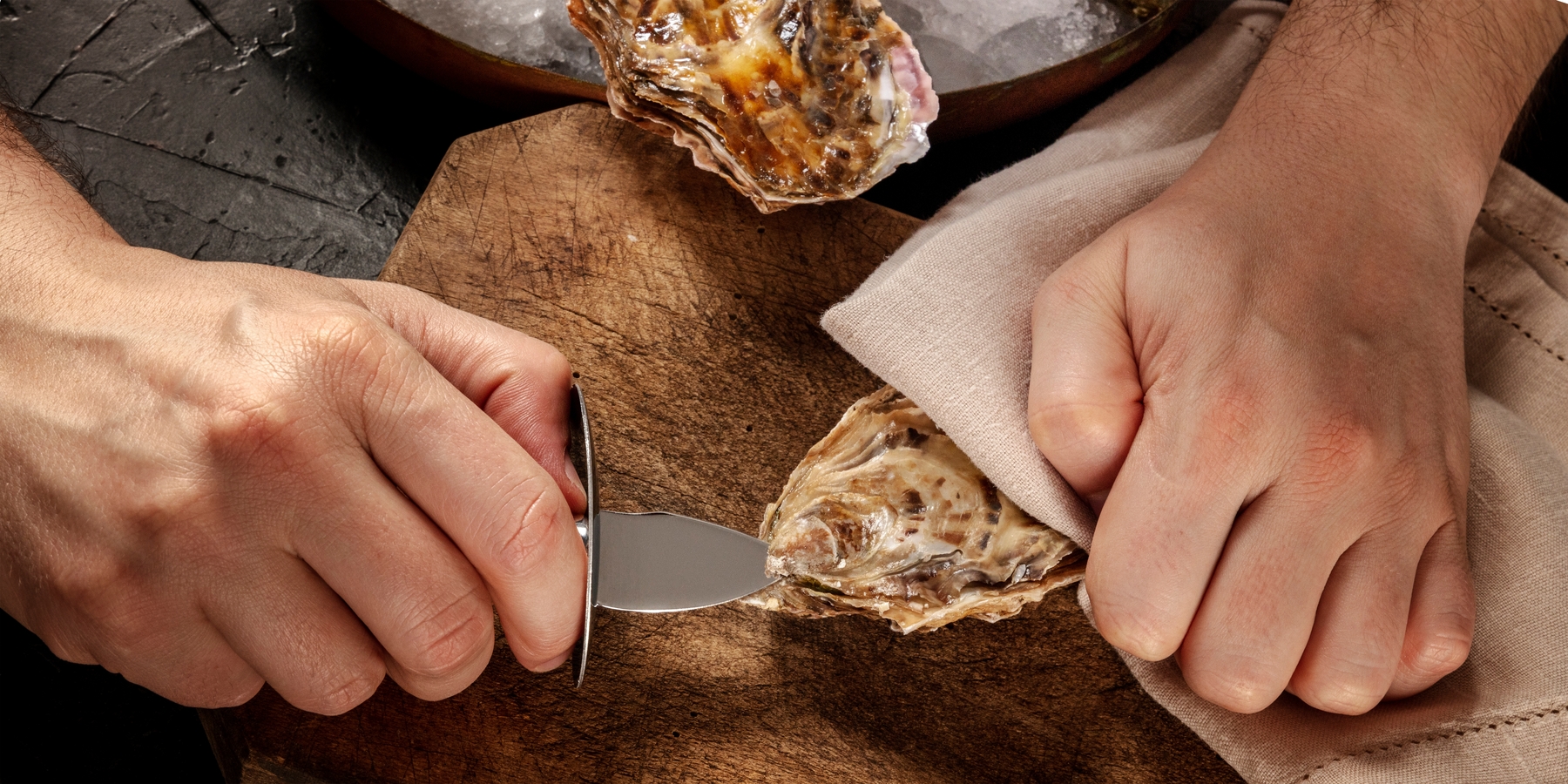
Locate the hinge—the point where the shells connect. Use a thick towel to protect your hands and slowly insert the oyster knife.
Step 2. Secure the Shell
The oyster is placed cup side down, flat side up. A towel folded in several layers protects the palm and prevents the shell from slipping on the board.
Step 3. Insert the Knife and Twist
The knife enters the hinge and twists—not a sawing motion, not downward pressure with all your weight, but a turn of the wrist. It is somewhat like the motion used to open an old lock. The shells will pop apart with a quiet but distinct click.
Step 4. Sever the Top Muscle
Slide the knife along the inner surface of the top shell, detaching the muscle. Open the shell. If there are any small fragments inside, remove them with the tip of the knife or the corner of the towel.
Step 5. Save the Liquor
The liquid inside is the oyster liquor. Not brine and not water. It is part of the flavor, often the best part. Hold the shell horizontally. Do not pour it out.
Step 6. Cut the Bottom Muscle
Gently detach the meat from the bottom shell so the oyster can be slurped in one motion without digging around with a fork. After that—onto the ice, and straight to the table.
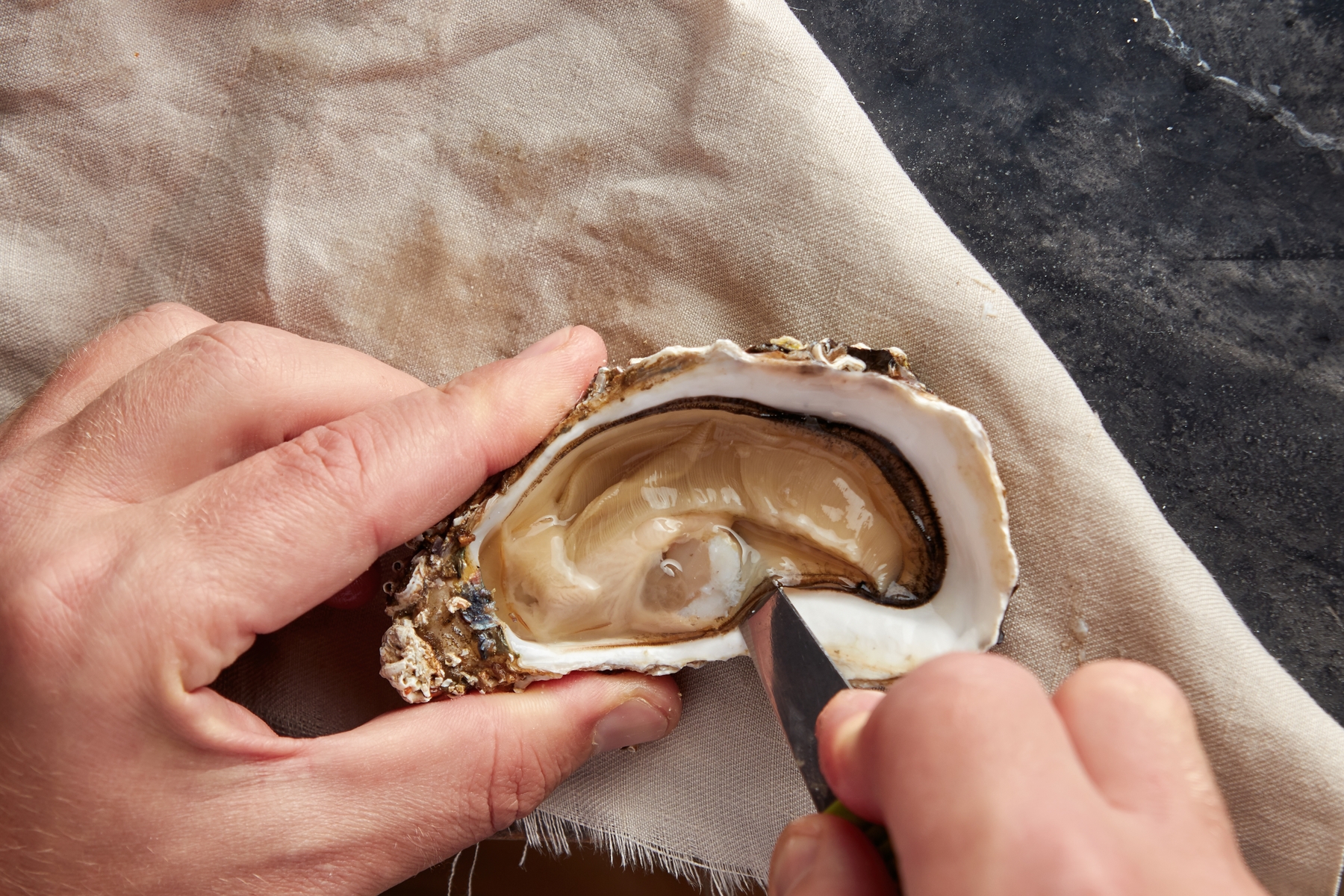
Carefully sever the top adductor muscle to release the shell without damaging the delicate meat of the mollusk inside.
How to Serve: Ice, Sauce, and Nothing Extraneous
Dishware and Presentation
The classic: a large plate or tray with crushed ice, the shells nestled into it, lemon halves, a small fork or oyster spoon, heavy napkins. In restaurants, seaweed is placed under the shells—to keep them from sliding and for aesthetics. At home, one can manage without seaweed. The main thing is ice, and there must be enough of it so the shells lie stably without tipping over.
What to Eat Oysters With: Which Sauces Work and Which Overpower the Flavor
- Lemon — the most straightforward and honest option. A few drops, not half a citrus fruit.
- Mignonette — white or red wine vinegar, finely minced shallot, freshly ground black pepper.
- Hot sauce — acceptable, but proceed with caution. Leave heavy cream sauces for baked oysters.
The best first oyster is plain. First, understand what is inside. Then decide if you need lemon.
What to Serve Alongside
Rye toast with good butter is the best thing you can place nearby. A fresh baguette. Thinly sliced cucumber. Champagne, Crémant, or Cava. A dry white wine—Muscadet, Albariño, Chablis. For a non-alcoholic option, sparkling mineral water or chilled green tea works well: they do not overpower the flavor and provide a brief pause between shells.
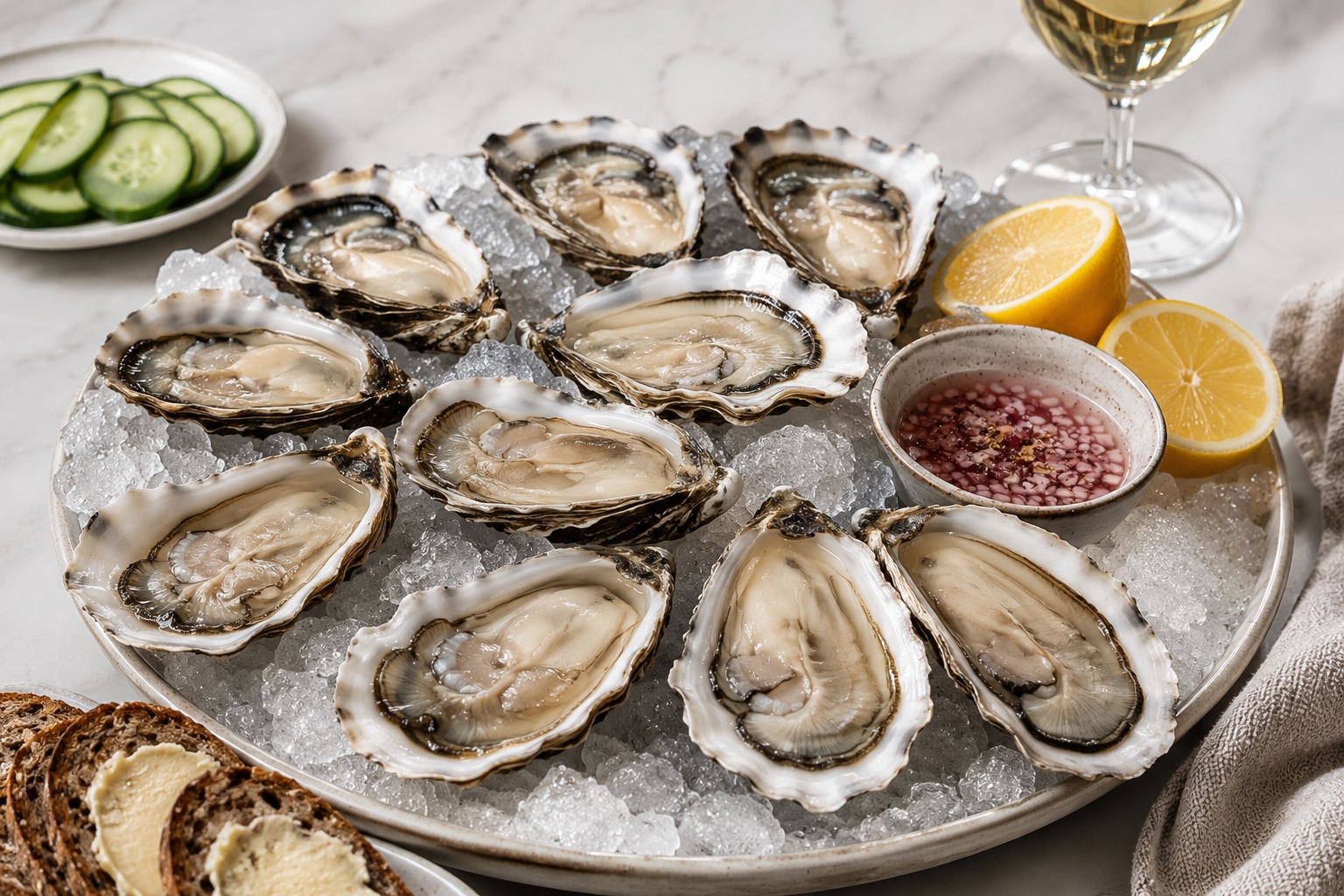
A classic presentation includes mignonette sauce, lemon wedges, and buttered rye toast, which perfectly highlight the oceanic flavors.
How to Eat Oysters Properly: A Few Practical Matters
Smell First
Before eating, give it a smell. A fresh oyster smells of the ocean: iodine, seaweed, sometimes something cucumber-like and cool. This smell is sharp but pleasant. Rotten fish, ammonia, sourness—these are signals not to eat it.
About Lemon and Quantity
A few drops. Lemon is great when it highlights the oceanic flavor and cuts through an overly sharp iodine background. When there is too much of it, you are eating lemon juice with an oyster texture. That is a different dish entirely.
Should Oysters Be Chewed or Swallowed?
One of the most persistent myths is that an oyster must be swallowed whole without chewing. It can and should be chewed slightly—this is the only way to experience its texture and flavor. Swallowing is fine, too. But chewing is not prohibited.
What to Do With an Empty Shell
In a restaurant, it is placed back on the plate, cup side up. At home—do whatever is comfortable. Building a pyramid out of empty shells is unnecessary.
What Oysters Taste Like
The Range Is Wider Than It Seems
Oysters can be salty and iodine-heavy, sweetish, creamy, nutty, cucumber-fresh—and sometimes with a metallic or mineral finish, like a cold stone near the water. The flavor depends on the region, the water temperature, and what the mollusk fed on.
- Norwegian and Swedish oysters—moderately salty, with a clean oceanic flavor and a minimum of anything extraneous.
- French Fine de Claire—softer, creamier, with a nutty hint; there is less iodine, and this is noticeable immediately.
- Atlantic French oysters are generally more delicate than, say, Pacific ones.
- Far Eastern Pacific oysters—often present a pronounced sweetness and a rich finish.
- Irish and Scottish—salty, without unnecessary nuances, almost rugged.
This is subjective. The taste also depends heavily on how well the shell is chilled.
Why You Might Not Like Your First One
The first oyster often seems strange. The brain expects “seafood”—something familiar, cooked, understandable. Instead, it receives a cold gulp of the sea with a live texture that takes getting used to. Because this texture takes getting used to, the first oyster rarely brings pure delight.
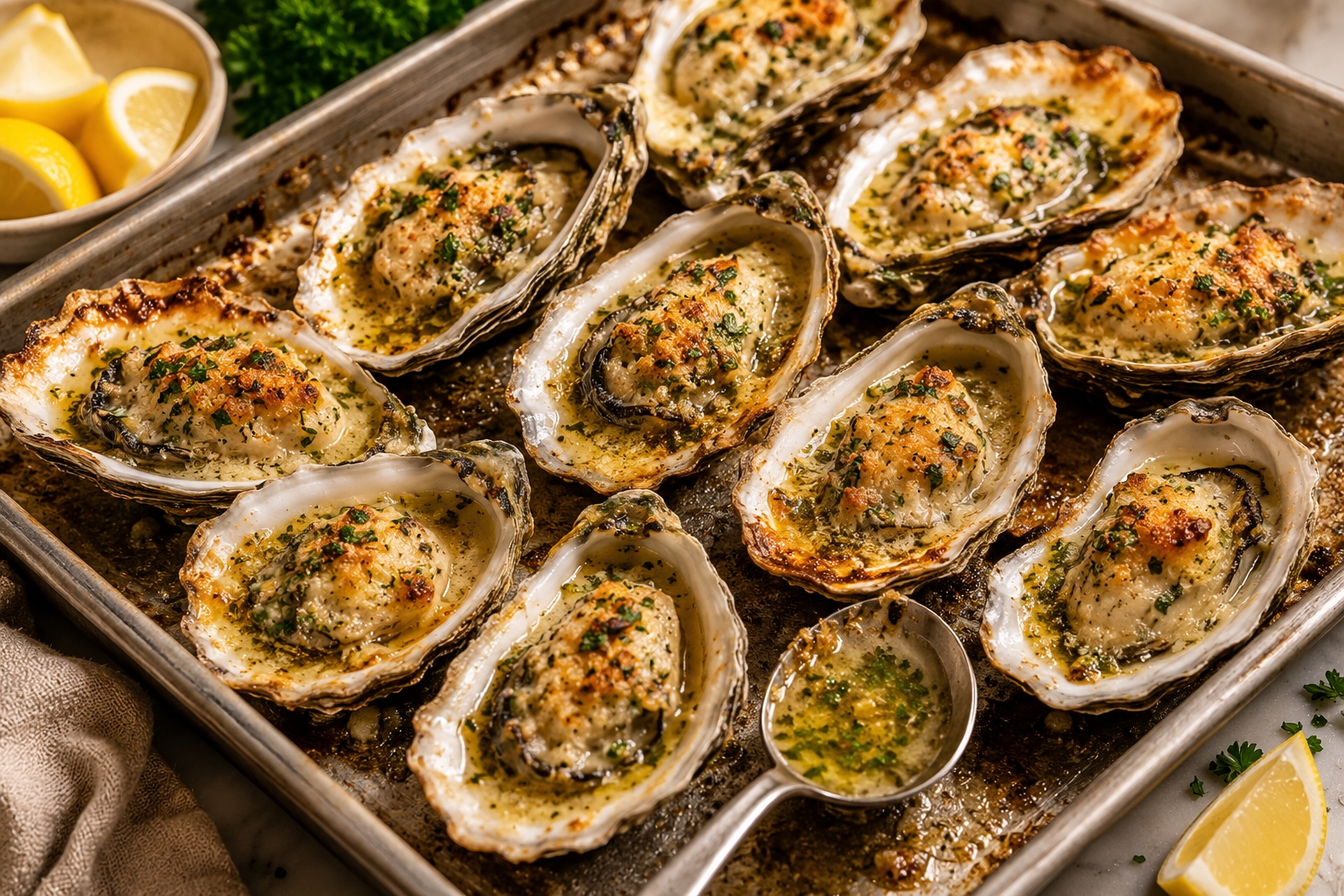
Baking is an excellent alternative for those who prefer thermally cooked seafood while maintaining a rich and satisfying flavor profile.
Baked Oysters: A Good Option
When Cooking Is Appropriate
If oysters are being purchased for the first time, if there are people from high-risk groups among the guests, or if you simply do not want to serve raw ones—fresh live oysters can be cooked. But if there is any doubt regarding freshness, smell, or storage, or if the oyster is open and unresponsive to tapping, it should not be baked; it should be thrown away.
Proper cooking kills vibrios and noticeably reduces risk. But “warming them up for a couple of minutes” is not enough: oysters must actually be cooked. Under the broiler—about 3 minutes; baking—around 10 minutes at 230 °C (450 °F), depending on size and filling.
What to Do With Them
- Garlic butter with parsley, a splash of white wine.
- Parmesan and herbs.
- A drop of heavy cream and black pepper.
- Oysters Rockefeller, if you want a classic.
Bake or broil them until the meat is thoroughly heated: the filling should bubble actively, the edges of the oyster should curl slightly, and the meat should become firmer but not dry out. If cooking for individuals in risk groups, it is better to aim not for “slightly warmed” but for full thermal cooking.
However, baked oysters are a completely different dish.
Mistakes Almost Everyone Makes
Opening Too Early
An oyster quickly loses its texture and flavor after opening. Opening them an hour before serving ruins them. Open them right before eating.
Rinsing Under the Tap
Rinsing the outside of the shell is fine, so fragments don’t end up in your mouth later. Rinsing the oyster itself from the inside under the tap washes away all the flavor and all the liquor.
Pouring Lemon Without Measure
A few drops. Not half a shell of lemon juice.
Buying Extra “Just in Case”
For a first time, 6–12 pieces for two is enough if the oysters are an appetizer. Fresh and in the right quantity is better than too many with leftovers the next day.
Confusing Price with Quality
Price depends on the region, size, logistics, and a trendy name on the price tag. A good oyster is fresh, stored correctly, with a balanced flavor. A loud name and a high price do not guarantee quality.
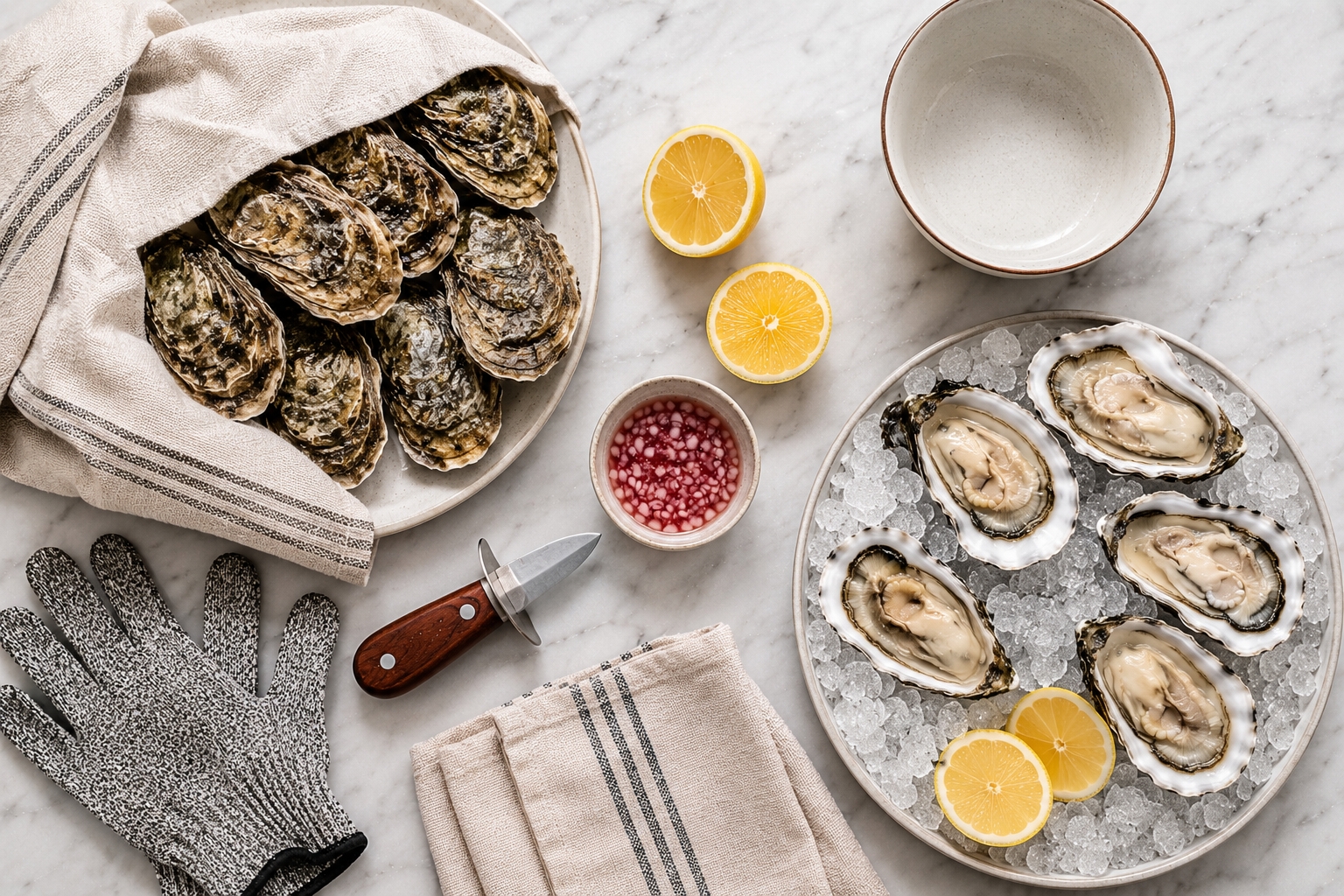
Everything you need for success: a specialized knife, a protective glove, fresh lemon, and a little bit of patience.
Quick Cheat Sheet
Buy: from a reliable seller with documentation, a cold display case, and good product turnover.
Store: in the refrigerator, cup side down, under a damp towel, without an airtight plastic bag.
Open: with an oyster knife, using a thick towel, cup side down, twisting the wrist at the hinge.
Check: the smell, the presence of liquor, the shell’s reaction to tapping.
Serve: on ice immediately after opening.
Eat: first without sauce, then with a few drops of lemon or mignonette.
If in Doubt: cook them thoroughly or do not eat them at all.
0 comments