
You stand at the wine shelf. A minute passes, then another. Your eyes skim the labels, and each new word only complicates the picture: Rioja, Tempranillo, Crianza, Reserva, Verdejo, Albariño, Ribera del Duero, Priorat, Cava. Half of these words seem familiar, the other half remain a mystery. People easily get lost and no longer understand which word to grasp first. Ultimately, they grab a Rioja. They choose it because they have seen it, because they have heard of it, because it is at least somewhat familiar.
Spanish wine often looks more complicated on the shelf than it actually is. Starting with two basic concepts makes a difference. First, observe how the wine was aged: Joven, Crianza, or Reserva. Next, look at where it comes from: Rioja, Ribera del Duero, Rueda, or Priorat. Two parameters are all you need. The rest are details. Understanding those details comes gradually as you uncork new bottles.
Spaniards grew up with these words. For them, reading a label is as effortless as reading “dry” or “semi-sweet” is for the rest of us.
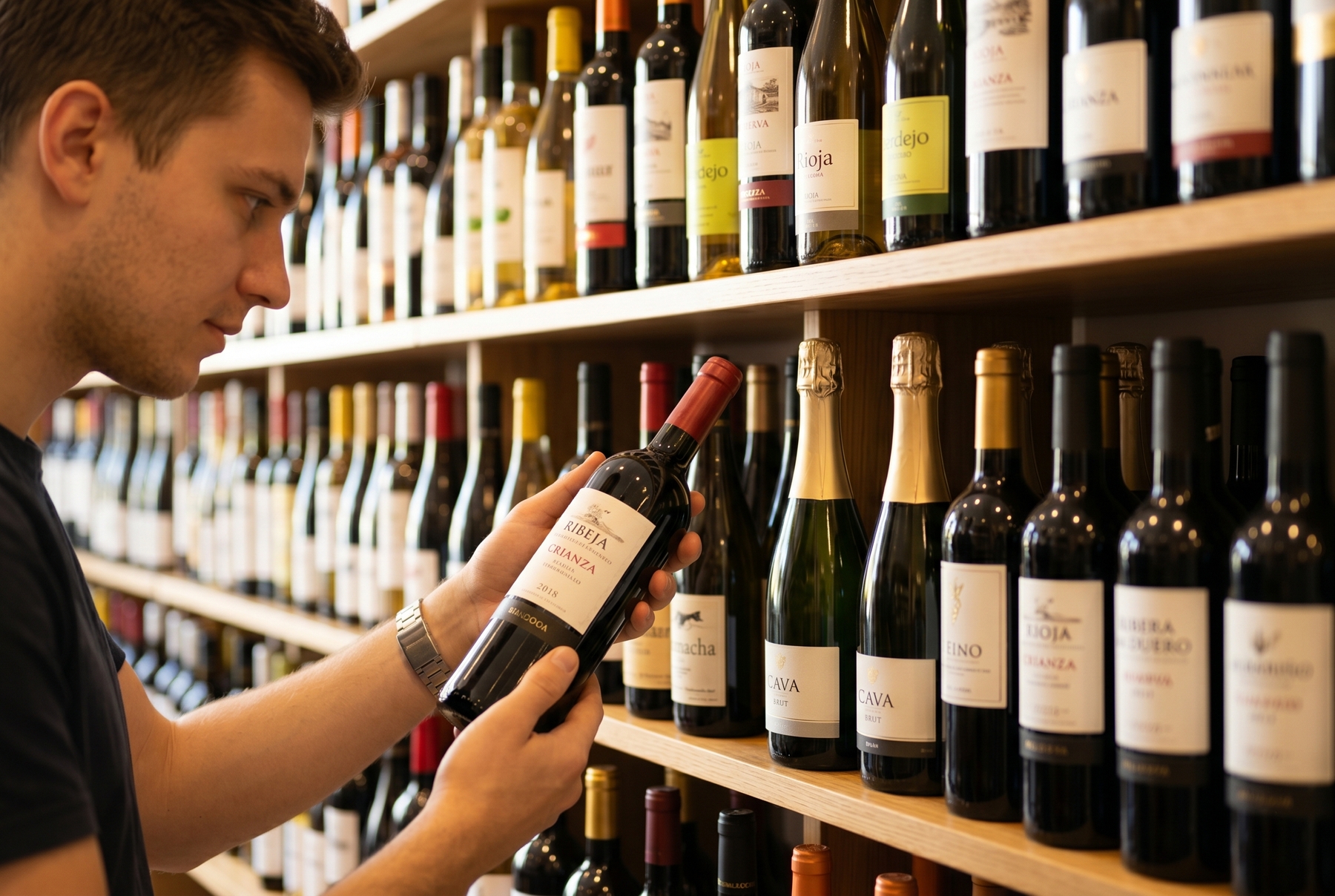
Understanding the label serves as the first step to choosing the perfect Spanish wine, whether it is a classic Rioja or a refreshing Albariño.
Table of Contents
- Spanish Wine Classification: What the Aging Terms Mean
- Spanish Wine Regions: Why Everything Does Not End With Rioja
- Rioja: The Classic Where It All Began
- Ribera del Duero and Toro: When You Want a More Powerful Red
- Rueda, Rías Baixas, and Galicia: White Wines You Cannot Help but Love
- Catalonia: Beyond Cava and Expensive Priorat
- Aragon: Garnacha, Sun, and Honest Generosity
- The Levant: Monastrell, Bobal, and Southern Power
- Andalusia: Sherry, Montilla-Moriles, and Málaga
- The Basque Country: Txakoli, a White Wine With a Maritime Character
- Navarra: The Quiet Neighbor With a Good Character
- Castilla-La Mancha: Massive Everyday Spanish Wine
- Madrid, the Balearic Islands, and the Canaries: Spain for the Curious
- Main Grape Varieties of Spanish Wines
- DO, DOCa, DOP, IGP, and Vino de Pago: What the Letters on the Label Mean
- How to Pair Spanish Wine With Food
- Cheat Sheet: How to Read a Spanish Wine Label at the Store Shelf
- How to Choose Good Spanish Wine in Local Stores
- How Spaniards Themselves Treat Wine
Spanish Wine Classification: What the Aging Terms Mean
Joven: A Young Wine Where the Grape Outshines the Barrel
This wine either never rested in an oak barrel or spent very little time there. It presents a fruitier, lighter, and simpler profile in the best sense of the word: it requires no special dinner and asks for no specific occasion.
Producers usually do not even print the word “Joven” (young) on the label. Instead, the grape variety appears in large print: Tempranillo, Garnacha, Verdejo, Albariño, Monastrell, Bobal. The producer aims to sell the variety itself, its character, and its freshness, rather than a story about oak and years of aging. If the bottle lists a variety but lacks Crianza, Reserva, or Gran Reserva, it generally holds a younger or unaged wine.
This is exactly what pairs well with roast chicken, pasta, tapas (traditional Spanish small plates), pizza, or a quick Wednesday dinner. It arrives without heaviness, vanilla notes, or solemn pretensions.
Crianza: The First Serious Introduction to the Barrel
Crianza goes beyond simple fruit. According to general Spanish rules, a red Crianza ages for a minimum of two years, with at least six months spent in oak. The most famous regions enforce even stricter rules: for example, in Rioja and Ribera del Duero, a red Crianza usually spends at least a year in oak. The barrel presence makes itself known, introducing a soft, rounded, slightly spicy background. The fruit flavor remains intact; it simply gains depth.
Crianza serves as an ideal choice when you want a properly made Spanish dry red without monumental weight. It perfectly complements meat, cheeses, hearty stews, and dinners where you actually sit at a table with at least half an hour to spare.
Crianza is not an under-developed Reserva. The hierarchy of “longer is better” does not apply here. Crianza often tastes better with everyday food because it refrains from overpowering the dish with assertiveness.
Reserva: Calmer, Deeper, and Not Always Necessary
Winemakers age Reserva for a longer period: a minimum of one year in the barrel and additional time in the bottle, totaling three years for reds. The glass reveals notes of dried cherry, leather, tobacco, spices, and vanilla. The wine becomes calm and mature, featuring soft, well-integrated tannins.
Reserva shines when served with meat, steak, lamb, aged cheese, and a dinner not eaten on the run. If you prefer juicy, lively, fruit-forward wines, Reserva might feel a bit too serious.
Gran Reserva: About Aging and Style, Not the Rule of “Older Is Better”
Gran Reserva represents the most aged traditional style: for reds, this means a minimum of five years of total aging. The exact aging proportions depend on the region. Memorizing the arithmetic of months matters less than understanding the character: mature, calm, and layered with tertiary aromas like leather, tobacco, and dried fruits.
Such wines easily disappear against the background of light food, disappoint lovers of freshness, and certainly do not fit the “bought a bottle for a salad” format.
Gran Reserva offers a distinct character: slow, mature, sometimes magnificent, and occasionally just too demanding for a regular Tuesday. Approaching it as an independent genre rather than the top of a pyramid yields a better experience.
Spanish Wine Regions: Why Everything Does Not End With Rioja
The secret to Rioja’s leadership remains simple: production scale, a stable image, a familiar aged red style, and a well-tuned export market. It appeared on shelves earlier than others and firmly secured its place there.
Knowing only Rioja means missing the white wines of Galicia, Verdejo from Rueda, the powerful reds of Ribera del Duero, the volcanic wines of the Canary Islands, the Sherry world of Andalusia, Cava and still wines of Catalonia, Monastrell from the southeast, Garnacha from Aragon, and Txakoli from the Basque Country. These wines are not rare. They represent a Spain that a single Rioja bottle cannot contain.
Rioja: The Classic Where It All Began
Rioja builds its identity around the Tempranillo grape, often blended with Garnacha, Graciano, and Mazuelo. For white Rioja, Viura remains essential. The basic profile of the red includes cherry, red berries, spices, oak, and vanilla; aged versions introduce leather and tobacco. The wine presents a rounded, predictably good profile without sharp edges.
It acts as a great entry point, offering plenty of choice, a clear Joven-Crianza-Reserva-Gran Reserva aging system, and a wide price range. Starting an exploration of Spanish wine with Rioja makes excellent sense.
One trap exists: it boasts such fame that people begin to think “if it is Spanish, it must be Rioja.” This equals believing that Russian cuisine restricts itself entirely to blini (pancakes).
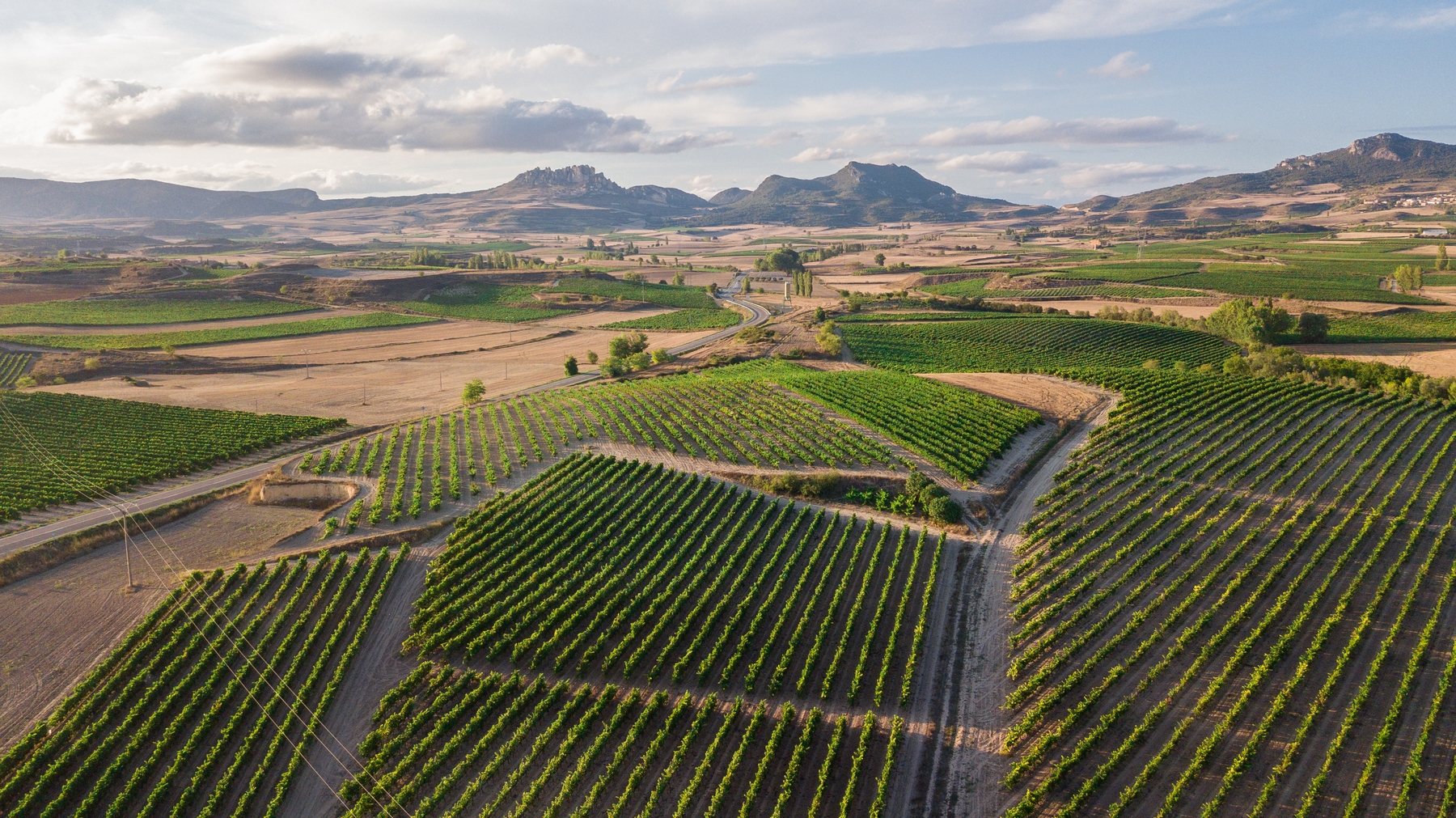
Rioja stands as Spain's most recognizable wine region, famous for its aging traditions and elegant Tempranillo wines.
Ribera del Duero and Toro: When You Want a More Powerful Red
Ribera del Duero: A Denser and More Powerful Version of Tempranillo
Ribera del Duero sits southwest of Rioja on a higher plateau. This elevation makes itself known in the glass. While Rioja delivers elegance, roundness, and soft fruitiness, Ribera provides density, dark berries, power, and a meaty undertone. Locals call Tempranillo “Tinto Fino” or “Tinta del País” here; the main white variety of the region is Albillo Mayor, though it appears less frequently on labels.
This provides the perfect match for steak, lamb, duck, and grilled meats.
Toro: Further South, Even Richer
Toro represents a small region to the west, situated on the banks of the Duero river, boasting very old vines. The primary grape, Tinta de Toro, acts as a local mutation of Tempranillo that yields thick and powerful wines. Reaching for a bottle of Toro makes sense when you desire a glass packed with robust flavor.
Rueda, Rías Baixas, and Galicia: White Wines You Cannot Help but Love
Rueda: Verdejo for Those Seeking Freshness
Rueda primarily focuses on white wine. The main grape, Verdejo, delivers a dry, brisk profile with a slight bitterness on the finish. It takes a chill beautifully and pairs wonderfully with fish, salads, goat cheese, and any light appetizers. It also drinks well on its own. It presents no complexities, just good white wine that requires no explanations.
Rías Baixas: Albariño and the Feeling of the Sea
Rías Baixas belongs to Galicia, characterized by the Atlantic coast and a humid, green northern climate. The primary grape is Albariño. Its minerality and freshness completely contradict the image of a hot, southern Spain. This wine smells of the sea, not metaphorically, but almost literally.
It serves as an excellent choice alongside oysters, seafood, fish, and cold appetizers.
Galicia Reaches Wider Than Albariño Alone
Galicia encompasses a massive region featuring several zones. Ribeiro produces fresh white blends. Valdeorras acts as the homeland of Godello, a more serious and deep white wine. Ribeira Sacra offers light reds made from Mencía, entirely different from what one expects from Spain by default. Monterrei represents a lesser-known but fascinating zone bordering Portugal.
Bierzo: At the Crossroads of Castile and Galician Mood
Bierzo technically belongs to Castile and León, but its character aligns closely with Galician reds. The main grape remains Mencía: the wines here taste lighter and more aromatic than Ribera or Toro, carrying good acidity and minerality. It provides an ideal option when seeking a northwestern red without the heavy southern power.
Catalonia: Beyond Cava and Expensive Priorat
Penedès: The Territory of Cava, but Not Only
Penedès serves as the region where the bulk of Cava originates, while also producing white, rosé, and experimental wines.
Cava: Not Just “Spanish Champagne”
Cava (Spanish sparkling wine) does not mean just any sparkling wine from Catalonia, nor does it mean “Spanish Champagne.” It exists as an independent category of Spanish sparkling wine with its own regulations. The historical homeland and main production center of Cava lies in Penedès and the zone around Sant Sadurní d’Anoia. Winemakers produce it using the traditional method, where the second fermentation occurs right in the bottle; the base relies on the classic trio of Macabeo, Xarel·lo, and Parellada grapes.
A Cava label offers two different clues. The first relates to sweetness, ranging from Brut Nature, Extra Brut, and Brut to Extra Seco, Seco, Semi Seco, and Dulce. The second indicates aging: Cava de Guarda (minimum 9 months), Reserva (minimum 18 months), Gran Reserva (minimum 30 months), and Cava de Paraje Calificado (minimum 36 months, plus ties to a specific outstanding plot). These represent two independent scales rather than a single one.
Cava pairs beautifully with fried foods, jamón (cured Spanish ham), tapas, seafood, potato snacks, and cheese. A Brut from a reputable house often outperforms more expensive wines in terms of price-to-quality ratio.
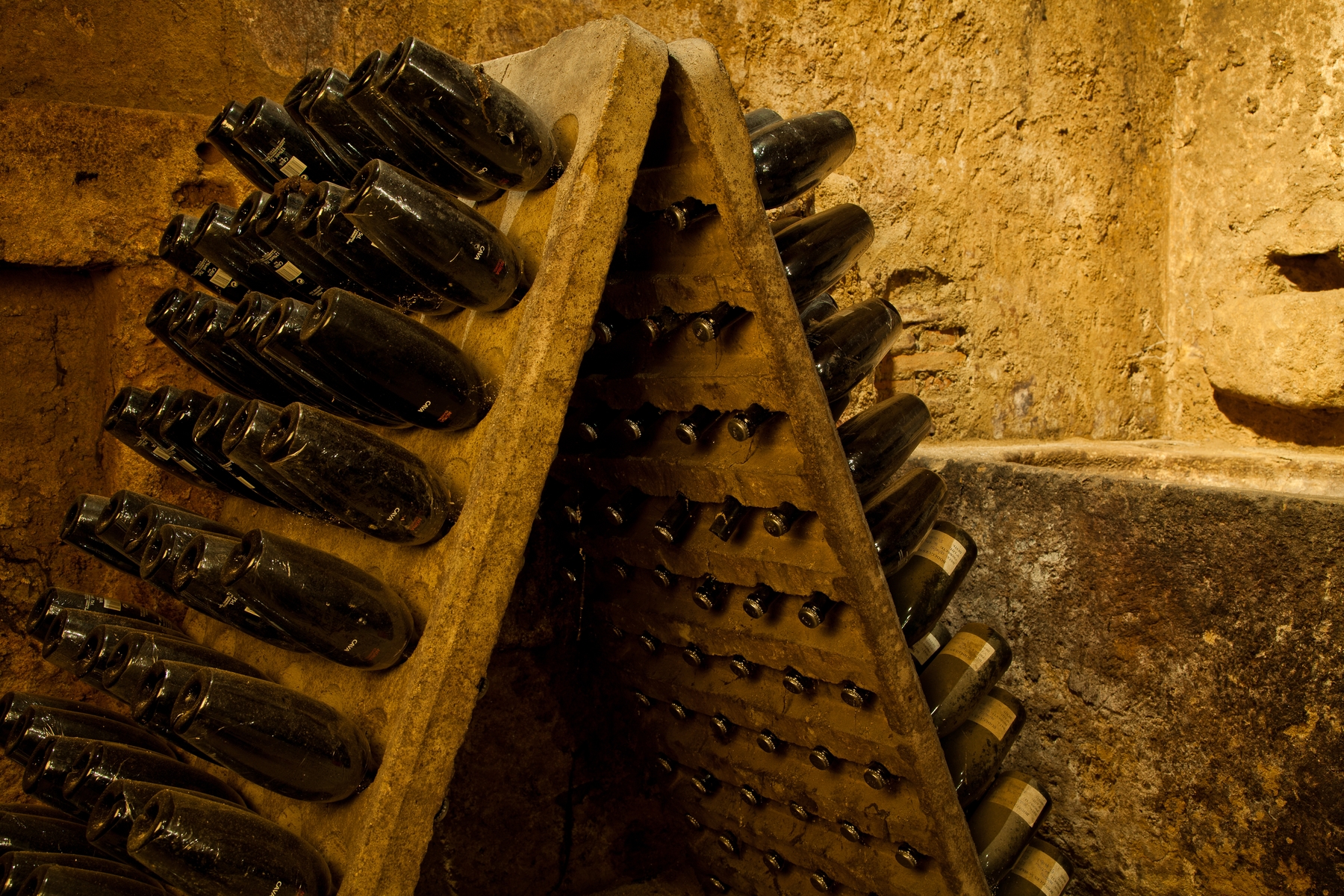
Winemakers produce Cava using the traditional method with secondary fermentation in the bottle, granting it complexity and a fine, persistent perlage.
Priorat: Dramatic Spain
Priorat stands as one of the most prestigious wine regions in Spain. The wines show power, minerality, and high concentration, frequently accompanied by a substantial price tag. Garnacha and Cariñena grow on llicorella soils—dark slate that drains water efficiently, forcing the vines to dig extremely deep. The taste of this rugged earth clearly translates into the wine.
Priorat does not fit the “just for dinner” category. Such a wine demands no food; it remains entirely self-sufficient.
Montsant: The Neighbor Without the Pomp
Montsant completely surrounds Priorat. It shares a similar Mediterranean style, featuring Garnacha and Cariñena grown on the same land, but often presents a much friendlier price. It offers a great opportunity to taste the local style for reasonable money.
Terra Alta, Empordà, and Costers del Segre: For the Curious
Terra Alta showcases White Garnacha, an infrequent guest on shelves outside Catalonia but an intriguing one. Empordà highlights a Mediterranean character, and its geographical proximity to the French Roussillon distinctly shows. Costers del Segre delivers a more continental style, offering a variety of grapes and fewer stereotypes.
Aragon: Garnacha, Sun, and Honest Generosity
Wine lovers frequently underestimate Aragon (Aragón).
Campo de Borja offers Garnacha without unnecessary ceremony. Ripe berries, spice, softness, and a great balance of price and expressiveness define it. This does not pose as a wine for long discussions about terroir, but it suits a casual dinner perfectly.
Cariñena and Calatayud yield rich, straightforward reds without the “special occasion” markup. Calatayud features wines from incredibly old Garnacha vines, creating a separate story entirely worthy of attention.
Somontano acts as a more modern region. Here, alongside local varieties, winemakers frequently plant Cabernet, Merlot, and Chardonnay. This provides an excellent alternative when craving a Spanish red after growing tired of Rioja.
The Levant: Monastrell, Bobal, and Southern Power
Jumilla and Yecla: Monastrell in All Its Glory
Jumilla and Yecla sit in the southeast, characterized by intense heat, limestone, and very little water. Monastrell dominates as the main grape here. The heat and aridity do their job: the resulting wine grows concentrated, dark, and occasionally boasts very high alcohol content.
It pairs flawlessly with kebabs, grilled meats, or a heavy winter dinner.
Valencia and Alicante: Sunny Spain in a Bottle
Valencia and Alicante represent more than just beaches and oranges. Monastrell and Moscatel serve as the key varieties of Alicante; Valencia adds Bobal and the local Merseguera to the mix. They produce diverse red and white wines that frequently offer great interest without carrying a high price tag.
Utiel-Requena and a Bobal Worth Remembering
Utiel-Requena highlights Bobal as its main grape. It yields dark, berry-driven wines with solid acidity. This serves as an excellent option for those seeking new flavor profiles. If Rioja feels too classic and Ribera too serious, the wines of the Levant offer a more direct, sunny, and thick taste.
Andalusia: Sherry, Montilla-Moriles, and Málaga
Sherry: Not “Grandma’s Sweet Wine,” but a Massive Separate World
Sherry (Jerez) acts as a fortified wine from a region in the country’s southwest. Many assume that Sherry only tastes sweet. They simply have never tried a Fino.
The foundation of most dry Sherries relies on Palomino Fino. The grape itself remains neutral: the character develops through aging either under flor (a layer of specific yeast that protects the wine from oxidation) or without it.
Fino drinks dry, light, and slightly salty, showing a bready, yeasty character. It demands to be served cold and pairs excellently with food, especially seafood, fried snacks, olives, and jamón.
Manzanilla carries its own official name, Manzanilla-Sanlúcar de Barrameda: it functions as a Fino-style wine that must age in Sanlúcar de Barrameda right next to the Atlantic, making the maritime character feel much sharper.
Amontillado starts as a Fino but ages with exposure to air. It brings notes of nuts, incredible depth, and an amber color.
Oloroso feels more powerful, darker, and richer: it acts as a dry Sherry aged without flor, undergoing long oxidative maturation. If you crave sweetness, seek out Cream, Medium, or sweet versions based on Sherry wines rather than a standard Oloroso.
Pedro Ximénez and Moscatel represent sweet southern styles: think raisins, figs, molasses, and chocolate. Pouring Pedro Ximénez over vanilla ice cream is not an Instagram culinary trick, but rather a very old Andalusian practice.
Sherry proves a vital point: Spanish wine extends far beyond the familiar dry red.
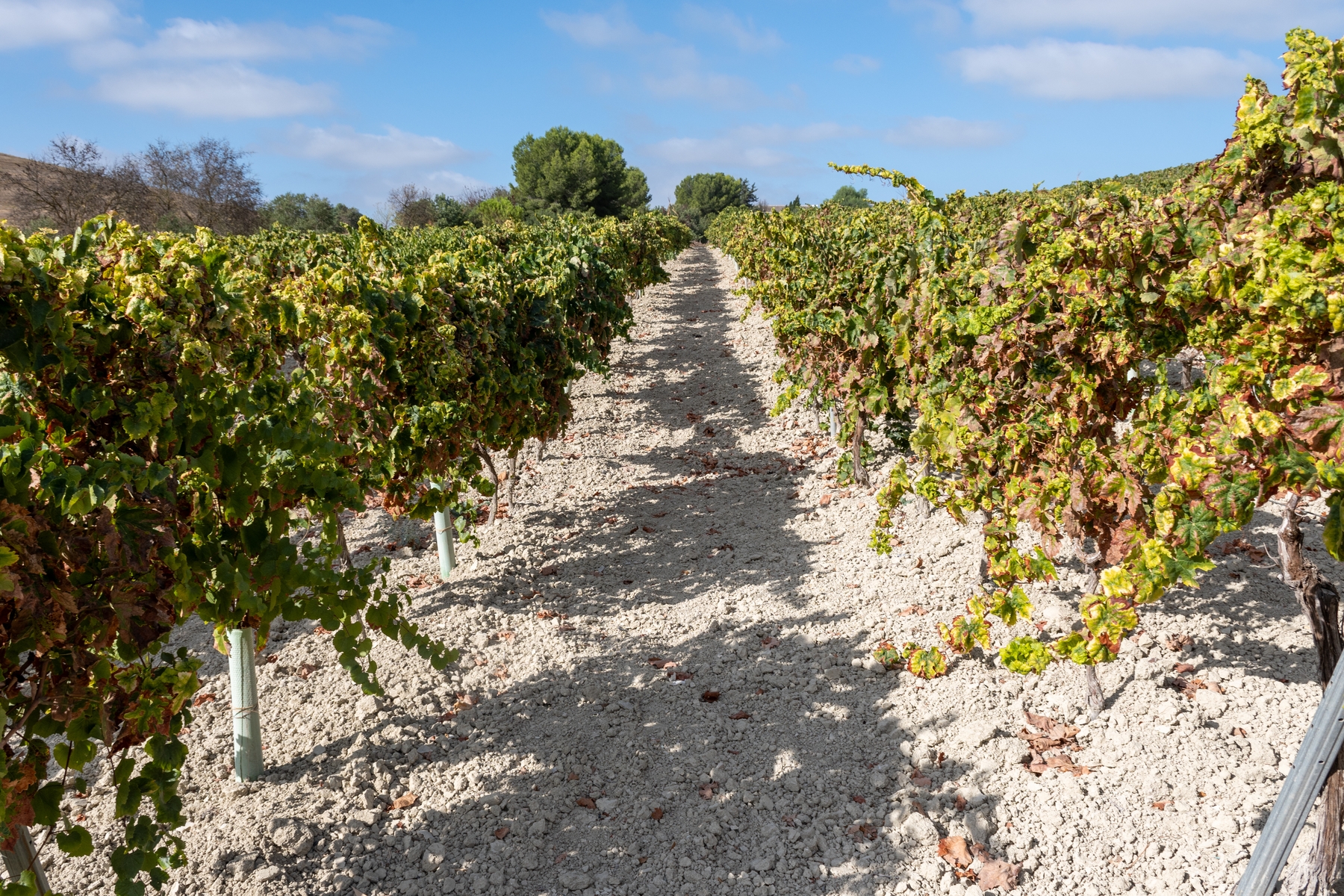
The unique chalky Albariza soils surrounding Jerez de la Frontera create ideal growing conditions for the Palomino grape.
Montilla-Moriles: A Relative of the Sherry World
Montilla-Moriles acts as a region within Andalusia, sharing a similar culture of southern aged wines. Pedro Ximénez serves as the primary grape here. These wines maintain a lower profile than Sherry, which frequently makes them highly compelling in terms of price.
Málaga: Old Wines and New Mountain Vineyards
Málaga means more than just a resort. It holds a very old wine history: sweet wines made from Pedro Ximénez and Moscatel earned fame across Europe long before the first tourists reached the Costa del Sol. Today, winemakers also craft dry wines from the mountain vineyards of Sierras de Málaga, delivering a fresh, fascinating, and entirely different character.
The Basque Country: Txakoli, a White Wine With a Maritime Character
Txakoli drinks as a light, highly acidic, and sometimes slightly sparkling white wine. The main white grape is Hondarrabi Zuri; Hondarrabi Beltza appears in red and rosé versions. Winemakers produce it in three zones of the Basque Country: Txakolí de Getaria, Txakolí de Bizkaia, and Txakolí de Álava. Drinkers enjoy it young and ice-cold.
It pairs flawlessly with anchovies, fish, seafood, fried snacks, or simply as an aperitif. This reveals a completely different Spain: sharp, crisp, and decidedly Atlantic.
Navarra: The Quiet Neighbor With a Good Character
Navarra sits right next to Rioja and Aragon but frequently goes unnoticed. Winemakers here craft rosé wines from Garnacha that rank among the best in the country for their price-to-character ratio. Reds based on Tempranillo and Garnacha drink softer and rounder than those of their neighbors. The style remains friendly and unpretentious. It serves those looking for a Spanish red with soft fruitiness and an excellent everyday option.
Castilla-La Mancha: Massive Everyday Spanish Wine
La Mancha: Scale, Accessibility, and Honesty
La Mancha represents the largest vineyard area in the country. Millions of inexpensive, everyday bottles originate here. If you buy a Crianza for a euro and a half at Mercadona (a popular Spanish supermarket), it most likely comes from this region. Despite the price, the wine often proves quite decent.
Valdepeñas stands out as a familiar name on the budget shelf, offering light reds made from Tempranillo, which locals call Cencibel. The white Airén acts as the crucial workhorse grape of the vast central plain, forming the base for a massive volume of everyday Spanish wine.
Manchuela, Almansa, and Méntrida deserve closer attention. Manchuela offers excellent Bobal, while Méntrida provides Garnacha and old vines. Almansa serves as a reference point for a darker, richer southern style, utilizing Garnacha Tintorera and Monastrell. This territory rewards the hunter looking for hidden gems.
Madrid, the Balearic Islands, and the Canaries: Spain for the Curious
Vinos de Madrid: A Local Discovery
When living in Madrid, you eventually realize that vineyards surround the city. The Vinos de Madrid zone does not act as the country’s main showcase or a top export symbol. However, it offers an excellent chance to try genuinely local wine. Expect old Garnacha vines in San Martín de Valdeiglesias, Tempranillo (Tinto Fino) in Arganda, and whites from Albillo Real and Malvar, crafted by several small producers working quietly without press releases. This forms a part of the gastronomic map that does not shout from international shelves.
The Balearic Islands: Mallorca Is Not Just for the Beach
Mallorca features the Binissalem and Pla i Llevant zones, relying on local grapes: Manto Negro and Callet for reds, and Prensal Blanc for whites. This wine carries an island character, feeling different if only because of the context in which you drink it.
The Canary Islands: Volcanic Spain
The Canary Islands follow their own path. Lanzarote, Tenerife, La Palma, El Hierro, and Gran Canaria each possess their own soil and microclimate. Vineyards grow on volcanic soils using old, ungrafted vines: the Canaries historically escaped the phylloxera epidemic, preserving rare ancient varieties like Listán Negro, Malvasía Volcánica, and Baboso Negro. They taste like nothing else in the world.
Geography manifests almost physically in Canarian wines: volcano, wind, and black earth. The glass delivers a sharp minerality, far removed from mainland Spain.
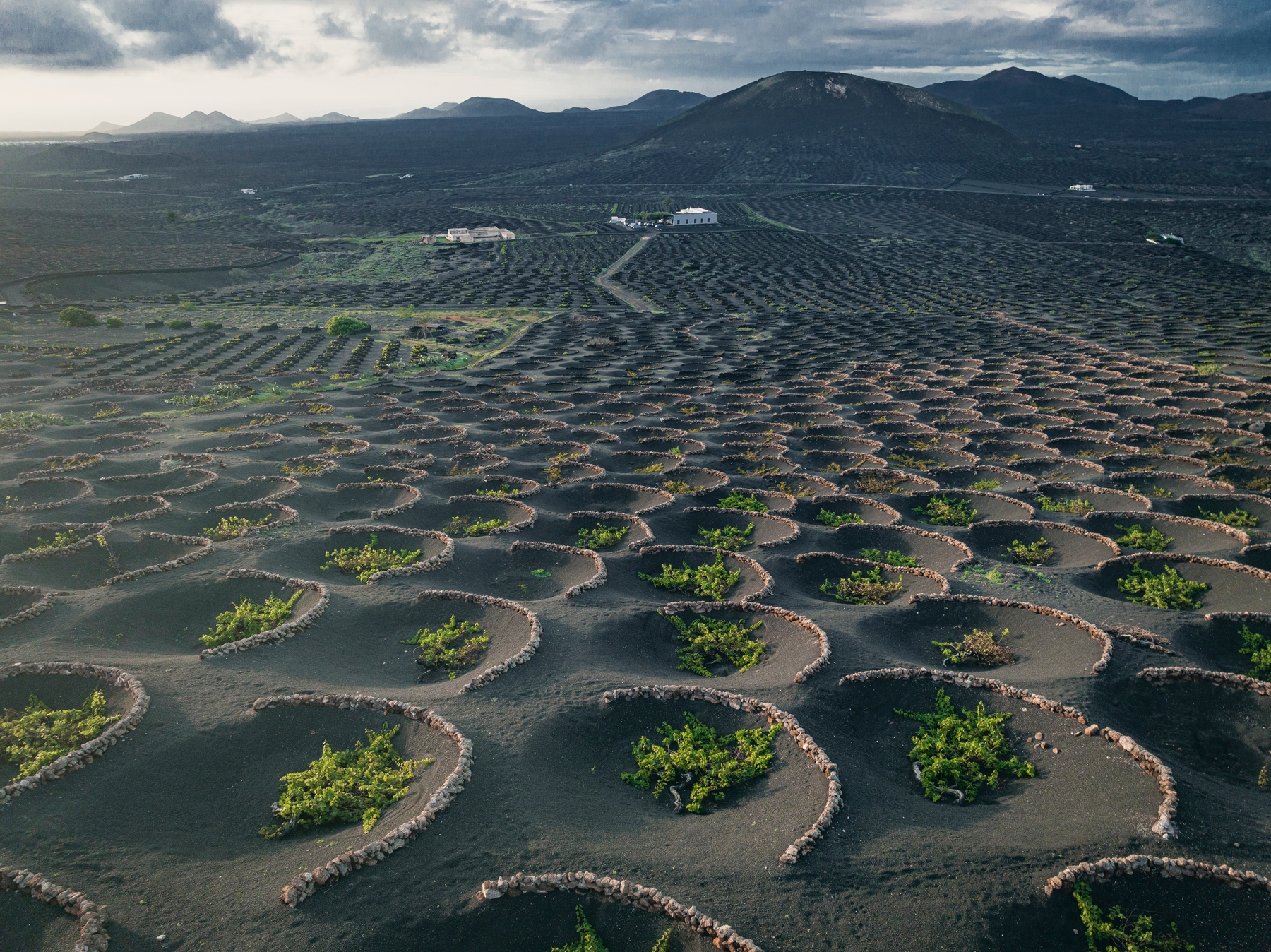
On Lanzarote, stone walls protect the vines from the wind, planted deep within craters of volcanic sand.
Main Grape Varieties of Spanish Wines
Grape varieties help explain a wine’s character, but beginners should not turn them into an isolated deciding factor. At the start, it remains easier to navigate by aging and region, keeping the grapes in mind as an additional clue. Here they are.
For reds, the main grape is Tempranillo. It forms the foundation of Rioja and Ribera del Duero: in Rioja, it typically drinks softer, rounder, and spicier, whereas in Ribera, it becomes denser, darker, and more powerful. If you want a recognizable Spanish red, Tempranillo acts as the most reliable starting point.
Garnacha presents a juicier, warmer, berry-driven, and softer profile. It grows abundantly in Aragon, Navarra, Madrid, Montsant, and Priorat. It makes a great choice when seeking a red without excessive austerity.
Monastrell thrives in the southeast: Jumilla, Yecla, and Alicante. It delivers dark berries, plum, spices, density, and sometimes high alcohol. It pairs exceptionally well with grilled meats and hearty stews.
Bobal represents Utiel-Requena and Manchuela. It showcases berry notes, dark color, and solid acidity. While less obvious than Tempranillo or Garnacha, it provides an intriguing option when trying something new.
Mencía rules Bierzo and Ribeira Sacra. It produces a lighter, fresher, and more mineral red, featuring cherry, herbs, and bright acidity. It acts as an excellent alternative for those tired of dense, oaky wines.
Among whites, memorizing three names keeps things simple. Verdejo from Rueda brings citrus, green apple, grass, and a slight bitterness. Albariño from Rías Baixas delivers Atlantic freshness, citrus, peach, salinity, and pairs flawlessly with seafood. Godello from Valdeorras drinks denser, more serious, and deeper than many light whites.
If you understand the grape, great. If not, do not worry. Look at the region first: Rioja, Ribera, Rueda, Galicia, Catalonia, Andalusia, or the Canaries. The grape varieties will naturally populate your map over time.
DO, DOCa, DOP, IGP, and Vino de Pago: What the Letters on the Label Mean
DOP / DO: Protected Designation of Origin
DO (Denominación de Origen) means that winemakers crafted the wine in a specific region according to strict rules dictating permitted varieties, vineyard boundaries, yields, and methods of production and aging. It does not guarantee you will love it, but it guarantees origin and standards. In a European context, the label displays this as DOP (Denominación de Origen Protegida).
DOCa: The Highest Regional Category
DOCa (Denominación de Origen Calificada) represents a stricter system featuring additional control for major wine zones. In Spain, only two regions hold this status: Rioja and Priorat. This does not automatically mean wines from these regions taste better; the controls simply remain stricter.
IGP / Vino de la Tierra: Sometimes Freer and More Interesting
Winemakers occasionally choose the IGP (Indicación Geográfica Protegida) category because it offers more freedom: they can work with varieties or methods outside the strict rules of a regional DO. A bottle marked “Vino de la Tierra” (Wine of the Land) does not inherently mean lower quality; sometimes it reflects a conscious choice by a producer who wants to operate outside classic boundaries.
Vino de Pago: What Does Payment Have to Do With It?
Vino de Pago functions as a special, prestigious category reserved for a single estate or vineyard with unique conditions. It does not act as a “region above DOCa,” but follows a different logic: it highlights a specific plot with its own history and rules, rather than a large zone. In this context, the Spanish word “Pago” refers to a plot of land, not a payment, although the confusion arises regularly.
How to Pair Spanish Wine With Food
For meat, steak, lamb, duck, and grilled meats: Rioja Crianza or Reserva, Ribera del Duero, Toro, Jumilla, Yecla, Priorat, or Montsant.
For fish and seafood: Rías Baixas, Rueda, Ribeiro, Valdeorras, Txakoli, or Cava Brut.
For tapas: Cava, Fino, Manzanilla, young Garnacha, Rioja Crianza, or Verdejo.
For cheeses: Rioja Reserva, Ribera del Duero, Amontillado, Oloroso, Cava, or whites with good acidity.
For dessert: Pedro Ximénez, Málaga, or sweet Muscat wines.
Cheat Sheet: How to Read a Spanish Wine Label at the Store Shelf
Rioja: Classic, aged styles, perfect for getting to know Spain.
Ribera del Duero: Denser, more powerful, dark berries.
Toro: Even richer.
Rueda: Primarily white Verdejo, fresh and light.
Rías Baixas: White Albariño, bright acidity, maritime character, seafood.
Bierzo: Mencía, lightness, minerality, fresh northwestern style.
Priorat: Power, minerality, high price, a separate genre.
Montsant: Similar Mediterranean taste, but frequently more affordable.
Cava: Sparkling wine that fits more than just celebrations.
Sherry (Jerez): Fino, Manzanilla, Amontillado, Oloroso (all based on Palomino Fino), Pedro Ximénez, Moscatel—multiple styles within a single zone.
Jumilla / Yecla: Monastrell, southern power, dark berries.
Campo de Borja / Calatayud: Garnacha, generosity, bright character for a reasonable price.
Navarra: Soft reds, rosés from Garnacha, friendly style.
Txakoli: Basque Country freshness, perfect for aperitifs and fish.
Canary Islands: Volcanic soils, old vines, rare ancient grape varieties.
Crianza / Reserva / Gran Reserva: Aging and style indicators. The “bad-good-excellent” ladder does not apply here. They simply represent different characters.
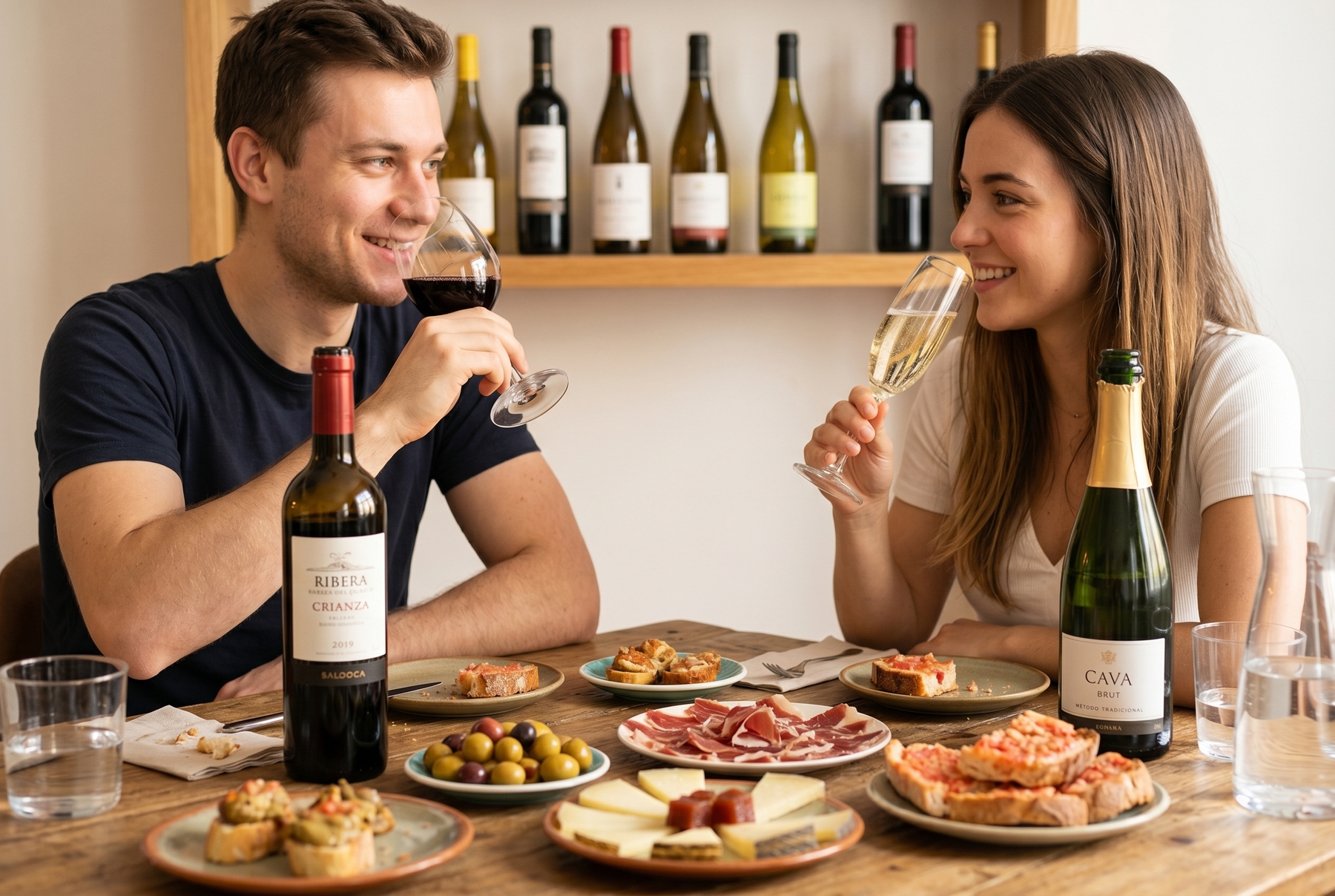
Spanish wine primarily acts as a part of the meal, perfectly complementing the flavors of jamón, cheeses, and local specialties.
How to Choose Good Spanish Wine in Local Stores
In most wine shops and supermarkets, Rioja, Ribera del Duero, Rueda, Sherry, and occasionally Priorat, Jumilla, Toro, and Rías Baixas regularly appear on the shelves. This selection provides plenty of material to start making informed choices.
However, a cheap export bottle rarely conveys the true character of a region. A budget Rioja does not represent Rioja as a whole, but rather its most basic version. Before drawing conclusions about a region, tasting at least two or three bottles from different producers and at varying quality levels makes sense.
If you normally prefer semi-sweet wines: start with fruity whites (Rueda, young Albariño) or try a Cava Semi Seco if you desire a softer profile. Look toward sweet Sherries and Málaga; they offer incredibly rich, concentrated wines possessing a noble sweetness. Getting accustomed to dry wines happens easiest when pairing them with the right food.
If you crave a soft red: seek out a Rioja Crianza, Garnacha from Campo de Borja, young reds from Navarra or Aragon, or the less powerful expressions of Ribera del Duero.
How Spaniards Themselves Treat Wine
Spaniards approach wine much more simply than it appears from the outside. Not every bottle marks an event. A bottle for dinner sits on the table alongside bread, olives, and water, acting merely as a part of the meal without needing a special introduction.
Spanish supermarkets stock very decent wine for just a few euros. In a wine shop, the conversation flows much easier if, instead of asking an abstract “which is best?”, you simply tell the clerk what you plan to eat for dinner. This helps the seller quickly grasp what you need without pushing the most expensive bottle.
Searching for the “absolute best” Spanish wine makes little sense. Taking cues from your evening plans works much better: decide whether your glass requires complexity, maritime salinity, heavy oak, light freshness, or just a good companion for a casual dinner.
And perhaps that explains exactly why Spanish wine commands such love: it knows how to be diverse while remaining comprehensible, lively, and completely devoid of unnecessary pretension.
0 comments