
We are making a vegan postny borscht with sauerkraut and braised beets, a comforting dish that warms the soul and brings a sense of home, even during the strictest fasting days. This variation of borscht features a delightful tangy kick and a deep, savory aroma, beautifully enhanced by a pinch of smoked paprika. The soup turns out hearty, incredibly flavorful, and retains its magnificent bright red hue thanks to a few simple culinary tricks. Cook more vegetable soups during fasting periods to fully embrace the nutritional benefits of seasonal produce. This recipe proves that the absence of meat is absolutely no reason to miss out on gastronomic pleasure.
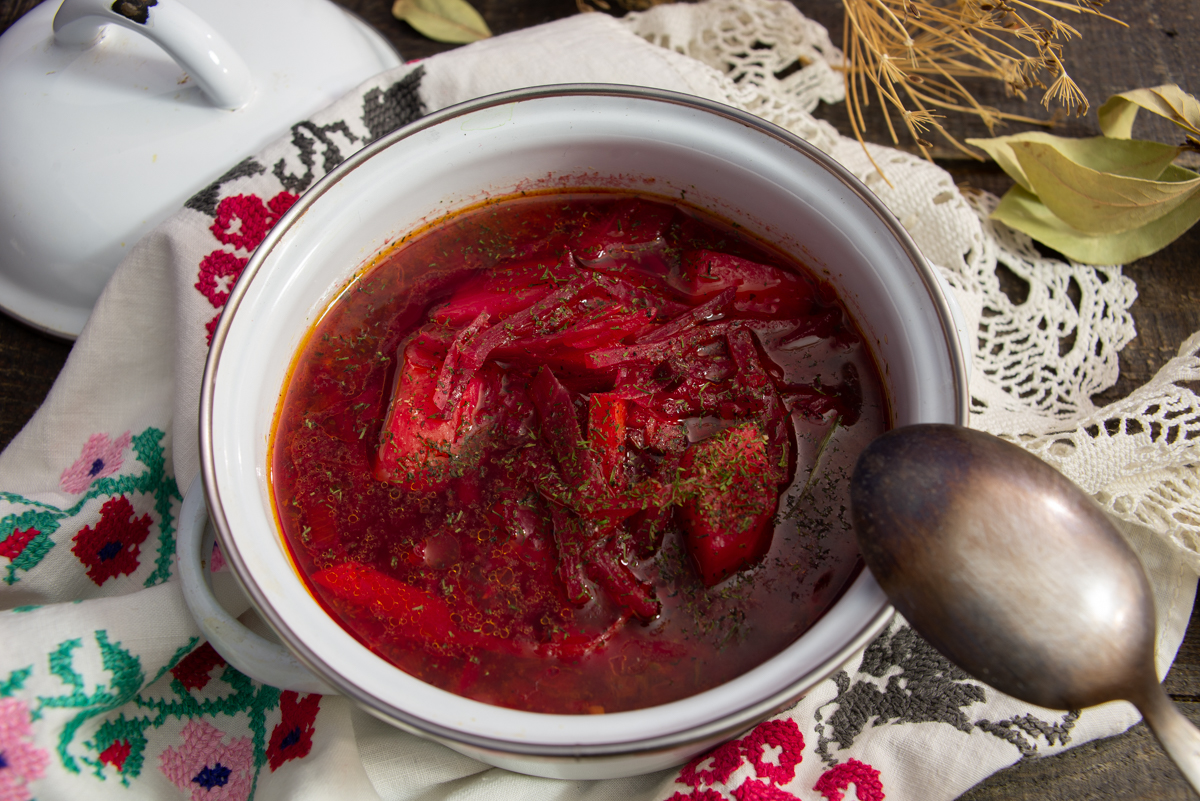
The aromatic and hearty vegan borscht with sauerkraut is ready to be served.
Ingredients
- 300 g sauerkraut
- 200 g potatoes
- 120 g onions
- 150 g carrots
- 150 g beets
- 50 g tomato purée
- 2 garlic cloves
- 1 teaspoon dried dill
- 1 teaspoon smoked paprika flakes
- 2 tablespoons vegetable oil
- Salt and black pepper to taste
How to Make Vegan Borscht with Sauerkraut
First, prep the sauerkraut: place it in a bowl and cover with cold water. Rinse thoroughly, drain in a sieve, and rinse again under running water. Transfer the rinsed sauerkraut to a pot and cover with boiling water. Boil for 3 minutes, drain in a colander, and rinse one more time. Repeat this boiling process once more. At this point, I highly recommend turning on your range hood to clear out that pungent boiled cabbage smell. Don’t worry, the odor won’t linger in the finished dish.
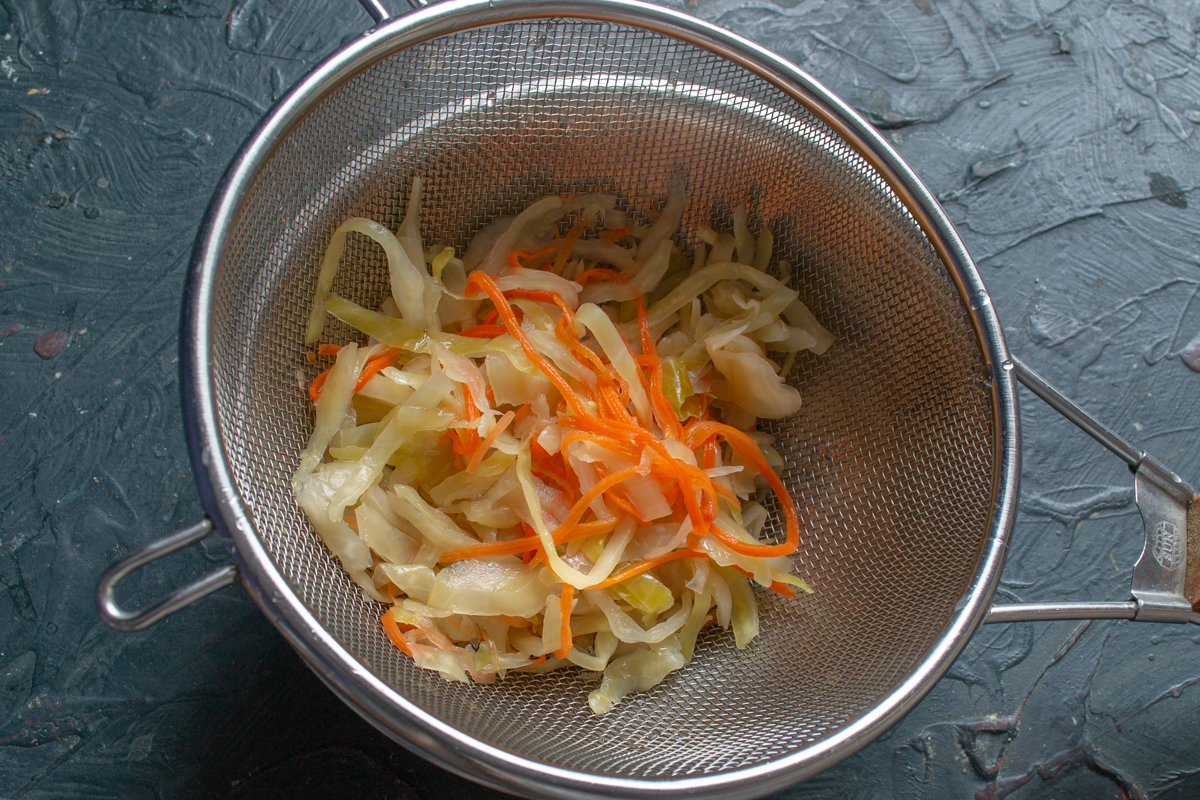
Rinse the sauerkraut multiple times to remove excess acidity and its strong, pungent odor.
Pour a tablespoon of vegetable oil into a heavy-bottomed pot. Finely chop a large onion. Toss the diced onion into the heated oil, add smoked paprika flakes, and season with a pinch of salt. Sauté over medium heat for 5-6 minutes.

Smoked paprika gives this vegan dish a deep flavor and an appetizing aroma.
Peel the carrots and cut them into batons. Add the prepped carrots to the pot.

Carrots cut into batons will retain their shape and provide great texture to the borscht.
Following the carrots, add the potatoes, cut into large cubes. For this recipe, make sure to use waxy potatoes that hold their shape, since all the vegetables will be cooking together for quite a while.
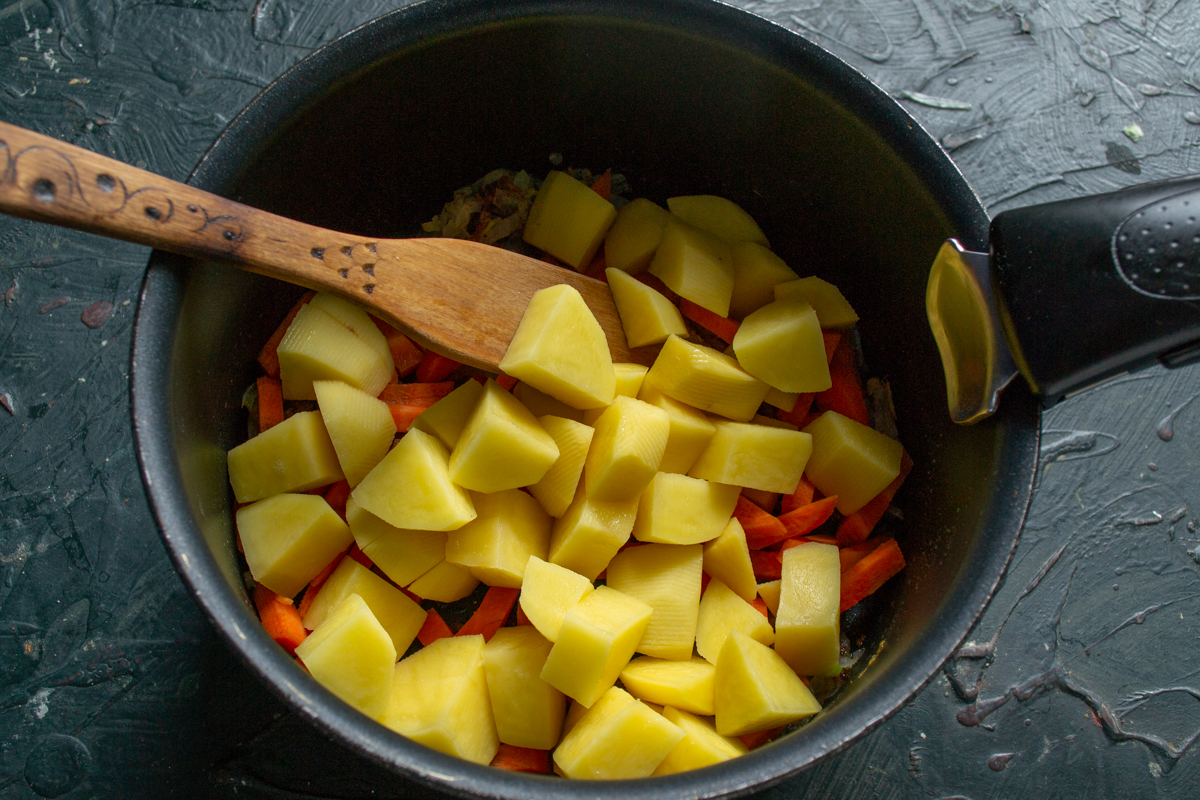
Choose waxy potato varieties that will hold their shape during a long simmer.
Stir in the prepared sauerkraut.

Combine all the main vegetable ingredients in the pot before pouring in the boiling water.
Pour in 1.5 liters (about 6 cups) of boiling water. Bring the borscht to a boil. Simmer gently over low heat for 40 minutes.

Simmer the vegetables over low heat to allow the flavors to gently meld into a rich broth.
Peel the beets and grate them on the large holes of a box grater. Heat 1 tablespoon of vegetable oil in a skillet. Add the grated beets and tomato purée, then braise over low heat for about 20 minutes. Once the beets are tender, stir in the minced garlic cloves, mix well, and remove the skillet from the heat.

Braise the grated beets with tomato purée and garlic to develop a vibrant color and sharp flavor.
Fold the braised beet and tomato mixture into the simmering borscht. Season with salt to taste and add a little granulated sugar to balance the acidity of the sauerkraut and tomatoes. Immediately remove the pot from the heat. If you boil the borscht for too long, its vibrant red color will turn a dull brown, though the boiling process won’t actually alter the flavor.

Fold in the beet mixture at the very end to preserve the dish's vibrant ruby red color.
Wrap the pot in a thick kitchen towel and let the borscht steep for at least 20 minutes.

After stirring in the beets, adjust the seasoning with salt and sugar, then immediately remove from the heat.
Serve the vegan borscht with sauerkraut piping hot, when its aroma is fully released. Right before serving, generously sprinkle each bowl with dried or fresh dill and add a pinch of freshly ground black pepper for a little kick. If you aren't strictly fasting, a spoonful of thick smetana (sour cream) will transform this soup into a true delicacy, beautifully complementing the sweetness of the braised beets and the tang of the cabbage. Don't forget to serve it alongside a slice of fresh rye bread or garlic pampushki (Ukrainian garlic rolls). Remember, this vegan borscht tastes even better the next day, after all the ingredients have truly melded together. Store it in the refrigerator and gently reheat over medium heat, taking care not to bring it to a rolling boil to preserve that noble ruby hue. If you prefer a thicker, more rustic soup, you can mash a portion of the potatoes directly in the pot to give the broth a wonderful, velvety texture. Bon appétit!
0 comments